

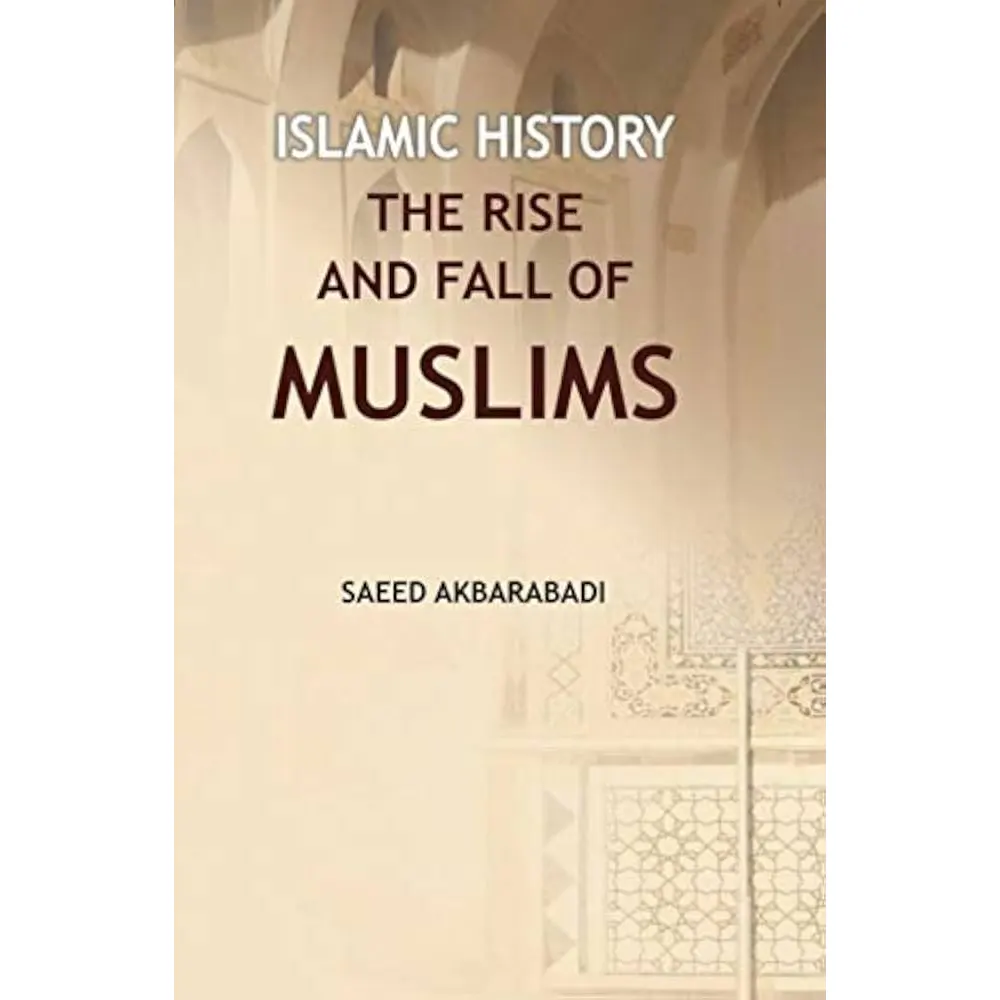
Islami Tareekh (Muhammad Abdul Hayi) Al Hasanat Urdu

Original price was: ₹50.00.₹40.00Current price is: ₹40.00.
- Islami Tareekh Muhammad Abdul Hayi Al Hasanat (Urdu)
- Conclusion
- Islami Tareekh by Muhammad Abdul Hayi provides a comprehensive overview of Islamic history in a manner that is both educational and spiritually instructive. Key contributions of the book include:
- Chronological Clarity: Covers the life of Prophet Muhammad ﷺ, the Rashidun Caliphs, major dynasties, and regional expansions.
- Integration of Faith and History: Events are analyzed not only historically but also for moral and spiritual lessons.
- Cultural and Intellectual Perspective: Highlights achievements in science, philosophy, literature, and governance.
- Guidance for Modern Muslims: Encourages understanding of historical models of leadership, justice, and piety.
- The book is particularly valuable for Urdu-speaking readers seeking a thorough understanding of Islamic history, from its inception to the challenges faced by Muslim societies in later centuries.
- Key Takeaways:
- Islam emphasizes faith, justice, knowledge, and social welfare.
- Leadership must combine morality, courage, and service to the people.
- Intellectual and cultural achievements are integral to the strength of Muslim civilization.
- History offers lessons in resilience, ethics, and spiritual development.
Islami Tareekh (Muhammad Abdul Hayi) Al Hasanat Urdu
Introduction
Islami Tareekh by Muhammad Abdul Hayi is a comprehensive Urdu work that chronicles the history of Islam from the advent of Prophet Muhammad ﷺ to later developments in the Islamic world. The book aims to provide readers with a chronological understanding of Islamic history, covering political, social, economic, and intellectual aspects.
The work is structured to highlight not only events and dates but also the moral and spiritual lessons that can be derived from Islamic history. It serves as both an educational resource and a guide for understanding the evolution of Muslim societies over time.
1. Early History of Islam
The book begins with the life of Prophet Muhammad ﷺ, tracing the development of Islam in Makkah and Madinah.
1.1 Pre-Islamic Arabia
The Arabian Peninsula before Islam was characterized by tribal divisions, polytheism, and social injustice.
The book emphasizes how these societal conditions set the stage for the moral and social reforms introduced by Islam.
1.2 Life of Prophet Muhammad ﷺ
Early Life: Born in 570 CE in Makkah, the Prophet faced the loss of his parents early and was raised under the care of his grandfather and uncle.
Prophethood: At age 40, he received the first revelation from Allah. The book explains his mission to establish monotheism and ethical reform in society.
Opposition: Early Muslims faced persecution from Quraysh leaders. Figures like Bilal ibn Rabah (RA) and Sumayyah bint Khayyat (RA) are highlighted for their sacrifices.
Hijrah to Madinah: The migration marked the beginning of the Islamic calendar and the establishment of an Islamic state based on justice and consultation.
Lesson: The early period emphasizes patience, sacrifice, and steadfastness in faith.
2. The Rashidun Caliphate
Muhammad Abdul Hayi gives detailed coverage of the four Rightly Guided Caliphs and their contributions:
2.1 Hazrat Abu Bakr Siddiq (RA)
Maintained unity during the Ridda (apostasy) wars.
Compiled the Qur’an into a single manuscript, preserving it for future generations.
2.2 Hazrat Umar Farooq (RA)
Expanded the Islamic empire to Syria, Persia, and Egypt.
Established administrative and judicial systems emphasizing justice and welfare.
Known for simplicity, piety, and fearlessness in upholding truth.
2.3 Hazrat Uthman ibn Affan (RA)
Standardized the Qur’anic text.
Promoted public welfare projects and infrastructure development.
2.4 Hazrat Ali ibn Abi Talib (RA)
Known for wisdom, knowledge, and bravery.
Faced internal conflicts like the Battle of Camel and Siffin.
Lesson: Leadership during the Rashidun period balanced governance, justice, and moral integrity, providing an ideal model for Muslims.
3. Umayyad and Abbasid Dynasties
The book examines the expansion and consolidation of the Islamic empire under these dynasties.
3.1 Umayyad Dynasty (661–750 CE)
Capital moved to Damascus; Islam expanded to Spain, North Africa, and Central Asia.
Arabic became the administrative language.
Centralized governance sometimes led to dissent, but the dynasty strengthened Islamic political structures.
3.2 Abbasid Dynasty (750–1258 CE)
Golden Age of Islamic civilization: Baghdad became a hub for science, philosophy, and literature.
Scholars like Al-Farabi, Ibn Sina, and Al-Ghazali contributed to philosophy, medicine, and theology.
Trade and cultural exchanges flourished, connecting the Muslim world with Europe, Africa, and Asia.
Lesson: The Umayyad and Abbasid periods highlight the role of leadership, education, and culture in the growth of Islamic civilization.
4. Regional Powers and Expansion
Muhammad Abdul Hayi also covers the spread of Islam to various regions:
Africa: Islam reached West Africa via trade, establishing states like Mali and Songhai under Muslim rulers.
India: Arrival through traders, missionaries, and later the Delhi Sultanate and Mughal Empire.
Southeast Asia: Spread primarily through trade networks and peaceful dawah.
Lesson: Islam’s expansion was both spiritual and cultural, integrating with local societies while maintaining core principles.
5. Intellectual and Cultural Achievements
The book emphasizes the intellectual and cultural contributions of Muslims:
5.1 Philosophy and Theology
Thinkers like Al-Farabi, Al-Ghazali, Ibn Rushd, and Ibn Sina bridged reason and revelation.
The synthesis of Greek philosophy with Islamic teachings influenced both the Muslim world and Europe.
5.2 Science and Medicine
Innovations in astronomy, mathematics, chemistry, and medicine were documented.
Hospitals, observatories, and universities flourished under Muslim rulers.
5.3 Literature and Art
Poetry, calligraphy, and architecture reflected spiritual and aesthetic sophistication.
Iconic structures like mosques, madrasas, and palaces combined functionality with artistic beauty.
Lesson: Islam encourages the pursuit of knowledge and the integration of spiritual and worldly wisdom.
6. Decline and Challenges
Internal strife, corruption, and invasions gradually weakened Muslim empires.
The book discusses the Mongol invasion, Crusades, and later European colonial encroachments.
Despite challenges, Islam survived as a spiritual and cultural force.
Lesson: History teaches resilience, adaptability, and the importance of moral and spiritual integrity in times of trial.
7. Methodology of the Book
Muhammad Abdul Hayi employs a chronological narrative, integrating political history with social, cultural, and intellectual developments.
Emphasis is given to moral and ethical lessons, making it not just a historical account but also a guide for personal and communal development.
The book references classical sources like Ibn Hajar, Tabari, and contemporary scholarly works to ensure authenticity.
Conclusion
Islami Tareekh by Muhammad Abdul Hayi provides a comprehensive overview of Islamic history in a manner that is both educational and spiritually instructive. Key contributions of the book include:
Chronological Clarity: Covers the life of Prophet Muhammad ﷺ, the Rashidun Caliphs, major dynasties, and regional expansions.
Integration of Faith and History: Events are analyzed not only historically but also for moral and spiritual lessons.
Cultural and Intellectual Perspective: Highlights achievements in science, philosophy, literature, and governance.
Guidance for Modern Muslims: Encourages understanding of historical models of leadership, justice, and piety.
The book is particularly valuable for Urdu-speaking readers seeking a thorough understanding of Islamic history, from its inception to the challenges faced by Muslim societies in later centuries.
Key Takeaways:
Islam emphasizes faith, justice, knowledge, and social welfare.
Leadership must combine morality, courage, and service to the people.
Intellectual and cultural achievements are integral to the strength of Muslim civilization.
History offers lessons in resilience, ethics, and spiritual development.
| Weight | 150 g |
|---|---|
| Dimensions | 16 × 10 × 8 cm |
Only logged in customers who have purchased this product may leave a review.
Related Products
- Hayatus Sahaba Part -1 Hazrat Maulana Muhammad Yusuf Kandhalvi Idara (Urdu)
Overarching Themes Across All Three Volumes
- Faith and Conviction
The Sahaba were ordinary people transformed into extraordinary personalities because of their unshakable belief in Allah and the Prophet ﷺ. - Sacrifice and Struggle
They gave up wealth, family ties, and even their lives for Islam. Their sacrifices laid the foundation of the global Muslim Ummah. - Worship and Spirituality
Their strength came from constant connection with Allah through salah, Qur’an, and dhikr. - Simplicity and Humility
Despite wealth or authority, they lived simply and avoided arrogance. - Dawah and Responsibility
They understood Islam as a global message and considered it their duty to spread it everywhere. - Justice and Character
Their honesty, compassion, and fairness won people’s hearts more than any sword or wealth.
- Faith and Conviction
3 in stock
- Islami Namon Ka Encyclopedia Tanvir Ahmad Al Hasanat (Urdu)
2 in stock
- Quran Ka Raasta Khurram Murad Al Hasanat (Hindi)
2 in stock
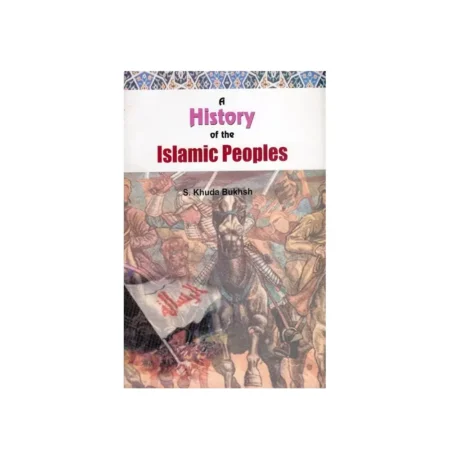
- A History Of The Islamic Peoples S Khuda Bukhsh (Adam Publishers) English
- The Scope of the Book
- The book covers the following broad areas:
- The Rise of Islam and the Prophet Muhammad (PBUH):
- The book begins with the Arabian background – a description of pre-Islamic Arabia, its tribal structure, culture, social conditions, and religious practices.
- It then moves to the life of Prophet Muhammad (peace be upon him), his mission, the revelation of the Qur’an, the struggles in Makkah, migration to Madinah, and the establishment of the first Islamic state.
- The author emphasizes how Islam brought moral, social, and spiritual reforms to a region deeply divided by tribalism and superstition.
- The Rashidun Caliphate (632–661 CE):
- Khuda Bukhsh describes the leadership of the four rightly guided caliphs (Abu Bakr, Umar, Uthman, Ali).
- He highlights the rapid expansion of Islam beyond Arabia into Syria, Iraq, Egypt, and Persia.
- Important administrative and legal reforms introduced by Caliph Umar are explained.
- The internal conflicts, especially during the caliphate of Uthman and Ali, are presented in a balanced way.
- The Umayyad Caliphate (661–750 CE):
- The book outlines the transformation of the caliphate into a hereditary monarchy under Muawiyah.
- It explains the expansion into North Africa, Spain (Andalusia), and Central Asia.
- Khuda Bukhsh also discusses the administrative centralization and cultural flowering of Damascus, the Umayyad capital.
2 in stock
- Author: Altaf Ahmad Azmi
- 336 Pages
- Language: Urdu
- Publisher: Al-Hasanat
1 in stock

- SKU: AHB001-NDL-0233
- Categories: Hadith, Urdu
- Tags: ahadees, Al-Hasanat Books, hadis, hadith
4 in stock
- Hayatus Sahaba Part 1,2&3 Hazrat Maulana Muhammad Yusuf Kandhalvi (Idara) Hindi
Overall Explanation and Themes
Taken together, the three parts of Hayatus Sahaba deliver timeless lessons:
- Faith and Conviction: The Sahaba’s faith was so strong that no torture, poverty, or danger could shake it.
- Love for the Prophet ﷺ: Their lives revolved around his guidance.
- Sacrifice and Simplicity: They abandoned worldly pleasures for the sake of Islam.
- Worship and Reliance on Allah: Their spiritual connection was the foundation of their strength.
- Global Responsibility: They considered spreading Islam a personal duty, not a communal option.
- Character and Justice: Their honesty and compassion won the hearts of nations.
3 in stock

- Conclusion
- Mukhtasar Tareekh Mashaikh-e-Awadh by Dr. Razi Ahmad Kamal is a concise yet comprehensive study of the spiritual, cultural, and social contributions of Sufi saints in Awadh.
- The book highlights the spiritual guidance, ethical influence, and societal reform brought about by the Mashaikh.
- Sufi saints acted as moral exemplars, educators, and cultural patrons, shaping Awadh’s identity and leaving a lasting legacy.
- The work demonstrates how Islamic spirituality, when integrated with social and cultural engagement, creates a balanced and harmonious society.
- Key Takeaways:
- Sufi saints of Awadh were central to both spiritual guidance and societal welfare.
- Their teachings emphasized ethics, devotion, and service to humanity.
- Different Sufi orders (Chishti, Qadiri, Suhrawardi, Naqshbandi) contributed unique perspectives and practices.
- Saints influenced governance, culture, education, and interfaith harmony.
- The legacy of Awadh’s Mashaikh continues to inspire spirituality, literature, and cultural identity in the region.
2 in stock
- Hayat-E-Tayyaba Abu Saleem Mohammad Al Hasanat (Urdu)
7 in stock

- Quran Sharif Muhammad Farooq Khan Al Hasanat (Hindi/Roman)
- Structure and Features
- Arabic Text
- Maintains authentic Uthmani script.
- Includes ayah numbers, surah headings, and section markers (Ruku) for navigation.
- Hindi Translation
- Simple, concise Hindi explanation for each verse.
- Focuses on meaning, context, and practical guidance.
- Roman Urdu Transliteration
- Guides readers in correct pronunciation of Arabic verses.
- Particularly helpful for beginners, students, and Hindi speakers unfamiliar with Arabic script.
- Explanatory Commentary
- Includes brief explanations, highlighting:
- Historical context (Asbab al-Nuzul)
- Moral and spiritual lessons
- Application in daily life
- Commentary avoids overly complex scholarly discussions, emphasizing clarity and understanding.
- Practical Layout
- Arabic text, Hindi translation, and Roman Urdu transliteration are aligned for easy reading.
- High-quality printing ensures clarity, durability, and usability.
1 in stock

1 in stock

- Concise Urdu Dictionary English-English-Urdu Al Hasanat
- Structure of the Dictionary
- The dictionary is alphabetically arranged by English words, with each entry typically including:
- Headword (English) – highlighted in bold for quick reference.
- English Definition – clear and concise explanation of the word in English.
- Urdu Translation – accurate equivalent(s) in Urdu script, sometimes including multiple meanings for context.
- Part of Speech – noun, verb, adjective, adverb, etc., where relevant.
- Usage Notes – optional examples or clarifications to show proper context.
- Example Entries
- Book (Noun) → A set of written or printed pages bound together; کتاب
- Friend (Noun) → A person one knows and has a bond of mutual affection with; دوست
- Beautiful (Adjective) → Pleasing the senses or mind aesthetically; خوبصورت
- Write (Verb) → To form letters, words, or symbols on a surface; لکھنا
- School (Noun) → An institution for educating children or students; اسکول
2 in stock
Reviews
There are no reviews yet.