

The Great Battle Of Badr ( Mohd. Ahmed Bashumail ) Ibs English

₹140.00
- The Great Battle Of Badr ( Mohd. Ahmed Bashumail ) Ibs English
- Religious Significance: The battle demonstrated the power of faith and reliance on God. The victory at Badr, despite overwhelming odds, reinforced the belief that divine support can overcome human limitations.
- Political Impact: It marked the first decisive triumph for Muslims, solidifying their presence in Medina and establishing them as a political and military force in the Arabian Peninsula.
- Psychological Effect: The success at Badr boosted the morale of the Muslim community and sent a clear message to the Quraysh and neighboring tribes that Islam was not merely a spiritual movement but also capable of defending itself.
- Key Events During the Battle
- The book details the sequence of events during the battle, highlighting both tactical and individual acts of bravery:
- Initial Skirmishes: The battle began with duels between champions of both sides, a common practice in Arabian warfare, where individual valor often set the tone.
- Muslim Cohesion: Despite being outnumbered, the Muslim ranks maintained discipline, and Prophet Muhammad’s leadership ensured that morale remained high.
- Divine Intervention: Bashumail emphasizes the Qur’anic account of angels assisting Muslims during the fight, which spiritually reinforced the believers’ confidence.
- Turning Point: The Quraysh’s numerical superiority began to falter under coordinated attacks by the Muslims, and their disorganized retreat contributed to the Muslim victory.
Out of stock
The Great Battle Of Badr ( Mohd. Ahmed Bashumail ) Ibs English
The Great Battle of Badr by Mohd. Ahmed Bashumail is a detailed account of one of the most significant events in Islamic history—the Battle of Badr. This battle, which occurred in 624 CE (2 AH), was the first major military engagement between the early Muslims of Medina, led by Prophet Muhammad (peace be upon him), and the Quraysh of Mecca. Bashumail’s work focuses not only on the historical and military aspects of the battle but also on its spiritual, moral, and societal significance, highlighting how it became a turning point for the Muslim community.
1. Historical Context
The Battle of Badr took place during a period of intense hostility between the Muslims, who had migrated from Mecca to Medina to escape persecution, and the Quraysh, the dominant tribe of Mecca. The Quraysh were economically, politically, and militarily powerful, and they viewed the Muslims as a threat to their authority and commercial interests. The early Muslim community faced harassment, boycotts, and several attempts on their survival, leading to growing tension between the two groups.
Bashumail emphasizes the disparity between the forces: the Quraysh had around 1,000 well-equipped soldiers, while the Muslims numbered approximately 313, many of whom were poorly armed. Despite this numerical disadvantage, the Muslims demonstrated unwavering faith in God and a strong sense of unity and discipline, which Bashumail presents as a crucial factor in their eventual victory.
2. The Importance of Badr
Badr was more than a military encounter; it was a defining moment for the nascent Muslim community. Bashumail underscores several reasons for its significance:
Religious Significance: The battle demonstrated the power of faith and reliance on God. The victory at Badr, despite overwhelming odds, reinforced the belief that divine support can overcome human limitations.
Political Impact: It marked the first decisive triumph for Muslims, solidifying their presence in Medina and establishing them as a political and military force in the Arabian Peninsula.
Psychological Effect: The success at Badr boosted the morale of the Muslim community and sent a clear message to the Quraysh and neighboring tribes that Islam was not merely a spiritual movement but also capable of defending itself.
3. Preparations and Strategies
Bashumail provides an in-depth analysis of the strategies employed by both sides. Prophet Muhammad’s leadership is highlighted as exemplary. Despite the Muslims’ limited numbers and resources, he emphasized careful planning, intelligence gathering, and spiritual preparation.
Choice of Battlefield: Badr was strategically selected near water wells, ensuring access to resources while limiting the Quraysh’s mobility.
Prayer and Spiritual Preparation: Before the battle, the Prophet encouraged collective prayers, reinforcing the idea that faith and divine guidance were as critical as military tactics.
Division of Forces: The Muslims organized themselves into small units, assigning key positions to experienced warriors while keeping cohesion and morale high.
Bashumail contrasts this with the Quraysh’s overconfidence, describing how their reliance on superior numbers and material resources led to underestimating the Muslims’ determination and strategy.
4. Key Events During the Battle
The book details the sequence of events during the battle, highlighting both tactical and individual acts of bravery:
Initial Skirmishes: The battle began with duels between champions of both sides, a common practice in Arabian warfare, where individual valor often set the tone.
Muslim Cohesion: Despite being outnumbered, the Muslim ranks maintained discipline, and Prophet Muhammad’s leadership ensured that morale remained high.
Divine Intervention: Bashumail emphasizes the Qur’anic account of angels assisting Muslims during the fight, which spiritually reinforced the believers’ confidence.
Turning Point: The Quraysh’s numerical superiority began to falter under coordinated attacks by the Muslims, and their disorganized retreat contributed to the Muslim victory.
5. Outcome and Significance
The battle resulted in a decisive victory for the Muslims. Several notable Quraysh leaders were killed or captured, and the Muslims acquired much-needed resources and spoils of war. Bashumail emphasizes that while the battle was militarily significant, its spiritual and psychological impact was even more profound:
Legitimacy for the Muslim Community: The victory established the Muslims as a formidable force in the Arabian Peninsula.
Strengthening Faith: It confirmed the Muslims’ belief in divine support and highlighted the effectiveness of unity, discipline, and moral courage.
Deterrence Against Enemies: The outcome of Badr acted as a deterrent to potential aggressors and created an aura of invincibility around the Muslim forces.
6. Leadership of Prophet Muhammad (PBUH)
Bashumail dedicates a significant portion of the book to analyzing Prophet Muhammad’s leadership qualities. He portrays the Prophet as a combination of spiritual guide, military strategist, and moral leader. Key aspects include:
Courage and Presence: The Prophet personally participated in the battle, inspiring his companions through example.
Strategic Wisdom: He utilized knowledge of the terrain, surprise attacks, and intelligence to counteract the Quraysh’s numerical advantage.
Ethical Warfare: Despite the conflict, the Prophet emphasized ethical conduct, prohibiting unnecessary cruelty and ensuring the treatment of prisoners according to Islamic principles.
7. Lessons from Badr
Bashumail draws several enduring lessons from the Battle of Badr that remain relevant beyond its historical context:
Faith Overcomes Fear: Belief in God’s support can empower individuals to face challenges far greater than their apparent strength.
Unity is Strength: Solidarity and cooperation among community members are crucial for success in any collective endeavor.
Leadership Matters: Visionary and ethical leadership can decisively influence outcomes, even against overwhelming odds.
Preparation and Discipline: Careful planning, training, and discipline are essential, combining both material readiness and moral resolve.
8. Spiritual and Moral Reflections
Badr is also presented as a spiritual milestone. Bashumail emphasizes that while military skill and courage were important, the Muslims’ reliance on divine guidance and adherence to ethical principles were decisive factors. The battle demonstrated that material superiority alone is insufficient without moral and spiritual grounding. It reinforced the idea that Islam is a comprehensive system addressing both worldly and spiritual needs.
9. Influence on Islamic History
The victory at Badr set the stage for subsequent events in Islamic history:
It strengthened the political position of Muslims in Medina.
It encouraged other tribes to consider alliances with Muslims, expanding the influence of Islam.
It marked the beginning of the Muslim community’s transition from a persecuted minority to an organized, influential society capable of defending itself and promoting its values.
10. Conclusion
The Great Battle of Badr by Mohd. Ahmed Bashumail is more than a historical account; it is an analysis of courage, faith, leadership, and strategy. Bashumail emphasizes that Badr’s significance lies not only in the military victory but in its lasting impact on the Muslim psyche and the consolidation of Islam as a social, political, and spiritual force. The lessons derived from Badr—unity, reliance on God, ethical conduct, and disciplined strategy—remain timeless and provide inspiration for Muslims and non-Muslims alike.
By presenting Badr as a turning point, Bashumail successfully conveys that historical events are shaped not just by material resources but by faith, determination, and ethical leadership, making it a defining chapter in the history of Islam.
| Weight | 280 g |
|---|---|
| Dimensions | 14.61 × 1.91 × 22.3 cm |
Only logged in customers who have purchased this product may leave a review.
Related Products

- 40 Daily Prayers (Ibs) English/Arabic
6 in stock

- Riyazul Quran 30 Para Set Ibs (Arabic)
- Structure and Features
- Arabic Text (Uthmani Script)
- Complete Qur’an in authentic Uthmani script.
- Includes ayah numbering, Surah headings, and Ruku markers.
- Full diacritics for accurate pronunciation and Tajweed practice.
- Division into 30 Para (Juz’)
- Traditional division enables structured recitation.
- Each Para can be recited daily to complete the Qur’an in a month.
- Useful for memorization and review.
- Readable Layout
- Clear font and balanced spacing for comfortable reading.
- Suitable for adults, students, and older children.
- Durable and Practical
- Each Para is bound individually or as part of a full set, making it easy to handle and use regularly.
- Sturdy binding ensures frequent recitation without wear.
- Optional Features
- Some editions may include tables, page numbers, or Surah index.
- Can be integrated with Tajweed books or Arabic learning resources.
2 in stock
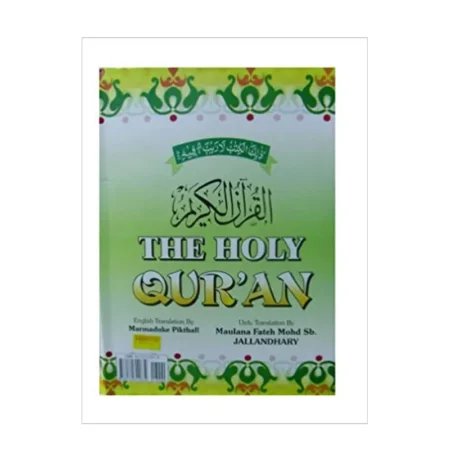
- The Holy Qur’An Marmaduke Pikthall Ibs (Arabic/English/Urdu)
1 in stock

- Al-Qur’An-Ul Kareem (Alifi) Ibs (Arabic)
- Spiritual and Practical Applications
- Daily Recitation:
- Ideal for Salah, Dhikr, and daily Qur’ān reading, ensuring correct pronunciation and spiritual fulfillment.
- Memorization Programs:
- Widely used in madrasas and home Hifz programs, supporting structured memorization of ayahs and surahs.
- Tajweed Practice:
- Helps learners internalize recitation rules, preparing them for formal Qari examinations or public recitation.
- Study and Reflection:
- Though primarily in Arabic, learners can reflect on the meanings with separate translation or tafsīr resources, integrating spiritual and intellectual understanding.
1 in stock
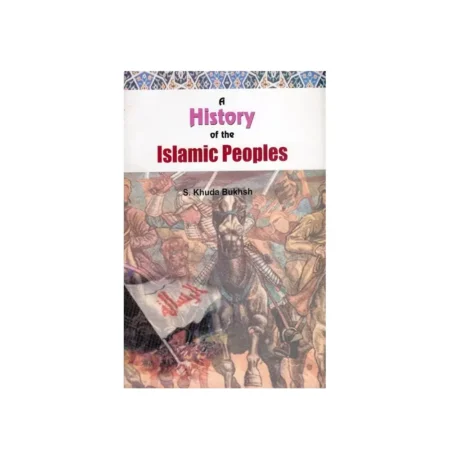
- A History Of The Islamic Peoples S Khuda Bukhsh (Adam Publishers) English
- The Scope of the Book
- The book covers the following broad areas:
- The Rise of Islam and the Prophet Muhammad (PBUH):
- The book begins with the Arabian background – a description of pre-Islamic Arabia, its tribal structure, culture, social conditions, and religious practices.
- It then moves to the life of Prophet Muhammad (peace be upon him), his mission, the revelation of the Qur’an, the struggles in Makkah, migration to Madinah, and the establishment of the first Islamic state.
- The author emphasizes how Islam brought moral, social, and spiritual reforms to a region deeply divided by tribalism and superstition.
- The Rashidun Caliphate (632–661 CE):
- Khuda Bukhsh describes the leadership of the four rightly guided caliphs (Abu Bakr, Umar, Uthman, Ali).
- He highlights the rapid expansion of Islam beyond Arabia into Syria, Iraq, Egypt, and Persia.
- Important administrative and legal reforms introduced by Caliph Umar are explained.
- The internal conflicts, especially during the caliphate of Uthman and Ali, are presented in a balanced way.
- The Umayyad Caliphate (661–750 CE):
- The book outlines the transformation of the caliphate into a hereditary monarchy under Muawiyah.
- It explains the expansion into North Africa, Spain (Andalusia), and Central Asia.
- Khuda Bukhsh also discusses the administrative centralization and cultural flowering of Damascus, the Umayyad capital.
2 in stock
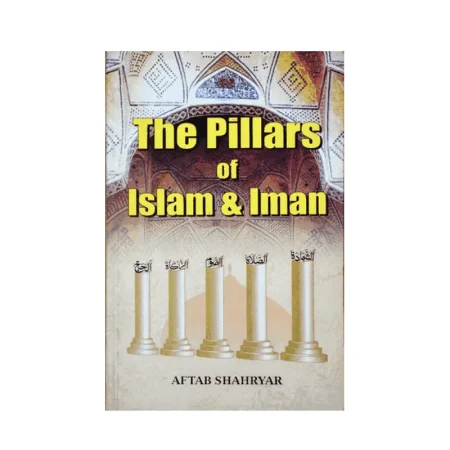
- The Pillars Of Islam & Iman Aftab Shahryar Ibs (English)
2 in stock

- The True Religion Of God Dr. Abu Ameenah Bilal Philips (Ibs) English
1 in stock

- Juz’U ‘Amma Cc ( Ibs ) Arabic
- Content Overview
- Juz‘U ‘Amma consists of 37 short Surahs (78–114). Though short in length, each Surah delivers powerful guidance, warnings, and hope, encapsulating the essence of Islamic teachings.
- 1. Themes of the Surahs
- Belief in Allah and the Hereafter:
Surahs repeatedly remind humans of Allah’s power, creation, and judgment, e.g., Surah An-Naba emphasizes resurrection and accountability. - Warnings against disbelief and arrogance:
Stories of past nations and their rejection of prophets (Surah Al-Mursalat, Al-Infitar) illustrate the consequences of ignoring divine guidance. - Moral and ethical guidance:
Surahs like Al-Adiyat and Al-Qari‘ah highlight justice, honesty, and awareness of divine judgment. - Praise of Allah and reflection on creation:
Surahs encourage humans to reflect on natural phenomena, the cosmos, and signs of Allah, fostering gratitude and humility. - Seeking protection and guidance:
Surahs Al-Falaq and An-Nas teach supplication, reliance on Allah, and seeking refuge from evil.
3 in stock

- Advantages of Lafz Ba Lafz Urdu Tarjuma
- Word-by-Word Accuracy: Connects Arabic words to precise Urdu meaning.
- Contextual Clarity: Combines literal translation with overall contextual understanding.
- Structured Learning: Supports stepwise study, memorization, and reflection.
- Spiritual and Ethical Engagement: Guides daily practice, moral behavior, and spiritual development.
- Educational Utility: Ideal for students, teachers, and researchers, bridging Arabic and Urdu understanding.
4 in stock

- The Holy Qur’An Colour Coded Tajweed Rules Ibs (Arabic)
- Ghunnah (Nasalization): Extended nasal sounds for Noon and Meem under certain conditions. The colour coding ensures learners sustain these sounds correctly.
- Ikhfa’ (Concealment): Noon Saakin or Tanween sounds are partially merged with following letters, producing a light nasal tone.
- Idgham (Merging): Letters are merged smoothly, either with Ghunnah (nasalized) or without, depending on the following letter.
- Iqlab (Conversion): Noon Saakin is transformed into a Meem sound when followed by a specific letter (Baa), producing a soft and blended recitation.
- Qalqalah (Echoing): Certain consonants produce a slight bounce when in Sukoon, and the colour helps learners anticipate the echo effect.
- Madd (Prolongation): Vowels are stretched for specific counts; different types of Madd (like natural, obligatory, or temporary) are highlighted using distinct colours.
- Rules of Noon and Meem Saakin: Various rules including Ikhfa’, Idgham, and Iqlab are visually reinforced, aiding both recognition and correct pronunciation.
- Other Articulation Rules: Proper tongue and lip positioning for letters, though not explicitly colour-coded, are often reinforced in accompanying guides or teacher instructions.
10 in stock
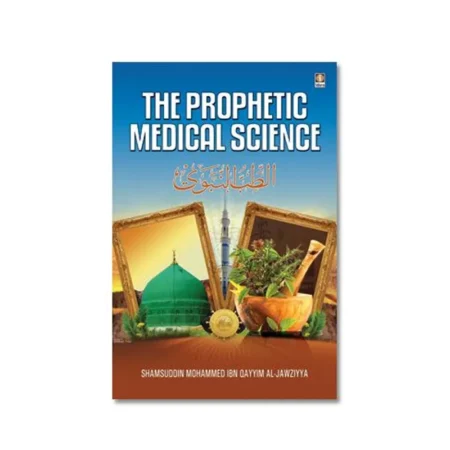
- The Prophetic Medical Science Shamsuddin Mohammed Ibn Qayyim Al-Jawziyya Idara (English)
- Purpose and Scope of the Book
- Preservation of Health in Islam: The book aims to highlight how Islam promotes personal hygiene, healthy living, and disease prevention.
- Spiritual and Ethical Integration: Prophetic medicine is not just physical; it incorporates mental and spiritual health.
- Practical Guidance: Offers remedies, preventive measures, and dietary recommendations that are relevant for contemporary readers.
- Educational Resource: Serves scholars, students, healthcare professionals, and anyone interested in the intersection of medicine and Islamic guidance.
- The book emphasizes that health is a divine trust and that human beings have a responsibility to care for their bodies and souls.
- 2. Concept of Health in Prophetic Medicine
- Holistic Approach: Health encompasses physical, mental, and spiritual well-being. A balanced lifestyle ensures harmony among body, mind, and soul.
- Preventive Care: Emphasizes diet, cleanliness, exercise, and moderation as primary means of disease prevention.
- Spiritual Health: Strong faith, prayer, gratitude, and ethical conduct are considered essential for overall well-being.
- Natural Remedies: The Prophet recommended natural substances like honey, black seed (Nigella sativa), dates, olive oil, and water for healing and maintenance of health.
1 in stock
Reviews
There are no reviews yet.