
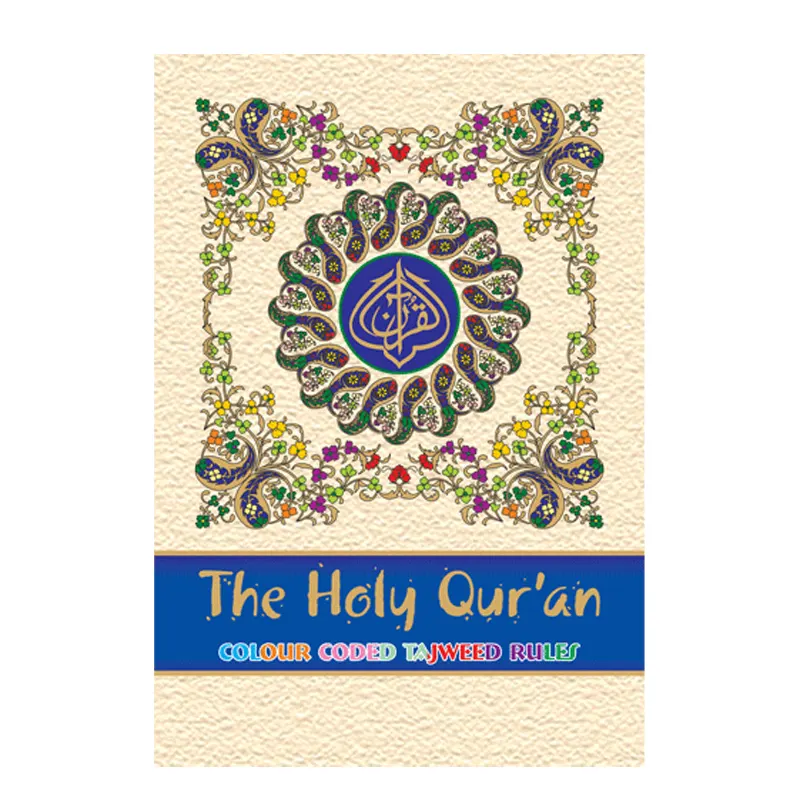
THE HOLY QUR’AN COLOUR CODED TAJWEED RULES (IBS) ARABIC
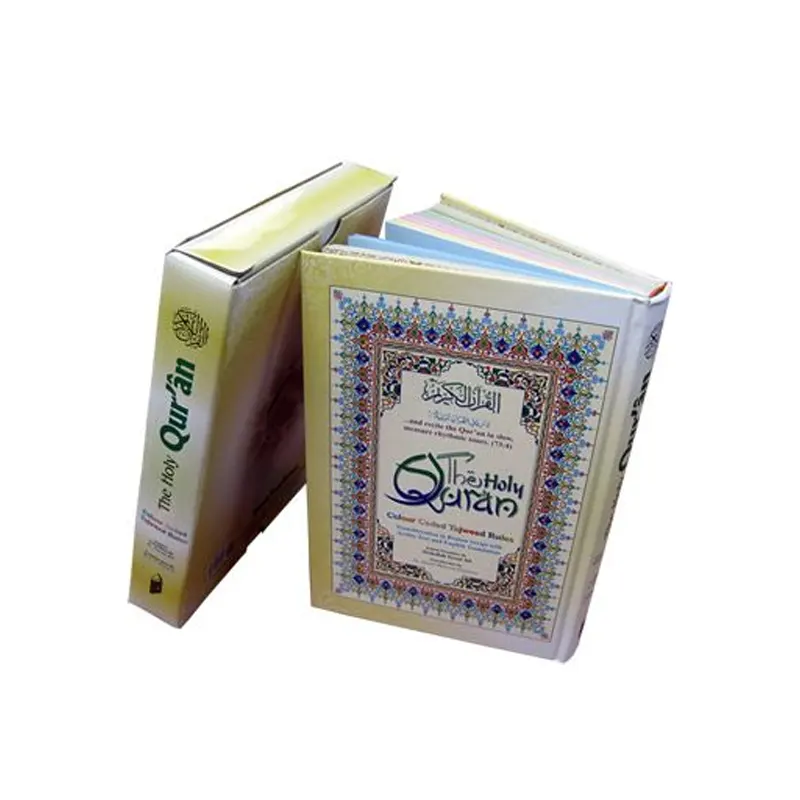
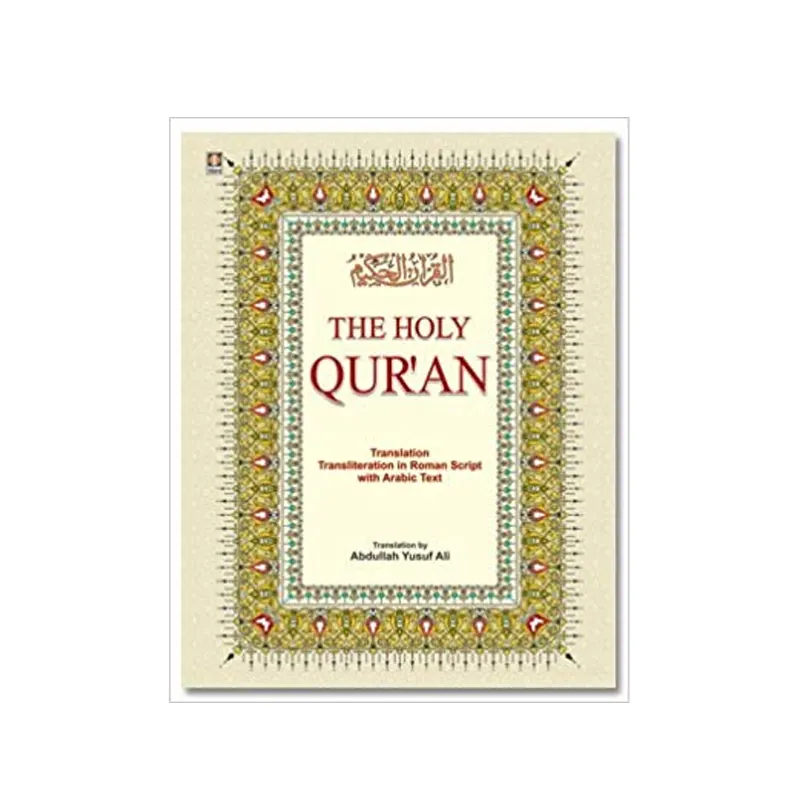
Original price was: ₹750.00.₹680.00Current price is: ₹680.00.
- The Holy Qur’An Colour Coded Tajweed Rules Ibs (Arabic)
- Ghunnah (Nasalization): Extended nasal sounds for Noon and Meem under certain conditions. The colour coding ensures learners sustain these sounds correctly.
- Ikhfa’ (Concealment): Noon Saakin or Tanween sounds are partially merged with following letters, producing a light nasal tone.
- Idgham (Merging): Letters are merged smoothly, either with Ghunnah (nasalized) or without, depending on the following letter.
- Iqlab (Conversion): Noon Saakin is transformed into a Meem sound when followed by a specific letter (Baa), producing a soft and blended recitation.
- Qalqalah (Echoing): Certain consonants produce a slight bounce when in Sukoon, and the colour helps learners anticipate the echo effect.
- Madd (Prolongation): Vowels are stretched for specific counts; different types of Madd (like natural, obligatory, or temporary) are highlighted using distinct colours.
- Rules of Noon and Meem Saakin: Various rules including Ikhfa’, Idgham, and Iqlab are visually reinforced, aiding both recognition and correct pronunciation.
- Other Articulation Rules: Proper tongue and lip positioning for letters, though not explicitly colour-coded, are often reinforced in accompanying guides or teacher instructions.
The Holy Qur’ān Colour Coded Tajweed Rules (IBS) – Arabic Version
The Holy Qur’ān Colour Coded Tajweed Rules published by IBS is a resource designed to facilitate accurate Quranic recitation through the systematic application of Tajweed rules. Tajweed, literally meaning “to improve” or “to make better,” refers to the set of principles that govern the proper pronunciation, articulation, and recitation of the Qur’anic text. This particular edition adopts a colour-coded approach to help learners visually identify and apply Tajweed rules while reading, enhancing both comprehension and fluency.
1. Purpose and Significance
The primary objective of this Qur’ān is to enable readers—whether beginners or advanced students—to recite the Qur’an correctly without frequent mistakes. Mispronunciation or improper elongation can alter the meaning of words, which emphasizes the critical importance of Tajweed. By using colours as visual cues, this edition reduces reliance on memorization alone and supports intuitive learning.
This colour-coded system also makes it easier for teachers to instruct multiple students at different levels simultaneously. Students can quickly identify where they need to focus their attention, whether it’s observing a prolonged sound (Madd), a nasal sound (Ghunnah), or a subtle pronunciation rule like Qalqalah.
2. Colour Coding System
The IBS edition employs a carefully designed palette, with each colour representing a specific Tajweed rule. Though the exact colour scheme may vary slightly in printings, the general principles include:
Red: Indicates letters of Ghunna (nasalization), alerting readers to apply nasal resonance for letters like ن (Noon) and م (Meem) in specific contexts.
Green: Represents Ikhfa’ or light nasalization where the Noon Saakin or Tanween is subtly merged with the following letter.
Blue: Denotes Qalqalah, a slight bouncing or echoing sound applied to specific consonants like ق, ط, ب, ج, and د when in a Sukoon state.
Orange/Yellow: Highlights Madd letters, guiding the reader to elongate vowels appropriately—typically for two, four, or six counts depending on the type of Madd.
Purple/Violet: Marks letters requiring Idgham, merging two letters smoothly where the Noon Saakin or Tanween meets particular letters.
Grey/Black: Standard letters without special rules, ensuring clarity and contrast against highlighted letters.
These colours provide immediate visual guidance, allowing learners to anticipate and implement proper recitation techniques in real-time.
3. Structure of the Qur’ān
The IBS colour-coded Qur’ān maintains the traditional arrangement of Surahs and Ayahs, ensuring that the spiritual and linguistic integrity of the text is preserved. Key features include:
Clear Arabic Script: The Uthmani script is used, known for its precision in letter shapes and vowel markings.
Diacritical Marks: Harakat (Fatha, Kasra, Damma), Sukoon, Shaddah, and other essential diacritics are clearly printed to aid pronunciation.
Marginal Guides: Some editions provide side notes or legends explaining the colour codes and rules in brief, helping learners cross-reference while reciting.
Consistent Layout: Each page is designed to minimize distraction while making the colour-coded rules prominent. This ensures that the reader can maintain focus on recitation rather than decoding the system.
4. Tajweed Rules Covered
This Qur’ān covers the major Tajweed rules essential for proper recitation:
Ghunnah (Nasalization): Extended nasal sounds for Noon and Meem under certain conditions. The colour coding ensures learners sustain these sounds correctly.
Ikhfa’ (Concealment): Noon Saakin or Tanween sounds are partially merged with following letters, producing a light nasal tone.
Idgham (Merging): Letters are merged smoothly, either with Ghunnah (nasalized) or without, depending on the following letter.
Iqlab (Conversion): Noon Saakin is transformed into a Meem sound when followed by a specific letter (Baa), producing a soft and blended recitation.
Qalqalah (Echoing): Certain consonants produce a slight bounce when in Sukoon, and the colour helps learners anticipate the echo effect.
Madd (Prolongation): Vowels are stretched for specific counts; different types of Madd (like natural, obligatory, or temporary) are highlighted using distinct colours.
Rules of Noon and Meem Saakin: Various rules including Ikhfa’, Idgham, and Iqlab are visually reinforced, aiding both recognition and correct pronunciation.
Other Articulation Rules: Proper tongue and lip positioning for letters, though not explicitly colour-coded, are often reinforced in accompanying guides or teacher instructions.
5. Learning Advantages
The colour-coded Qur’ān offers several pedagogical advantages:
Visual Learning: Many learners retain information better when they can visually connect letters with rules, making the process faster and more intuitive.
Error Reduction: The colour system minimizes mispronunciations by providing immediate, on-page cues.
Self-Paced Learning: Students can progress at their own speed, focusing on one set of rules at a time.
Teacher Support: Teachers can quickly point out rules by colour, making classroom instruction more efficient.
6. Integration with Memorization (Hifz)
For students memorizing the Qur’an, colour-coded Tajweed ensures that the recitation learned during Hifz is correct from the beginning. This integration prevents bad habits from forming and ensures that spiritual practice aligns with the rules of proper recitation.
7. Practical Tips for Learners
To make the most of this Qur’ān edition:
Begin by learning one set of rules (e.g., Ghunnah or Madd) before moving on to others.
Read aloud regularly to reinforce auditory recognition along with visual cues.
Combine colour-coded learning with listening to recitations by qualified Qaris to internalize rhythm and pronunciation.
Review sections frequently, focusing on letters or rules that are challenging.
8. Conclusion
The Holy Qur’ān Colour Coded Tajweed Rules (IBS) Arabic is more than a visually appealing Qur’ān; it is an educational tool that bridges traditional learning with modern teaching techniques. Its colour-coded system simplifies complex Tajweed rules, making them accessible to both beginners and intermediate learners. By aligning visual cues with recitation practices, it ensures that learners not only memorize the Qur’anic text but also recite it correctly, preserving its divine phonetic beauty and intended meanings. This edition is invaluable for anyone committed to mastering Tajweed and achieving fluency in Qur’anic recitation while maintaining spiritual reverence.
| Weight | 900 g |
|---|---|
| Dimensions | 16 × 10 × 8 cm |
Only logged in customers who have purchased this product may leave a review.
Related Products
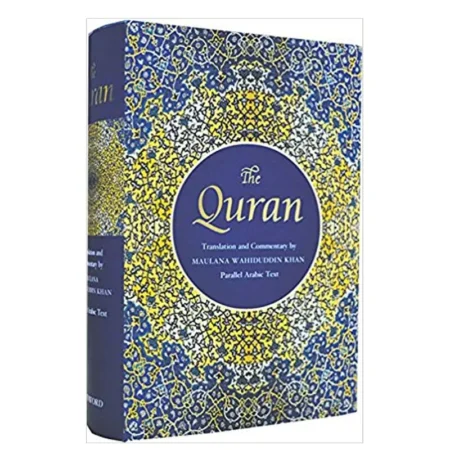
- Tazkeerul Quran ( Maulana Wahiduddin Khan ) Goodword Arabic/Hindi
- The central theme of Tazkeerul Quran is that the Qur’an is not merely a book of rituals, law, or theology, but a comprehensive guide for building a moral, ethical, and spiritually grounded life.
- Maulana Wahiduddin Khan stresses that the Qur’an addresses the human heart before it addresses human actions.
- It is concerned with shaping the inner self, which in turn manifests in ethical behavior, compassionate treatment of others, and a sense of accountability before God.
- This perspective underscores the Qur’an’s timeless relevance, showing that its message is universal and not confined to a specific culture, era, or society.
- The book also addresses the concept of human purpose and responsibility.
- Maulana Khan explains that the Qur’an presents life as a trust (Amanah) from God, and human beings are accountable for how they fulfill this trust.
- This idea encompasses not only individual ethical conduct but also the broader social and environmental responsibilities.
- The Qur’an encourages reflection, personal accountability, and the pursuit of knowledge to live a life aligned with divine guidance.
- Tazkeerul Quran highlights that spirituality in Islam is practical; it requires action rooted in moral consciousness, and mere ritual without inner transformation is insufficient.
2 in stock

- Juz’U ‘Amma Cc ( Ibs ) Arabic
- Content Overview
- Juz‘U ‘Amma consists of 37 short Surahs (78–114). Though short in length, each Surah delivers powerful guidance, warnings, and hope, encapsulating the essence of Islamic teachings.
- 1. Themes of the Surahs
- Belief in Allah and the Hereafter:
Surahs repeatedly remind humans of Allah’s power, creation, and judgment, e.g., Surah An-Naba emphasizes resurrection and accountability. - Warnings against disbelief and arrogance:
Stories of past nations and their rejection of prophets (Surah Al-Mursalat, Al-Infitar) illustrate the consequences of ignoring divine guidance. - Moral and ethical guidance:
Surahs like Al-Adiyat and Al-Qari‘ah highlight justice, honesty, and awareness of divine judgment. - Praise of Allah and reflection on creation:
Surahs encourage humans to reflect on natural phenomena, the cosmos, and signs of Allah, fostering gratitude and humility. - Seeking protection and guidance:
Surahs Al-Falaq and An-Nas teach supplication, reliance on Allah, and seeking refuge from evil.
1 in stock

- Practical Lessons for Believers
- Rise from Complacency
- Spiritual and moral growth requires effort; believers must actively seek knowledge, worship, and ethical living.
- Purify the Heart
- Inner cleansing—removing arrogance, selfishness, and negligence—is essential for divine guidance to flourish.
- Fear Allah and Be Mindful of Deeds
- Awareness of constant recording of actions instills self-discipline and encourages moral behavior.
- Serve Humanity
- Ethical responsibility extends to societal obligations: helping the needy, speaking truthfully, and avoiding injustice.
- Prepare for the Afterlife
- Recognition of death, resurrection, and divine judgment motivates believers to align worldly actions with spiritual goals.
1 in stock
- Personal Use: Ideal for daily recitation and personal study.
- Educational: Suitable for students of Quranic recitation and memorization.
- Gift: A thoughtful and meaningful gift for friends, family, or loved ones.
- Always handle the Mushaf with clean hands (wudu).
- Keep it inside its golden purse case when not in use.
- Avoid placing it on the floor or beneath other items.
- Do not expose it to direct sunlight or moisture.
- For frequent travelers, carry it in the purse to ensure safety and respect.
2 in stock

- Ahsanul Qawaid Mohammad Yunus Idara (Arabic/English)
- Spiritual and Educational Benefits
- Enhanced Qur’anic Understanding – Grammar knowledge allows readers to discern subtle meanings, differentiate between literal and figurative expressions, and interpret verses accurately.
- Improved Recitation and Tajweed – Understanding syntax helps with proper pauses, elongations, and emphasis during recitation.
- Facilitates Memorization (Hifz) – Recognizing grammatical patterns aids in memorization by providing contextual understanding, rather than rote learning.
- Bridge to Tafsir (Exegesis) – Knowledge of Arabic grammar is essential for Tafsir studies. By mastering grammar, readers can appreciate scholars’ explanations and contextual meanings more deeply.
- Practical Use for Islamic Education – The book is suitable for students, teachers, and madrasas, providing a structured grammar curriculum for Qur’anic studies.
40 in stock
Benefits of Studying Para 2
- Spiritual Growth: Strengthens faith, patience, and reliance on Allah.
- Moral Guidance: Teaches honesty, justice, and social responsibility.
- Historical Insight: Provides lessons from prophets and past nations.
- Practical Life Guidance: Instructs on prayer, fasting, charity, and ethics.
- Preparation for the Hereafter: Encourages conscious living with accountability.
6 in stock
- Conclusion
- Para 23 of the Qur’an (23:1 – 25:20) is a comprehensive guide on morality, faith, and accountability. It emphasizes:
- Believers’ qualities: humility, prayer, chastity, honesty, and charity.
- Consequences of disobedience: historical lessons and divine justice.
- Divine signs in creation: reflection and gratitude strengthen faith.
- Guidance through the Qur’an: distinguishing truth from falsehood.
- Preparation for the Hereafter: ultimate success depends on faith and righteous deeds.
1 in stock

- An Index To The Qur’An Harun Yahya Idara (English)
- Conclusion
- “An Index to the Qur’ān” by Harun Yahya is a valuable tool for systematic study, reflection, and research. Its importance lies in:
- Providing quick access to Qur’ānic verses on specific topics.
- Facilitating thematic understanding across multiple surahs.
- Supporting spiritual, academic, and interfaith endeavors.
- Helping readers recognize patterns, repetitions, and core teachings in the Qur’ān.
1 in stock

- Quran Sharif Muhammad Farooq Khan Al Hasanat (Hindi/Roman)
- Structure and Features
- Arabic Text
- Maintains authentic Uthmani script.
- Includes ayah numbers, surah headings, and section markers (Ruku) for navigation.
- Hindi Translation
- Simple, concise Hindi explanation for each verse.
- Focuses on meaning, context, and practical guidance.
- Roman Urdu Transliteration
- Guides readers in correct pronunciation of Arabic verses.
- Particularly helpful for beginners, students, and Hindi speakers unfamiliar with Arabic script.
- Explanatory Commentary
- Includes brief explanations, highlighting:
- Historical context (Asbab al-Nuzul)
- Moral and spiritual lessons
- Application in daily life
- Commentary avoids overly complex scholarly discussions, emphasizing clarity and understanding.
- Practical Layout
- Arabic text, Hindi translation, and Roman Urdu transliteration are aligned for easy reading.
- High-quality printing ensures clarity, durability, and usability.
1 in stock

- Conclusion
- Para 3-A of Al-Quran Ul Hakeem is a comprehensive guidance on faith, ethics, social justice, and spiritual development. It addresses:
- Ritual and spiritual obedience: Prayer, fasting, and sincerity in worship.
- Moral and ethical conduct: Honesty, humility, and social responsibility.
- Justice and accountability: Laws of retaliation, charity, and fair dealings.
- Reflection on history and divine signs: Learning from past nations and trusting in Allah’s wisdom.
- Inner faith vs. outward appearance: True belief is reflected in consistent, sincere action.
4 in stock

- Structure and Features
- Arabic Text
- Preserves authentic Uthmani script for correct recitation.
- Includes ayah numbering, surah headings, and sections for easy reference.
- Hindi Translation
- Clear, literal translation accompanied by contextual meaning.
- Uses simple Hindi for readers of all levels.
- Explanatory Commentary
- Explains historical background, ethical teachings, and spiritual guidance.
- Highlights practical lessons for daily life.
- Focuses on peace, morality, and understanding rather than complex academic discourse.
- Thematic Organization
- Surahs presented in traditional order for continuity of reading.
- Footnotes clarify difficult Arabic terms or phrases.
- Practical Layout
- Clear page formatting for comfortable reading.
- Some editions include indexes or topic-based references for easier navigation.
1 in stock

- The Holy Qur’An Colour Coded Tajweed Rules Ref. 3 Ibs (Arabic)
- Accurate and detailed colour-coded Tajweed rules.
- Uthmani Arabic script with clear diacritical marks.
- Coverage of both basic and advanced Tajweed principles.
- Practical support for memorization and daily recitation.
- Ease of use for self-study and classroom instruction.
2 in stock
Reviews
There are no reviews yet.