

The Alhambra (Washington Irving) Goodword English


Original price was: ₹130.00.₹60.00Current price is: ₹60.00.
- The Alhambra Washington Irving (Goodword) English
- Key Takeaways:
- Islam emerged in a challenging socio-political environment and transformed Arabian society through spiritual and ethical teachings.
- Prophet Muhammad’s (PBUH) leadership combined moral integrity, diplomacy, and strategic acumen.
- The Rashidun Caliphs laid the foundations of governance, justice, and expansion that shaped early Islamic history.
- Umayyad and Abbasid dynasties contributed to political consolidation and cultural flourishing.
- Islamic history provides timeless lessons in leadership, justice, morality, and social responsibility.
- Historical reflection is essential for understanding both the successes and pitfalls of past Muslim societies.
The Alhambra (Washington Irving) Goodword English
Overview of the Book:
Tarikh-E-Islam by Akbar Shah Khan Najibabadi is a comprehensive historical account of Islam, tracing its origins, the life of Prophet Muhammad (PBUH), the Caliphate period, the spread of Islam, and the socio-political developments in the Muslim world. The book is written in a narrative style, blending historical facts with moral lessons and reflections on Islamic civilization. The two-volume set provides a detailed chronology of events while highlighting the lives of key personalities, battles, and governance systems that shaped early Islamic history.
Volume 1 Summary:
Introduction to Islam and the Arabian Peninsula:
The first volume begins with the socio-political and religious landscape of the Arabian Peninsula before Islam. Najibabadi describes the tribal system, idol worship, and the prevailing moral and social conditions. The account explains the need for divine guidance and the arrival of Prophet Muhammad (PBUH) as a reformer.
Life of Prophet Muhammad (PBUH):
The book extensively covers the Seerah (life history) of the Prophet. It narrates his birth in Makkah, early life, marriage to Khadijah (RA), and his experiences as a young merchant. Najibabadi emphasizes the moral and spiritual qualities of the Prophet, his patience, wisdom, and leadership qualities. The revelation of the Quran and the commencement of his prophethood are described along with the initial opposition from Quraysh.
Challenges and Migration (Hijrah):
The author details the persecution faced by early Muslims, the key events of Boycott in Sha’b Abi Talib, and the migration to Abyssinia. Najibabadi highlights the wisdom of strategic alliances and the significance of the migration (Hijrah) to Medina as a turning point in Islamic history.
Establishment of the First Islamic State in Medina:
The Madinan society, the Constitution of Medina, and the establishment of communal rights and responsibilities are elaborated. The author explains how the Prophet laid the foundation for a just political and social order, emphasizing consultation (Shura), justice, and welfare.
Key Battles and Conflicts:
Najibabadi narrates the major battles, including Badr, Uhud, and the Battle of the Trench, with attention to strategy, moral lessons, and the steadfastness of the companions. The victories and hardships of the Muslim community are linked with divine guidance and the development of the Muslim identity.
Expansion and Consolidation:
The final chapters of Volume 1 discuss the treaties, conquests, and the peaceful unification of Arabian tribes under Islam. The Prophet’s diplomacy, forgiveness, and administrative skills are highlighted. The volume ends with the Prophet’s passing, reflecting on his legacy and the challenges faced by the Muslim community.
Volume 2 Summary:
The Rightly Guided Caliphs (Rashidun Era):
The second volume opens with the leadership of Abu Bakr (RA), focusing on the Ridda wars (wars against apostasy) and the preservation of the Islamic state. Najibabadi provides detailed accounts of Umar ibn al-Khattab’s (RA) administration, judicial reforms, and expansion of the empire. Uthman ibn Affan’s (RA) era is discussed with special attention to the compilation of the Quran, while Ali ibn Abi Talib’s (RA) caliphate is examined in the context of internal conflicts like the Battle of Jamal and Siffin.
Expansion of the Islamic Empire:
The book traces the conquests in Persia, Levant, Egypt, and North Africa. Najibabadi emphasizes the strategic military campaigns, treaties, and the spread of Islamic governance. He also discusses the cultural exchanges and contributions of the conquered regions to Islamic civilization.
Umayyad and Abbasid Dynasties:
Najibabadi explains the political developments under the Umayyads, including administrative reforms, capital establishment in Damascus, and challenges faced from internal rebellions. The Abbasid period is portrayed as a golden age, highlighting intellectual growth, advancements in sciences, literature, architecture, and trade. The author discusses how Islamic civilization became a center of knowledge and culture.
Socio-Political Insights:
Throughout the second volume, Najibabadi intertwines historical facts with lessons on governance, ethics, and justice. He emphasizes the role of Islamic principles in shaping societal norms, economic policies, and diplomatic relations. The author notes that adherence to justice, consultation, and moral responsibility were key to the stability and prosperity of the Muslim state.
Moral Lessons and Reflections:
A significant aspect of Tarikh-E-Islam is its focus on lessons drawn from history. Najibabadi reflects on the importance of leadership integrity, communal harmony, and religious adherence. He contrasts the virtues of early leaders with later challenges, stressing that the decline of Muslim rulers often coincided with moral and ethical lapses.
Legacy of Islamic Civilization:
The book concludes by celebrating the contributions of Islamic civilization to human knowledge, governance, and culture. Najibabadi stresses that understanding Islamic history is not only about memorizing dates and battles but also about learning values, ethics, and wisdom from the lives of past leaders and scholars.
Style and Approach:
Najibabadi writes in an accessible and engaging manner. He combines chronological narration with analytical insights, ensuring that readers understand both the historical events and their broader significance. He often provides anecdotes and moral interpretations that make the book suitable for both academic and general readers. The narrative also emphasizes the spiritual dimension of Islamic history, portraying historical events as intertwined with divine guidance and moral lessons.
Key Takeaways:
Islam emerged in a challenging socio-political environment and transformed Arabian society through spiritual and ethical teachings.
Prophet Muhammad’s (PBUH) leadership combined moral integrity, diplomacy, and strategic acumen.
The Rashidun Caliphs laid the foundations of governance, justice, and expansion that shaped early Islamic history.
Umayyad and Abbasid dynasties contributed to political consolidation and cultural flourishing.
Islamic history provides timeless lessons in leadership, justice, morality, and social responsibility.
Historical reflection is essential for understanding both the successes and pitfalls of past Muslim societies.
Conclusion:
Tarikh-E-Islam by Akbar Shah Khan Najibabadi is not just a historical account; it is a moral and intellectual guide. By combining chronological narration with insights into governance, ethics, and social structures, the book offers readers a comprehensive understanding of Islamic history. The two-volume set remains a valuable resource for students, scholars, and anyone interested in the development and legacy of Islamic civilization. It underscores the idea that history is a teacher, and lessons from the past can guide present and future generations.
| Weight | 250 g |
|---|---|
| Dimensions | 16 × 10 × 8 cm |
Only logged in customers who have purchased this product may leave a review.
Related Products

- Let?S Speak Arabic S.A. Rahman Goodword (English/Arabic)
1 in stock

- Islam And Peace Wahiduddin Khan (Goodword) English
1 in stock
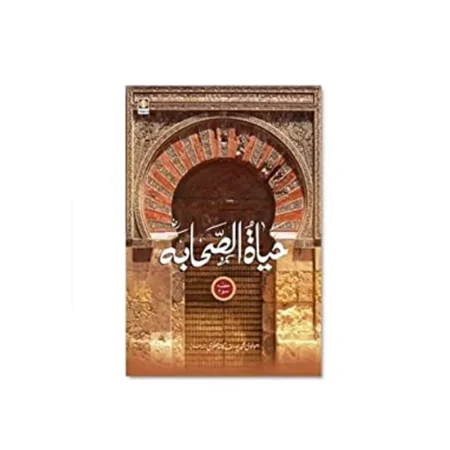
- Hayatus Sahaba Part -3 Hazrat Maulana Muhammad Yusuf Kandhalvi Idara (Urdu)
Conclusion
Hayatus Sahaba Part 3 by Hazrat Maulana Muhammad Yusuf Kandhalvi (RA) completes the journey of the Sahaba’s lives by showing how they carried Islam to the world.
- It records their dawah efforts, their bravery in jihad, their sacrifices, and their role as just and compassionate leaders.
This volume is not just a history of expansion; it is a blueprint for Muslim life and responsibility. It teaches that:
- Islam is not private—it is a universal mission.
- Sacrifice and struggle are necessary for spreading truth.
- Justice, honesty, and compassion are the foundation of Islamic influence.
- Ordinary people, with extraordinary faith, can change the course of history.
1 in stock

- Non-Violence And Peace-Building In Islam Maulana Wahiduddin Khan (Goodword) English
2 in stock

- Arabic Conversation Book Mohd. Harun Rashid (Goodword) English/Arabic
- Educational and Cognitive Benefits
- Enhanced Communication Skills:
- Learners develop reading, writing, speaking, and listening skills simultaneously.
- Vocabulary Retention:
- Thematic dialogues reinforce common words and phrases, improving memory retention.
- Critical Thinking and Comprehension:
- Comprehension exercises help learners analyze meaning and context.
- Cultural Competence:
- Understanding Arabic etiquette and customs enhances effective and polite communication.
- Confidence in Practical Use:
- Role-playing and conversational exercises build speaking confidence.
- Foundation for Advanced Studies:
- Prepares learners for formal Arabic courses, Modern Standard Arabic, or interaction with Arabic speakers.
2 in stock

- Madinah Arabic Reader Book 3 Dr.V.Abdur Rahim (Goodword) Arabic/English
4 in stock
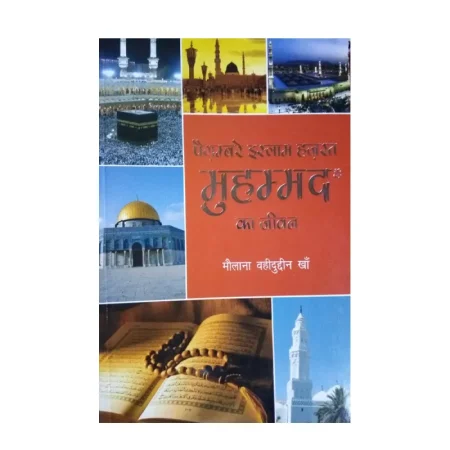
- Payghambar E Islam Hazrat Muhammad Ka Jeevan Maulana Wahiduddin Khan (Goodword) Hindi
1 in stock
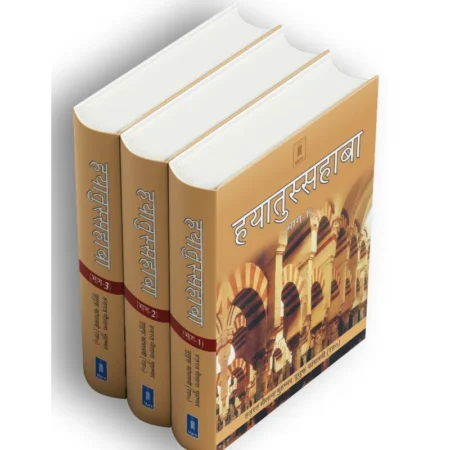
- Hayatus Sahaba Part 1,2&3 Hazrat Maulana Muhammad Yusuf Kandhalvi (Idara) Hindi
Overall Explanation and Themes
Taken together, the three parts of Hayatus Sahaba deliver timeless lessons:
- Faith and Conviction: The Sahaba’s faith was so strong that no torture, poverty, or danger could shake it.
- Love for the Prophet ﷺ: Their lives revolved around his guidance.
- Sacrifice and Simplicity: They abandoned worldly pleasures for the sake of Islam.
- Worship and Reliance on Allah: Their spiritual connection was the foundation of their strength.
- Global Responsibility: They considered spreading Islam a personal duty, not a communal option.
- Character and Justice: Their honesty and compassion won the hearts of nations.
3 in stock

- Arabic English Advanced Learner’S Dictionary J.G. Hava (Goodword) English/Arabic
- Features of the Dictionary
- Comprehensive Coverage – thousands of words and phrases with detailed meanings.
- Bilingual Clarity – Arabic words clearly matched with English equivalents.
- Root and Morphology Information – aids learners in understanding word formation.
- Contextual Examples – helps in using words appropriately in sentences.
- Advanced Usage Notes – explains subtle differences between synonyms.
- Academic and Professional Utility – suitable for research, translation, and advanced study.
1 in stock
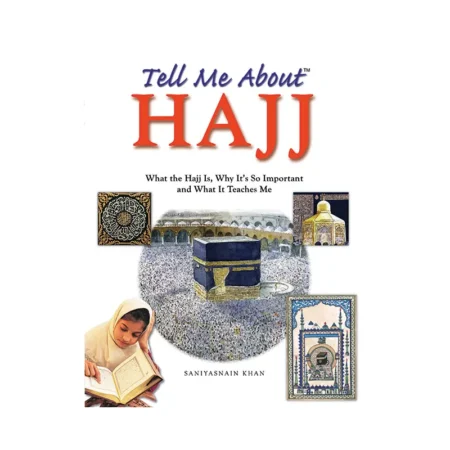
- Tell Me About Hajj (Hb) Saniyasnain Khan (Goodword) English
- Key Rituals of Hajj
- 1. Tawaf (Circumambulation around the Ka’bah)
- Pilgrims walk seven times around the Ka’bah, moving in a counterclockwise direction. This act symbolizes:
- Worship and devotion to Allah alone
- Unity among Muslims, all moving together in harmony
- Remembering the connection between humans and their Creator
2 in stock

- Conclusion
- Mukhtasar Tareekh Mashaikh-e-Awadh by Dr. Razi Ahmad Kamal is a concise yet comprehensive study of the spiritual, cultural, and social contributions of Sufi saints in Awadh.
- The book highlights the spiritual guidance, ethical influence, and societal reform brought about by the Mashaikh.
- Sufi saints acted as moral exemplars, educators, and cultural patrons, shaping Awadh’s identity and leaving a lasting legacy.
- The work demonstrates how Islamic spirituality, when integrated with social and cultural engagement, creates a balanced and harmonious society.
- Key Takeaways:
- Sufi saints of Awadh were central to both spiritual guidance and societal welfare.
- Their teachings emphasized ethics, devotion, and service to humanity.
- Different Sufi orders (Chishti, Qadiri, Suhrawardi, Naqshbandi) contributed unique perspectives and practices.
- Saints influenced governance, culture, education, and interfaith harmony.
- The legacy of Awadh’s Mashaikh continues to inspire spirituality, literature, and cultural identity in the region.
2 in stock

- Arabic Reading Lessons Duncan Forbes Goodword (English)
- Learning Benefits:
- Foundational Arabic Literacy:
- Children and beginners develop the ability to read Arabic letters, words, and sentences with confidence.
- Provides essential skills for Quranic reading and further Islamic studies.
- Improved Pronunciation:
- Focus on vowels, Sukun, and Tanween ensures learners pronounce letters and words accurately, which is essential for both general Arabic and Quranic reading.
- Enhanced Reading Fluency:
- Stepwise progression from letters to words and sentences builds speed and accuracy in reading.
- Learners can gradually read more complex texts with proper rhythm and intonation.
- Interactive Learning:
- Exercises and drills encourage active participation, making learning enjoyable.
- Visual and repetitive practice helps reinforce memory and understanding.
- Confidence Building:
- The structured lessons allow learners to track their progress, increasing motivation and self-confidence.
2 in stock
Reviews
There are no reviews yet.