
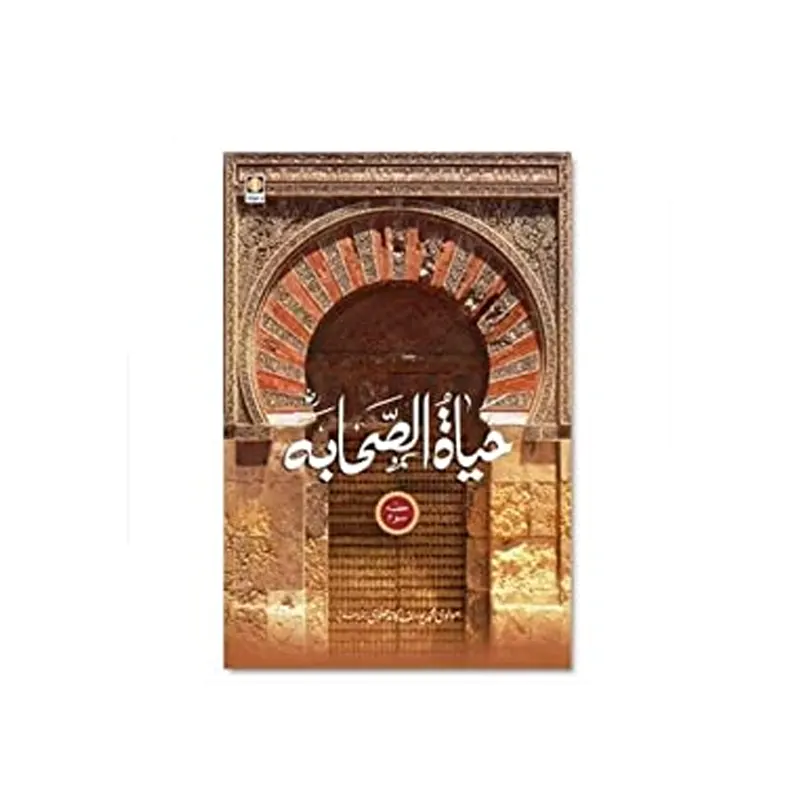
HAYATUS SAHABA PART -3 HAZRAT MAULANA MUHAMMAD YUSUF KANDHALVI IDARA (URDU)


₹275.00
- Hayatus Sahaba Part -3 Hazrat Maulana Muhammad Yusuf Kandhalvi Idara (Urdu)
Conclusion
Hayatus Sahaba Part 3 by Hazrat Maulana Muhammad Yusuf Kandhalvi (RA) completes the journey of the Sahaba’s lives by showing how they carried Islam to the world.
- It records their dawah efforts, their bravery in jihad, their sacrifices, and their role as just and compassionate leaders.
This volume is not just a history of expansion; it is a blueprint for Muslim life and responsibility. It teaches that:
- Islam is not private—it is a universal mission.
- Sacrifice and struggle are necessary for spreading truth.
- Justice, honesty, and compassion are the foundation of Islamic influence.
- Ordinary people, with extraordinary faith, can change the course of history.
Hayatus Sahaba Part -3 Hazrat Maulana Muhammad Yusuf Kandhalvi Idara (Urdu)
Introduction
Hayatus Sahaba is a monumental three-volume work authored by Hazrat Maulana Muhammad Yusuf Kandhalvi (RA), the second Ameer of the Tablighi Jamaat. It contains authentic narrations and stories from the lives of the Prophet’s Companions (Sahaba), presenting them as practical role models for Muslims. While the first volume focuses on faith and sacrifice, and the second on worship and simplicity, Part Three highlights the global mission of the Sahaba—their dawah (invitation to Islam), their jihad (struggle in the path of Allah), and their role in spreading Islam beyond Arabia.
This third volume is crucial because it shows how a small group of men and women, transformed by the Qur’an and Sunnah, became carriers of Islam to the world. It documents their courage, leadership, sacrifice, and moral excellence as they spread the message of Allah far and wide.
1. Dawah – The Mission of the Sahaba
One of the most powerful themes in Part 3 is the responsibility of dawah. The Companions understood Islam not just as personal worship but as a universal message for all humanity.
Carrying Islam Beyond Arabia: After the Prophet’s ﷺ passing, the Sahaba spread across the world. Some went to Persia, others to Rome (Byzantine lands), Africa, and Central Asia. They saw it as their duty to invite every nation to the worship of Allah.
Sacrifice in Dawah: These journeys were not luxurious. They left behind families, wealth, and comfort, facing hunger, travel hardships, and danger. Yet they considered this sacrifice a privilege.
Method of Dawah: The Sahaba did not spread Islam by force or empty words. Instead, they lived by example, displaying honesty, humility, and compassion. Their character attracted people more than their speeches.
Lesson: Dawah is not the responsibility of scholars alone; every Muslim has a duty to represent Islam through words and actions.
2. Jihad – Striving in the Path of Allah
Part 3 also highlights the struggles (jihad) of the Companions. Their battles were not for worldly power but to establish justice and allow the word of Allah to be freely heard.
Battlefield Bravery: Sahaba like Khalid ibn al-Walid (RA), known as “the Sword of Allah,” demonstrated military brilliance and unmatched courage. In battles against far larger forces, the Sahaba’s unity and faith led them to victory.
Sacrifice of Life: Many Companions embraced martyrdom. They did not see death as an end but as a meeting with Allah. For example, at the Battle of Yarmouk, severely injured Sahaba passed water to one another, preferring their brother’s comfort over their own life.
Balance of Justice: Even in war, the Sahaba followed strict ethical guidelines taught by the Prophet ﷺ: not harming civilians, women, children, or destroying property unnecessarily. Their moral conduct distinguished them from other armies of the time.
Lesson: Jihad is broader than warfare—it includes sacrifice, service, and struggle for the cause of Allah.
3. Morality and Justice
The third volume also emphasizes the moral excellence and justice of the Sahaba.
Governance with Integrity: When the Sahaba became leaders of newly conquered lands, they ruled with humility and fairness. Umar ibn al-Khattab (RA), as Caliph, lived simply and ensured justice for all, Muslim or non-Muslim.
Honesty in Dealings: Wherever the Sahaba went, people were impressed by their honesty and fairness in trade, governance, and social relations. Islam spread more through their character than through the sword.
Compassion and Brotherhood: The Sahaba cared for the poor, freed slaves, and treated even enemies with kindness once they accepted peace. Their brotherhood was so strong that the Ansar (helpers of Madinah) shared their homes and wealth with the Muhajirun (migrants from Makkah).
Lesson: True dawah and jihad are meaningless without justice, honesty, and compassion.
4. Transformation of Civilizations
Part 3 illustrates how the Sahaba’s efforts transformed the course of history:
From Weakness to Global Reach: Within a few decades, Islam spread from the Arabian Peninsula to parts of Africa, Europe, and Asia. This expansion was not driven by wealth or military power but by faith and sacrifice.
Role Models for Leadership: Figures like Abu Bakr (RA), Umar (RA), Uthman (RA), and Ali (RA) set timeless examples of leadership—rooted in service, humility, and accountability before Allah.
Lasting Impact: The values of justice, equality, and worship that the Sahaba spread laid the foundation of Islamic civilization for centuries to come.
Lesson: A small group, if sincere and faithful, can change the world.
5. Lessons for the Modern Muslim
Though Part 3 is about history, its lessons are deeply relevant today:
Responsibility of Dawah: Every Muslim must carry Islam’s message in their daily life—at work, in family, and in society—through good conduct and sincerity.
Sacrifice is Essential: The Sahaba achieved greatness because they gave up wealth, comfort, and sometimes life itself. Today’s Muslims must also sacrifice time, ego, and materialism for Islam.
Justice is Non-Negotiable: The Sahaba proved that power without justice is meaningless. Modern Muslims must be ambassadors of fairness and honesty.
Strength from Faith: The Sahaba’s victories came not from numbers or resources but from unshakable faith in Allah. Today, faith remains the real source of strength.
Conclusion
Hayatus Sahaba Part 3 by Hazrat Maulana Muhammad Yusuf Kandhalvi (RA) completes the journey of the Sahaba’s lives by showing how they carried Islam to the world. It records their dawah efforts, their bravery in jihad, their sacrifices, and their role as just and compassionate leaders.
This volume is not just a history of expansion; it is a blueprint for Muslim life and responsibility. It teaches that:
Islam is not private—it is a universal mission.
Sacrifice and struggle are necessary for spreading truth.
Justice, honesty, and compassion are the foundation of Islamic influence.
Ordinary people, with extraordinary faith, can change the course of history.
For today’s Muslims, Hayatus Sahaba Part 3 is both an inspiration and a challenge. It calls us to revive the spirit of the Sahaba—living not for personal gain but for the mission of Islam, with sincerity, sacrifice, and service to humanity.
✅ This is a 1000-word English explanation of Hayatus Sahaba Part 3 (Urdu original).
Would you like me to now prepare separate full-length 1000-word explanations for Part 1 and Part 2 as well, so you’ll have detailed individual summaries for all three volumes?
| Weight | 300 g |
|---|---|
| Dimensions | 16 × 10 × 8 cm |
Only logged in customers who have purchased this product may leave a review.
Related Products
- Masnoon Aur Maqbool Duaein Munshi Anees Ahmad Idara (English)
6 in stock

- Kitaabul Fiqh – Diin Kii Baate’ – English | A concise manual on Fiqh of Imaam Abuu Haniifah, Nu’maan bin Thaabit, rahimahullaah
Maulana Ashraf Ali Thanvi Rah
2 in stock

- Hardcover
- Publisher: idara impex (2013)
- Language: English
1 in stock

- Bahishti Zewar : Heavenly Ornaments (ENGLISH) Ashraf Ali Thanvi’s best selling book of advice specially for the Muslim Woman.
1 in stock
- Qassasul Ambiya Wa Ashabe Saliheen Maulana Muhammad Hifzur Rehman Seeohwarwi Idara (Urdu)
- Prophet Adam (AS): The book details his creation, the test in Paradise, and the lessons of obedience, repentance, and divine mercy.
- Prophet Nuh (AS): His patience in calling his people to monotheism and his perseverance in the face of rejection teaches the importance of steadfastness.
- Prophet Ibrahim (AS): His devotion, sacrifice, and trust in Allah serve as a model of complete submission and reliance on God.
- Prophet Musa (AS) and Prophet Isa (AS): Their struggles against oppression, leadership, and miracles highlight the significance of courage, justice, and divine guidance.
- Prophet Muhammad (SAW): The final prophet’s life, mission, and ethical conduct are presented as the ultimate model of virtue, wisdom, and spiritual guidance.
1 in stock

- Paperback
- Publisher: idara impex (2012)
8 in stock

- 26 Chabbis Surtein Momin Ka Hathyar Allah Ki Panah Muhammad Yunus Idara (Urdu)
4 in stock

- Product Code ID 6693
- Condition New
- Binding Hard Bound
- Genre Fiqh
- publisher idara impex
- Publication Date 2017
- Language Hind
2 in stock
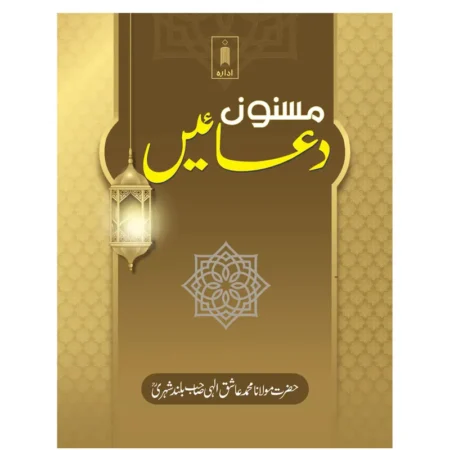
- Masnoon Duaein Maulana Muhammad Ashiq Elahi Bulandshahri Idara (Urdu)
6 in stock

- Tarikh-E-Islam Akbar Shah Khan Najibabadi Al Hasanat (Hindi) 2 Volume Set
- Key Takeaways:
- Islam emerged in a challenging socio-political environment and transformed Arabian society through spiritual and ethical teachings.
- Prophet Muhammad’s (PBUH) leadership combined moral integrity, diplomacy, and strategic acumen.
- The Rashidun Caliphs laid the foundations of governance, justice, and expansion that shaped early Islamic history.
- Umayyad and Abbasid dynasties contributed to political consolidation and cultural flourishing.
- Islamic history provides timeless lessons in leadership, justice, morality, and social responsibility.
- Historical reflection is essential for understanding both the successes and pitfalls of past Muslim societies.
1 in stock

- Key Features and Benefits
- Supports Accurate Recitation:
- Bold letters and correct orthography ensure proper pronunciation and Tajweed adherence.
- Supports long recitation sessions while maintaining concentration and spiritual connection.
- Facilitates Memorization (Hifz):
- Clear verse numbering, organized layout, and prominent Surah divisions help learners memorize efficiently.
- Durable paper ensures repeated use without damage, supporting long-term Hifz practice.
- Durable and Long-Lasting:
- High-quality paper and binding make this edition resilient to frequent daily use.
- Suitable for personal devotion, mosque use, or educational purposes.
- Easy Navigation:
- Surah titles, Ayah numbers, and Juz markers help plan systematic recitation schedules.
- Sajdah markers guide proper prostration during Salah, ensuring ritual compliance.
- Gift-Worthy Edition:
- Elegant design, premium materials, and clear layout make this edition suitable for Hifz completion, religious milestones, Eid, or personal devotion.
4 in stock
Reviews
There are no reviews yet.