

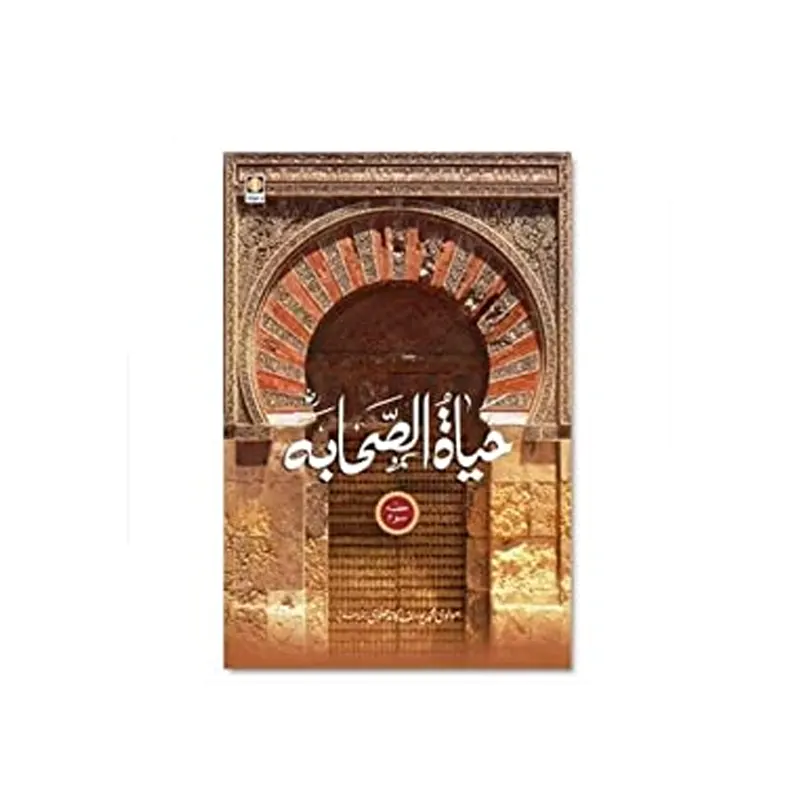
Hayatus Sahaba Part -2 Hazrat Maulana Muhammad Yusuf Kandhalvi Idara (Urdu)

Original price was: ₹275.00.₹245.00Current price is: ₹245.00.
- Hayatus Sahaba Part -2 Hazrat Maulana Muhammad Yusuf Kandhalvi Idara (Urdu)
Conclusion
Hayatus Sahaba Part 2 provides an extraordinary glimpse into the spiritual life of the Sahaba.
- It shows that their greatness did not come only from military victories or leadership but from their deep devotion to Allah, sincerity in worship, love for the Qur’an, constant remembrance, simplicity, and compassion for humanity.
This volume teaches Muslims that:
- Worship is the foundation of strength.
- The Qur’an must guide daily life.
- Supplication and trust in Allah are the key to success.
- Simplicity and detachment from materialism strengthen faith.
- Spiritual devotion must translate into service and brotherhood.
Out of stock
Hayatus Sahaba Part -2 Hazrat Maulana Muhammad Yusuf Kandhalvi Idara (Urdu)
Introduction
Hayatus Sahaba is one of the most inspiring works in Islamic literature. Compiled by Hazrat Maulana Muhammad Yusuf Kandhalvi (RA), it brings together authentic narrations about the lives, sacrifices, and virtues of the Companions of Prophet Muhammad ﷺ. The three parts of this monumental collection each highlight different aspects of their lives.
While Part 1 focuses on the foundations of faith (iman), sacrifices, and migration (hijrah), Part 2 turns the spotlight on the inner life of the Sahaba—their worship (‘ibadah), their deep relationship with Allah, their spiritual discipline, their devotion to the Qur’an, their sincerity in supplications, and their unwavering trust (tawakkul) in Allah.
This second volume provides an intimate look into the spiritual practices that made the Sahaba the purest generation of Muslims and role models for all time.
1. Worship (‘Ibadah) in the Life of the Sahaba
The Sahaba were not merely warriors or leaders; they were first and foremost servants of Allah.
Prayers (Salah): They gave extraordinary importance to salah. They did not treat it as a ritual but as a living connection with Allah. Narrations in this volume show that even in the midst of battle, they would not neglect prayer. For them, salah was the pillar of their lives.
Night Worship (Tahajjud): Many Companions would stand for long hours in prayer at night, reciting the Qur’an until their feet swelled. This shows their intense love for Allah and their desire to be close to Him.
Fasting (Sawm): Beyond Ramadan, the Sahaba observed voluntary fasts, sometimes fasting alternate days. They viewed fasting as a way to discipline the soul and detach from worldly desires.
Remembrance (Dhikr): Constant remembrance of Allah was a hallmark of their character. Whether walking, working, or resting, their tongues were moist with words of glorification and gratitude.
Lesson: True worship is not just formal practice but a heart-deep devotion that transforms character.
2. Connection with the Qur’an
The second volume highlights how central the Qur’an was in the daily lives of the Sahaba.
Recitation: The Companions recited the Qur’an with deep reflection (tadabbur). They wept when listening to its verses, feeling as if Allah was addressing them directly.
Memorization: Many Sahaba memorized large portions, while others committed the entire Qur’an to memory. For them, the Qur’an was not just for rituals but a living guide.
Living by the Qur’an: They acted upon its teachings immediately. If a verse was revealed, they implemented it without hesitation. Their lives became practical commentaries of the Qur’an.
Teaching the Qur’an: They took the responsibility of teaching it to their children, families, and communities, ensuring its preservation across generations.
Lesson: The Qur’an must not remain in bookshelves—it must live in the believer’s heart, speech, and actions.
3. Du’a (Supplication) and Tawakkul (Reliance on Allah)
Another theme of Part 2 is the Sahaba’s reliance on Allah.
Supplications: They would turn to Allah in every moment of difficulty and joy. Before battles, journeys, or even in small matters, they sought Allah’s help through heartfelt du’a.
Trust in Allah: They trusted Allah so deeply that material resources seemed secondary. When they had nothing, they still believed Allah would provide. For example, during hunger, they tied stones to their stomachs, yet continued serving the deen.
Answered Du’as: Many times, Allah accepted their prayers in miraculous ways. This instilled even greater faith in future generations.
Lesson: A believer’s real strength lies in prayer and dependence on Allah, not worldly means.
4. Simplicity and Detachment from the World
The Companions lived with remarkable simplicity, despite opportunities for wealth after Islamic conquests.
Simple Lives: They often wore patched clothes, ate simple food, and slept on the ground. Comfort was not their goal—pleasing Allah was.
Generosity: When wealth came, they spent most of it in the path of Allah. Abu Bakr (RA) gave all his wealth in charity, Umar (RA) gave half, and Uthman (RA) equipped entire armies.
Avoiding Luxury: They feared that indulging in luxury would weaken their spirituality. Thus, even leaders like Caliph Umar (RA) lived austerely.
Lesson: True honor is not in material possessions but in taqwa (piety) and simplicity.
5. Brotherhood and Community Life
The volume also emphasizes how worship and devotion translated into strong social bonds.
Brotherhood of Faith: The Muhajirun (migrants) and Ansar (helpers) exemplified true Islamic brotherhood by sharing homes, wealth, and food.
Forgiveness and Mercy: They forgave one another’s faults, prioritized unity, and avoided unnecessary disputes.
Helping Others: Worship for them was incomplete without serving people—feeding the hungry, caring for orphans, and assisting the weak.
Lesson: Spiritual devotion must manifest in compassion and service to society.
6. The Balance of Fear and Hope
The Sahaba lived between fear of Allah’s displeasure and hope in His mercy.
Fear of Accountability: Despite their high status, they feared Allah’s judgment. Some wept the entire night out of concern for the Hereafter.
Hope in Mercy: At the same time, they never despaired. They trusted Allah’s forgiveness and remained optimistic.
Result: This balance made them humble, sincere, and constantly striving to improve.
Lesson: A believer should neither feel overconfident nor hopeless, but live between hope and fear.
7. Spiritual Discipline and Struggle Against the Nafs
Part 2 also highlights how the Sahaba disciplined their inner selves.
Self-Control: They restrained anger, controlled desires, and guarded their tongues.
Patience (Sabr): In hunger, poverty, persecution, and battle, they demonstrated patience and endurance.
Gratitude (Shukr): Whether in hardship or prosperity, their hearts overflowed with gratitude.
Lesson: Spiritual strength comes from training the self (nafs) and making it submit to Allah.
8. Impact of Their Devotion
The Sahaba’s spiritual depth was not isolated—it influenced entire societies.
Attracting People to Islam: Their humility and piety won the hearts of non-Muslims. Many embraced Islam not after debates, but after witnessing their honesty and worship.
Foundation of Islamic Civilization: Their devotion laid the foundation for centuries of Islamic scholarship, governance, and spirituality.
Lesson: True worship transforms not only individuals but entire communities.
Conclusion
Hayatus Sahaba Part 2 provides an extraordinary glimpse into the spiritual life of the Sahaba. It shows that their greatness did not come only from military victories or leadership but from their deep devotion to Allah, sincerity in worship, love for the Qur’an, constant remembrance, simplicity, and compassion for humanity.
This volume teaches Muslims that:
Worship is the foundation of strength.
The Qur’an must guide daily life.
Supplication and trust in Allah are the key to success.
Simplicity and detachment from materialism strengthen faith.
Spiritual devotion must translate into service and brotherhood.
The Sahaba’s lives remind us that the true measure of success is closeness to Allah. Their example calls modern Muslims to revive that same devotion—balancing worship, simplicity, and service, while trusting Allah in all circumstances.
| Weight | 300 g |
|---|---|
| Dimensions | 16 × 10 × 8 cm |
Only logged in customers who have purchased this product may leave a review.
Related Products

- Ahsanul Qawaid Mohammad Yunus Idara (Arabic/English)
- Spiritual and Educational Benefits
- Enhanced Qur’anic Understanding – Grammar knowledge allows readers to discern subtle meanings, differentiate between literal and figurative expressions, and interpret verses accurately.
- Improved Recitation and Tajweed – Understanding syntax helps with proper pauses, elongations, and emphasis during recitation.
- Facilitates Memorization (Hifz) – Recognizing grammatical patterns aids in memorization by providing contextual understanding, rather than rote learning.
- Bridge to Tafsir (Exegesis) – Knowledge of Arabic grammar is essential for Tafsir studies. By mastering grammar, readers can appreciate scholars’ explanations and contextual meanings more deeply.
- Practical Use for Islamic Education – The book is suitable for students, teachers, and madrasas, providing a structured grammar curriculum for Qur’anic studies.
40 in stock

- 26 Chabbis Surtein Momin Ka Hathyar Allah Ki Panah Muhammad Yunus Idara (Urdu)
4 in stock

- Bahishti Zewar : Heavenly Ornaments (ENGLISH) Ashraf Ali Thanvi’s best selling book of advice specially for the Muslim Woman.
1 in stock

- Hardcover
- Publisher: idara impex (2013)
- Language: English
1 in stock

- Paperback
- Publisher: idara impex (2012)
8 in stock
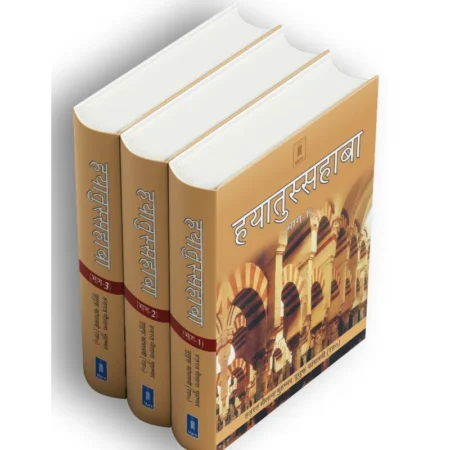
- Hayatus Sahaba Part 1,2&3 Hazrat Maulana Muhammad Yusuf Kandhalvi (Idara) Hindi
Overall Explanation and Themes
Taken together, the three parts of Hayatus Sahaba deliver timeless lessons:
- Faith and Conviction: The Sahaba’s faith was so strong that no torture, poverty, or danger could shake it.
- Love for the Prophet ﷺ: Their lives revolved around his guidance.
- Sacrifice and Simplicity: They abandoned worldly pleasures for the sake of Islam.
- Worship and Reliance on Allah: Their spiritual connection was the foundation of their strength.
- Global Responsibility: They considered spreading Islam a personal duty, not a communal option.
- Character and Justice: Their honesty and compassion won the hearts of nations.
1 in stock

- Qassasul Ambiya Wa Ashabe Saliheen Maulana Muhammad Hifzur Rehman Seeohwarwi Idara (Urdu)
- Prophet Adam (AS): The book details his creation, the test in Paradise, and the lessons of obedience, repentance, and divine mercy.
- Prophet Nuh (AS): His patience in calling his people to monotheism and his perseverance in the face of rejection teaches the importance of steadfastness.
- Prophet Ibrahim (AS): His devotion, sacrifice, and trust in Allah serve as a model of complete submission and reliance on God.
- Prophet Musa (AS) and Prophet Isa (AS): Their struggles against oppression, leadership, and miracles highlight the significance of courage, justice, and divine guidance.
- Prophet Muhammad (SAW): The final prophet’s life, mission, and ethical conduct are presented as the ultimate model of virtue, wisdom, and spiritual guidance.
1 in stock

- Key Features and Benefits
- Supports Accurate Recitation:
- Bold letters and correct orthography ensure proper pronunciation and Tajweed adherence.
- Supports long recitation sessions while maintaining concentration and spiritual connection.
- Facilitates Memorization (Hifz):
- Clear verse numbering, organized layout, and prominent Surah divisions help learners memorize efficiently.
- Durable paper ensures repeated use without damage, supporting long-term Hifz practice.
- Durable and Long-Lasting:
- High-quality paper and binding make this edition resilient to frequent daily use.
- Suitable for personal devotion, mosque use, or educational purposes.
- Easy Navigation:
- Surah titles, Ayah numbers, and Juz markers help plan systematic recitation schedules.
- Sajdah markers guide proper prostration during Salah, ensuring ritual compliance.
- Gift-Worthy Edition:
- Elegant design, premium materials, and clear layout make this edition suitable for Hifz completion, religious milestones, Eid, or personal devotion.
4 in stock

- Hardcover
- Publisher: Idara Impex (2012)
- Language: Hindi
2 in stock

- In The Shade Of The Holy Qur’An Sayyid Qutb Vol.30 Idara (English)
- Significance of Volume 30
- Concluding Lessons of the Qur’ān:
- The final surahs emphasize spiritual purity, ethical conduct, gratitude, and divine reliance, summarizing the core moral and spiritual messages.
- Accessible for Daily Reflection:
- Short, powerful surahs make this volume ideal for meditation, memorization, and application in daily life.
- Bridging Traditional and Modern Understanding:
- Sayyid Qutb’s tafsīr links classical meanings with contemporary human challenges, making it relevant for modern readers.
- Strengthening Faith and Moral Character:
- Encourages readers to internalize faith, uphold moral principles, and maintain ethical behavior in all aspects of life.
2 in stock

- Pakistani Panj Surah Idara (Arabic)
- Educational Significance
- Foundation for Qur’ānic Literacy
- Helps learners read, memorize, and recite basic Surahs fluently.
- Ease of Memorization
- Short length and thematic focus make it easy for children and beginners to memorize.
- Practical for Daily Life
- Surahs are used in Salah, morning/evening supplications, and protection prayers, giving learners immediate application.
- Spiritual Growth
- Provides reflection on divine guidance, protection, and gratitude, nurturing faith and reliance on Allah.
- Teacher-Friendly Resource
- Structured compilation makes it easy for teachers and parents to guide students step-by-step.
2 in stock

- Biography Of Hadrat Moulana Muhammad Yusuf Sahib(R.A) Amire Tabligh Maulana Mufti Azizur-Rehman Bijnori Idara (English)
- 1. Early Life and Background
- Hadrat Moulana Muhammad Yusuf Sahib (R.A) was born in the late 19th or early 20th century in India, into a family committed to Islamic learning and piety. Maulana Mufti Azizur-Rehman Bijnori highlights that his upbringing in a spiritually rich environment laid the foundation for his lifelong dedication to Islamic scholarship and da‘wah (missionary work).
- From an early age, he displayed qualities of sincerity, devotion, discipline, and humility. His family emphasized both religious education and moral training, cultivating in him a love for Qur’an, Hadith, and the practices of the Prophet Muhammad (S.A.W.).
- 2. Education and Religious Formation
- The biography emphasizes Moulana Muhammad Yusuf Sahib’s thorough grounding in Islamic sciences. He studied:
- Tafsir (Qur’anic exegesis)
- Hadith (Prophetic traditions)
- Fiqh (Islamic jurisprudence)
- Aqidah (Islamic creed)
- His teachers recognized his intelligence, piety, and commitment to learning, which allowed him to excel in both religious knowledge and practical application. This strong scholarly foundation later helped him lead, guide, and inspire followers in Tablighi activities across India and beyond.
- 3. Early Involvement in Tabligh Work
- The book narrates Moulana Yusuf Sahib’s early participation in Tablighi activities under the guidance of senior scholars and leaders of the movement. He actively engaged in:
- Missionary journeys (khuruj): Traveling to various towns and villages to invite Muslims to observe Islamic practices.
- Spiritual training of disciples: Teaching sincerity, humility, and moral reform.
- Organization and administration: Assisting in the structured planning of Tablighi missions.
3 in stock
Reviews
There are no reviews yet.