
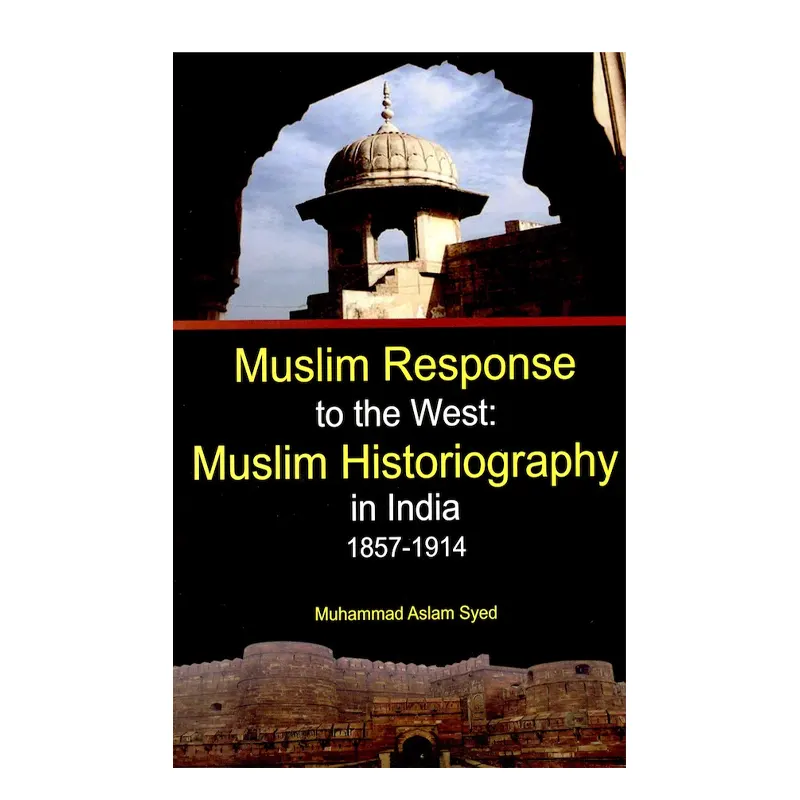
Muslim Response To The West Muslim Historiography In India 1857-1914 Muhammad Aslam Syed (Adam) English
Original price was: ₹300.00.₹240.00Current price is: ₹240.00.
- Muslim Response To The West Muslim Historiography In India 1857-1914 Muhammad Aslam Syed (Adam) English
- Conclusion
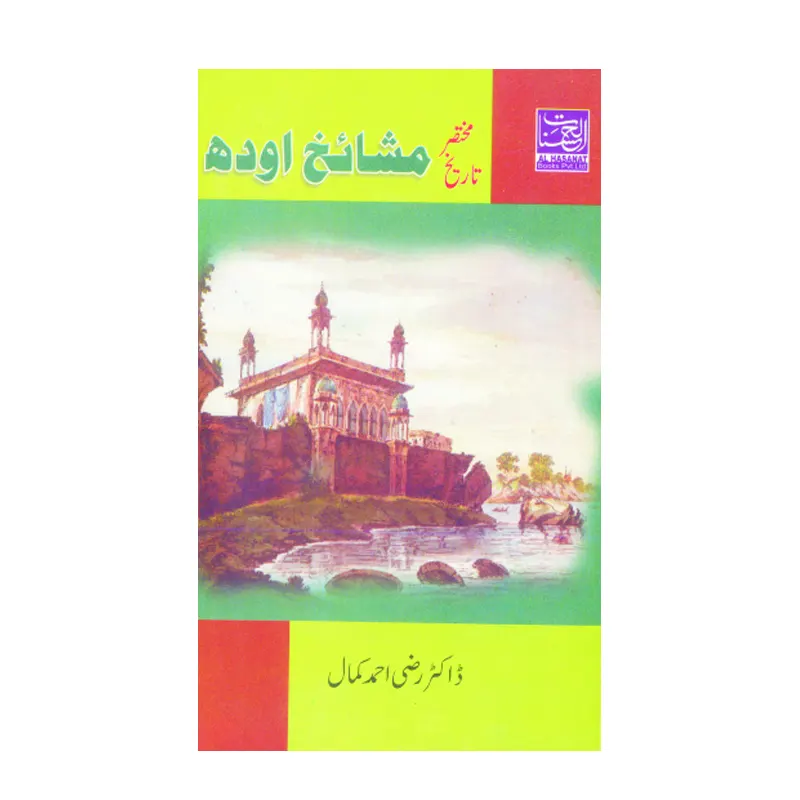
- Mukhtasar Tareekh Mashaikh-e-Awadh by Dr. Razi Ahmad Kamal is a concise yet comprehensive study of the spiritual, cultural, and social contributions of Sufi saints in Awadh.
- The book highlights the spiritual guidance, ethical influence, and societal reform brought about by the Mashaikh.
- Sufi saints acted as moral exemplars, educators, and cultural patrons, shaping Awadh’s identity and leaving a lasting legacy.
- The work demonstrates how Islamic spirituality, when integrated with social and cultural engagement, creates a balanced and harmonious society.
- Key Takeaways:
- Sufi saints of Awadh were central to both spiritual guidance and societal welfare.
- Their teachings emphasized ethics, devotion, and service to humanity.
- Different Sufi orders (Chishti, Qadiri, Suhrawardi, Naqshbandi) contributed unique perspectives and practices.
- Saints influenced governance, culture, education, and interfaith harmony.
- The legacy of Awadh’s Mashaikh continues to inspire spirituality, literature, and cultural identity in the region.
Out of stock
Muslim Response To The West Muslim Historiography In India 1857-1914 Muhammad Aslam Syed (Adam) English
Introduction
Mukhtasar Tareekh Mashaikh-e-Awadh by Dr. Razi Ahmad Kamal is a concise yet comprehensive account of the lives, contributions, and spiritual legacy of the Sufi saints (Mashaikh) of Awadh, a historically significant region in northern India. The book traces the development of Sufism in Awadh, emphasizing both its spiritual and socio-cultural impact on the region.
Awadh (modern-day Lucknow and surrounding areas) has long been a center of Islamic learning, culture, and spirituality. The book highlights how Sufi saints played a pivotal role in spreading Islamic teachings, promoting moral reform, and integrating spiritual values into society.
Dr. Kamal’s work is notable for combining historical research with biographical sketches, offering readers both chronological narratives and spiritual insights.
1. Historical Context of Awadh
1.1 Geographical and Cultural Significance
Awadh’s fertile lands and strategic location made it a hub for political, economic, and cultural activity.
During medieval times, it attracted scholars, mystics, poets, and political leaders.
1.2 Introduction of Sufism in Awadh
Sufism reached Awadh through traveling saints, disciples of famous Chishti and Qadiri masters, and missionary efforts from other regions of India and Central Asia.
The arrival of Sufi saints coincided with the rise of Muslim rule, creating a synthesis of religious, cultural, and social influences.
Lesson: The historical and cultural environment of Awadh provided fertile ground for the growth of Sufi traditions, fostering both spiritual and social reform.
2. Early Sufi Saints of Awadh
Dr. Kamal begins by introducing the early saints who established Sufi networks in Awadh:
2.1 Spiritual Lineage (Silsila)
Saints were often disciples of prominent Sufi orders, such as the Chishti, Qadiri, Suhrawardi, and Naqshbandi orders.
The emphasis was on spiritual training, moral discipline, and service to humanity.
2.2 Key Figures
Early saints emphasized asceticism, devotion, and the purification of the heart.
Their khanqahs (Sufi lodges) became centers of spiritual instruction, charity, and community gathering.
Lesson: The early Sufi saints laid the foundation for a sustained spiritual tradition in Awadh, emphasizing inner transformation and social responsibility.
3. Role of Sufi Saints in Society
Dr. Kamal highlights the multifaceted contributions of the Mashaikh:
3.1 Spiritual Guidance
Saints provided moral and ethical guidance to rulers, nobles, and common people.
Their teachings emphasized honesty, compassion, humility, and devotion to God.
3.2 Social Reform
Sufi saints promoted welfare, education, and care for the poor and marginalized.
Khanqahs often provided food, shelter, and spiritual instruction, fostering communal harmony.
3.3 Cultural Contributions
Saints encouraged poetry, calligraphy, and literary gatherings (mushairas) as expressions of devotion and culture.
They facilitated the synthesis of Persian, Arabic, and local Indian traditions in literature, architecture, and music.
Lesson: Sufi saints were not merely spiritual guides; they were catalysts for social cohesion, cultural enrichment, and ethical governance.
4. Prominent Mashaikh of Awadh
The book presents detailed biographies of key saints, highlighting their spiritual achievements, teachings, and societal impact:
4.1 Chishti Saints
Advocated love, tolerance, and service.
Known for qawwali and devotional poetry as tools of spiritual expression.
4.2 Qadiri and Suhrawardi Saints
Focused on discipline, spiritual exercises (muraqaba), and theological instruction.
Acted as advisors to rulers and scholars, influencing both religious and political life.
4.3 Naqshbandi Saints
Emphasized silent dhikr (remembrance of God) and strict adherence to Sharia.
Played a role in education, jurisprudence, and the propagation of Islamic scholarship.
Lesson: Each Sufi order contributed uniquely to Awadh’s spiritual and social landscape, creating a diverse and harmonious spiritual ecosystem.
5. Interaction with Rulers and Society
Sufi saints maintained cordial relations with regional rulers, including Nawabs of Awadh.
Their guidance helped shape governance, ethics, and public welfare policies.
Saints also mediated disputes, promoted religious tolerance, and encouraged interfaith harmony.
Lesson: The influence of Mashaikh extended beyond spiritual realms into governance, diplomacy, and social harmony.
6. Spiritual Teachings and Practices
Dr. Kamal emphasizes the practical aspects of Sufi teachings:
6.1 Ethical Principles
Humility, patience, honesty, and detachment from worldly desires were central to the saints’ teachings.
6.2 Devotional Practices
Dhikr (remembrance of God), meditation, and spiritual retreats were common practices.
Saints emphasized the balance between spiritual devotion and social responsibility.
6.3 Moral Lessons
Stories of miracles (karamat), personal discipline, and selfless service illustrate the transformative power of Sufi guidance.
Lesson: The spiritual practices of Mashaikh were designed to cultivate both personal piety and social ethics.
7. Legacy of Sufism in Awadh
The traditions established by the Mashaikh of Awadh continued to influence society even during colonial times.
Their khanqahs remained centers of education, charity, and spiritual instruction.
The cultural synthesis fostered by Sufism shaped Awadh’s music, poetry, architecture, and literature, leaving an enduring mark on regional identity.
Lesson: Sufi saints ensured that Islamic spirituality in Awadh was both deeply personal and socially transformative, creating a legacy that persisted across generations.
8. Methodology of the Book
Dr. Kamal employs historical research, combining biographical narratives with references from manuscripts, oral traditions, and historical records.
Emphasis is placed on chronology, spiritual lineage, and socio-cultural impact, providing readers with a holistic understanding of the Mashaikh of Awadh.
The book integrates historical fact with ethical and spiritual reflection, making it both informative and inspirational.
Conclusion
Mukhtasar Tareekh Mashaikh-e-Awadh by Dr. Razi Ahmad Kamal is a concise yet comprehensive study of the spiritual, cultural, and social contributions of Sufi saints in Awadh.
The book highlights the spiritual guidance, ethical influence, and societal reform brought about by the Mashaikh.
Sufi saints acted as moral exemplars, educators, and cultural patrons, shaping Awadh’s identity and leaving a lasting legacy.
The work demonstrates how Islamic spirituality, when integrated with social and cultural engagement, creates a balanced and harmonious society.
Key Takeaways:
Sufi saints of Awadh were central to both spiritual guidance and societal welfare.
Their teachings emphasized ethics, devotion, and service to humanity.
Different Sufi orders (Chishti, Qadiri, Suhrawardi, Naqshbandi) contributed unique perspectives and practices.
Saints influenced governance, culture, education, and interfaith harmony.
The legacy of Awadh’s Mashaikh continues to inspire spirituality, literature, and cultural identity in the region.
This book is essential for students, researchers, and readers seeking a holistic understanding of Sufism in Awadh, its historical development, and enduring impact on society.
| Weight | 300 g |
|---|---|
| Dimensions | 16 × 10 × 8 cm |
Only logged in customers who have purchased this product may leave a review.
Related Products

- Prophetic Way Of Treatment Badar Azimabadi (Adam) English
1 in stock
- Hayatus Sahaba Part -3 Hazrat Maulana Muhammad Yusuf Kandhalvi Idara (Urdu)
Conclusion
Hayatus Sahaba Part 3 by Hazrat Maulana Muhammad Yusuf Kandhalvi (RA) completes the journey of the Sahaba’s lives by showing how they carried Islam to the world.
- It records their dawah efforts, their bravery in jihad, their sacrifices, and their role as just and compassionate leaders.
This volume is not just a history of expansion; it is a blueprint for Muslim life and responsibility. It teaches that:
- Islam is not private—it is a universal mission.
- Sacrifice and struggle are necessary for spreading truth.
- Justice, honesty, and compassion are the foundation of Islamic influence.
- Ordinary people, with extraordinary faith, can change the course of history.
1 in stock

- Islam & Feudalism The Economics Of Riba Interest And Profit Dr Ziaul Haque (Adam) English
2 in stock

- Islami Tareekh Muhammad Abdul Hayi Al Hasanat (Urdu)
- Conclusion
- Islami Tareekh by Muhammad Abdul Hayi provides a comprehensive overview of Islamic history in a manner that is both educational and spiritually instructive. Key contributions of the book include:
- Chronological Clarity: Covers the life of Prophet Muhammad ﷺ, the Rashidun Caliphs, major dynasties, and regional expansions.
- Integration of Faith and History: Events are analyzed not only historically but also for moral and spiritual lessons.
- Cultural and Intellectual Perspective: Highlights achievements in science, philosophy, literature, and governance.
- Guidance for Modern Muslims: Encourages understanding of historical models of leadership, justice, and piety.
- The book is particularly valuable for Urdu-speaking readers seeking a thorough understanding of Islamic history, from its inception to the challenges faced by Muslim societies in later centuries.
- Key Takeaways:
- Islam emphasizes faith, justice, knowledge, and social welfare.
- Leadership must combine morality, courage, and service to the people.
- Intellectual and cultural achievements are integral to the strength of Muslim civilization.
- History offers lessons in resilience, ethics, and spiritual development.
1 in stock

- Mercy For Mankind Rahmatul-Lil-Alamin Qazi Sulaiman Mansoorpuri (Adam) English
1 in stock
- Hayatus Sahaba Part -1 Hazrat Maulana Muhammad Yusuf Kandhalvi Idara (Urdu)
Overarching Themes Across All Three Volumes
- Faith and Conviction
The Sahaba were ordinary people transformed into extraordinary personalities because of their unshakable belief in Allah and the Prophet ﷺ. - Sacrifice and Struggle
They gave up wealth, family ties, and even their lives for Islam. Their sacrifices laid the foundation of the global Muslim Ummah. - Worship and Spirituality
Their strength came from constant connection with Allah through salah, Qur’an, and dhikr. - Simplicity and Humility
Despite wealth or authority, they lived simply and avoided arrogance. - Dawah and Responsibility
They understood Islam as a global message and considered it their duty to spread it everywhere. - Justice and Character
Their honesty, compassion, and fairness won people’s hearts more than any sword or wealth.
- Faith and Conviction
3 in stock

- Islam Christianity And Judaism Moid Siddiqui (Adam) English
1 in stock

- Conclusion
- Mukhtasar Tareekh Mashaikh-e-Awadh by Dr. Razi Ahmad Kamal is a concise yet comprehensive study of the spiritual, cultural, and social contributions of Sufi saints in Awadh.
- The book highlights the spiritual guidance, ethical influence, and societal reform brought about by the Mashaikh.
- Sufi saints acted as moral exemplars, educators, and cultural patrons, shaping Awadh’s identity and leaving a lasting legacy.
- The work demonstrates how Islamic spirituality, when integrated with social and cultural engagement, creates a balanced and harmonious society.
- Key Takeaways:
- Sufi saints of Awadh were central to both spiritual guidance and societal welfare.
- Their teachings emphasized ethics, devotion, and service to humanity.
- Different Sufi orders (Chishti, Qadiri, Suhrawardi, Naqshbandi) contributed unique perspectives and practices.
- Saints influenced governance, culture, education, and interfaith harmony.
- The legacy of Awadh’s Mashaikh continues to inspire spirituality, literature, and cultural identity in the region.
2 in stock

Key Themes and Analysis
1. Administrative Changes Under Mughal Rule
2. Socio-Cultural Transformations
3. Economic Developments
4. Decline of Mughal Influence and Rise of Maratha Power
5. British Colonial Encroachment
1 in stock

- Muslim Jurisprudence And The Quranic Law Of Crimes Mir Waliullah (Adam) English
2 in stock

- Introduction To Al-Hadith Dr Rafiq Ahmad (Adam) English
2 in stock
2 in stock
Reviews
There are no reviews yet.