
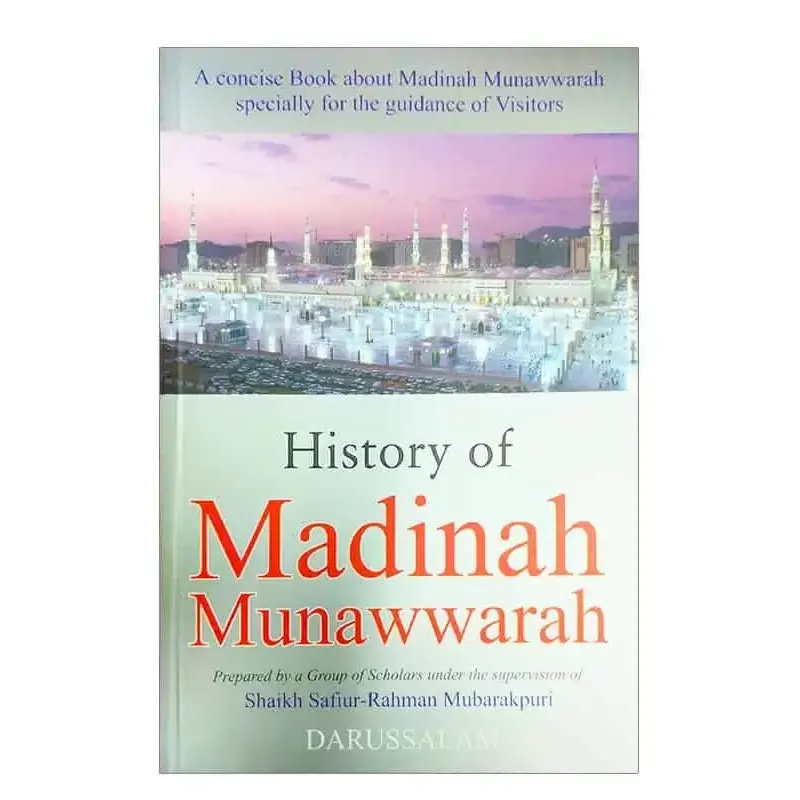
History Of Madinah Munawwarah ( Shaikh Safiur-Rahman Mubarakpuri ) Darussalam English

₹650.00
- Purpose and Approach of the Book
- Comprehensive City History: The book traces Madinah’s history before Islam, its role in the Prophet’s migration, and its development during the Islamic era.
- Integration of Ethics and History: Each event is analyzed for its moral and spiritual lessons, emphasizing the role of faith in shaping societal structures.
- Accessible Narrative: Written in English, the book makes historical and cultural information about Madinah accessible to students, researchers, and general readers.
- Mubarakpuri’s approach allows readers to understand Madinah not just as a geographical location but as a center of spiritual, ethical, and communal life.
- 2. Pre-Islamic Madinah
- Tribal Structure: The city was primarily inhabited by Aws and Khazraj tribes, along with Jewish communities. Tribal allegiances, customs, and conflicts shaped early society.
- Economy and Society: Agriculture, trade, and oasis life provided economic stability, while tribal rivalries often caused internal tensions.
- Religion and Beliefs: Pre-Islamic Madinah included polytheists and Jews, each maintaining religious and social traditions.
- This background illustrates the challenges and opportunities that the Prophet encountered upon his arrival.
Out of stock
History Of Madinah Munawwarah ( Shaikh Safiur-Rahman Mubarakpuri ) Darussalam English
History of Madinah Munawwarah by Shaikh Safiur-Rahman Mubarakpuri is a comprehensive work that chronicles the history of the city of Madinah, highlighting its social, political, cultural, and spiritual significance in Islam. The book focuses on the city’s transformation from a tribal settlement to the vibrant center of the Muslim Ummah under the guidance of Prophet Muhammad (S.A.W.). Mubarakpuri combines historical facts with vivid narratives, providing readers with both educational insight and inspiration.
1. Purpose and Approach of the Book
Comprehensive City History: The book traces Madinah’s history before Islam, its role in the Prophet’s migration, and its development during the Islamic era.
Integration of Ethics and History: Each event is analyzed for its moral and spiritual lessons, emphasizing the role of faith in shaping societal structures.
Accessible Narrative: Written in English, the book makes historical and cultural information about Madinah accessible to students, researchers, and general readers.
Mubarakpuri’s approach allows readers to understand Madinah not just as a geographical location but as a center of spiritual, ethical, and communal life.
2. Pre-Islamic Madinah
Tribal Structure: The city was primarily inhabited by Aws and Khazraj tribes, along with Jewish communities. Tribal allegiances, customs, and conflicts shaped early society.
Economy and Society: Agriculture, trade, and oasis life provided economic stability, while tribal rivalries often caused internal tensions.
Religion and Beliefs: Pre-Islamic Madinah included polytheists and Jews, each maintaining religious and social traditions.
This background illustrates the challenges and opportunities that the Prophet encountered upon his arrival.
3. Prophet Muhammad’s (S.A.W.) Migration (Hijra)
Invitation to Madinah: The city’s leaders invited the Prophet to mediate tribal disputes and provide guidance.
Strategic Planning of Hijra: The migration involved careful planning, trust in God, and coordination with followers.
Integration of Muslims and Locals: The Prophet fostered unity between Muhajirun (migrants) and Ansar (helpers), emphasizing brotherhood, justice, and collective responsibility.
The Hijra is portrayed as a pivotal moment, transforming Madinah into the political and spiritual center of Islam.
4. Establishment of the Islamic Community
Constitution of Madinah: Mubarakpuri details the agreement that outlined rights, duties, and governance structures for Muslims, Jews, and other residents.
Social Organization: Emphasis on justice, mutual assistance, and ethical conduct created a stable and cohesive society.
Spiritual Leadership: The Prophet served as both political leader and spiritual guide, ensuring that governance aligned with moral and ethical principles.
These developments highlight the integration of faith, ethics, and governance in early Madinah.
5. Battles and Defense of Madinah
Battle of Badr: Mubarakpuri describes the battle as a demonstration of strategic planning, faith, and divine support.
Battle of Uhud and the Trench: Lessons from these battles emphasize patience, courage, and the consequences of disobedience or lack of discipline.
Defense and Diplomacy: Stories highlight ethical conduct during warfare, protection of civilians, and the importance of alliances.
Through these narratives, the author illustrates how Madinah became a fortified and resilient center of the Muslim community.
6. Social and Ethical Life in Madinah
Community Welfare: Establishment of markets, mosques, and public facilities reflected ethical governance and concern for the welfare of all citizens.
Justice and Equality: Dispute resolution, fair treatment of women, orphans, and the poor are highlighted as central to the Prophet’s administration.
Moral Education: Daily life in Madinah emphasized spiritual growth, ethical conduct, and the practice of Islamic values in personal and social interactions.
The city is portrayed as a model for ethical, spiritual, and social development under Islamic guidance.
7. Expansion of Islam and Diplomacy
Relations with Tribes and Neighboring Regions: Mubarakpuri discusses treaties, alliances, and peaceful propagation of Islam beyond Madinah.
Economic Growth: Trade and agriculture supported the city’s prosperity, providing resources for social welfare and community projects.
Role as a Center of Guidance: Scholars, companions, and citizens contributed to the spread of Islamic teachings from Madinah.
Madinah’s growth demonstrates the interplay of ethics, governance, and strategic planning in fostering a thriving community.
8. Legacy of Madinah under the Prophet
Model City for the Ummah: Madinah exemplified justice, brotherhood, spiritual devotion, and civic responsibility.
Influence on Islamic Civilization: Practices developed in Madinah influenced governance, social organization, and community life throughout the Muslim world.
Spiritual Significance: The city remains a symbol of faith, perseverance, and ethical governance in Islamic consciousness.
Mubarakpuri portrays Madinah as a city whose legacy extends beyond geography to embody the ideals of the Islamic faith.
9. Lessons for Contemporary Readers
Leadership and Ethics: Madinah demonstrates that governance must integrate moral, ethical, and spiritual principles.
Community Cohesion: Mutual respect, justice, and collective responsibility are essential for societal resilience.
Faith and Perseverance: Trust in God and ethical conduct enable communities to withstand internal and external challenges.
Practical Application of Values: The city’s history encourages readers to apply Islamic principles in modern social, political, and personal contexts.
The book provides both inspiration and practical guidance for contemporary individuals and societies.
10. Conclusion
History of Madinah Munawwarah by Shaikh Safiur-Rahman Mubarakpuri:
Provides a detailed account of Madinah’s history before and during Islam.
Highlights the establishment of a morally, spiritually, and socially guided community under Prophet Muhammad (S.A.W.).
Discusses battles, diplomacy, governance, and social welfare in the context of ethical and religious principles.
Emphasizes the lasting legacy of Madinah as a model city for the Muslim Ummah, combining justice, spirituality, and communal harmony.
The book serves as both a historical account and an ethical guide, showing that the story of Madinah is not just about events but about the principles and values that can guide communities throughout history and into the modern age.
| Weight | 275 g |
|---|---|
| Dimensions | 14 × 1.2 × 21 cm |
Only logged in customers who have purchased this product may leave a review.
Related Products

- Key Themes in the Quran (Applicable to this Edition)
- Although this edition focuses on text presentation, it contains the entire Quran, covering all themes of Islamic guidance:
- Tawheed (Oneness of Allah)
- Repeated emphasis on Allah’s oneness, power, knowledge, and mercy.
- Prophethood (Risalah)
- Stories of prophets and the final message of Prophet Muhammad (PBUH).
- Day of Judgment (Akhirah)
- Moral accountability, rewards for righteousness, and consequences of sin.
- Ethics and Morality
- Guidance on honesty, patience, charity, forgiveness, humility, and social justice.
- Worship and Obligations
- Instructions on prayer (Salah), fasting (Sawm), Zakat, Hajj, and daily conduct.
- Stories of Nations and Lessons
- Narratives from past nations serve as moral lessons, emphasizing obedience to Allah and consequences of injustice.
1 in stock

- Islami Tareekh Muhammad Abdul Hayi Al Hasanat (Urdu)
- Conclusion
- Islami Tareekh by Muhammad Abdul Hayi provides a comprehensive overview of Islamic history in a manner that is both educational and spiritually instructive. Key contributions of the book include:
- Chronological Clarity: Covers the life of Prophet Muhammad ﷺ, the Rashidun Caliphs, major dynasties, and regional expansions.
- Integration of Faith and History: Events are analyzed not only historically but also for moral and spiritual lessons.
- Cultural and Intellectual Perspective: Highlights achievements in science, philosophy, literature, and governance.
- Guidance for Modern Muslims: Encourages understanding of historical models of leadership, justice, and piety.
- The book is particularly valuable for Urdu-speaking readers seeking a thorough understanding of Islamic history, from its inception to the challenges faced by Muslim societies in later centuries.
- Key Takeaways:
- Islam emphasizes faith, justice, knowledge, and social welfare.
- Leadership must combine morality, courage, and service to the people.
- Intellectual and cultural achievements are integral to the strength of Muslim civilization.
- History offers lessons in resilience, ethics, and spiritual development.
1 in stock
- Series: The Golden Series (Book 9)
- Hardcover: 142 pages
- Publisher: Dar-us-Salam (2007)
- Language: English
1 in stock

- Conclusion
- Mukhtasar Tareekh Mashaikh-e-Awadh by Dr. Razi Ahmad Kamal is a concise yet comprehensive study of the spiritual, cultural, and social contributions of Sufi saints in Awadh.
- The book highlights the spiritual guidance, ethical influence, and societal reform brought about by the Mashaikh.
- Sufi saints acted as moral exemplars, educators, and cultural patrons, shaping Awadh’s identity and leaving a lasting legacy.
- The work demonstrates how Islamic spirituality, when integrated with social and cultural engagement, creates a balanced and harmonious society.
- Key Takeaways:
- Sufi saints of Awadh were central to both spiritual guidance and societal welfare.
- Their teachings emphasized ethics, devotion, and service to humanity.
- Different Sufi orders (Chishti, Qadiri, Suhrawardi, Naqshbandi) contributed unique perspectives and practices.
- Saints influenced governance, culture, education, and interfaith harmony.
- The legacy of Awadh’s Mashaikh continues to inspire spirituality, literature, and cultural identity in the region.
2 in stock
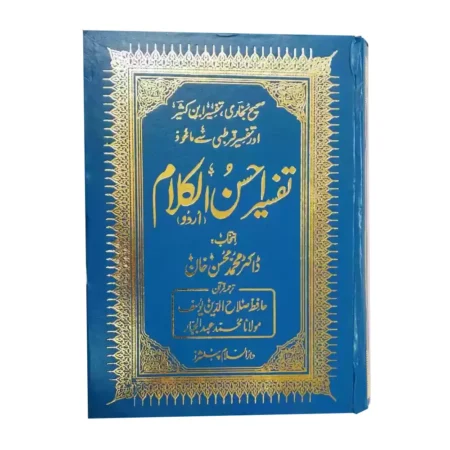
- Conclusion
- Tafseer Ahsanul Kalam (Darussalam) by Dr. Muhammad Muhsin Khan and Hafiz Salahuddin Yusuf:
- Provides clear, authentic, and accessible explanations of the Qur’an.
- Integrates spiritual guidance, moral ethics, and social reform, reflecting Islam’s holistic approach.
- Uses a multi-lingual format to make classical scholarship accessible for modern readers.
- Encourages reflection, ethical behavior, and practical application of Qur’anic guidance.
- Serves as a reliable resource for scholars, students, and anyone seeking a comprehensive understanding of the Qur’an.
3 in stock
2 in stock
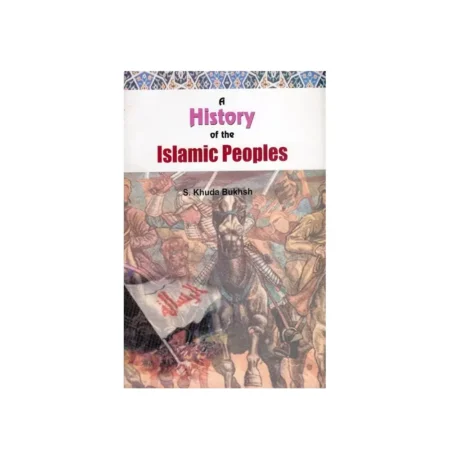
- A History Of The Islamic Peoples S Khuda Bukhsh (Adam Publishers) English
- The Scope of the Book
- The book covers the following broad areas:
- The Rise of Islam and the Prophet Muhammad (PBUH):
- The book begins with the Arabian background – a description of pre-Islamic Arabia, its tribal structure, culture, social conditions, and religious practices.
- It then moves to the life of Prophet Muhammad (peace be upon him), his mission, the revelation of the Qur’an, the struggles in Makkah, migration to Madinah, and the establishment of the first Islamic state.
- The author emphasizes how Islam brought moral, social, and spiritual reforms to a region deeply divided by tribalism and superstition.
- The Rashidun Caliphate (632–661 CE):
- Khuda Bukhsh describes the leadership of the four rightly guided caliphs (Abu Bakr, Umar, Uthman, Ali).
- He highlights the rapid expansion of Islam beyond Arabia into Syria, Iraq, Egypt, and Persia.
- Important administrative and legal reforms introduced by Caliph Umar are explained.
- The internal conflicts, especially during the caliphate of Uthman and Ali, are presented in a balanced way.
- The Umayyad Caliphate (661–750 CE):
- The book outlines the transformation of the caliphate into a hereditary monarchy under Muawiyah.
- It explains the expansion into North Africa, Spain (Andalusia), and Central Asia.
- Khuda Bukhsh also discusses the administrative centralization and cultural flowering of Damascus, the Umayyad capital.
2 in stock
- Series: The Golden Series (Book 2)
- Hardcover: 111 pages
- Publisher: Dar-us-Salam (2007)
- Language: English
2 in stock
- Series: The Golden Series (Book 10)
- Hardcover: 112 pages
- Publisher: Dar-us-Salam (2007)
- Language: English
3 in stock
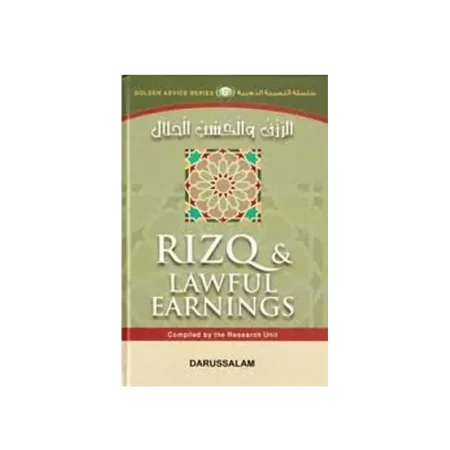
- Series: The Golden Series (Book 6)
- Hardcover: 103 pages
- Publisher: Dar-us-Salam (2007)
- Language: English
1 in stock

- Series: The Golden Series (Book 5)
- Hardcover: 88 pages
- Publisher: Dar-us-Salam (2007)
- Language: English
3 in stock
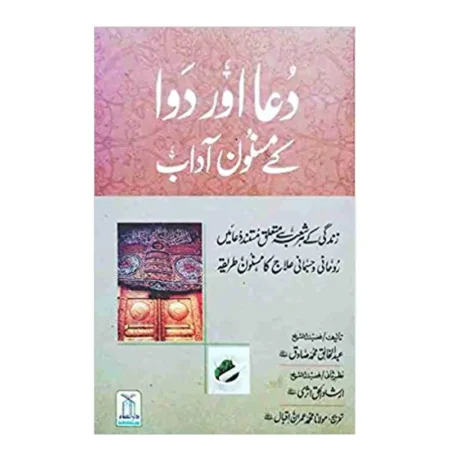
- Dua Aur Dawa Kai Masnoon Aadab Abdul Khaliq Muhammad Sadiq Darussalam (Urdu)
6 in stock
Reviews
There are no reviews yet.