

Al-Hadiyato Linnisa Islamic Laws Regarding Purity Of Women Maulana Muhammad Ibrahim Palanpuri Idara (English)

₹50.00
- Al-Hadiyato Linnisa Islamic Laws Regarding Purity Of Women Maulana Muhammad Ibrahim Palanpuri Idara (English)
- Content Overview
- The book is structured logically, moving from basic principles to specific rulings:
- Introduction to Tahara (Purity):
- Defines ritual purity and its significance in Islam.
- Explains the difference between minor impurity (hadath asghar) and major impurity (hadath akbar).
- Establishes the necessity of purity for performing Salah, touching the Qur’an, and other acts of worship.
- Menstruation (Haydh):
- Duration, onset, and cessation of menstrual bleeding.
- Obligations and restrictions during menstruation, such as refraining from Salah and fasting.
- Instructions for resuming worship after menstruation, including ghusl (ritual bath).
- Guidance on regular and irregular cycles, addressing anomalies and exceptional cases.
- Postpartum Bleeding (Nifas):
- Rules governing women after childbirth.
- Maximum duration of postpartum bleeding, beyond which it is considered abnormal.
- Interaction with fasting, prayer, and marital relations during this period.
- Emphasis on spiritual patience and personal hygiene.
Out of stock
Al-Hadiyato Linnisa Islamic Laws Regarding Purity Of Women Maulana Muhammad Ibrahim Palanpuri Idara (English)
Al-Hadiyato Linnisa by Maulana Muhammad Ibrahim Palanpuri, published by Idara, is a specialized work in Islamic jurisprudence (Fiqh) focusing on the laws of women’s purity, covering topics related to menstruation, postpartum bleeding, sexual relations, and ritual worship. The book is written in English, making it accessible to a wide audience of students, scholars, and practicing Muslims seeking a clear understanding of these sensitive yet important aspects of Islamic law.
The book is based on classical Hanafi jurisprudence, one of the four major schools of Sunni Islamic law, but its principles are presented in a manner that allows general comprehension while maintaining scholarly rigor. It serves as both a guide for practical observance and an educational text for understanding the Shariah’s wisdom in regulating human life.
Purpose of the Book
The primary purpose of Al-Hadiyato Linnisa is to provide:
Clear Guidance for Women: On maintaining ritual purity (tahara) during menstruation (haydh), postpartum bleeding (nifas), and irregular discharges.
Religious and Ritual Compliance: Ensuring proper performance of Salah (prayer), fasting, and other acts of worship according to Shariah rules.
Educational Value: Helping scholars, teachers, and students of Islamic studies understand the detailed rulings in a structured, English-language presentation.
Practical Reference: For daily life, including marital relations, bathing regulations (ghusl), and interactions with worship practices during impurity.
The book balances technical jurisprudential explanations with practical examples, allowing readers to understand not just the “what” but also the “why” behind the rulings.
Content Overview
The book is structured logically, moving from basic principles to specific rulings:
Introduction to Tahara (Purity):
Defines ritual purity and its significance in Islam.
Explains the difference between minor impurity (hadath asghar) and major impurity (hadath akbar).
Establishes the necessity of purity for performing Salah, touching the Qur’an, and other acts of worship.
Menstruation (Haydh):
Duration, onset, and cessation of menstrual bleeding.
Obligations and restrictions during menstruation, such as refraining from Salah and fasting.
Instructions for resuming worship after menstruation, including ghusl (ritual bath).
Guidance on regular and irregular cycles, addressing anomalies and exceptional cases.
Postpartum Bleeding (Nifas):
Rules governing women after childbirth.
Maximum duration of postpartum bleeding, beyond which it is considered abnormal.
Interaction with fasting, prayer, and marital relations during this period.
Emphasis on spiritual patience and personal hygiene.
Istihadha (Irregular Bleeding):
Cases of vaginal bleeding outside normal menstrual or postpartum periods.
Differentiating between normal menstrual bleeding and abnormal discharge.
Rulings for continuing worship when irregular bleeding occurs, including performing Wudu and Salah.
Ghusl (Ritual Bath):
Detailed procedure of performing ghusl after menstruation, postpartum bleeding, or sexual relations.
Emphasis on intention (niyyah), cleanliness, and covering all parts of the body.
Common mistakes and corrections to ensure proper ritual purification.
Marital Relations:
Laws regarding sexual intercourse in the context of women’s purity.
Prohibitions during menstruation and postpartum bleeding.
Recommended conduct and sensitivity in marital life according to Shariah.
Fasting and Salah:
Rules on Sawm (fasting) during menstruation or postpartum periods.
Expiation (qada) for missed fasts.
Conditions under which prayer can be resumed after purification.
Practical Advice and Ethical Guidance:
Encourages personal hygiene and cleanliness, which are both religious obligations and socially beneficial.
Addresses psychological aspects, helping women navigate periods of impurity with dignity, faith, and patience.
Offers guidance for community awareness and family support.
Language and Presentation
Maulana Palanpuri presents the content in clear, precise English, avoiding unnecessary technical jargon while retaining jurisprudential accuracy. Key features include:
Structured Chapters: Each topic is divided into sub-sections for easy reference.
Practical Examples: Real-life scenarios illustrate rulings for clarity.
Qur’anic and Hadith References: Text is supported with evidence from primary sources, reinforcing authenticity.
Comparative Notes: Occasionally highlights differences in minor opinions within Hanafi jurisprudence to aid deeper understanding.
The book’s approach ensures that both beginners and advanced students can benefit, from everyday guidance to scholarly insight.
Spiritual and Ethical Significance
The book emphasizes that Shariah laws regarding women’s purity are not arbitrary; they serve several purposes:
Spiritual Discipline: Observing purity fosters mindfulness of Allah, instilling discipline and self-awareness.
Physical Hygiene: Many rulings promote cleanliness, which has both spiritual and health benefits.
Marital Respect: Guidelines ensure mutual respect and sensitivity in marital relations during periods of physical changes.
Equality in Worship: Even temporary inability to perform certain rituals does not reduce spiritual reward; Shariah provides compensatory measures such as missed fasts and prayers.
The ethical tone of the book reinforces that purity laws are meant to protect dignity, health, and spirituality, rather than restrict or burden women.
Practical Benefits for Readers
Daily Reference: Women can consult the book to clarify rules during menstruation, postpartum periods, or irregular bleeding.
Educational Use: Teachers, madrasa instructors, and Islamic educators can incorporate its guidance into lessons.
Scholarly Research: Students of Fiqh can use it as a source for writing papers or understanding Hanafi jurisprudence on women’s issues.
Family Guidance: Husbands and family members can better understand women’s religious obligations and challenges, promoting empathy and respect.
Conclusion
Al-Hadiyato Linnisa by Maulana Muhammad Ibrahim Palanpuri is an essential text on Islamic laws regarding women’s purity, combining clarity, authenticity, and practical relevance. Its English-language presentation makes it accessible to non-Arabic speakers while maintaining scholarly depth.
Key takeaways include:
Understanding the principles of Tahara (purity) and its importance in daily life and worship.
Correctly observing Salah, fasting, and ghusl in accordance with Shariah rules.
Managing menstruation, postpartum bleeding, and irregular discharge with knowledge and dignity.
Enhancing spiritual awareness, hygiene, and ethical conduct in personal and family life.
Providing a reliable reference for scholars, students, and families seeking practical guidance in compliance with Islamic law.
In essence, this book is both educational and spiritually enriching, empowering women to fulfill their religious duties confidently while understanding the wisdom behind these divine laws. By bridging jurisprudence with practical application, it serves as a valuable companion for women seeking to navigate their religious obligations with knowledge, ease, and faith.
| Weight | 300 g |
|---|---|
| Dimensions | 16 × 10 × 5 cm |
Only logged in customers who have purchased this product may leave a review.
Related Products

- The Holy Qur’An Colour Coded Tajweed Rules Ibs (Arabic)
- Ghunnah (Nasalization): Extended nasal sounds for Noon and Meem under certain conditions. The colour coding ensures learners sustain these sounds correctly.
- Ikhfa’ (Concealment): Noon Saakin or Tanween sounds are partially merged with following letters, producing a light nasal tone.
- Idgham (Merging): Letters are merged smoothly, either with Ghunnah (nasalized) or without, depending on the following letter.
- Iqlab (Conversion): Noon Saakin is transformed into a Meem sound when followed by a specific letter (Baa), producing a soft and blended recitation.
- Qalqalah (Echoing): Certain consonants produce a slight bounce when in Sukoon, and the colour helps learners anticipate the echo effect.
- Madd (Prolongation): Vowels are stretched for specific counts; different types of Madd (like natural, obligatory, or temporary) are highlighted using distinct colours.
- Rules of Noon and Meem Saakin: Various rules including Ikhfa’, Idgham, and Iqlab are visually reinforced, aiding both recognition and correct pronunciation.
- Other Articulation Rules: Proper tongue and lip positioning for letters, though not explicitly colour-coded, are often reinforced in accompanying guides or teacher instructions.
1 in stock

- In The Shade Of The Holy Qur’An Sayyid Qutb Vol.30 Idara (English)
- Significance of Volume 30
- Concluding Lessons of the Qur’ān:
- The final surahs emphasize spiritual purity, ethical conduct, gratitude, and divine reliance, summarizing the core moral and spiritual messages.
- Accessible for Daily Reflection:
- Short, powerful surahs make this volume ideal for meditation, memorization, and application in daily life.
- Bridging Traditional and Modern Understanding:
- Sayyid Qutb’s tafsīr links classical meanings with contemporary human challenges, making it relevant for modern readers.
- Strengthening Faith and Moral Character:
- Encourages readers to internalize faith, uphold moral principles, and maintain ethical behavior in all aspects of life.
2 in stock

- The Noble Qur’An Tafseer-E-Usmani Shabbir Ahmed Usmani Idara (Arabic/English) 3 Volume Set
- Clear presentation of the Arabic Qur’ān with accurate English translation.
- Detailed commentary explaining linguistic, historical, theological, and legal aspects.
- Integration of classical scholarship with practical guidance for daily life.
- Structured, verse-by-verse approach supporting reflection, memorization, and study.
- Accessibility for a wide audience, from students to scholars and general readers
3 in stock
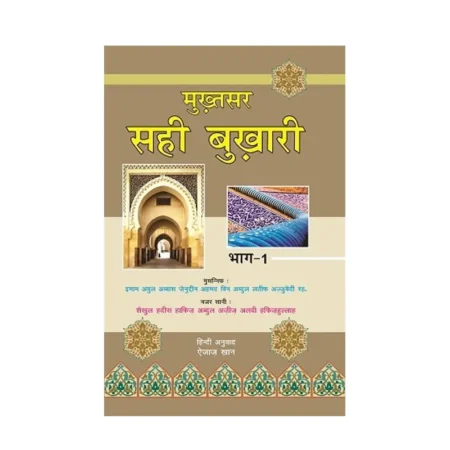
- Mukhtasar Sahih Bukhari – (3 Vol. Set)
- Key Features of the Mukhtasar Edition
- 1. Concise and Reader-Friendly
- Focuses on core Hadiths, eliminating repetitive narrations found in the original Sahih Bukhari.
- Makes it practical for students and casual readers to understand Prophetic guidance.
- 2. Hindi Translation
- Ensures comprehension for Hindi-speaking readers.
- Clarifies terminology, context, and subtle meanings.
- 3. Structured for Learning
- Volumes are organized thematically, aiding memorization and study.
- Chapters include acts of worship, social conduct, moral behavior, and leadership.
- 4. Faith and Moral Guidance
- Highlights Hadiths that emphasize:
- Taqwa (God-consciousness)
- Ethical conduct and social responsibility
- Compassion, honesty, and humility
- Rights and obligations of individuals and communities
3 in stock
Para 1 (Alif Laam Meem, Taj edition) is a comprehensive introduction to the Quran’s guidance. It combines:
- Praise of Allah and acknowledgment of His mercy.
- Emphasis on worship, reliance, and accountability.
- Guidance for ethical conduct, social harmony, and personal development.
- Introduction to divine knowledge and the mysteries of revelation.
Reading and reflecting on this para daily builds:
- Strong faith and reliance on Allah.
- Ethical and moral character.
- Spiritual awareness and patience.
- Intellectual engagement and understanding of human purpose.
19 in stock

- The Holy Qur’An Colour Coded Tajweed Rules Ref. 3 Ibs (Arabic)
- Accurate and detailed colour-coded Tajweed rules.
- Uthmani Arabic script with clear diacritical marks.
- Coverage of both basic and advanced Tajweed principles.
- Practical support for memorization and daily recitation.
- Ease of use for self-study and classroom instruction.
2 in stock
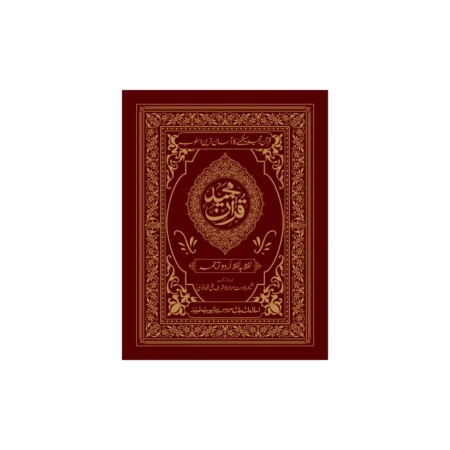
- Advantages of Lafz Ba Lafz Urdu Tarjuma
- Word-by-Word Accuracy: Connects Arabic words to precise Urdu meaning.
- Contextual Clarity: Combines literal translation with overall contextual understanding.
- Structured Learning: Supports stepwise study, memorization, and reflection.
- Spiritual and Ethical Engagement: Guides daily practice, moral behavior, and spiritual development.
- Educational Utility: Ideal for students, teachers, and researchers, bridging Arabic and Urdu understanding.
2 in stock

- Quran 23 No Cc With Box (Idara) Arabic
- Key Features and Benefits
- Supports Accurate Recitation:
- Bold Arabic letters, proper orthography, and potential color-coded Tajweed markers ensure correct pronunciation and adherence to Tajweed rules.
- Supports long recitation sessions while maintaining focus and spiritual engagement.
- Facilitates Memorization (Hifz):
- Clear verse numbering, Juz markers, and structured layout help learners memorize efficiently.
- Durable pages ensure repeated use without wear, supporting long-term memorization.
- Durable and Long-Lasting:
- High-quality paper, binding, and protective box provide resilience against frequent handling, maintaining the Quran in excellent condition.
- Suitable for personal devotion, mosque circulation, or educational purposes.
- Easy Navigation:
- Surah titles, Ayah numbers, and Juz markers enable readers to plan systematic recitation schedules.
- Sajdah markers guide proper prostration during Salah, ensuring ritual compliance.
- Gift-Worthy Edition:
- The protective box, elegant design, and premium quality make this edition ideal for Hifz completion gifts, Eid, religious milestones, or personal devotion.
2 in stock
- Personal Use: Ideal for daily recitation and personal study.
- Educational: Suitable for students of Quranic recitation and memorization.
- Gift: A thoughtful and meaningful gift for friends, family, or loved ones.
- Always handle the Mushaf with clean hands (wudu).
- Keep it inside its golden purse case when not in use.
- Avoid placing it on the floor or beneath other items.
- Do not expose it to direct sunlight or moisture.
- For frequent travelers, carry it in the purse to ensure safety and respect.
2 in stock
Benefits of Studying Para 2
- Spiritual Growth: Strengthens faith, patience, and reliance on Allah.
- Moral Guidance: Teaches honesty, justice, and social responsibility.
- Historical Insight: Provides lessons from prophets and past nations.
- Practical Life Guidance: Instructs on prayer, fasting, charity, and ethics.
- Preparation for the Hereafter: Encourages conscious living with accountability.
6 in stock
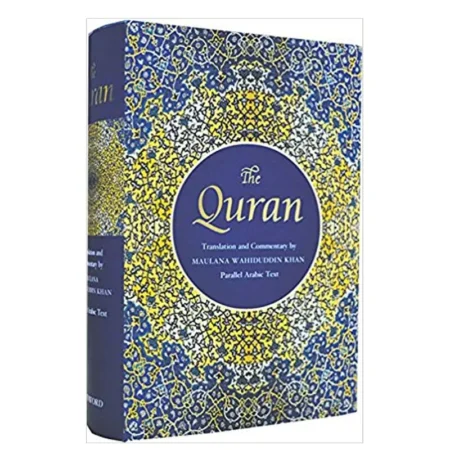
- Tazkeerul Quran ( Maulana Wahiduddin Khan ) Goodword Arabic/Hindi
- The central theme of Tazkeerul Quran is that the Qur’an is not merely a book of rituals, law, or theology, but a comprehensive guide for building a moral, ethical, and spiritually grounded life.
- Maulana Wahiduddin Khan stresses that the Qur’an addresses the human heart before it addresses human actions.
- It is concerned with shaping the inner self, which in turn manifests in ethical behavior, compassionate treatment of others, and a sense of accountability before God.
- This perspective underscores the Qur’an’s timeless relevance, showing that its message is universal and not confined to a specific culture, era, or society.
- The book also addresses the concept of human purpose and responsibility.
- Maulana Khan explains that the Qur’an presents life as a trust (Amanah) from God, and human beings are accountable for how they fulfill this trust.
- This idea encompasses not only individual ethical conduct but also the broader social and environmental responsibilities.
- The Qur’an encourages reflection, personal accountability, and the pursuit of knowledge to live a life aligned with divine guidance.
- Tazkeerul Quran highlights that spirituality in Islam is practical; it requires action rooted in moral consciousness, and mere ritual without inner transformation is insufficient.
2 in stock
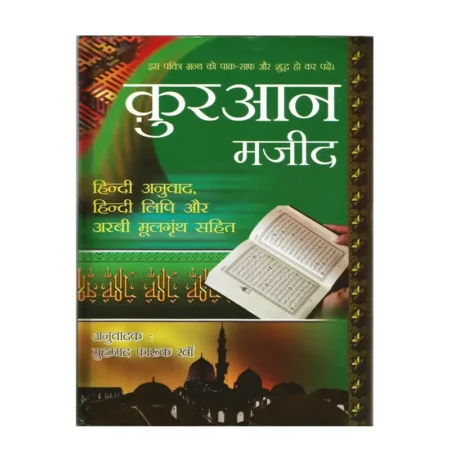
- Quran Majeed ( Maulana Muhammad Farooq Khan ) Hindi/Maktaba Al Hasnat
- In Short
- Author: Maulana Muhammad Farooq Khan
- Language: Hindi
- Purpose: Comprehensible understanding of Qur’anic guidance
- Method: Arabic text + Hindi translation + explanatory notes
- Focus: Faith, ethics, morality, spirituality, and practical application
- Audience: Students, teachers, families, and general Hindi-speaking readers
2 in stock
Reviews
There are no reviews yet.