
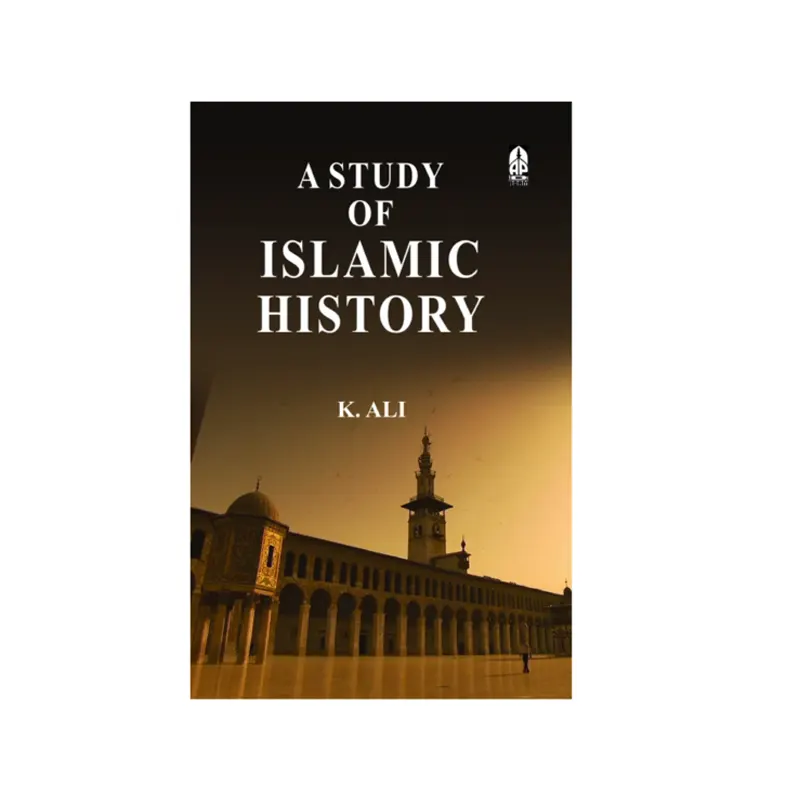
A Study Of Islamic History ( K.Ali ) Adam English


₹395.00
- A Study Of Islamic History ( K.Ali ) Adam English
- Purpose and Scope of the Book
- Comprehensive Coverage: The book traces Islamic history from pre-Islamic Arabia to the decline of major Muslim empires.
- Ethical and Spiritual Insights: Each historical event is interpreted to highlight lessons in morality, leadership, and social conduct.
- Accessible Scholarship: Written in clear English, the book caters to students, researchers, and general readers interested in both factual history and reflective understanding.
- K. Ali aims to present Islamic history as a living guide for ethical, political, and social principles, rather than a mere chronicle of events.
- 2. Pre-Islamic Arabia (Jahiliyyah)
- Tribal Society and Economy: Arabia was primarily tribal, with social organization based on kinship, honor, and customs. Trade, agriculture, and pastoralism were central to survival.
- Religion and Culture: Polytheism and idol worship were widespread, alongside minority Jewish and Christian communities. Religious practices influenced social norms and ethical conduct.
- Challenges and Opportunities: The fragmented tribal society set the stage for the transformative impact of Islam, which sought unity, justice, and moral guidance.
- By describing the pre-Islamic context, K. Ali illustrates the radical social, spiritual, and ethical reforms introduced by Islam.
Out of stock
A Study Of Islamic History ( K.Ali ) Adam English
A Study of Islamic History by K. Ali is a scholarly English-language work that provides a comprehensive overview of Islamic civilization from its inception to later periods of political, social, and cultural development. The book emphasizes not only historical events but also the ethical, social, and spiritual lessons that can be drawn from Islamic history. K. Ali integrates analysis of governance, societal transformation, intellectual achievements, and moral principles, offering readers a holistic understanding of the rise and evolution of the Muslim Ummah.
1. Purpose and Scope of the Book
Comprehensive Coverage: The book traces Islamic history from pre-Islamic Arabia to the decline of major Muslim empires.
Ethical and Spiritual Insights: Each historical event is interpreted to highlight lessons in morality, leadership, and social conduct.
Accessible Scholarship: Written in clear English, the book caters to students, researchers, and general readers interested in both factual history and reflective understanding.
K. Ali aims to present Islamic history as a living guide for ethical, political, and social principles, rather than a mere chronicle of events.
2. Pre-Islamic Arabia (Jahiliyyah)
Tribal Society and Economy: Arabia was primarily tribal, with social organization based on kinship, honor, and customs. Trade, agriculture, and pastoralism were central to survival.
Religion and Culture: Polytheism and idol worship were widespread, alongside minority Jewish and Christian communities. Religious practices influenced social norms and ethical conduct.
Challenges and Opportunities: The fragmented tribal society set the stage for the transformative impact of Islam, which sought unity, justice, and moral guidance.
By describing the pre-Islamic context, K. Ali illustrates the radical social, spiritual, and ethical reforms introduced by Islam.
3. Life of Prophet Muhammad (S.A.W.)
Early Life and Character: Honesty, integrity, and moral uprightness of the Prophet are highlighted as foundational for his leadership.
Revelation and Early Mission: The first revelations and initial propagation of Islam in Mecca faced opposition, persecution, and social boycott, testing the resilience of early Muslims.
Hijra to Medina: The migration marked a turning point, demonstrating strategic planning, trust in God, and the creation of a united Muslim community.
Community Building in Medina: The Constitution of Medina established governance, social cohesion, justice, and mutual rights among Muslims, Jews, and other residents.
These episodes demonstrate the integration of ethical leadership, spiritual guidance, and practical administration.
4. The Rashidun Caliphate (632–661 CE)
Abu Bakr Siddiq (RA): Consolidation of the Muslim state and suppression of rebellion (Riddah Wars) ensured political stability.
Umar ibn al-Khattab (RA): Reforms in administration, taxation, and public welfare highlighted justice and accountability.
Uthman ibn Affan (RA): Compilation of the Quran and administrative challenges illustrated the need for integrity and ethical governance.
Ali ibn Abi Talib (RA): Internal conflicts and civil strife (First Fitna) provided lessons on leadership, patience, and moral courage.
K. Ali emphasizes that the Rashidun period exemplifies governance grounded in ethical and spiritual principles.
5. Umayyad and Abbasid Dynasties
Umayyad Rule (661–750 CE): Focused on territorial expansion, administration, and consolidation of political power.
Abbasid Rule (750–1258 CE): Baghdad became a center of intellectual, cultural, and economic activity. Scholars, scientists, and philosophers flourished.
Ethical Reflections: Despite political challenges, adherence to justice, equity, and faith remained central to societal progress.
The author illustrates that Islamic civilization’s strength lay in balancing governance, intellectual achievement, and moral guidance.
6. Intellectual, Cultural, and Scientific Achievements
Scholars and Thinkers: Contributions of Al-Khwarizmi, Ibn Sina, Al-Farabi, and others in mathematics, medicine, astronomy, and philosophy.
Literature and Arts: Arabic and Persian literature, poetry, architecture, and arts reflected both ethical values and cultural sophistication.
Education and Knowledge Dissemination: Establishment of madrasas, libraries, and centers of learning promoted intellectual growth alongside moral and spiritual development.
K. Ali underscores that Islamic civilization thrived through the integration of knowledge, ethics, and spirituality.
7. Social, Ethical, and Religious Life
Community Ethics: Justice, charity, and welfare programs reflected the practical application of Islamic principles.
Individual Virtues: Honesty, humility, patience, and moral responsibility were emphasized as essential for societal cohesion.
Role of Scholars and Spiritual Leaders: Guidance from jurists and Sufi saints helped maintain moral and ethical order.
The book illustrates that societal progress in Islam is inseparable from adherence to ethical and spiritual values.
8. Regional Dynasties and Spread of Islam
Fatimids, Seljuks, Mamluks, and Andalusians: Regional powers contributed to governance, cultural preservation, and intellectual achievements.
Trade and Economy: Commerce and urbanization facilitated prosperity and cross-cultural exchanges.
Integration of Local Traditions: Islamic principles were harmonized with local customs, enriching civilization while maintaining ethical and religious foundations.
This highlights that Islam’s expansion involved both moral guidance and practical governance.
9. Challenges and Resilience of the Ummah
Internal Conflicts: Political disputes, succession crises, and factionalism tested the unity of the Muslim community.
External Threats: Invasions, Crusades, and other military challenges tested resilience.
Spiritual and Moral Strength: Faith, ethical governance, and intellectual perseverance enabled the Ummah to endure and adapt.
K. Ali emphasizes that moral and spiritual foundations, rather than mere political or military strength, ensured the survival of Islamic civilization.
10. Lessons and Contemporary Relevance
Leadership and Governance: Historical examples demonstrate the importance of justice, accountability, and ethical decision-making.
Integration of Knowledge and Morality: Intellectual and scientific pursuits must align with ethical principles.
Community and Social Cohesion: Education, moral conduct, and unity are essential for societal resilience.
Faith and Perseverance: Spiritual devotion and ethical conduct underpin long-term success and stability.
The study provides guidance for applying historical lessons in modern personal, social, and political contexts.
11. Conclusion
A Study of Islamic History by K. Ali:
Provides a thorough chronological account of Islamic history from the Prophet’s era to later dynasties.
Integrates political, social, cultural, intellectual, and ethical dimensions of Islamic civilization.
Highlights the resilience, moral guidance, and spiritual strength of the Muslim Ummah.
Serves as both an educational resource and an ethical guide, demonstrating that the study of history is most meaningful when it informs character, leadership, and societal values.
K. Ali presents Islamic history not merely as a sequence of events but as a rich source of ethical, spiritual, and intellectual lessons for individuals and societies.
| Weight | 250 g |
|---|---|
| Dimensions | 16 × 10 × 8 cm |
Only logged in customers who have purchased this product may leave a review.
Related Products

- History Testifies To The Infallibility Of The Holy Qur’An Early History Of The Children Of Israel (Adam) English
1 in stock

- A Comparative Study Of Christianity & Islam By Ulfat Azizus Samad (Adam Publishers) English
1 in stock
- Introduction To Al-Hadith Dr Rafiq Ahmad (Adam) English
2 in stock

- Islam Muslims And Non-Muslims Yusuf Alqarazavi (Adam) English
1 in stock

- Europe’S Gift To Islam Vol 1&2 Muhammad Asad (Adam) English
1 in stock
- Hayatus Sahaba Part -1 Hazrat Maulana Muhammad Yusuf Kandhalvi Idara (Urdu)
Overarching Themes Across All Three Volumes
- Faith and Conviction
The Sahaba were ordinary people transformed into extraordinary personalities because of their unshakable belief in Allah and the Prophet ﷺ. - Sacrifice and Struggle
They gave up wealth, family ties, and even their lives for Islam. Their sacrifices laid the foundation of the global Muslim Ummah. - Worship and Spirituality
Their strength came from constant connection with Allah through salah, Qur’an, and dhikr. - Simplicity and Humility
Despite wealth or authority, they lived simply and avoided arrogance. - Dawah and Responsibility
They understood Islam as a global message and considered it their duty to spread it everywhere. - Justice and Character
Their honesty, compassion, and fairness won people’s hearts more than any sword or wealth.
- Faith and Conviction
3 in stock
- Introduction To Al-Quran Dr Rafiq Ahmed (Adam) English
2 in stock

- Conclusion
- Mukhtasar Tareekh Mashaikh-e-Awadh by Dr. Razi Ahmad Kamal is a concise yet comprehensive study of the spiritual, cultural, and social contributions of Sufi saints in Awadh.
- The book highlights the spiritual guidance, ethical influence, and societal reform brought about by the Mashaikh.
- Sufi saints acted as moral exemplars, educators, and cultural patrons, shaping Awadh’s identity and leaving a lasting legacy.
- The work demonstrates how Islamic spirituality, when integrated with social and cultural engagement, creates a balanced and harmonious society.
- Key Takeaways:
- Sufi saints of Awadh were central to both spiritual guidance and societal welfare.
- Their teachings emphasized ethics, devotion, and service to humanity.
- Different Sufi orders (Chishti, Qadiri, Suhrawardi, Naqshbandi) contributed unique perspectives and practices.
- Saints influenced governance, culture, education, and interfaith harmony.
- The legacy of Awadh’s Mashaikh continues to inspire spirituality, literature, and cultural identity in the region.
2 in stock

- The Alhambra Washington Irving (Goodword) English
- Key Takeaways:
- Islam emerged in a challenging socio-political environment and transformed Arabian society through spiritual and ethical teachings.
- Prophet Muhammad’s (PBUH) leadership combined moral integrity, diplomacy, and strategic acumen.
- The Rashidun Caliphs laid the foundations of governance, justice, and expansion that shaped early Islamic history.
- Umayyad and Abbasid dynasties contributed to political consolidation and cultural flourishing.
- Islamic history provides timeless lessons in leadership, justice, morality, and social responsibility.
- Historical reflection is essential for understanding both the successes and pitfalls of past Muslim societies.
1 in stock

- Mercy For Mankind Rahmatul-Lil-Alamin Qazi Sulaiman Mansoorpuri (Adam) English
1 in stock
Key Themes and Analysis
1. Administrative Changes Under Mughal Rule
2. Socio-Cultural Transformations
3. Economic Developments
4. Decline of Mughal Influence and Rise of Maratha Power
5. British Colonial Encroachment
1 in stock
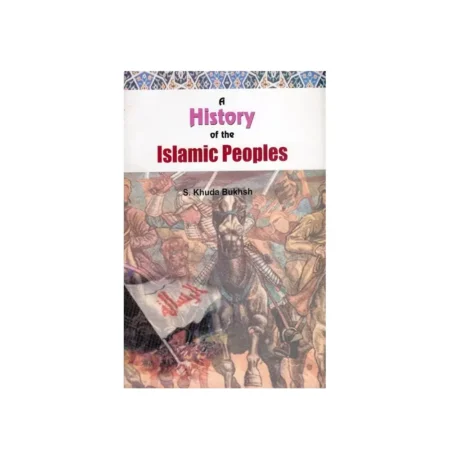
- A History Of The Islamic Peoples S Khuda Bukhsh (Adam Publishers) English
- The Scope of the Book
- The book covers the following broad areas:
- The Rise of Islam and the Prophet Muhammad (PBUH):
- The book begins with the Arabian background – a description of pre-Islamic Arabia, its tribal structure, culture, social conditions, and religious practices.
- It then moves to the life of Prophet Muhammad (peace be upon him), his mission, the revelation of the Qur’an, the struggles in Makkah, migration to Madinah, and the establishment of the first Islamic state.
- The author emphasizes how Islam brought moral, social, and spiritual reforms to a region deeply divided by tribalism and superstition.
- The Rashidun Caliphate (632–661 CE):
- Khuda Bukhsh describes the leadership of the four rightly guided caliphs (Abu Bakr, Umar, Uthman, Ali).
- He highlights the rapid expansion of Islam beyond Arabia into Syria, Iraq, Egypt, and Persia.
- Important administrative and legal reforms introduced by Caliph Umar are explained.
- The internal conflicts, especially during the caliphate of Uthman and Ali, are presented in a balanced way.
- The Umayyad Caliphate (661–750 CE):
- The book outlines the transformation of the caliphate into a hereditary monarchy under Muawiyah.
- It explains the expansion into North Africa, Spain (Andalusia), and Central Asia.
- Khuda Bukhsh also discusses the administrative centralization and cultural flowering of Damascus, the Umayyad capital.
2 in stock
Reviews
There are no reviews yet.