
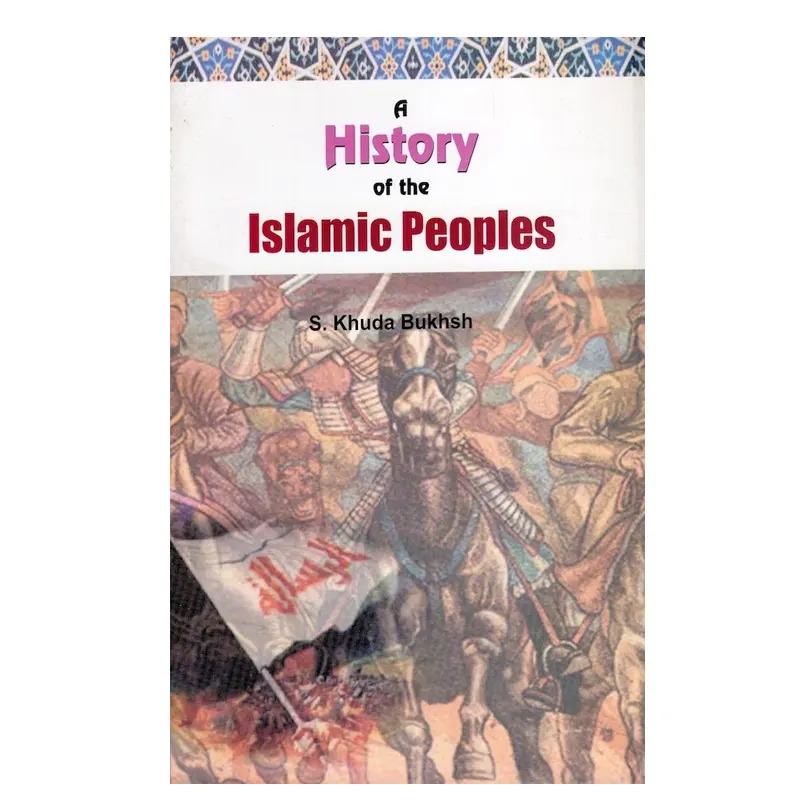
A History Of The Islamic Peoples ( S. Khuda Bukhsh ) Adam English
₹230.00
- A History Of The Islamic Peoples ( S. Khuda Bukhsh ) Adam English
- Purpose and Scope of the Book
- Comprehensive Historical Survey: The book covers the rise of Islam, the establishment of the Caliphates, regional dynasties, and socio-cultural developments across Muslim lands.
- Integration of Values: Historical events are interpreted to showcase Islamic ethical principles, justice, and societal progress.
- Educational and Reflective: Written in clear English, it serves students, scholars, and general readers, combining factual history with moral insights.
- The author’s goal is to present Islamic history as a guide for ethical governance, social harmony, and intellectual advancement.
- 2. Pre-Islamic Arabia
- Tribal and Social Structure: Arabia before Islam was organized into tribes, with customs, honor codes, and kinship playing central roles.
- Economic Foundations: Trade, agriculture, and pastoralism formed the economic base, with Mecca as a commercial hub.
- Religious Practices: Polytheism and idol worship were prevalent, alongside Jewish and Christian communities, creating a diverse spiritual environment.
- This context demonstrates the transformational role of Islam in creating unity, ethical guidance, and social reform.
Out of stock
A History Of The Islamic Peoples ( S. Khuda Bukhsh ) Adam English
A History of the Islamic Peoples by S. Khuda Bukhsh is a comprehensive English-language work that provides a detailed overview of Islamic civilization, tracing its development from the emergence of Islam in 7th-century Arabia to the rise and decline of major Islamic empires. The book integrates political, social, economic, and cultural history, highlighting how Islamic values shaped societies and governance. Khuda Bukhsh emphasizes not just historical events but also the lessons that Islamic history offers in ethics, leadership, and community development.
1. Purpose and Scope of the Book
Comprehensive Historical Survey: The book covers the rise of Islam, the establishment of the Caliphates, regional dynasties, and socio-cultural developments across Muslim lands.
Integration of Values: Historical events are interpreted to showcase Islamic ethical principles, justice, and societal progress.
Educational and Reflective: Written in clear English, it serves students, scholars, and general readers, combining factual history with moral insights.
The author’s goal is to present Islamic history as a guide for ethical governance, social harmony, and intellectual advancement.
2. Pre-Islamic Arabia
Tribal and Social Structure: Arabia before Islam was organized into tribes, with customs, honor codes, and kinship playing central roles.
Economic Foundations: Trade, agriculture, and pastoralism formed the economic base, with Mecca as a commercial hub.
Religious Practices: Polytheism and idol worship were prevalent, alongside Jewish and Christian communities, creating a diverse spiritual environment.
This context demonstrates the transformational role of Islam in creating unity, ethical guidance, and social reform.
3. Life of Prophet Muhammad (S.A.W.)
Early Life: The Prophet’s honesty, integrity, and leadership qualities are highlighted as central to his mission.
Revelation and Early Propagation: The initial call to Islam, opposition in Mecca, and the migration to Medina (Hijra) are described with attention to moral, social, and political dimensions.
Medinan Society: The Constitution of Medina exemplified principles of justice, communal responsibility, and interfaith coexistence.
Military Campaigns: Battles such as Badr, Uhud, and Khandaq are analyzed for both strategic and ethical lessons.
Khuda Bukhsh portrays the Prophet as a unifying figure who integrated spiritual, ethical, and administrative guidance.
4. The Rashidun Caliphate (632–661 CE)
Abu Bakr Siddiq (RA): Consolidation of the Muslim state, suppression of rebellions, and establishment of political stability.
Umar ibn al-Khattab (RA): Expansion of territories, administrative reforms, and promotion of justice and welfare.
Uthman ibn Affan (RA): Compilation of the Quran and management of state resources, with attention to fairness and governance.
Ali ibn Abi Talib (RA): Ethical leadership amidst civil strife, emphasizing justice and moral integrity during internal conflict.
The Rashidun period is presented as a model for combining ethical governance with political and military acumen.
5. Umayyad and Abbasid Dynasties
Umayyads (661–750 CE): Focused on territorial expansion, centralized administration, and trade networks.
Abbasids (750–1258 CE): Baghdad became a hub of culture, knowledge, and commerce, attracting scholars and artisans.
Ethical Considerations: Despite political challenges, Khuda Bukhsh emphasizes that adherence to justice and faith contributed to the resilience of Islamic civilization.
These dynasties illustrate the interplay between political authority, cultural development, and moral responsibility.
6. Regional Dynasties and Islamic Expansion
Fatimids, Seljuks, Mamluks, Ottomans, and Andalusians: Each dynasty contributed to governance, intellectual life, and socio-economic development.
Trade and Urban Development: Cities flourished as centers of commerce, learning, and culture, reflecting the integration of economic and ethical planning.
Cultural Integration: Local customs were harmonized with Islamic ethical principles, enriching societies while maintaining religious values.
Khuda Bukhsh highlights that the spread of Islam involved both spiritual guidance and practical societal organization.
7. Intellectual, Scientific, and Cultural Achievements
Science and Philosophy: Contributions in astronomy, mathematics, medicine, and philosophy by scholars like Al-Khwarizmi, Ibn Sina, and Al-Farabi.
Literature and Arts: Development of poetry, literature, architecture, and calligraphy reflected ethical and spiritual ideals.
Education and Knowledge: Establishment of libraries, madrasas, and centers of learning supported intellectual growth and social welfare.
The author demonstrates that intellectual and cultural achievements were deeply intertwined with ethical and spiritual guidance.
8. Social, Economic, and Ethical Life
Community Welfare: Emphasis on social justice, charity, and support for the poor and marginalized.
Ethical Leadership: Leaders were expected to embody Islamic values, ensuring fairness, accountability, and moral conduct.
Individual Responsibility: Honesty, humility, and moral discipline were foundational for social cohesion and community strength.
Khuda Bukhsh stresses that ethical and social norms were central to the long-term stability and prosperity of Islamic societies.
9. Challenges and Resilience of the Ummah
Internal Conflicts: Political disputes, sectarian tensions, and succession challenges tested unity.
External Threats: Crusades, Mongol invasions, and colonial pressures challenged the survival of Muslim states.
Spiritual and Ethical Resilience: Faith, justice, and moral conduct enabled the Ummah to adapt and endure through crises.
The book underscores that moral, spiritual, and intellectual strength ensured the continuity of Islamic civilization.
10. Lessons for Contemporary Readers
Governance and Leadership: History teaches the importance of justice, accountability, and ethical decision-making.
Integration of Knowledge and Morality: Intellectual and economic pursuits must be aligned with ethical principles.
Community and Social Cohesion: Education, moral conduct, and unity are crucial for societal resilience.
Faith and Perseverance: Spiritual devotion and ethical principles underpin long-term success and stability.
These lessons highlight the applicability of historical insights to modern personal, social, and political life.
11. Conclusion
A History of the Islamic Peoples by S. Khuda Bukhsh:
Provides a detailed, chronological account of Islamic history from the Prophet’s era to later dynasties and empires.
Integrates political, social, cultural, economic, intellectual, and ethical dimensions of Islamic civilization.
Emphasizes resilience, moral guidance, and spiritual strength as key factors in the development and survival of the Muslim Ummah.
Serves as both an educational resource and an ethical guide, illustrating that history is most meaningful when it informs character, leadership, and societal values.
Khuda Bukhsh presents Islamic history not just as a series of events, but as a repository of ethical, spiritual, and intellectual lessons for individuals and societies.
| Weight | 350 g |
|---|---|
| Dimensions | 16 × 10 × 8 cm |
Only logged in customers who have purchased this product may leave a review.
Related Products
- A History Of The Islamic Peoples S Khuda Bukhsh (Adam Publishers) English
- The Scope of the Book
- The book covers the following broad areas:
- The Rise of Islam and the Prophet Muhammad (PBUH):
- The book begins with the Arabian background – a description of pre-Islamic Arabia, its tribal structure, culture, social conditions, and religious practices.
- It then moves to the life of Prophet Muhammad (peace be upon him), his mission, the revelation of the Qur’an, the struggles in Makkah, migration to Madinah, and the establishment of the first Islamic state.
- The author emphasizes how Islam brought moral, social, and spiritual reforms to a region deeply divided by tribalism and superstition.
- The Rashidun Caliphate (632–661 CE):
- Khuda Bukhsh describes the leadership of the four rightly guided caliphs (Abu Bakr, Umar, Uthman, Ali).
- He highlights the rapid expansion of Islam beyond Arabia into Syria, Iraq, Egypt, and Persia.
- Important administrative and legal reforms introduced by Caliph Umar are explained.
- The internal conflicts, especially during the caliphate of Uthman and Ali, are presented in a balanced way.
- The Umayyad Caliphate (661–750 CE):
- The book outlines the transformation of the caliphate into a hereditary monarchy under Muawiyah.
- It explains the expansion into North Africa, Spain (Andalusia), and Central Asia.
- Khuda Bukhsh also discusses the administrative centralization and cultural flowering of Damascus, the Umayyad capital.
2 in stock

- Tarikh-E-Islam Akbar Shah Khan Najibabadi Al Hasanat (Hindi) 2 Volume Set
- Key Takeaways:
- Islam emerged in a challenging socio-political environment and transformed Arabian society through spiritual and ethical teachings.
- Prophet Muhammad’s (PBUH) leadership combined moral integrity, diplomacy, and strategic acumen.
- The Rashidun Caliphs laid the foundations of governance, justice, and expansion that shaped early Islamic history.
- Umayyad and Abbasid dynasties contributed to political consolidation and cultural flourishing.
- Islamic history provides timeless lessons in leadership, justice, morality, and social responsibility.
- Historical reflection is essential for understanding both the successes and pitfalls of past Muslim societies.
2 in stock

- Caliphate & Sultanate In Medieval Persia Dr. A. H. Siddiqi Adam Publishers (English)
1 in stock
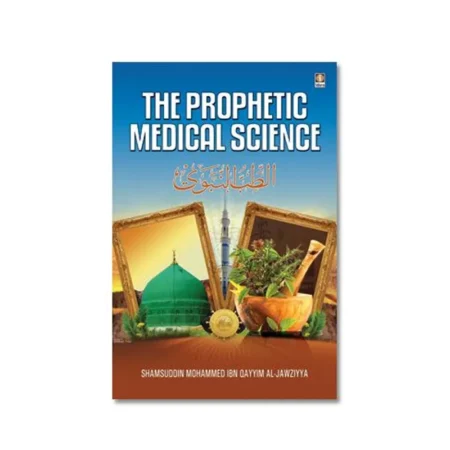
- The Prophetic Medical Science Shamsuddin Mohammed Ibn Qayyim Al-Jawziyya Idara (English)
- Purpose and Scope of the Book
- Preservation of Health in Islam: The book aims to highlight how Islam promotes personal hygiene, healthy living, and disease prevention.
- Spiritual and Ethical Integration: Prophetic medicine is not just physical; it incorporates mental and spiritual health.
- Practical Guidance: Offers remedies, preventive measures, and dietary recommendations that are relevant for contemporary readers.
- Educational Resource: Serves scholars, students, healthcare professionals, and anyone interested in the intersection of medicine and Islamic guidance.
- The book emphasizes that health is a divine trust and that human beings have a responsibility to care for their bodies and souls.
- 2. Concept of Health in Prophetic Medicine
- Holistic Approach: Health encompasses physical, mental, and spiritual well-being. A balanced lifestyle ensures harmony among body, mind, and soul.
- Preventive Care: Emphasizes diet, cleanliness, exercise, and moderation as primary means of disease prevention.
- Spiritual Health: Strong faith, prayer, gratitude, and ethical conduct are considered essential for overall well-being.
- Natural Remedies: The Prophet recommended natural substances like honey, black seed (Nigella sativa), dates, olive oil, and water for healing and maintenance of health.
1 in stock
- Family Law In Islam Theory And Application Dr Muhammad Tahir Mansoori (Adam) English
2 in stock
- Educational Philosophy Of The Holy Qur’An Dr Mahar Abdul Haq (Adam) English
1 in stock
- Introduction To Al-Hadith Dr Rafiq Ahmad (Adam) English
2 in stock

- Islami Tareekh Muhammad Abdul Hayi Al Hasanat (Urdu)
- Conclusion
- Islami Tareekh by Muhammad Abdul Hayi provides a comprehensive overview of Islamic history in a manner that is both educational and spiritually instructive. Key contributions of the book include:
- Chronological Clarity: Covers the life of Prophet Muhammad ﷺ, the Rashidun Caliphs, major dynasties, and regional expansions.
- Integration of Faith and History: Events are analyzed not only historically but also for moral and spiritual lessons.
- Cultural and Intellectual Perspective: Highlights achievements in science, philosophy, literature, and governance.
- Guidance for Modern Muslims: Encourages understanding of historical models of leadership, justice, and piety.
- The book is particularly valuable for Urdu-speaking readers seeking a thorough understanding of Islamic history, from its inception to the challenges faced by Muslim societies in later centuries.
- Key Takeaways:
- Islam emphasizes faith, justice, knowledge, and social welfare.
- Leadership must combine morality, courage, and service to the people.
- Intellectual and cultural achievements are integral to the strength of Muslim civilization.
- History offers lessons in resilience, ethics, and spiritual development.
1 in stock
- Index-Cum-Concordance For The Qur’An Al Haaj A. A. Kherie Adam Publishers (English)
2 in stock
- Hayatus Sahaba Part -1 Hazrat Maulana Muhammad Yusuf Kandhalvi Idara (Urdu)
Overarching Themes Across All Three Volumes
- Faith and Conviction
The Sahaba were ordinary people transformed into extraordinary personalities because of their unshakable belief in Allah and the Prophet ﷺ. - Sacrifice and Struggle
They gave up wealth, family ties, and even their lives for Islam. Their sacrifices laid the foundation of the global Muslim Ummah. - Worship and Spirituality
Their strength came from constant connection with Allah through salah, Qur’an, and dhikr. - Simplicity and Humility
Despite wealth or authority, they lived simply and avoided arrogance. - Dawah and Responsibility
They understood Islam as a global message and considered it their duty to spread it everywhere. - Justice and Character
Their honesty, compassion, and fairness won people’s hearts more than any sword or wealth.
- Faith and Conviction
3 in stock
- Irshaadul Mulook Shaykh Aashiq Ilaahi Merathi (Adam) English
1 in stock
- Islam Christianity And Judaism Moid Siddiqui (Adam) English
1 in stock
Reviews
There are no reviews yet.