
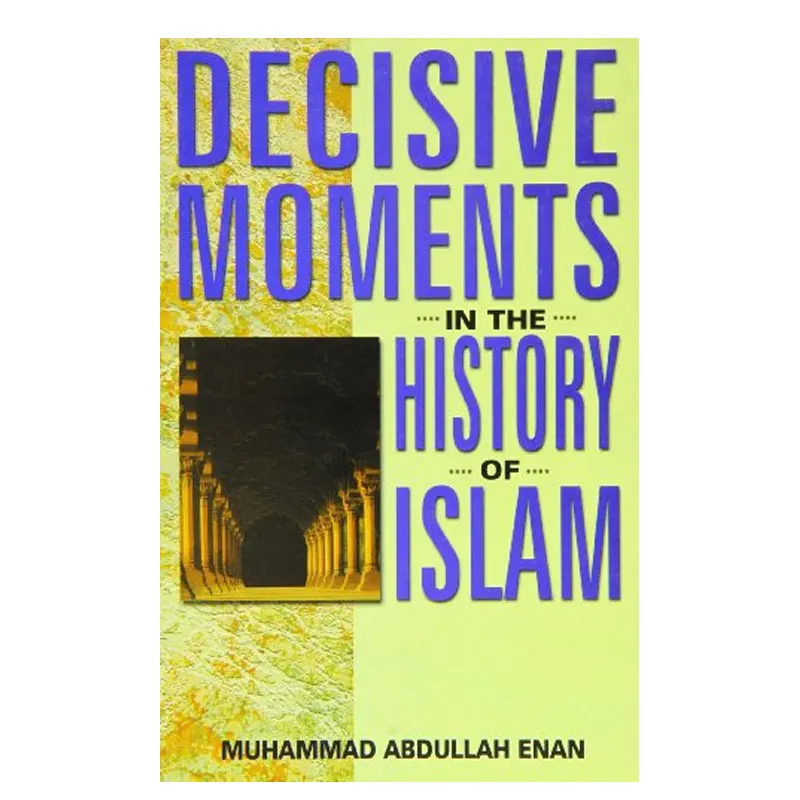
Decisive Moments In The History Of Islam Muhammad Abdullah Enan Goodword (English)

₹100.00
- Decisive Moments In The History Of Islam Muhammad Abdullah Enan Goodword (English)
- Themes of the Book
- Cause and Effect: Enan does not just narrate events but analyzes why they happened and what consequences they had.
- Moral Lessons: Each decisive moment carries lessons about leadership, unity, justice, and the dangers of corruption and division.
- Balance of Power: The book shows how Islam rose when Muslims were united and just, and declined when they were divided and materialistic.
- Global Impact: Enan places Islamic history within world history, showing how Muslim events influenced Europe, Africa, and Asia.Relevance of the Book
- The book is valuable for students, researchers, and general readers because it simplifies complex history into key moments.
- It provides lessons for today: unity, knowledge, and justice are the keys to revival.
- It also reminds readers that Islam has been a major shaper of world civilization.
Out of stock
Decisive Moments In The History Of Islam Muhammad Abdullah Enan Goodword (English)
Introduction
Muhammad Abdullah Enan (1896–1986) was an Egyptian historian and scholar, widely respected for his objective and scholarly works on Islamic and medieval history. One of his most popular books, Decisive Moments in the History of Islam, focuses on those turning points that shaped not just the Muslim world but also the course of global history.
Unlike general histories that move chronologically across centuries, Enan adopts a selective and thematic approach. He picks specific historical events and presents them as “decisive moments,” because these events changed the destiny of Islamic civilization—sometimes leading to expansion and progress, and other times to decline and loss.
This book is widely admired for its analytical style, clarity of narrative, and fairness. It also serves as a reminder that history is not a straight path but a series of choices and confrontations where the outcome often defines generations to come.
Scope of the Book
The book does not attempt to cover the entire history of Islam but focuses on critical episodes that had long-lasting consequences. Enan explores these moments in detail, analyzing not only what happened but also why it happened, what alternatives were possible, and what lessons can be drawn.
Some of the most important decisive moments discussed include:
1. The Hijrah (Migration to Madinah, 622 CE)
The book begins with the Prophet Muhammad’s (peace be upon him) migration from Makkah to Madinah, known as the Hijrah.
Enan explains that this was not merely a physical migration but the beginning of the Islamic community (Ummah).
In Makkah, Islam was a persecuted faith. In Madinah, it became a functioning society with laws, governance, and unity.
The Hijrah marks the start of the Islamic calendar because it was the decisive step that transformed Islam into a socio-political force.
2. The Battle of Badr (624 CE)
Enan identifies Badr as another turning point.
A small band of Muslims, poorly equipped, defeated the much larger Quraysh army.
This victory boosted the morale of Muslims, gave legitimacy to their cause, and signaled that Islam was destined to rise despite the odds.
The outcome of Badr strengthened the Prophet’s leadership and made Islam a serious power in Arabia.
3. The Caliphate of Umar ibn al-Khattab (634–644 CE)
Enan pays special attention to the leadership of the second Caliph, Umar.
Under him, Islam expanded rapidly into Syria, Egypt, Iraq, and Persia.
Umar established a strong administrative structure, justice system, and public treasury.
His rule is described as a decisive moment because it laid down the principles of governance that influenced Muslim rulers for centuries.
4. The Battle of Karbala (680 CE)
The tragic martyrdom of Imam Husayn (RA), grandson of the Prophet (PBUH), at Karbala is highlighted as a spiritual and political turning point.
It deepened divisions between Muslims, eventually leading to the Sunni-Shia split.
Enan treats Karbala not only as a tragedy but also as a moral lesson about standing up against injustice and tyranny.
5. The Fall of Damascus and Rise of the Umayyads (661 CE onwards)
The shift of power from Madinah to Damascus under the Umayyads was a moment of transformation.
The Caliphate moved from being a simple, community-oriented rule to a dynastic empire.
Enan sees this as both progress (expansion into Spain, Central Asia, and North Africa) and a step towards decline (worldly luxuries, weakening of spiritual values).
6. The Abbasid Golden Age (750–1258 CE)
Enan devotes space to the Abbasid era, especially the brilliance of Baghdad as the intellectual capital of the Muslim world.
This was the age of great scholars, scientists, and philosophers: Al-Khwarizmi, Ibn Sina, Al-Farabi, and many others.
The Abbasids preserved and expanded knowledge that later inspired the European Renaissance.
Yet, Enan also notes that political fragmentation and luxury weakened the caliphate, leading to vulnerability.
7. The Crusades (1095–1291 CE)
Enan considers the Crusades a critical test of Muslim resilience.
At first, Muslims were divided and suffered the loss of Jerusalem in 1099.
Later, leaders like Salahuddin Ayyubi (Saladin) unified the Muslim front and recaptured Jerusalem in 1187.
This event is decisive because it restored Muslim confidence and prestige, while also shaping relations between the Islamic world and Europe.
8. The Fall of Baghdad (1258 CE)
The Mongol invasion and destruction of Baghdad in 1258 is one of the darkest decisive moments.
The cultural and intellectual capital of the Muslim world was destroyed, and hundreds of thousands were killed.
Enan describes it as the end of the classical Islamic age.
Yet, from this tragedy emerged resilience, as Islam later spread among the Mongols themselves, showing the adaptability of the faith.
9. The Fall of Granada (1492 CE)
The end of Muslim Spain (Al-Andalus) is another crucial turning point.
Granada, the last Muslim stronghold, fell to Ferdinand and Isabella of Spain.
This marked the end of 800 years of Muslim rule in Spain, which had been a beacon of knowledge, science, and culture in Europe.
The fall symbolized the decline of Muslim political power in the West and the rise of European dominance.
10. The Rise of the Ottoman Empire (14th–20th century)
The Ottomans represent a decisive revival of Muslim power after centuries of decline.
The capture of Constantinople in 1453 by Sultan Mehmet II was a world-changing event, ending the Byzantine Empire.
The Ottomans became a global superpower, ruling for more than 600 years across three continents.
Enan notes both the achievements (law, architecture, stability) and the later stagnation that led to their decline.
11. The Age of European Colonialism (18th–20th century)
Enan argues that the rise of European colonial powers over Muslim lands was one of the most decisive modern moments.
Muslims lost political independence in large parts of Asia and Africa.
However, this period also gave birth to reformist movements, intellectual revival, and struggles for independence.
Themes of the Book
Cause and Effect: Enan does not just narrate events but analyzes why they happened and what consequences they had.
Moral Lessons: Each decisive moment carries lessons about leadership, unity, justice, and the dangers of corruption and division.
Balance of Power: The book shows how Islam rose when Muslims were united and just, and declined when they were divided and materialistic.
Global Impact: Enan places Islamic history within world history, showing how Muslim events influenced Europe, Africa, and Asia.
Relevance of the Book
The book is valuable for students, researchers, and general readers because it simplifies complex history into key moments.
It provides lessons for today: unity, knowledge, and justice are the keys to revival.
It also reminds readers that Islam has been a major shaper of world civilization.
Conclusion
Muhammad Abdullah Enan’s Decisive Moments in the History of Islam is not a mere chronicle of rulers and battles. It is a thoughtful study of turning points that defined the destiny of Muslims. From the Hijrah to the fall of Granada, from the Abbasid Golden Age to the Ottoman rise, and from the Crusades to colonialism, Enan highlights events that forever changed the trajectory of Islamic civilization.
The book teaches us that history is shaped by decisions—sometimes courageous and sometimes weak. The glory of Islam came from faith, justice, knowledge, and unity. Its decline came from division, luxury, and loss of vision. By studying these decisive moments, Muslims and non-Muslims alike can better appreciate the remarkable journey of a civilization that has influenced the world for over fourteen centuries.
| Weight | 300 g |
|---|---|
| Dimensions | 20 × 14 × 4 cm |
Only logged in customers who have purchased this product may leave a review.
Related Products
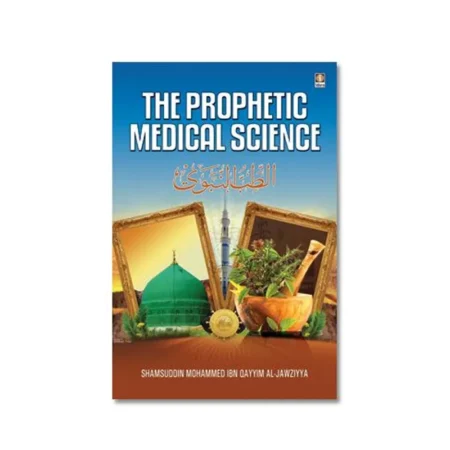
- The Prophetic Medical Science Shamsuddin Mohammed Ibn Qayyim Al-Jawziyya Idara (English)
- Purpose and Scope of the Book
- Preservation of Health in Islam: The book aims to highlight how Islam promotes personal hygiene, healthy living, and disease prevention.
- Spiritual and Ethical Integration: Prophetic medicine is not just physical; it incorporates mental and spiritual health.
- Practical Guidance: Offers remedies, preventive measures, and dietary recommendations that are relevant for contemporary readers.
- Educational Resource: Serves scholars, students, healthcare professionals, and anyone interested in the intersection of medicine and Islamic guidance.
- The book emphasizes that health is a divine trust and that human beings have a responsibility to care for their bodies and souls.
- 2. Concept of Health in Prophetic Medicine
- Holistic Approach: Health encompasses physical, mental, and spiritual well-being. A balanced lifestyle ensures harmony among body, mind, and soul.
- Preventive Care: Emphasizes diet, cleanliness, exercise, and moderation as primary means of disease prevention.
- Spiritual Health: Strong faith, prayer, gratitude, and ethical conduct are considered essential for overall well-being.
- Natural Remedies: The Prophet recommended natural substances like honey, black seed (Nigella sativa), dates, olive oil, and water for healing and maintenance of health.
1 in stock

- Conclusion
- Mukhtasar Tareekh Mashaikh-e-Awadh by Dr. Razi Ahmad Kamal is a concise yet comprehensive study of the spiritual, cultural, and social contributions of Sufi saints in Awadh.
- The book highlights the spiritual guidance, ethical influence, and societal reform brought about by the Mashaikh.
- Sufi saints acted as moral exemplars, educators, and cultural patrons, shaping Awadh’s identity and leaving a lasting legacy.
- The work demonstrates how Islamic spirituality, when integrated with social and cultural engagement, creates a balanced and harmonious society.
- Key Takeaways:
- Sufi saints of Awadh were central to both spiritual guidance and societal welfare.
- Their teachings emphasized ethics, devotion, and service to humanity.
- Different Sufi orders (Chishti, Qadiri, Suhrawardi, Naqshbandi) contributed unique perspectives and practices.
- Saints influenced governance, culture, education, and interfaith harmony.
- The legacy of Awadh’s Mashaikh continues to inspire spirituality, literature, and cultural identity in the region.
2 in stock
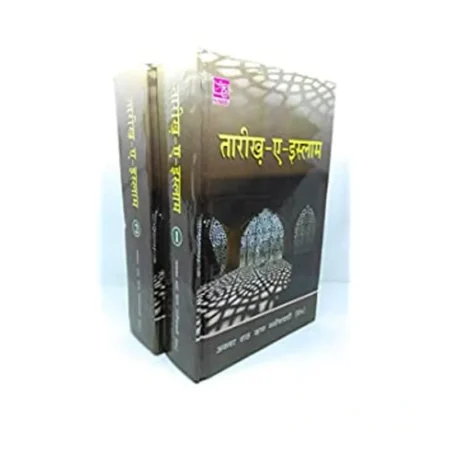
- Tarikh-E-Islam Akbar Shah Khan Najibabadi Al Hasanat (Hindi) 2 Volume Set
- Key Takeaways:
- Islam emerged in a challenging socio-political environment and transformed Arabian society through spiritual and ethical teachings.
- Prophet Muhammad’s (PBUH) leadership combined moral integrity, diplomacy, and strategic acumen.
- The Rashidun Caliphs laid the foundations of governance, justice, and expansion that shaped early Islamic history.
- Umayyad and Abbasid dynasties contributed to political consolidation and cultural flourishing.
- Islamic history provides timeless lessons in leadership, justice, morality, and social responsibility.
- Historical reflection is essential for understanding both the successes and pitfalls of past Muslim societies.
2 in stock
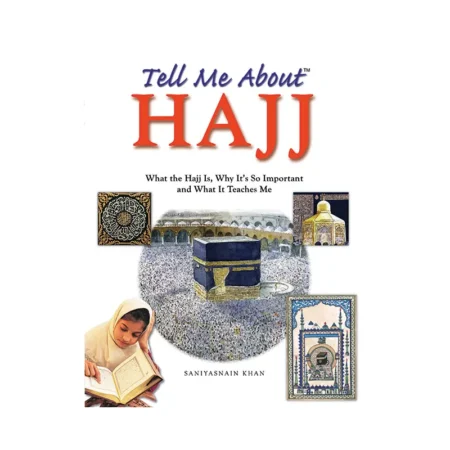
- Tell Me About Hajj (Hb) Saniyasnain Khan (Goodword) English
- Key Rituals of Hajj
- 1. Tawaf (Circumambulation around the Ka’bah)
- Pilgrims walk seven times around the Ka’bah, moving in a counterclockwise direction. This act symbolizes:
- Worship and devotion to Allah alone
- Unity among Muslims, all moving together in harmony
- Remembering the connection between humans and their Creator
2 in stock
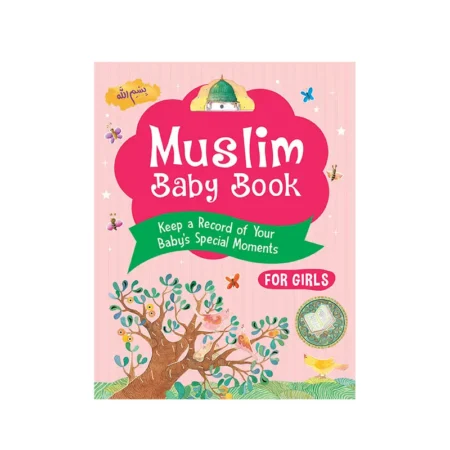
- Muslim Baby Book For Girls (Goodword) English
- Introducing Islamic concepts such as Allah, the Prophet Muhammad (S), prayers, and simple acts of worship.
- Teaching basic duas (supplications), Islamic greetings, and manners in an easy-to-understand format.
- Providing a resource for parents and caregivers to guide early religious education at home.
- Encouraging cognitive development through interactive elements, repetition, and visual learning.
- Promoting moral and ethical development by highlighting values such as kindness, honesty, gratitude, and respect.
1 in stock
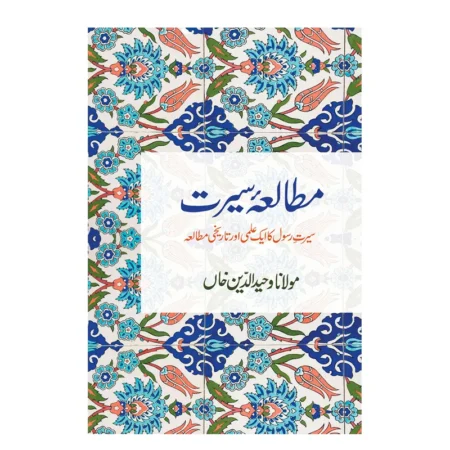
- Mutala-E-Seerat (Goodword ) Urdu
4 in stock

- A Dictionary Of Muslim Names Prof. S. A. Rahman Goodword (English)
- Key Features of the Dictionary
- Alphabetical Arrangement
Names are listed alphabetically for ease of reference. Both male and female names are included, with separate indications where necessary. - Meanings and Origins
Each name is accompanied by: - Its meaning in English.
- Its linguistic origin (Arabic, Persian, Turkish, Urdu, etc.).
- Its religious or historical significance, if applicable.
- Pronunciation Guides
Some editions provide phonetic spellings to help readers pronounce names correctly. - Focus on Positive and Virtuous Meanings
Names often carry religious, moral, or noble qualities, reflecting Islamic values, such as honesty, piety, bravery, and beauty. - Quranic and Hadith References
Many names are drawn from Quranic terms, names of Prophets, companions, or historical Islamic figures, often with references to their sources.
1 in stock

- The Alhambra Washington Irving (Goodword) English
- Key Takeaways:
- Islam emerged in a challenging socio-political environment and transformed Arabian society through spiritual and ethical teachings.
- Prophet Muhammad’s (PBUH) leadership combined moral integrity, diplomacy, and strategic acumen.
- The Rashidun Caliphs laid the foundations of governance, justice, and expansion that shaped early Islamic history.
- Umayyad and Abbasid dynasties contributed to political consolidation and cultural flourishing.
- Islamic history provides timeless lessons in leadership, justice, morality, and social responsibility.
- Historical reflection is essential for understanding both the successes and pitfalls of past Muslim societies.
1 in stock

- C.B.S.E. Arabic Grammar Amanulla Vadakkangara (Goodword) English/Arabic
- Educational and Cognitive Impact
- Cognitive Development:
- Enhances logical thinking, memory, and analytical skills through grammar exercises.
- Linguistic Competence:
- Students develop proficiency in reading, writing, and sentence construction.
- Cultural Awareness:
- Exposure to Arabic culture, expressions, and Islamic phrases enriches cultural literacy.
- Exam Preparation:
- Exercises and structured learning help students perform well in CBSE assessments.
- Confidence Building:
- Progressive learning fosters fluency, comprehension, and the ability to construct meaningful sentences.
2 in stock

- Paperback: 271 pages
- Language: English
1 in stock
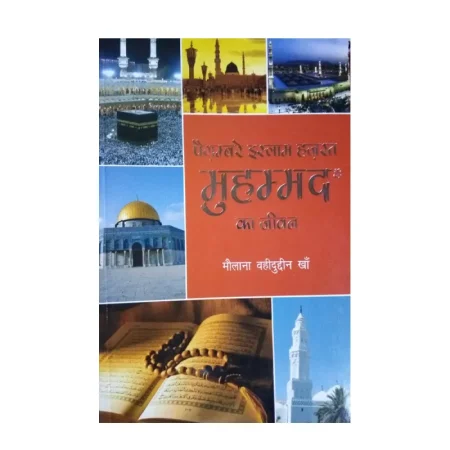
- Payghambar E Islam Hazrat Muhammad Ka Jeevan Maulana Wahiduddin Khan (Goodword) Hindi
1 in stock

- A-Z Ready Reference Of The Quran Abdullah Yusuf Ali Goodword (English)
1 in stock
Reviews
There are no reviews yet.