
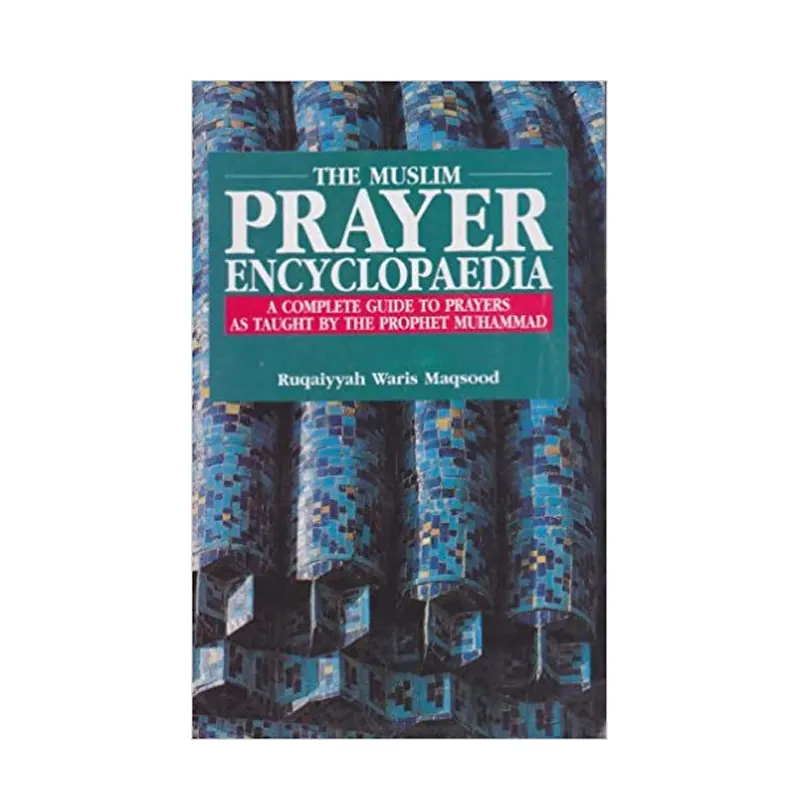
The Muslim Prayer Encyclopaedia Ruqaiyyah Waris Maqsood (Goodword) English

Original price was: ₹70.00.₹60.00Current price is: ₹60.00.
- The Muslim Prayer Encyclopaedia Ruqaiyyah Waris Maqsood (Goodword) English
- Detailed instructions on obligatory, optional, and special prayers.
- Integration of Qur’anic verses, Hadith references, and historical context.
- Clear step-by-step guidance supported by illustrations.
- Emphasis on both the outer practice and inner spiritual dimensions of prayer.
- Accessibility for beginners while providing depth for advanced learners.
Out of stock
Muslim Prayer Encyclopaedia – Ruqaiyyah Waris Maqsood (Goodword, English)
The Muslim Prayer Encyclopaedia by Ruqaiyyah Waris Maqsood is a comprehensive and accessible guide to Islamic prayer (Salah) and worship practices. Published by Goodword, this encyclopedia serves as an essential resource for Muslims seeking to understand the theological, practical, and spiritual dimensions of prayer. It is designed to cater to readers ranging from beginners to advanced students of Islamic studies, combining detailed instructions with explanations of underlying meanings and historical context.
1. Purpose and Significance
The primary aim of the encyclopaedia is to provide a thorough and practical guide to all aspects of Muslim prayer and related acts of worship:
Spiritual Guidance: Salah is the second pillar of Islam, and performing it correctly is central to a Muslim’s faith. This encyclopedia emphasizes the spiritual significance of prayer as a direct connection with Allah.
Practical Instruction: It provides step-by-step guidance on performing prayers correctly, including Wudu (ablution), physical postures, and recitations.
Educational Resource: The book functions as a reference for students, teachers, and scholars, combining clarity with depth.
Cultural and Historical Insight: It explains the origins and evolution of prayer practices, providing context for contemporary observances.
By compiling all relevant information in one volume, the encyclopedia ensures that readers can study, review, and practice prayers with confidence and understanding.
2. Structure and Layout
The book is systematically organized to make learning comprehensive and user-friendly:
Thematic Arrangement: Topics are grouped logically, covering ritual purity, obligatory prayers, optional prayers, supplications (Duas), and special prayers during festivals or significant occasions.
Alphabetical Indexing: Key terms, concepts, and prayers are arranged alphabetically in some sections, making it easy to locate specific topics.
Step-by-Step Instructions: Each prayer is described with its movements, recitations, and conditions clearly detailed.
Visual Aids: Diagrams and illustrations show prayer postures, hand positions, and sequences to aid proper performance.
Footnotes and References: References to Qur’anic verses, Hadith, and classical scholarly works provide authenticity and depth.
This structure allows readers to approach the encyclopedia as both a learning tool and a reference guide, supporting both study and daily practice.
3. Core Content
The encyclopedia covers all major aspects of Muslim prayer, including:
Ablution (Wudu) and Ritual Purity: Detailed instructions on how to perform Wudu, Ghusl (full-body purification), and Tayammum (dry ablution), including conditions, intentions (Niyyah), and common mistakes to avoid.
Obligatory Prayers (Fard Salah): Step-by-step guidance for the five daily prayers—Fajr, Dhuhr, Asr, Maghrib, and Isha—including the number of units (Rak’ahs), recitations, and recommended postures.
Congregational Prayers (Jama’ah): Explanation of praying in congregation, the role of the Imam, and etiquettes of collective worship.
Friday Prayer (Jumu’ah): Instructions for the weekly congregational prayer, its significance, and sermon (Khutbah) etiquettes.
Eid and Special Prayers: Coverage of Eid al-Fitr and Eid al-Adha prayers, Tarawih during Ramadan, and other optional prayers with historical context.
Supplications (Duas): Selected Qur’anic and prophetic supplications for various occasions, including morning and evening remembrances, seeking forgiveness, and guidance.
Postures and Physical Movements: Illustrations of standing (Qiyam), bowing (Ruku), prostration (Sujood), and sitting (Tashahhud), with instructions for proper alignment and spiritual focus.
Prayer Etiquettes (Adab): Discussion of mental and spiritual preparation, including concentration (Khushu’), sincerity (Ikhlas), humility, and mindfulness during prayer.
4. Teaching and Learning Advantages
This encyclopedia is designed to support learners of all ages and backgrounds:
Stepwise Learning: Beginners can follow detailed instructions for each prayer, while advanced learners can study supplementary rules and optional practices.
Comprehensive Reference: Scholars and teachers can quickly locate specific information, rules, or supplications.
Visual Learning: Illustrations reinforce textual explanations, reducing errors in physical performance.
Integration of Theory and Practice: Combines spiritual, historical, and practical aspects of prayer, ensuring holistic understanding.
5. Historical and Theological Insights
Ruqaiyyah Waris Maqsood provides context for the development and significance of prayer:
Origins of Salah: Discussion of the Prophet Muhammad’s (PBUH) teachings on prayer, including its divine mandate and spiritual benefits.
Qur’anic Foundations: Key Qur’anic verses emphasizing the obligation, timing, and spiritual purpose of prayer are cited and explained.
Prophetic Traditions (Hadith): Prophetic guidance on proper recitation, postures, and supplementary prayers is referenced throughout, highlighting authentic practices.
Cultural Practices: The book explains variations in prayer practices across different regions and schools of thought while emphasizing core universal principles.
6. Ethical and Spiritual Emphasis
Beyond physical performance, the encyclopedia emphasizes the inner dimensions of prayer:
Mindfulness and Presence: Encourages readers to focus attention on Allah during Salah, avoiding distractions.
Sincerity and Devotion: Highlights the importance of performing prayers for divine approval, not social or habitual reasons.
Consistency and Discipline: Reinforces the role of regular prayer in spiritual growth, character development, and moral responsibility.
7. Practical Tips for Using the Encyclopedia
To maximize benefit:
Learn Sequentially: Begin with Wudu, then progress to obligatory prayers, before exploring optional prayers and supplications.
Practice with Visual Aids: Refer to illustrations while performing prayers to ensure correct physical posture.
Reflect on Meaning: Read footnotes to understand the spiritual significance behind each action and recitation.
Use as a Reference: Keep it handy for clarifying doubts or learning special prayers during festivals, travel, or emergencies.
Integrate into Daily Routine: Apply teachings regularly to develop both proper technique and spiritual mindfulness.
8. Educational Impact
This encyclopedia serves multiple educational functions:
For Individuals: A complete guide for personal learning, improving both correctness and devotion in prayer.
For Families: Can be used to teach children and adults alike, combining visual, textual, and spiritual guidance.
For Educators and Scholars: Acts as a reference for teaching formal courses on Islamic worship or for preparing educational material.
For Community Use: Encourages communal understanding of proper prayer practice, fostering unity and adherence to correct methods.
9. Conclusion
The Muslim Prayer Encyclopaedia by Ruqaiyyah Waris Maqsood (Goodword, English edition) is a comprehensive, authoritative, and user-friendly guide to Muslim prayer. Its major strengths include:
Detailed instructions on obligatory, optional, and special prayers.
Integration of Qur’anic verses, Hadith references, and historical context.
Clear step-by-step guidance supported by illustrations.
Emphasis on both the outer practice and inner spiritual dimensions of prayer.
Accessibility for beginners while providing depth for advanced learners.
By combining practical guidance with theological insights, this encyclopedia ensures that readers can perform prayers correctly, understand their significance, and develop a deeper spiritual connection with Allah. It serves as both a learning tool and a long-term reference, making it indispensable for individuals, families, educators, and scholars seeking a holistic understanding of Islamic worship.
| Weight | 200 g |
|---|---|
| Dimensions | 16 × 10 × 8 cm |
Only logged in customers who have purchased this product may leave a review.
Related Products

- Quran Sharif Muhammad Farooq Khan Al Hasanat (Hindi/Roman)
- Structure and Features
- Arabic Text
- Maintains authentic Uthmani script.
- Includes ayah numbers, surah headings, and section markers (Ruku) for navigation.
- Hindi Translation
- Simple, concise Hindi explanation for each verse.
- Focuses on meaning, context, and practical guidance.
- Roman Urdu Transliteration
- Guides readers in correct pronunciation of Arabic verses.
- Particularly helpful for beginners, students, and Hindi speakers unfamiliar with Arabic script.
- Explanatory Commentary
- Includes brief explanations, highlighting:
- Historical context (Asbab al-Nuzul)
- Moral and spiritual lessons
- Application in daily life
- Commentary avoids overly complex scholarly discussions, emphasizing clarity and understanding.
- Practical Layout
- Arabic text, Hindi translation, and Roman Urdu transliteration are aligned for easy reading.
- High-quality printing ensures clarity, durability, and usability.
1 in stock
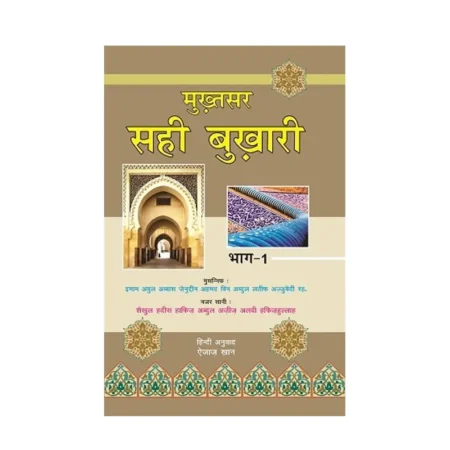
- Mukhtasar Sahih Bukhari – (3 Vol. Set)
- Key Features of the Mukhtasar Edition
- 1. Concise and Reader-Friendly
- Focuses on core Hadiths, eliminating repetitive narrations found in the original Sahih Bukhari.
- Makes it practical for students and casual readers to understand Prophetic guidance.
- 2. Hindi Translation
- Ensures comprehension for Hindi-speaking readers.
- Clarifies terminology, context, and subtle meanings.
- 3. Structured for Learning
- Volumes are organized thematically, aiding memorization and study.
- Chapters include acts of worship, social conduct, moral behavior, and leadership.
- 4. Faith and Moral Guidance
- Highlights Hadiths that emphasize:
- Taqwa (God-consciousness)
- Ethical conduct and social responsibility
- Compassion, honesty, and humility
- Rights and obligations of individuals and communities
3 in stock

- The Holy Qur’An Colour Coded Tajweed Rules Ibs (Arabic)
- Ghunnah (Nasalization): Extended nasal sounds for Noon and Meem under certain conditions. The colour coding ensures learners sustain these sounds correctly.
- Ikhfa’ (Concealment): Noon Saakin or Tanween sounds are partially merged with following letters, producing a light nasal tone.
- Idgham (Merging): Letters are merged smoothly, either with Ghunnah (nasalized) or without, depending on the following letter.
- Iqlab (Conversion): Noon Saakin is transformed into a Meem sound when followed by a specific letter (Baa), producing a soft and blended recitation.
- Qalqalah (Echoing): Certain consonants produce a slight bounce when in Sukoon, and the colour helps learners anticipate the echo effect.
- Madd (Prolongation): Vowels are stretched for specific counts; different types of Madd (like natural, obligatory, or temporary) are highlighted using distinct colours.
- Rules of Noon and Meem Saakin: Various rules including Ikhfa’, Idgham, and Iqlab are visually reinforced, aiding both recognition and correct pronunciation.
- Other Articulation Rules: Proper tongue and lip positioning for letters, though not explicitly colour-coded, are often reinforced in accompanying guides or teacher instructions.
1 in stock

- Riyazul Quran 30 Para Set Ibs (Arabic)
- Structure and Features
- Arabic Text (Uthmani Script)
- Complete Qur’an in authentic Uthmani script.
- Includes ayah numbering, Surah headings, and Ruku markers.
- Full diacritics for accurate pronunciation and Tajweed practice.
- Division into 30 Para (Juz’)
- Traditional division enables structured recitation.
- Each Para can be recited daily to complete the Qur’an in a month.
- Useful for memorization and review.
- Readable Layout
- Clear font and balanced spacing for comfortable reading.
- Suitable for adults, students, and older children.
- Durable and Practical
- Each Para is bound individually or as part of a full set, making it easy to handle and use regularly.
- Sturdy binding ensures frequent recitation without wear.
- Optional Features
- Some editions may include tables, page numbers, or Surah index.
- Can be integrated with Tajweed books or Arabic learning resources.
1 in stock

- In The Shade Of The Holy Qur’An Sayyid Qutb Vol.30 Idara (English)
- Significance of Volume 30
- Concluding Lessons of the Qur’ān:
- The final surahs emphasize spiritual purity, ethical conduct, gratitude, and divine reliance, summarizing the core moral and spiritual messages.
- Accessible for Daily Reflection:
- Short, powerful surahs make this volume ideal for meditation, memorization, and application in daily life.
- Bridging Traditional and Modern Understanding:
- Sayyid Qutb’s tafsīr links classical meanings with contemporary human challenges, making it relevant for modern readers.
- Strengthening Faith and Moral Character:
- Encourages readers to internalize faith, uphold moral principles, and maintain ethical behavior in all aspects of life.
2 in stock

- Conclusion
- Tafseer Ahsanul Kalam (Darussalam) by Dr. Muhammad Muhsin Khan and Hafiz Salahuddin Yusuf:
- Provides clear, authentic, and accessible explanations of the Qur’an.
- Integrates spiritual guidance, moral ethics, and social reform, reflecting Islam’s holistic approach.
- Uses a multi-lingual format to make classical scholarship accessible for modern readers.
- Encourages reflection, ethical behavior, and practical application of Qur’anic guidance.
- Serves as a reliable resource for scholars, students, and anyone seeking a comprehensive understanding of the Qur’an.
2 in stock
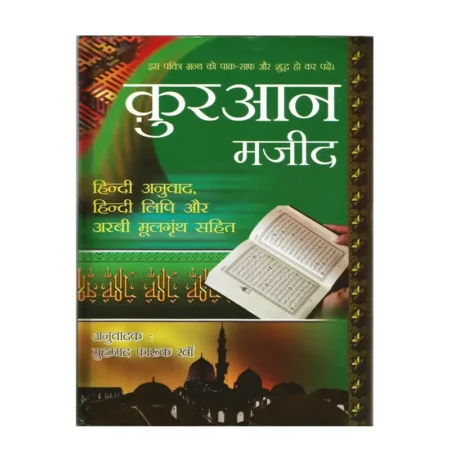
- Quran Majeed ( Maulana Muhammad Farooq Khan ) Hindi/Maktaba Al Hasnat
- In Short
- Author: Maulana Muhammad Farooq Khan
- Language: Hindi
- Purpose: Comprehensible understanding of Qur’anic guidance
- Method: Arabic text + Hindi translation + explanatory notes
- Focus: Faith, ethics, morality, spirituality, and practical application
- Audience: Students, teachers, families, and general Hindi-speaking readers
2 in stock

- Ahsanul Qawaid Mohammad Yunus Idara (Arabic/English)
- Spiritual and Educational Benefits
- Enhanced Qur’anic Understanding – Grammar knowledge allows readers to discern subtle meanings, differentiate between literal and figurative expressions, and interpret verses accurately.
- Improved Recitation and Tajweed – Understanding syntax helps with proper pauses, elongations, and emphasis during recitation.
- Facilitates Memorization (Hifz) – Recognizing grammatical patterns aids in memorization by providing contextual understanding, rather than rote learning.
- Bridge to Tafsir (Exegesis) – Knowledge of Arabic grammar is essential for Tafsir studies. By mastering grammar, readers can appreciate scholars’ explanations and contextual meanings more deeply.
- Practical Use for Islamic Education – The book is suitable for students, teachers, and madrasas, providing a structured grammar curriculum for Qur’anic studies.
40 in stock

- Tazkeerul Quran ( Maulana Wahiduddin Khan ) Goodword Arabic/Hindi
- The central theme of Tazkeerul Quran is that the Qur’an is not merely a book of rituals, law, or theology, but a comprehensive guide for building a moral, ethical, and spiritually grounded life.
- Maulana Wahiduddin Khan stresses that the Qur’an addresses the human heart before it addresses human actions.
- It is concerned with shaping the inner self, which in turn manifests in ethical behavior, compassionate treatment of others, and a sense of accountability before God.
- This perspective underscores the Qur’an’s timeless relevance, showing that its message is universal and not confined to a specific culture, era, or society.
- The book also addresses the concept of human purpose and responsibility.
- Maulana Khan explains that the Qur’an presents life as a trust (Amanah) from God, and human beings are accountable for how they fulfill this trust.
- This idea encompasses not only individual ethical conduct but also the broader social and environmental responsibilities.
- The Qur’an encourages reflection, personal accountability, and the pursuit of knowledge to live a life aligned with divine guidance.
- Tazkeerul Quran highlights that spirituality in Islam is practical; it requires action rooted in moral consciousness, and mere ritual without inner transformation is insufficient.
2 in stock

- Practical Lessons for Believers
- Rise from Complacency
- Spiritual and moral growth requires effort; believers must actively seek knowledge, worship, and ethical living.
- Purify the Heart and Mind
- Inner cleansing—removing arrogance, selfishness, and negligence—is essential for divine guidance to flourish.
- Be Conscious of Every Action
- Awareness that all deeds are recorded fosters moral restraint and responsibility.
- Serve Humanity Ethically
- Social justice, helping the needy, and ethical conduct reflect spiritual commitment.
- Prepare for the Hereafter
- Recognition of death, resurrection, and divine judgment motivates believers to align worldly actions with spiritual goals.
- Sincerity in Worship
- Actions and worship should be purely for Allah, not for social recognition or personal gain.
2 in stock
How to Use This Mushaf for Maximum Benefit
- Daily Recitation:
Allocate a set time for daily recitation. Focus on correct pronunciation, using the color-coded Tajweed rules as a guide. - Segmented Memorization:
Memorize small sections (e.g., a few verses or a page) before moving to the next. Use the verse numbers and Hizb divisions for systematic progress. - Repetition with Tajweed:
Recite repeatedly with attention to colors. For instance, pause and observe the letters marked for Ikhfa or Qalqalah until pronunciation is correct. - Record and Compare:
Advanced learners can record their recitation and compare with Tajweed rules to identify mistakes. - Teacher Feedback:
Regularly consult a teacher to correct subtle mistakes that color coding alone may not catch.
1 in stock
1 in stock
Reviews
There are no reviews yet.