
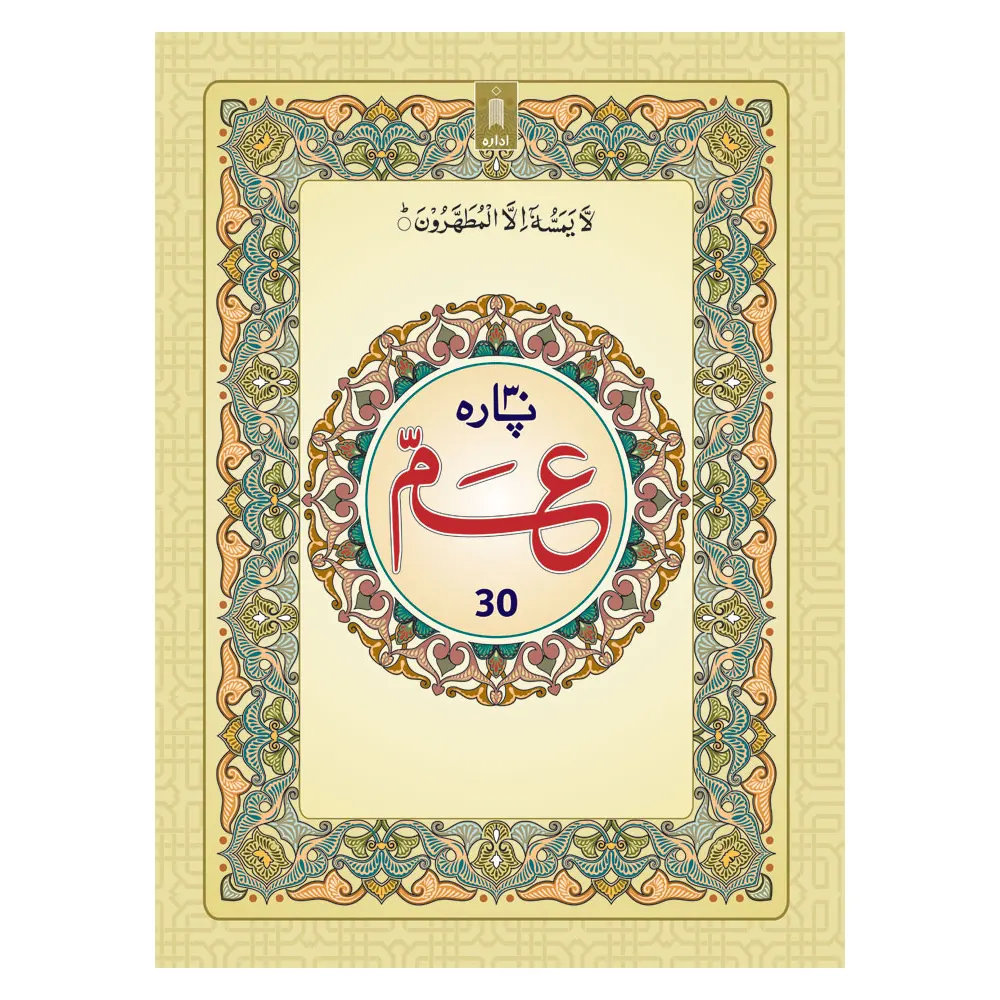
Para 30 Amma Ap (Ima) Arabic


Original price was: ₹25.00.₹20.00Current price is: ₹20.00.
Key Themes of Para 30:
- Monotheism and Faith: Emphasis on worshiping one God sincerely.
- Afterlife & Accountability: Constant reminders of resurrection, judgment, reward, and punishment.
- Moral Conduct: Encouragement to act justly, help others, and maintain integrity.
- Reflection on Nature: Observing creation as signs of God.
- Human Weakness and Divine Mercy: Recognition of human limitations and reliance on God’s guidance.
Out of stock
Para 30 (Juz ‘Amma)
Para 30 of the Qur’an, also known as Juz ‘Amma, comprises the last section of the Qur’an, starting from Surah An-Naba (78) to Surah An-Nas (114). This part of the Qur’an is particularly significant as it contains short, concise chapters that are commonly memorized and recited in daily prayers. Despite their brevity, these surahs contain deep guidance, moral lessons, and reminders about faith, the afterlife, and righteous conduct.
1. Surah An-Naba (78) – The Great News
This surah opens with a question about the “Great News,” which refers to the Day of Judgment. It reminds people of God’s creation—the heavens, the earth, mountains, and human life. The surah emphasizes that the signs of God are evident in the natural world. It contrasts the fate of the righteous, who will enjoy Paradise, with that of the disbelievers, who will face severe punishment. The key lesson is accountability: all humans will be judged for their deeds.
2. Surah An-Nazi’at (79) – Those Who Pull Out
This surah describes the angels who extract souls at the time of death and emphasizes resurrection and the Day of Judgment. It draws attention to the arrogance of Pharaoh as an example of disbelief. The surah encourages reflection on history and past communities to learn from their fate. Belief in the afterlife is central to maintaining moral consciousness.
3. Surah Abasa (80) – He Frowned
Surah Abasa addresses a specific incident where Prophet Muhammad (peace be upon him) frowned at a blind man who approached him for guidance. The surah highlights that God values sincerity and humility over social status. It teaches that the guidance of God is for everyone, regardless of worldly standing.
4. Surah At-Takwir (81) – The Overthrowing
This surah describes the cosmic signs of the Day of Judgment: the sun wrapped up, stars falling, and mountains vanishing. Such vivid imagery is meant to instill awareness of the transient nature of the world. Believers are reminded to remain conscious of God and the afterlife, as worldly life is temporary and deceptive.
5. Surah Al-Infitar (82) – The Cleaving
Al-Infitar continues the theme of the afterlife. It highlights human creation, accountability, and divine justice. The surah reminds us that angels record every action, and people will face the consequences of their deeds. This underscores the importance of ethical behavior and moral responsibility.
6. Surah Al-Mutaffifin (83) – Those Who Give Less
This surah warns against dishonesty in trade and dealings. The term “mutaffifin” refers to those who cheat others in weights and measures. It stresses that such behavior is not hidden from God, and those who deceive will be punished while the righteous will enjoy Paradise. Integrity and fairness are emphasized as key virtues.
7. Surah Al-Inshiqaq (84) – The Splitting
Al-Inshiqaq vividly portrays the Day of Judgment, where the sky splits apart and people’s deeds are revealed. Each individual receives a record of their deeds, highlighting personal accountability. The surah inspires fear of God and motivates believers to lead a righteous life.
8. Surah Al-Buruj (85) – The Constellations
This surah recounts the story of believers persecuted for their faith and assures that God sees all acts of oppression. It emphasizes steadfastness in faith and the ultimate triumph of truth. The surah reinforces that worldly trials are temporary and that God rewards patience and devotion.
9. Surah At-Tariq (86) – The Morning Star
At-Tariq draws attention to the creation of humans and the protection of the soul by God. It reminds humans of their humble origin and that God is aware of all actions, even secret ones. Reflection on human creation encourages gratitude and mindfulness of God’s presence.
10. Surah Al-A’la (87) – The Most High
This surah praises God, highlighting His perfection, power, and knowledge. It encourages worship, remembrance of God, and following divine guidance. The surah teaches that worldly achievements are transient, and true success lies in obedience to God and preparation for the Hereafter.
11. Surah Al-Ghashiyah (88) – The Overwhelming Event
The surah describes the Day of Judgment and the contrasting fates of the righteous and the disbelievers. The righteous will enjoy gardens and blessings, while the disbelievers will face severe torment. It serves as a warning and a reminder to live a life guided by faith and good deeds.
12. Surah Al-Fajr (89) – The Dawn
This surah warns against arrogance and forgetting God, using the examples of past nations such as ‘Ad, Thamud, and Pharaoh. It emphasizes the consequences of disobedience and injustice. However, it also reassures the patient and righteous of reward and divine mercy.
13. Surah Al-Balad (90) – The City
Al-Balad focuses on human struggle, moral responsibility, and acts of charity. It encourages helping the poor, freeing captives, and guiding others toward righteousness. The surah teaches that true success is measured by moral action, not wealth or status.
14. Surah Ash-Shams (91) – The Sun
Ash-Shams emphasizes the duality of the soul: it can incline toward righteousness or corruption. By reflecting on natural phenomena, humans are urged to purify their souls through discipline, worship, and moral behavior.
15. Surah Al-Lail (92) – The Night
The surah contrasts the paths of the righteous and the wicked. Those who give charity and fear God will succeed, while those who deny truth and indulge in selfishness will fail. It emphasizes personal choice and accountability.
16. Surah Ad-Duhaa (93) – The Morning Hours
This surah comforts Prophet Muhammad (peace be upon him) during a period of hardship. It reassures that God has not forsaken him and encourages gratitude and service to the needy. It highlights divine care and personal patience during trials.
17. Surah Al-Inshirah (94) – The Expansion
Al-Inshirah reminds that after hardship comes ease. It teaches reliance on God, patience, and gratitude. Spiritual resilience and hope are central themes.
18. Surah At-Tin (95) – The Fig
At-Tin stresses human dignity and potential for righteousness. God has created humans in the best form, but success depends on faith and ethical behavior. The surah underlines human responsibility in choosing the path of good.
19. Surah Al-‘Alaq (96) – The Clot
This surah, the first revelation, emphasizes knowledge, learning, and humility. It reminds humans of their origin from a clot of blood and encourages reflection and obedience to God. The surah underscores the importance of education and moral responsibility.
20. Surah Al-Qadr (97) – The Night of Power
Al-Qadr highlights the significance of Laylat al-Qadr, the night in which the Qur’an was revealed. Worship on this night is better than a thousand months. It teaches the value of divine guidance and the importance of spiritual devotion.
21. Surah Al-Bayyina (98) – The Clear Proof
This surah underscores the role of divine revelation and clear guidance sent to humanity. It distinguishes between the righteous, who believe and act, and those who deny the truth.
22. Surah Az-Zalzalah (99) – The Earthquake
Az-Zalzalah describes the Day of Judgment through a vivid depiction of the earth shaking and revealing deeds. It emphasizes that every action, no matter how small, will be accounted for.
23. Surah Al-Adiyat (100) – The Chargers
This surah depicts human greed and ingratitude while highlighting accountability on the Day of Judgment. It serves as a warning against materialism and self-deception.
24. Surah Al-Qari’ah (101) – The Calamity
Al-Qari’ah describes the cataclysmic Day of Judgment and the weighing of deeds. It stresses the finality of divine justice.
25. Surah At-Takathur (102) – Rivalry in Worldly Increase
This surah warns against obsession with worldly gains and neglect of the afterlife. Human life is transient, and success is measured by piety, not possessions.
26. Surah Al-Asr (103) – The Time
A short but profound surah emphasizing that humans are in loss except those who believe, do righteous deeds, and advise each other in truth and patience. It summarizes the essence of faith and morality.
27. Surah Al-Humazah (104) – The Slanderer
It condemns slander, backbiting, and greed. The surah warns of severe punishment for those who harm others and hoard wealth unjustly.
28. Surah Al-Fil (105) – The Elephant
Al-Fil recounts God’s protection of the Kaaba from the army of elephants, showing divine intervention in history. It inspires faith in God’s protection.
29. Surah Quraish (106) – Quraysh
This surah urges the Quraysh tribe to worship God who provides sustenance and security. It reminds that gratitude is due for God’s blessings.
30. Surah Al-Ma’un (107) – Small Kindnesses
It highlights the importance of helping the needy and warns against hypocrisy in worship. Faith must translate into action.
31. Surah Al-Kawthar (108) – Abundance
This short surah offers consolation to the Prophet and encourages gratitude, prayer, and sacrifice.
32. Surah Al-Kafirun (109) – The Disbelievers
It emphasizes religious freedom and sincerity in worship, rejecting compromise in faith. The surah promotes respect and steadfastness in belief.
33. Surah An-Nasr (110) – Divine Help
This surah foretells the victory of Islam and encourages gratitude and seeking forgiveness. It highlights humility and recognition of God’s support.
34. Surah Al-Masad (111) – The Palm Fiber
It warns of the punishment of Abu Lahab, an enemy of Islam, symbolizing that opposition to God brings destruction.
35. Surah Al-Ikhlas (112) – Purity of Faith
It defines the oneness of God, rejecting all forms of polytheism. This surah is foundational for understanding Islamic monotheism.
36. Surah Al-Falaq (113) – The Daybreak
Al-Falaq teaches seeking protection from evil forces and harms in the world. It emphasizes reliance on God for safety and security.
37. Surah An-Nas (114) – Mankind
The final surah guides seeking refuge in God from internal and external evil, reinforcing the need for divine support against temptation and harm.
Key Themes of Para 30:
Monotheism and Faith: Emphasis on worshiping one God sincerely.
Afterlife & Accountability: Constant reminders of resurrection, judgment, reward, and punishment.
Moral Conduct: Encouragement to act justly, help others, and maintain integrity.
Reflection on Nature: Observing creation as signs of God.
Human Weakness and Divine Mercy: Recognition of human limitations and reliance on God’s guidance.
Para 30, though concise in its surahs, is rich in guidance, reminding believers of their ultimate purpose, moral responsibility, and the transient nature of worldly life. These chapters are designed to instill mindfulness, gratitude, and steadfastness in faith.
Only logged in customers who have purchased this product may leave a review.
Related Products

- Ahsanul Qawaid Mohammad Yunus Idara (Arabic/English)
- Spiritual and Educational Benefits
- Enhanced Qur’anic Understanding – Grammar knowledge allows readers to discern subtle meanings, differentiate between literal and figurative expressions, and interpret verses accurately.
- Improved Recitation and Tajweed – Understanding syntax helps with proper pauses, elongations, and emphasis during recitation.
- Facilitates Memorization (Hifz) – Recognizing grammatical patterns aids in memorization by providing contextual understanding, rather than rote learning.
- Bridge to Tafsir (Exegesis) – Knowledge of Arabic grammar is essential for Tafsir studies. By mastering grammar, readers can appreciate scholars’ explanations and contextual meanings more deeply.
- Practical Use for Islamic Education – The book is suitable for students, teachers, and madrasas, providing a structured grammar curriculum for Qur’anic studies.
40 in stock

- Pakistani Panj Surah Idara (Arabic)
- Educational Significance
- Foundation for Qur’ānic Literacy
- Helps learners read, memorize, and recite basic Surahs fluently.
- Ease of Memorization
- Short length and thematic focus make it easy for children and beginners to memorize.
- Practical for Daily Life
- Surahs are used in Salah, morning/evening supplications, and protection prayers, giving learners immediate application.
- Spiritual Growth
- Provides reflection on divine guidance, protection, and gratitude, nurturing faith and reliance on Allah.
- Teacher-Friendly Resource
- Structured compilation makes it easy for teachers and parents to guide students step-by-step.
2 in stock

- Key Features and Benefits
- Supports Accurate Recitation:
- Bold letters and correct orthography ensure proper pronunciation and Tajweed adherence.
- Supports long recitation sessions while maintaining concentration and spiritual connection.
- Facilitates Memorization (Hifz):
- Clear verse numbering, organized layout, and prominent Surah divisions help learners memorize efficiently.
- Durable paper ensures repeated use without damage, supporting long-term Hifz practice.
- Durable and Long-Lasting:
- High-quality paper and binding make this edition resilient to frequent daily use.
- Suitable for personal devotion, mosque use, or educational purposes.
- Easy Navigation:
- Surah titles, Ayah numbers, and Juz markers help plan systematic recitation schedules.
- Sajdah markers guide proper prostration during Salah, ensuring ritual compliance.
- Gift-Worthy Edition:
- Elegant design, premium materials, and clear layout make this edition suitable for Hifz completion, religious milestones, Eid, or personal devotion.
4 in stock

- Practical Lessons for Believers
- Rise from Complacency
- Spiritual and moral growth requires effort; believers must actively seek knowledge, worship, and ethical living.
- Purify the Heart
- Inner cleansing—removing arrogance, selfishness, and negligence—is essential for divine guidance to flourish.
- Fear Allah and Be Mindful of Deeds
- Awareness of constant recording of actions instills self-discipline and encourages moral behavior.
- Serve Humanity
- Ethical responsibility extends to societal obligations: helping the needy, speaking truthfully, and avoiding injustice.
- Prepare for the Afterlife
- Recognition of death, resurrection, and divine judgment motivates believers to align worldly actions with spiritual goals.
1 in stock

- Encourages active reflection and contemplation, not passive reading.
- Integrates spiritual, moral, social, and political guidance into a coherent framework.
- Highlights the conceptual unity of the Qur’ān, showing interrelation between themes, stories, and laws.
- Provides practical lessons for both individual conduct and societal organization.
- Emphasizes that the Qur’ān is timeless, addressing both historical contexts and modern challenges.
1 in stock

- The Holy Qur’An Colour Coded Tajweed Rules Ibs (Arabic)
- Ghunnah (Nasalization): Extended nasal sounds for Noon and Meem under certain conditions. The colour coding ensures learners sustain these sounds correctly.
- Ikhfa’ (Concealment): Noon Saakin or Tanween sounds are partially merged with following letters, producing a light nasal tone.
- Idgham (Merging): Letters are merged smoothly, either with Ghunnah (nasalized) or without, depending on the following letter.
- Iqlab (Conversion): Noon Saakin is transformed into a Meem sound when followed by a specific letter (Baa), producing a soft and blended recitation.
- Qalqalah (Echoing): Certain consonants produce a slight bounce when in Sukoon, and the colour helps learners anticipate the echo effect.
- Madd (Prolongation): Vowels are stretched for specific counts; different types of Madd (like natural, obligatory, or temporary) are highlighted using distinct colours.
- Rules of Noon and Meem Saakin: Various rules including Ikhfa’, Idgham, and Iqlab are visually reinforced, aiding both recognition and correct pronunciation.
- Other Articulation Rules: Proper tongue and lip positioning for letters, though not explicitly colour-coded, are often reinforced in accompanying guides or teacher instructions.
1 in stock
- Personal Use: Ideal for daily recitation and personal study.
- Educational: Suitable for students of Quranic recitation and memorization.
- Gift: A thoughtful and meaningful gift for friends, family, or loved ones.
- Always handle the Mushaf with clean hands (wudu).
- Keep it inside its golden purse case when not in use.
- Avoid placing it on the floor or beneath other items.
- Do not expose it to direct sunlight or moisture.
- For frequent travelers, carry it in the purse to ensure safety and respect.
2 in stock
How to Use This Mushaf for Maximum Benefit
- Daily Recitation:
Allocate a set time for daily recitation. Focus on correct pronunciation, using the color-coded Tajweed rules as a guide. - Segmented Memorization:
Memorize small sections (e.g., a few verses or a page) before moving to the next. Use the verse numbers and Hizb divisions for systematic progress. - Repetition with Tajweed:
Recite repeatedly with attention to colors. For instance, pause and observe the letters marked for Ikhfa or Qalqalah until pronunciation is correct. - Record and Compare:
Advanced learners can record their recitation and compare with Tajweed rules to identify mistakes. - Teacher Feedback:
Regularly consult a teacher to correct subtle mistakes that color coding alone may not catch.
1 in stock

- Conclusion
- Para 3-A of Al-Quran Ul Hakeem is a comprehensive guidance on faith, ethics, social justice, and spiritual development. It addresses:
- Ritual and spiritual obedience: Prayer, fasting, and sincerity in worship.
- Moral and ethical conduct: Honesty, humility, and social responsibility.
- Justice and accountability: Laws of retaliation, charity, and fair dealings.
- Reflection on history and divine signs: Learning from past nations and trusting in Allah’s wisdom.
- Inner faith vs. outward appearance: True belief is reflected in consistent, sincere action.
4 in stock

- The Noble Qur’An Tafseer-E-Usmani Shabbir Ahmed Usmani Idara (Arabic/English) 3 Volume Set
- Clear presentation of the Arabic Qur’ān with accurate English translation.
- Detailed commentary explaining linguistic, historical, theological, and legal aspects.
- Integration of classical scholarship with practical guidance for daily life.
- Structured, verse-by-verse approach supporting reflection, memorization, and study.
- Accessibility for a wide audience, from students to scholars and general readers
3 in stock
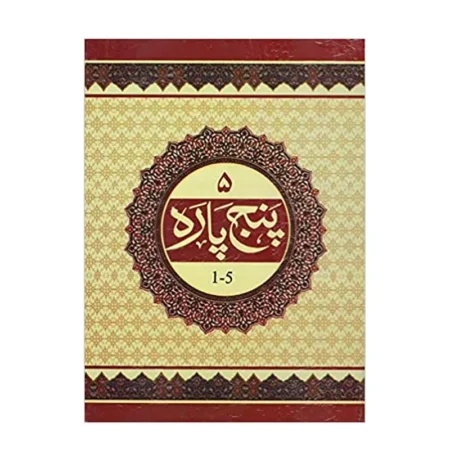
- Panj Para Set Sada 6 Vol (Idara) Arabic
- Practical Benefits
- Memorization (Hifz):
- Dividing the Quran into six volumes makes memorization easier.
- Learners can focus on one volume at a time, gradually covering the entire Quran.
- Daily Recitation:
- Reading one Para daily allows completion of the Quran in 30 days, promoting discipline and spiritual growth.
- Study and Teaching:
- Ideal for madrasas, Quran classes, or personal study.
- Teachers can assign specific volumes or Paras for recitation, Tajweed practice, or thematic discussion.
- Convenience and Durability:
- Compact size and sturdy binding make handling easy.
- Each volume is portable, suitable for home, school, or travel.
2 in stock

- Quran 23 No Cc With Box (Idara) Arabic
- Key Features and Benefits
- Supports Accurate Recitation:
- Bold Arabic letters, proper orthography, and potential color-coded Tajweed markers ensure correct pronunciation and adherence to Tajweed rules.
- Supports long recitation sessions while maintaining focus and spiritual engagement.
- Facilitates Memorization (Hifz):
- Clear verse numbering, Juz markers, and structured layout help learners memorize efficiently.
- Durable pages ensure repeated use without wear, supporting long-term memorization.
- Durable and Long-Lasting:
- High-quality paper, binding, and protective box provide resilience against frequent handling, maintaining the Quran in excellent condition.
- Suitable for personal devotion, mosque circulation, or educational purposes.
- Easy Navigation:
- Surah titles, Ayah numbers, and Juz markers enable readers to plan systematic recitation schedules.
- Sajdah markers guide proper prostration during Salah, ensuring ritual compliance.
- Gift-Worthy Edition:
- The protective box, elegant design, and premium quality make this edition ideal for Hifz completion gifts, Eid, religious milestones, or personal devotion.
2 in stock
Reviews
There are no reviews yet.