

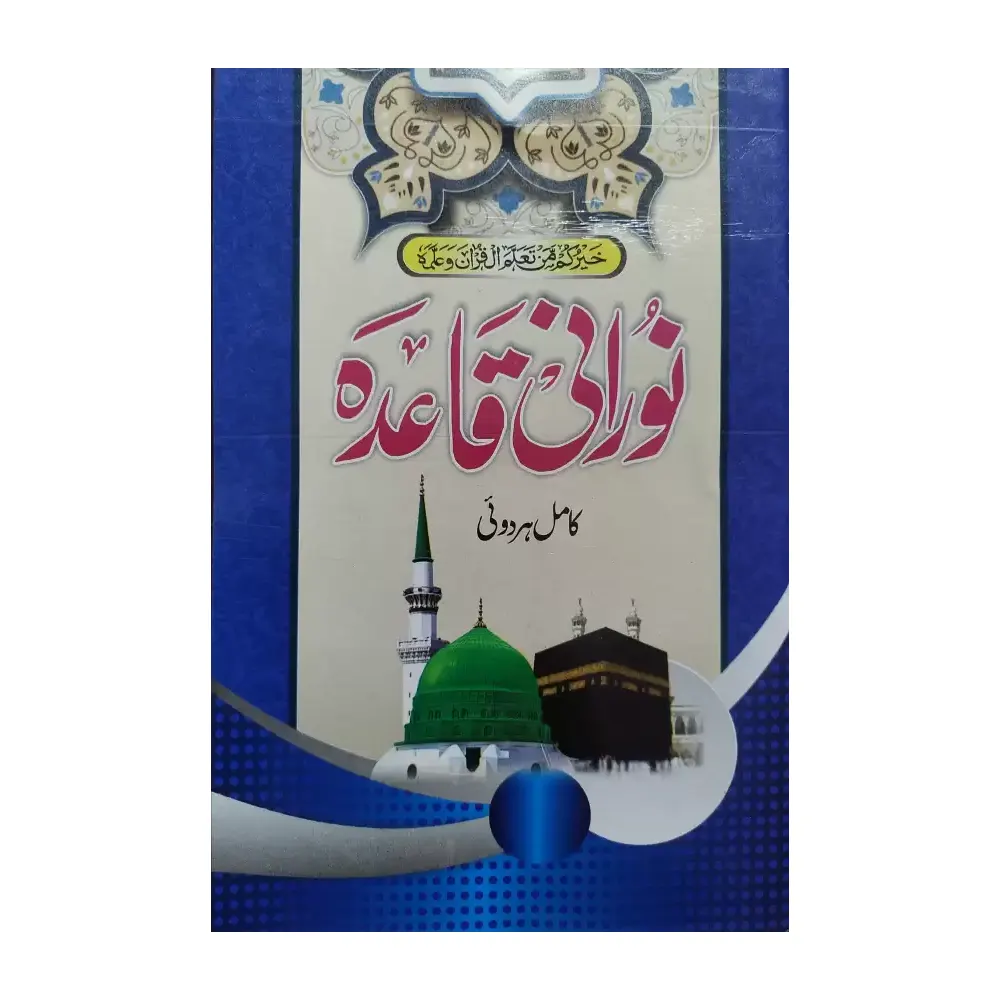
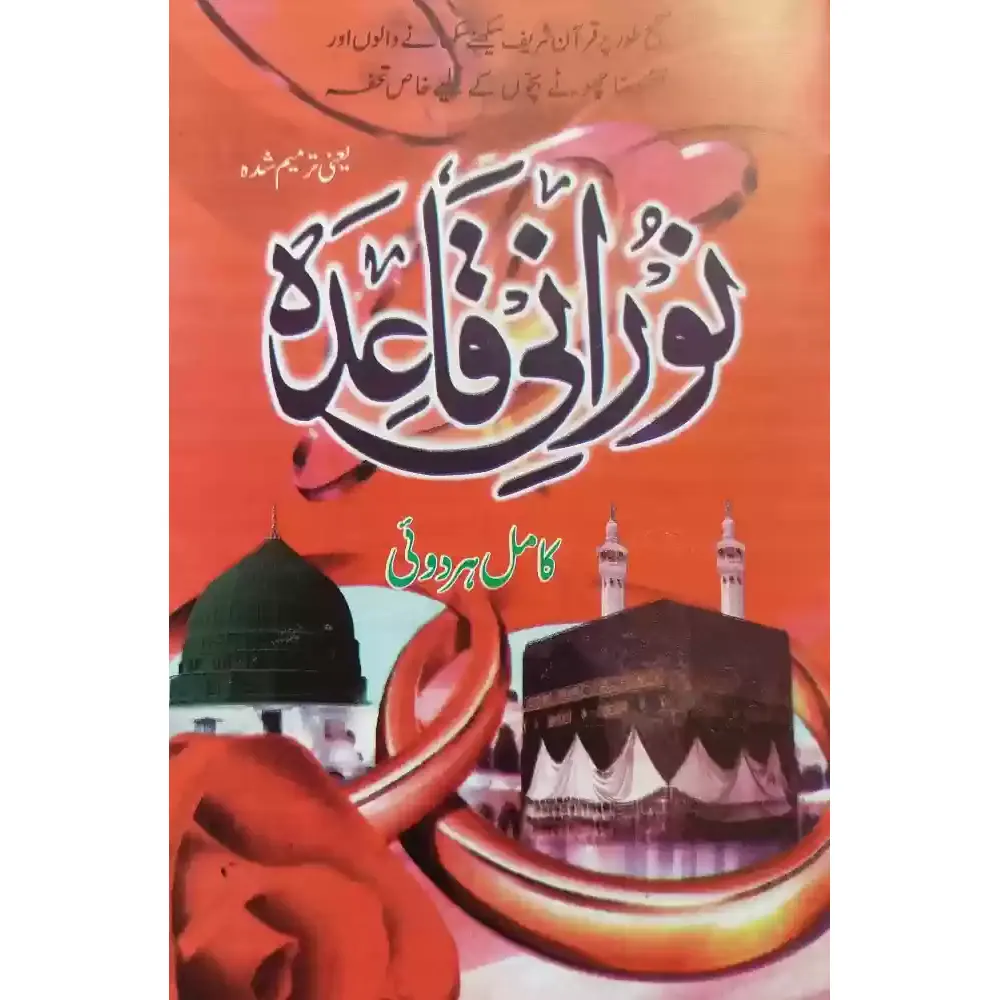
Noorani Qaida Part-1 ( Delhi ) Arabic
₹20.00
- Letter recognition and pronunciation – mastering the Arabic alphabet forms the base for accurate reading.
- Vowel marks and diacritics – teaching Zabar, Zer, Pesh, Shadda, Sukoon, and Tanween ensures correct pronunciation.
- Step-by-step progression – moving from letters to syllables, words, phrases, and short sentences.
- Letter joining and word formation – developing fluency in reading connected Arabic script.
- Repetition and practice – reinforcing learning, building confidence, and improving fluency.
- Basic Tajweed principles – introducing elongation, nasalization, and pauses for proper recitation.
- Clear, learner-friendly layout – ensuring letters, vowels, and syllables are easy to read and follow.
- Spiritual and moral encouragement – promoting respect, patience, and devotion in learning the Quran.
- Structured methodology – lessons build logically for effective learning and confidence development.
Out of stock
Noorani Qaida Part-1 ( Delhi ) Arabic
Noorani Qaida Part-1 (Delhi Edition) is a foundational text designed for beginners to learn to read the Quranic Arabic script accurately and fluently. It is widely used in madrasas, Islamic schools, and homes across the Indian subcontinent and internationally. The book’s main goal is to provide learners, especially children and new beginners, with the essential skills needed to recognize Arabic letters, understand their pronunciation, and read Quranic text correctly. Its structured methodology and step-by-step approach make it one of the most effective tools for Quranic literacy.
The primary focus of Noorani Qaida Part-1 is to teach learners the Arabic alphabet (Huroof-e-Tahajji). Each letter is introduced individually with its proper pronunciation and shape. Learners are taught the different forms letters take when written in isolation, initial, medial, and final positions within words. This ensures that students can recognize letters in all contexts, which is critical for accurate Quranic reading.
A key feature of the Qaida is its emphasis on correct pronunciation (Makharij al-Huruf). Learners are taught how to articulate each letter from its proper point of origin in the mouth or throat. Special attention is given to letters that are often mispronounced by beginners, such as ح, خ, ع, غ, ق, ط, ظ, and ص. Accurate pronunciation at this early stage is essential for fluency and correctness in Quranic recitation.
The book follows a gradual, step-by-step progression. It starts with individual letters and their associated vowel sounds (Zabar, Zer, Pesh) to form simple syllables. Learners practice reading these syllables repeatedly until they gain fluency. After mastering syllables, learners move on to combining letters into simple words and then short phrases or sentences. This progressive approach ensures that learners gain confidence at every stage before tackling more complex texts.
Another significant aspect of Noorani Qaida Part-1 is its focus on vowel marks and diacritics. The book teaches learners how to read words correctly with short vowels (Zabar, Zer, Pesh), Shadda (for doubling consonants), Sukoon (for consonant stopping), and Tanween (for indefinite nouns). Mastery of these diacritics is critical because they affect pronunciation and meaning. Without proper understanding, reading the Quran accurately would be challenging.
The Qaida also emphasizes letter joining and word formation. Learners practice connecting letters correctly in words, as Arabic letters change shape depending on their position within a word. Exercises guide students in reading words with multiple letters and syllables, helping them develop reading fluency and recognition of continuous text. Gradually, learners progress to reading complete phrases and short verses, which prepares them for independent Quranic reading.
A key methodology of the book is repetition and frequent practice. Learners are encouraged to read aloud repeatedly to reinforce correct pronunciation, fluency, and retention. Repetition exercises help embed the correct articulation of letters, syllables, and words, which is vital for developing confidence and accuracy in Quranic recitation.
Noorani Qaida Part-1 also introduces basic Tajweed principles in a beginner-friendly manner. While it does not cover the full detailed rules of Tajweed, it teaches foundational concepts such as elongation (Madd), nasalization (Ghunna), and the proper pauses (Waqf) and starts (Ibtida). These early lessons prepare learners to recite the Quran correctly and lay the groundwork for advanced Tajweed studies.
The book is designed with learner-friendly formatting. Letters and words are printed clearly, often with color-coded vowel marks to help beginners differentiate between Zabar, Zer, and Pesh. The simple and clear layout minimizes confusion and allows learners to focus on correct reading and pronunciation. This format is particularly useful for children and beginners who are learning Arabic for the first time.
Illustrations or visual cues, while limited, sometimes accompany certain lessons to help learners understand the pronunciation of letters or the concept of elongation and pauses. These aids make learning interactive and help students visualize the application of rules in practice.
A noteworthy aspect of Noorani Qaida Part-1 is its integration of moral and spiritual encouragement. While the book’s primary goal is linguistic, it also encourages learners to approach the Quran with respect, patience, and devotion. Children are reminded that learning to read the Quran is a form of worship and that proper recitation carries spiritual rewards. This emphasis helps learners develop both academic and spiritual engagement with the text.
The teaching methodology is structured and systematic, making it suitable for self-study or classroom teaching. Each lesson builds on the previous one, reinforcing earlier concepts while gradually introducing new material. Teachers and parents are encouraged to guide learners patiently, correct mistakes, and ensure frequent oral practice, which helps solidify the foundational skills of reading the Quran.
Overall, Noorani Qaida Part-1 (Delhi Edition) emphasizes several critical aspects of Quranic learning for beginners:
Letter recognition and pronunciation – mastering the Arabic alphabet forms the base for accurate reading.
Vowel marks and diacritics – teaching Zabar, Zer, Pesh, Shadda, Sukoon, and Tanween ensures correct pronunciation.
Step-by-step progression – moving from letters to syllables, words, phrases, and short sentences.
Letter joining and word formation – developing fluency in reading connected Arabic script.
Repetition and practice – reinforcing learning, building confidence, and improving fluency.
Basic Tajweed principles – introducing elongation, nasalization, and pauses for proper recitation.
Clear, learner-friendly layout – ensuring letters, vowels, and syllables are easy to read and follow.
Spiritual and moral encouragement – promoting respect, patience, and devotion in learning the Quran.
Structured methodology – lessons build logically for effective learning and confidence development.
In conclusion, Noorani Qaida Part-1 (Delhi Edition) is an essential resource for children and beginners learning to read the Quran. By following the book, learners develop a solid foundation in reading fluency, correct pronunciation, and basic Tajweed. Its systematic approach, emphasis on repetition, and clear instructions make it highly effective for beginners. Once mastered, learners are well-prepared to move on to more advanced Quranic recitation and deeper Tajweed studies. The book’s simplicity, structure, and spiritual guidance make it a trusted and widely used tool for Quranic education globally.
Only logged in customers who have purchased this product may leave a review.
Related Products

2 in stock

- What Is Jannah? Salmah Umm Zainab (Goodword) English
- Understanding Jannah:
- Descriptions of Jannah:
- The Importance of Good Deeds:
- The Mercy of Allah:
- Comparison with Earthly Life:
- Storytelling and Illustrations:
4 in stock
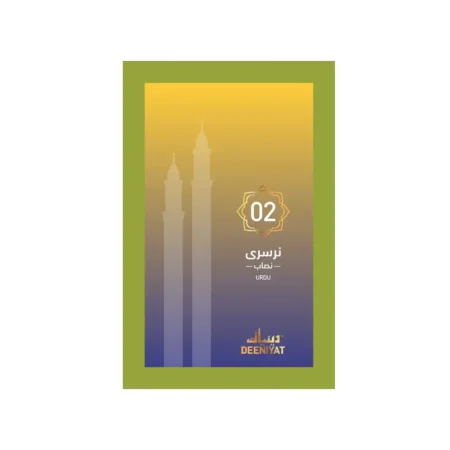
- The syllabus begins by introducing the concept of Allah as the Creator, Sustainer, and Most Merciful.
- Children are taught in simple Urdu phrases that Allah loves them, watches over them, and provides for all creatures.
- The idea of Tawheed (Oneness of Allah) is presented in a way that young minds can grasp, often through short sentences, stories, or illustrations showing Allah’s care in nature, family, and daily life.
- By teaching children about Allah’s attributes at an early age, the syllabus lays the foundation for developing love, respect, and trust in the Creator.
- Another key focus of Nursery Nisab 02 (Deeniyat) is the introduction to the life of the Prophet Muhammad (PBUH).
- The curriculum narrates simple stories about the Prophet’s kindness, honesty, and compassion.
- Children learn about his role as a messenger of Allah, his care for others, and his exemplary moral character.
- Stories are short, illustrated, and delivered in simple Urdu sentences, making them easy to understand and remember.
- These narratives are designed to teach children core moral values such as honesty, patience, respect, and generosity through the actions and teachings of the Prophet (PBUH).
2 in stock

‘- Premium quality chocolate
– Delicious tasting
– Finest ingredients
10 in stock

- Brand- Hlr Star
- Name- Eyeshadow
3 in stock

- Fun Taleem O Tarbiyaat Vol 2
- Benefits for Children
- Intellectual Growth:
- Enhances Urdu literacy, comprehension, arithmetic skills, and general knowledge.
- Promotes problem-solving, logical thinking, and analytical abilities.
- Moral and Ethical Development:
- Reinforces honesty, patience, empathy, responsibility, teamwork, and gratitude.
- Encourages practical application of ethical principles.
- Emotional and Social Learning:
- Stories and activities foster empathy, cooperation, and communication skills.
- Teaches children to understand the perspectives of others and make ethical decisions.
- Confidence and Independence:
- Encourages self-paced learning and active participation.
- Builds confidence in both academics and ethical reasoning.
- Engaging and Fun Learning Experience:
- Puzzles, illustrations, and creative tasks make learning enjoyable.
- Motivates children to practice regularly, reinforcing knowledge and skills.
- Preparation for Real-Life Challenges:
- Lessons and stories help children understand the importance of applying knowledge and values in everyday life.
- Builds a foundation for academic success and socially responsible behavior.
1 in stock
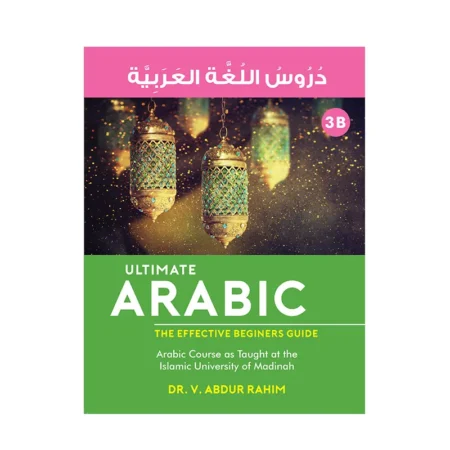
- Clear explanations of grammar and syntax – building on earlier concepts and introducing more complex structures.
- Thematic vocabulary expansion – covering practical, daily, and religious contexts.
- Reading and writing exercises – enhancing fluency, comprehension, and accuracy.
- Conversational practice – providing dialogues and situational examples for practical communication.
- Integration of Islamic vocabulary – helping learners understand religious texts alongside modern usage.
- Interactive exercises and revision sections – encouraging active engagement and reinforcement.
- Pronunciation guidance – ensuring accurate articulation of challenging Arabic sounds.
- Structured progression – lessons build logically from simple to more advanced concepts.
- Emphasis on practice and application – enabling learners to internalize knowledge and use it confidently.
2 in stock

- Quran Stories For Toddlers Board Book Saniyasnain Khan (Goodword) Arabic
1 in stock

- Allah Ka Tasavvur (Concept of Allah)
Bachon ko pehle Allah ka tasavvur karwaya jata hai. Allah hamara khaliq hai. Allah sab kuch banata hai – aasmaan, zameen, phool, ped, janwar aur hum insaan bhi Allah ne banaye. Allah har cheez ko dekhta hai aur hamesha hamare saath hota hai. Bachon ko ye samjhana zaruri hai ke Allah sab se bara aur sab se accha hai. - 2. Allah Ki Ibadat (Worship of Allah)
Bachon ko ibadat ki ahmiyat samjhayi jati hai. Ibadat ka matlab hai Allah ki baat man’na aur uski khushi ke liye kaam karna. Bachon ko ye sikhaya jata hai ke Allah ke liye namaz, dua aur acchai karna zaruri hai. Simple shabdon me, “Allah ki baat sunna aur acchai karna ibadat hai.” - 3. Dua aur Salam (Prayers and Greetings)
Nursery ke bachon ko chhoti chhoti duaen sikhayi jati hain, jaise: - Bismillah (Kuch bhi shuru karne se pehle bolna)
- Alhamdulillah (Shukriya ada karne ke liye)
- Assalamu Alaikum (Salaam karna)
Bachon ko bataya jata hai ke ye shabd hamare liye barkat aur mohabbat laate hain. Salam karna aur dua karna insaan ko shafqat aur acchai sikhata hai. - 4. Nabiyon Ka Ta’aruf (Introduction to Prophets)
Nursery bachon ko sabse pehle Hazrat Muhammad ﷺ aur kuch dusre nabi ke bare me sikhaya jata hai. Simple kahaniyon ke zariye: - Hazrat Adam A.S – pehle insaan
- Hazrat Nuh A.S – jo barkhata aur insano ko Allah ka hukum batate the
- Hazrat Muhammad ﷺ – akhir ke nabi, sabse pyare aur sabko acchai sikhane wale
Bachon ko ye samjhaya jata hai ke nabi hamesha sach bolte the aur Allah ki baat manate the.
2 in stock

- Organization: Keeps your lipsticks neatly arranged and prevents clutter.
- Visibility: Clear design allows you to see all your lipsticks easily.
- Space-Efficient: Compact size saves space on your vanity or dresser.
- Stylish: Adds a modern touch to your makeup storage area.
1 in stock
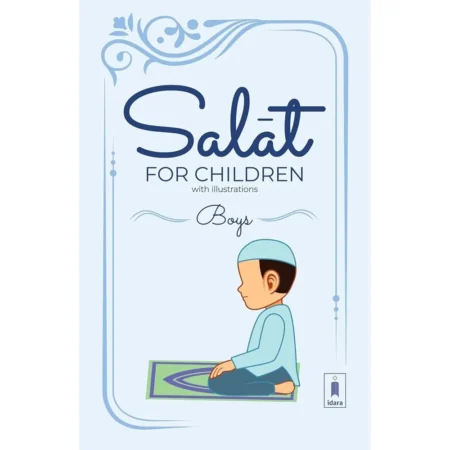
- The book begins with an introduction to the importance of Salah in Islam.
- Children are taught that Salah is one of the five pillars of Islam, a mandatory act of worship prescribed by Allah, and a direct means of connecting with Him.
- The introduction explains in simple, child-friendly language that Salah is a way to express gratitude, seek forgiveness, and remember Allah throughout the day.
- The text emphasizes that establishing Salah from a young age helps develop a strong moral and spiritual foundation, shaping a child’s character and encouraging regular adherence to religious duties.
- One of the key features of the book is its focus on visual learning.
- Each step of Salah is accompanied by clear illustrations showing a boy performing the prayer correctly.
- These illustrations cover all aspects of the prayer, including standing (Qiyam), bowing (Ruku), prostration (Sajdah), and sitting (Jalsa).
- The images are simple yet detailed, making it easy for children to understand the proper postures, hand positions, and movements.
- By seeing the actions depicted visually, children can imitate them accurately, which is especially helpful for learners who benefit from a hands-on, demonstration-based approach.
- The book explains the sequence of Salah in a step-by-step manner. Each step is described using simple language, often breaking down complex concepts into easy-to-understand instructions.
- For instance, it teaches children how to begin with the intention (Niyyah), say Takbir (Allahu Akbar), recite Surah Al-Fatihah and additional short Surahs, perform Ruku and Sajdah correctly, and conclude with Taslim.
- The instructions include guidance on correct pronunciation of Arabic words and phrases, ensuring that children learn not only the actions but also the verbal elements of prayer accurately.
2 in stock

- Tasty Chocolate
- Package Contents: 1 Chocolate Box
- Perfect Gift
4 in stock
Reviews
There are no reviews yet.