

Conscience Described In The Quran

₹95.00
- Conscience, Accountability, and Judgment
- Self-Reproach and Reflection
- The Quran emphasizes the self-reproaching soul (Nafs al-Lawwama), which naturally questions actions and decisions.
- This inner critique prompts repentance, reform, and mindfulness.
- Divine Witness
- Conscience is aligned with Allah’s knowledge, acting as a witness to human behavior.
- Human moral sense is accountable in the Hereafter: “Every soul will be (held) in pledge for what it earned.” (Quran 74:38)
- Ethical Responsibility
- Conscience bridges human freedom and divine accountability.
- Humans are responsible for listening to their conscience and acting ethically, knowing that Allah observes and judges deeds.
Out of stock
Conscience Described In The Quran
Overview
The Quran addresses not only laws and rituals but also the inner moral compass of human beings—what is often referred to as the conscience (Al-Fitrah, Qalb, or Nafs). Conscience in the Quran is described as the innate sense of right and wrong, a guiding faculty within humans that informs moral choices, distinguishes good from evil, and inclines people toward truth and justice.
Unlike philosophical or psychological discussions of conscience, the Quranic perspective integrates spiritual, ethical, and rational dimensions, showing that human morality is linked to accountability before Allah. The Quran presents conscience as both innate and nurtured, emphasizing personal responsibility, reflection, and guidance by divine revelation.
Definition of Conscience in the Quran
The Quran uses several terms related to conscience:
Al-Fitrah (Innate Nature)
Refers to the natural disposition created by Allah in every human.
Allah says: “So set your face to the religion, inclining to truth. This is the natural way (Fitrah) upon which Allah created mankind.” (Quran 30:30)
Fitrah represents the innate moral compass, urging humans to recognize truth and justice.
Qalb (Heart)
The heart is described as the center of understanding, moral discernment, and spiritual awareness.
It perceives guidance, doubts, fear, remorse, and inspiration toward ethical behavior.
Nafs (Self/Soul)
Refers to the human self, which has inclinations toward both good and evil.
Quran emphasizes self-control (Tazkiyah al-Nafs) and the struggle between desires and moral conscience.
Functions of Conscience in the Quran
Distinguishing Right from Wrong
Conscience is the internal faculty that recognizes moral truth.
Example: The Quran describes the Children of Israel, whose prophets reminded them of right and wrong, and the inner recognition of God’s commands and prohibitions.
Prompting Remorse or Guilt
When one acts unjustly, conscience triggers remorse (Nadam) and awareness of wrongdoing.
Example: “And the soul and He who proportioned it, and inspired it with its wickedness and its righteousness.” (Quran 91:7-8)
This demonstrates that humans are naturally aware of moral accountability.
Guiding Toward Righteousness
Conscience inclines humans to good deeds, ethical conduct, and spiritual mindfulness.
Quranic stories (e.g., Abraham, Joseph) highlight listening to the inner moral voice as a source of guidance.
Mediating Between Reason and Desire
Conscience functions as a balance between rational reflection (Aql) and desires (Shahwah).
Humans are morally accountable for obeying conscience rather than succumbing blindly to impulses.
Quranic Examples Illustrating Conscience
Prophet Abraham (AS)
Abraham’s reasoning and moral reflection on creation, idolatry, and justice illustrate an awakened conscience that recognizes truth independently.
He questioned inherited beliefs, demonstrating that conscience works through reason and revelation.
Prophet Joseph (AS)
When faced with temptation, Joseph’s conscience guided him to reject sin, saying: “I seek refuge in Allah; He is my Lord. Indeed, He has made my path straight.” (Quran 12:50)
Conscience acts as a protective inner guide against wrongdoing.
Human Accountability
In several verses, Allah reminds humans of inner witness and self-judgment: “And I swear by the self-reproaching soul (Al-Nafs al-Lawwama).” (Quran 75:2)
This verse shows the conscience’s role in prompting self-reflection and responsibility.
Development and Nurturing of Conscience
The Quran indicates that conscience is both innate and developed:
Innate Aspect
Every human is born with Fitrah, a natural sense of truth, justice, and accountability.
This innate moral awareness is the foundation of conscience.
Nurturing through Revelation
Following Allah’s guidance through Quranic teachings and prophetic example strengthens the conscience.
Education, reflection, and spiritual discipline purify the heart, allowing conscience to function fully.
Influence of Environment
Social, cultural, and religious surroundings can support or corrupt the conscience.
The Quran encourages choosing environments and companions that foster moral awareness.
Conscience, Accountability, and Judgment
Self-Reproach and Reflection
The Quran emphasizes the self-reproaching soul (Nafs al-Lawwama), which naturally questions actions and decisions.
This inner critique prompts repentance, reform, and mindfulness.
Divine Witness
Conscience is aligned with Allah’s knowledge, acting as a witness to human behavior.
Human moral sense is accountable in the Hereafter: “Every soul will be (held) in pledge for what it earned.” (Quran 74:38)
Ethical Responsibility
Conscience bridges human freedom and divine accountability.
Humans are responsible for listening to their conscience and acting ethically, knowing that Allah observes and judges deeds.
Practical Implications of Conscience
Personal Ethics
Conscience guides honesty, integrity, and self-discipline in daily life.
Social Conduct
Promotes justice, compassion, and fairness in interactions with family, society, and governance.
Spiritual Awareness
Encourages Dhikr (remembrance of Allah), repentance, and mindfulness.
Decision-Making
In complex situations, conscience helps distinguish morally right choices from temptation or peer pressure.
Conclusion
The Quran describes conscience as a divine gift, inherent in human nature, and strengthened through reflection, guidance, and spiritual discipline. Its key attributes include:
Innate recognition of right and wrong (Fitrah).
Moral prompting through self-reproach (Nafs al-Lawwama).
Guidance toward ethical and righteous conduct.
Alignment with divine accountability and spiritual awareness.
Conscience in the Quran is central to human moral and spiritual life, integrating ethical awareness, personal responsibility, and reflection on divine guidance. By following conscience, humans cultivate righteousness, justice, and God-consciousness, ensuring that actions are not only socially ethical but spiritually accountable.
Ultimately, the Quran teaches that a nurtured conscience, aligned with Allah’s guidance, is the key to moral integrity, inner peace, and salvation in this life and the Hereafter.
Only logged in customers who have purchased this product may leave a review.
Related Products

- Personal Use: Ideal for daily recitation and personal study.
- Educational: Suitable for students of Quranic recitation and memorization.
- Gift: A thoughtful and meaningful gift for friends, family, or loved ones.
- Always handle the Mushaf with clean hands (wudu).
- Keep it inside its golden purse case when not in use.
- Avoid placing it on the floor or beneath other items.
- Do not expose it to direct sunlight or moisture.
- For frequent travelers, carry it in the purse to ensure safety and respect.
2 in stock
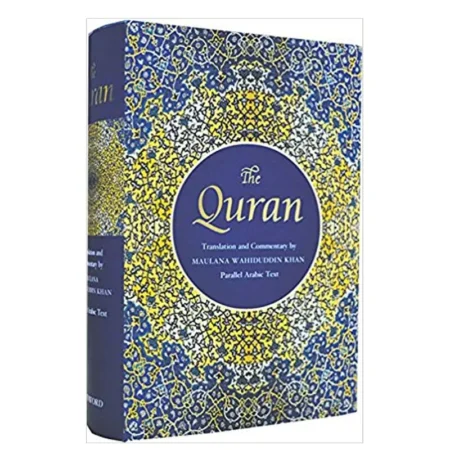
- Tazkeerul Quran ( Maulana Wahiduddin Khan ) Goodword Arabic/Hindi
- The central theme of Tazkeerul Quran is that the Qur’an is not merely a book of rituals, law, or theology, but a comprehensive guide for building a moral, ethical, and spiritually grounded life.
- Maulana Wahiduddin Khan stresses that the Qur’an addresses the human heart before it addresses human actions.
- It is concerned with shaping the inner self, which in turn manifests in ethical behavior, compassionate treatment of others, and a sense of accountability before God.
- This perspective underscores the Qur’an’s timeless relevance, showing that its message is universal and not confined to a specific culture, era, or society.
- The book also addresses the concept of human purpose and responsibility.
- Maulana Khan explains that the Qur’an presents life as a trust (Amanah) from God, and human beings are accountable for how they fulfill this trust.
- This idea encompasses not only individual ethical conduct but also the broader social and environmental responsibilities.
- The Qur’an encourages reflection, personal accountability, and the pursuit of knowledge to live a life aligned with divine guidance.
- Tazkeerul Quran highlights that spirituality in Islam is practical; it requires action rooted in moral consciousness, and mere ritual without inner transformation is insufficient.
2 in stock

- Encourages active reflection and contemplation, not passive reading.
- Integrates spiritual, moral, social, and political guidance into a coherent framework.
- Highlights the conceptual unity of the Qur’ān, showing interrelation between themes, stories, and laws.
- Provides practical lessons for both individual conduct and societal organization.
- Emphasizes that the Qur’ān is timeless, addressing both historical contexts and modern challenges.
1 in stock
1 in stock
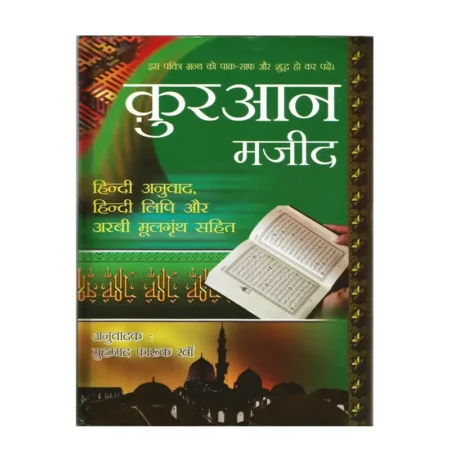
- Quran Majeed ( Maulana Muhammad Farooq Khan ) Hindi/Maktaba Al Hasnat
- In Short
- Author: Maulana Muhammad Farooq Khan
- Language: Hindi
- Purpose: Comprehensible understanding of Qur’anic guidance
- Method: Arabic text + Hindi translation + explanatory notes
- Focus: Faith, ethics, morality, spirituality, and practical application
- Audience: Students, teachers, families, and general Hindi-speaking readers
2 in stock

- An Index To The Qur’An Harun Yahya Idara (English)
- Conclusion
- “An Index to the Qur’ān” by Harun Yahya is a valuable tool for systematic study, reflection, and research. Its importance lies in:
- Providing quick access to Qur’ānic verses on specific topics.
- Facilitating thematic understanding across multiple surahs.
- Supporting spiritual, academic, and interfaith endeavors.
- Helping readers recognize patterns, repetitions, and core teachings in the Qur’ān.
1 in stock

- The Holy Qur’An Colour Coded Tajweed Rules Ibs (Arabic)
- Ghunnah (Nasalization): Extended nasal sounds for Noon and Meem under certain conditions. The colour coding ensures learners sustain these sounds correctly.
- Ikhfa’ (Concealment): Noon Saakin or Tanween sounds are partially merged with following letters, producing a light nasal tone.
- Idgham (Merging): Letters are merged smoothly, either with Ghunnah (nasalized) or without, depending on the following letter.
- Iqlab (Conversion): Noon Saakin is transformed into a Meem sound when followed by a specific letter (Baa), producing a soft and blended recitation.
- Qalqalah (Echoing): Certain consonants produce a slight bounce when in Sukoon, and the colour helps learners anticipate the echo effect.
- Madd (Prolongation): Vowels are stretched for specific counts; different types of Madd (like natural, obligatory, or temporary) are highlighted using distinct colours.
- Rules of Noon and Meem Saakin: Various rules including Ikhfa’, Idgham, and Iqlab are visually reinforced, aiding both recognition and correct pronunciation.
- Other Articulation Rules: Proper tongue and lip positioning for letters, though not explicitly colour-coded, are often reinforced in accompanying guides or teacher instructions.
1 in stock

- Key Features and Benefits
- Supports Accurate Recitation:
- Bold letters and correct orthography ensure proper pronunciation and Tajweed adherence.
- Supports long recitation sessions while maintaining concentration and spiritual connection.
- Facilitates Memorization (Hifz):
- Clear verse numbering, organized layout, and prominent Surah divisions help learners memorize efficiently.
- Durable paper ensures repeated use without damage, supporting long-term Hifz practice.
- Durable and Long-Lasting:
- High-quality paper and binding make this edition resilient to frequent daily use.
- Suitable for personal devotion, mosque use, or educational purposes.
- Easy Navigation:
- Surah titles, Ayah numbers, and Juz markers help plan systematic recitation schedules.
- Sajdah markers guide proper prostration during Salah, ensuring ritual compliance.
- Gift-Worthy Edition:
- Elegant design, premium materials, and clear layout make this edition suitable for Hifz completion, religious milestones, Eid, or personal devotion.
4 in stock

- In The Shade Of The Holy Qur’An Sayyid Qutb Vol.30 Idara (English)
- Significance of Volume 30
- Concluding Lessons of the Qur’ān:
- The final surahs emphasize spiritual purity, ethical conduct, gratitude, and divine reliance, summarizing the core moral and spiritual messages.
- Accessible for Daily Reflection:
- Short, powerful surahs make this volume ideal for meditation, memorization, and application in daily life.
- Bridging Traditional and Modern Understanding:
- Sayyid Qutb’s tafsīr links classical meanings with contemporary human challenges, making it relevant for modern readers.
- Strengthening Faith and Moral Character:
- Encourages readers to internalize faith, uphold moral principles, and maintain ethical behavior in all aspects of life.
2 in stock
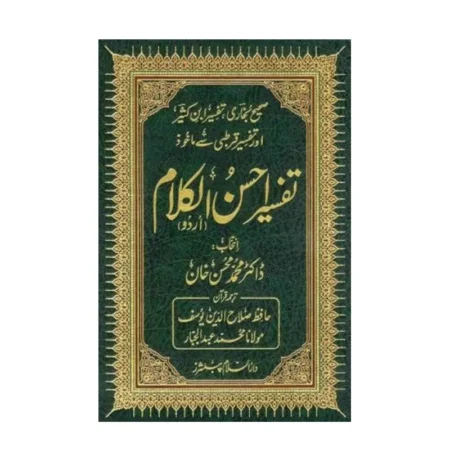
- Conclusion
- Tafseer Ahsanul Kalam (Darussalam) by Dr. Muhammad Muhsin Khan and Hafiz Salahuddin Yusuf:
- Provides clear, authentic, and accessible explanations of the Qur’an.
- Integrates spiritual guidance, moral ethics, and social reform, reflecting Islam’s holistic approach.
- Uses a multi-lingual format to make classical scholarship accessible for modern readers.
- Encourages reflection, ethical behavior, and practical application of Qur’anic guidance.
- Serves as a reliable resource for scholars, students, and anyone seeking a comprehensive understanding of the Qur’an.
2 in stock

- Quran 23 No Cc With Box (Idara) Arabic
- Key Features and Benefits
- Supports Accurate Recitation:
- Bold Arabic letters, proper orthography, and potential color-coded Tajweed markers ensure correct pronunciation and adherence to Tajweed rules.
- Supports long recitation sessions while maintaining focus and spiritual engagement.
- Facilitates Memorization (Hifz):
- Clear verse numbering, Juz markers, and structured layout help learners memorize efficiently.
- Durable pages ensure repeated use without wear, supporting long-term memorization.
- Durable and Long-Lasting:
- High-quality paper, binding, and protective box provide resilience against frequent handling, maintaining the Quran in excellent condition.
- Suitable for personal devotion, mosque circulation, or educational purposes.
- Easy Navigation:
- Surah titles, Ayah numbers, and Juz markers enable readers to plan systematic recitation schedules.
- Sajdah markers guide proper prostration during Salah, ensuring ritual compliance.
- Gift-Worthy Edition:
- The protective box, elegant design, and premium quality make this edition ideal for Hifz completion gifts, Eid, religious milestones, or personal devotion.
2 in stock
Benefits of Studying Para 3
- Spiritual Growth: Strengthens faith, reliance on Allah, and moral consciousness.
- Ethical Awareness: Enhances understanding of justice, honesty, and social responsibility.
- Historical Insight: Provides examples of prophetic guidance and lessons from past nations.
- Practical Life Guidance: Offers instructions on prayer, patience, and ethical living.
- Preparation for Accountability: Encourages awareness of the Hereafter and righteous conduct.
17 in stock
Reviews
There are no reviews yet.