

Urdu Reader Qaida ( F. Ahmad ) Fbs New Delhi Urdu
₹40.00
- Letter recognition and pronunciation – mastery of the Urdu alphabet is the foundation of reading and writing.
- Vowel usage and phonetics – understanding zabar, zer, and pesh ensures correct pronunciation and meaning.
- Word formation and sentence building – combining letters into words and sentences fosters comprehension and communication skills.
- Reading and writing practice – tracing and writing exercises improve handwriting and reinforce learning.
- Vocabulary development – everyday words make language practical and relatable.
- Visual aids and illustrations – pictures enhance memory and understanding.
- Repetition and reinforcement – frequent practice solidifies knowledge and builds confidence.
- Moral and social lessons – integrating polite phrases and ethical lessons encourages holistic development.
- Introduction to punctuation and reading rhythm – prepares learners for advanced reading comprehension.
Out of stock
Urdu Reader Qaida ( F. Ahmad ) Fbs New Delhi Urdu
Urdu Reader Qaida by F. Ahmad is a foundational Urdu learning book designed for beginners, particularly young children who are starting to read and write in Urdu. The book is widely used in schools and homes as an introductory guide to the Urdu language. Its structured approach, simple language, and gradual progression make it highly effective for teaching children the basics of Urdu reading, writing, pronunciation, and comprehension.
The main purpose of the book is to provide learners with a step-by-step introduction to the Urdu script, helping them recognize letters, understand their sounds, and combine them to form words. The book begins with individual letters (haroof-e-tahajji) and their basic sounds, gradually moving to simple words and short sentences. This systematic approach ensures that children build a strong foundation in the language before progressing to more complex reading and writing exercises.
The book emphasizes phonetic understanding, teaching children how to pronounce each Urdu letter correctly. Proper pronunciation is reinforced through repetition exercises, examples, and short words that combine vowels (zabar, zer, pesh) with consonants. By focusing on phonetics, the book helps learners develop reading fluency and accuracy, which is essential for later comprehension and writing skills.
A notable feature of the book is its gradual progression from letters to words to sentences. Children first learn individual letters and their forms, then simple words, and finally, short sentences. This scaffolding technique allows learners to gain confidence at each stage before moving on to the next. It also helps them understand how letters combine to create meaningful words, and how words are used to form sentences, promoting both literacy and language comprehension.
The book also includes vowel markers (zabar, zer, pesh), which are essential for correct pronunciation in Urdu. Exercises and examples demonstrate how vowel sounds change the meaning of words, helping learners avoid common mistakes. This emphasis on vowels ensures that children can read fluently and understand the words accurately.
Urdu Reader Qaida integrates writing practice alongside reading. Children are encouraged to trace letters and words to develop proper handwriting and familiarity with Urdu script. Writing exercises not only reinforce recognition of letters but also improve fine motor skills and attention to detail. This dual focus on reading and writing ensures that children can communicate effectively in written Urdu as well as read it fluently.
The book also introduces basic vocabulary and everyday words in a contextual manner. Simple words related to family, animals, objects, colors, and common activities are included to make learning practical and relevant. By learning words that children encounter in daily life, the book encourages them to connect language learning with real-world experiences, making Urdu more meaningful and engaging.
A key aspect of the Qaida is its use of simple sentences for comprehension. As learners progress, short sentences are introduced to help children practice reading fluently and understand basic sentence structures. These sentences often include greetings, simple instructions, and descriptive phrases, allowing children to see how words combine in meaningful ways. This gradual introduction to sentences fosters both literacy and early comprehension skills.
Illustrations and visual aids play an important role in the book. Pictures accompany letters, words, and sentences to provide visual context, making it easier for children to associate words with their meanings. For example, an image of a “کتاب” (book) helps learners remember the word and reinforces understanding through visual association. The combination of text and images makes learning interactive and engaging for young readers.
The book also emphasizes repetition and reinforcement. Regular exercises, recitations, and reading practice help learners retain letters, words, and sentence structures. Children are encouraged to read aloud frequently, which improves pronunciation, fluency, and confidence. This repetitive practice ensures that foundational skills are solid before moving on to more advanced Urdu learning.
Another important feature is the focus on moral and practical lessons through simple sentences. Many example sentences include polite expressions, greetings, and phrases that teach good manners. This subtly introduces children to ethical behavior and social norms while learning the language. By combining language learning with life lessons, the book nurtures both linguistic and moral development.
The Qaida also introduces basic punctuation and reading rhythm, helping children understand how pauses and stops affect meaning. This early exposure to punctuation prepares learners for reading longer passages and developing comprehension skills. Proper reading rhythm enhances fluency and makes reading more expressive and natural.
Overall, Urdu Reader Qaida emphasizes several key aspects of early Urdu learning:
Letter recognition and pronunciation – mastery of the Urdu alphabet is the foundation of reading and writing.
Vowel usage and phonetics – understanding zabar, zer, and pesh ensures correct pronunciation and meaning.
Word formation and sentence building – combining letters into words and sentences fosters comprehension and communication skills.
Reading and writing practice – tracing and writing exercises improve handwriting and reinforce learning.
Vocabulary development – everyday words make language practical and relatable.
Visual aids and illustrations – pictures enhance memory and understanding.
Repetition and reinforcement – frequent practice solidifies knowledge and builds confidence.
Moral and social lessons – integrating polite phrases and ethical lessons encourages holistic development.
Introduction to punctuation and reading rhythm – prepares learners for advanced reading comprehension.
In conclusion, Urdu Reader Qaida by F. Ahmad is an essential resource for young learners beginning their journey in Urdu. Its structured approach, combination of reading and writing exercises, and inclusion of vocabulary and moral lessons make it highly effective for teaching literacy and language skills. By following the Qaida, children develop a strong foundation in Urdu, gain confidence in reading and writing, and acquire the skills necessary for further study of the language. The book is not only a practical tool for literacy but also a means to foster cognitive, social, and moral development in young learners.
Only logged in customers who have purchased this product may leave a review.
Related Products
- Have a stronger understanding of basic and intermediate Arabic grammar, including verb conjugation, pluralization, and sentence formation.
- Expand vocabulary related to daily life, social interactions, and Islamic contexts.
- Develop confidence in reading and writing simple Arabic sentences accurately.
- Engage in basic conversations in Arabic, applying grammar and vocabulary in practical situations.
- Recognize and correctly pronounce Arabic letters and sounds.
- Understand the connection between grammar, vocabulary, and sentence construction
2 in stock

1. Islam as a Religion of Peace
2. The Prophetic Model of Peaceful Struggle
3. Misinterpretations of Jihad
4. Islam and Interfaith Harmony
5. Islam and Modern Civilization
6. The Spiritual Dimension of Islam
1 in stock

- 100% Authentic & Original Products
- 100% Organic Products
- Suitable for All Skin Types
19 in stock

‘- Premium quality chocolate
– Delicious tasting
– Finest ingredients
10 in stock

1 in stock
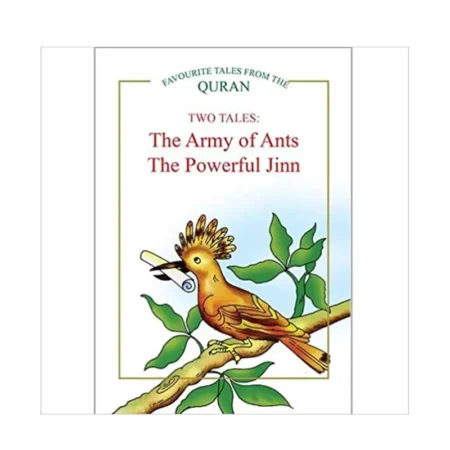
- The Army Of Ants The Powerful Jinn Hb Saniyasnain Khan (Goodword) English
- Story Overview
- The story revolves around Prophet Suleiman’s rule, his ability to communicate with creatures, and the lessons learned from the natural world, particularly ants and jinn.
- 1. Prophet Suleiman and His Kingdom
- Prophet Suleiman, son of Prophet Dawud (David, peace be upon him), was granted wisdom, knowledge, and a vast kingdom by Allah.
- His authority extended over humans, animals, and jinn.
- The book emphasizes his devotion, fairness, and leadership, showing that his power came from Allah and was meant to serve justice and uphold righteousness.
- 2. The Army of Ants
- One day, while traveling with his army, Prophet Suleiman overheard a conversation among the ants, who were concerned about being trampled by the soldiers.
- The story highlights his ability to understand and communicate with animals, reflecting Allah’s blessings and his unique gift.
- Suleiman smiled, showing mercy and consideration, and ensured the ants were safe.
1 in stock
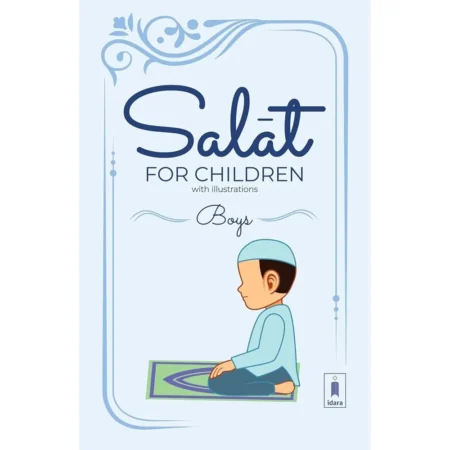
- The book begins with an introduction to the importance of Salah in Islam.
- Children are taught that Salah is one of the five pillars of Islam, a mandatory act of worship prescribed by Allah, and a direct means of connecting with Him.
- The introduction explains in simple, child-friendly language that Salah is a way to express gratitude, seek forgiveness, and remember Allah throughout the day.
- The text emphasizes that establishing Salah from a young age helps develop a strong moral and spiritual foundation, shaping a child’s character and encouraging regular adherence to religious duties.
- One of the key features of the book is its focus on visual learning.
- Each step of Salah is accompanied by clear illustrations showing a boy performing the prayer correctly.
- These illustrations cover all aspects of the prayer, including standing (Qiyam), bowing (Ruku), prostration (Sajdah), and sitting (Jalsa).
- The images are simple yet detailed, making it easy for children to understand the proper postures, hand positions, and movements.
- By seeing the actions depicted visually, children can imitate them accurately, which is especially helpful for learners who benefit from a hands-on, demonstration-based approach.
- The book explains the sequence of Salah in a step-by-step manner. Each step is described using simple language, often breaking down complex concepts into easy-to-understand instructions.
- For instance, it teaches children how to begin with the intention (Niyyah), say Takbir (Allahu Akbar), recite Surah Al-Fatihah and additional short Surahs, perform Ruku and Sajdah correctly, and conclude with Taslim.
- The instructions include guidance on correct pronunciation of Arabic words and phrases, ensuring that children learn not only the actions but also the verbal elements of prayer accurately.
2 in stock

- Quran Stories For Toddlers Board Book Saniyasnain Khan (Goodword) Arabic
1 in stock
- The syllabus begins by introducing the concept of Allah as the Creator, Sustainer, and Most Merciful.
- Children are taught in simple Urdu phrases that Allah loves them, watches over them, and provides for all creatures.
- The idea of Tawheed (Oneness of Allah) is presented in a way that young minds can grasp, often through short sentences, stories, or illustrations showing Allah’s care in nature, family, and daily life.
- By teaching children about Allah’s attributes at an early age, the syllabus lays the foundation for developing love, respect, and trust in the Creator.
- Another key focus of Nursery Nisab 02 (Deeniyat) is the introduction to the life of the Prophet Muhammad (PBUH).
- The curriculum narrates simple stories about the Prophet’s kindness, honesty, and compassion.
- Children learn about his role as a messenger of Allah, his care for others, and his exemplary moral character.
- Stories are short, illustrated, and delivered in simple Urdu sentences, making them easy to understand and remember.
- These narratives are designed to teach children core moral values such as honesty, patience, respect, and generosity through the actions and teachings of the Prophet (PBUH).
2 in stock

- Taste and texture: Amber dates are fresh, rich with a syrupy flavor. It is soft and fleshy dry variety of date fruit from Saudi Arabia
- Color and size: Amber Dates are the smallest and most fragile type of dates. The firm skin and flesh turn amber, then golden brown when stored, and the fruit itself is small to medium in size.
- Uses: Amber Dates are famous for their extraordinary size, quality and health benefits. Amber Dates are counted among the top-most variety of dates. They are a favourite premium dates variety in Middle East.
- Origins: Amber dates are grown in Saudi Arabia , cultivated from Madinah .
- in 500g , Occasions Amber VIP can between 20-25 pieces
24 in stock

- Arabic Reading Lessons Duncan Forbes Goodword (English)
- Learning Benefits:
- Foundational Arabic Literacy:
- Children and beginners develop the ability to read Arabic letters, words, and sentences with confidence.
- Provides essential skills for Quranic reading and further Islamic studies.
- Improved Pronunciation:
- Focus on vowels, Sukun, and Tanween ensures learners pronounce letters and words accurately, which is essential for both general Arabic and Quranic reading.
- Enhanced Reading Fluency:
- Stepwise progression from letters to words and sentences builds speed and accuracy in reading.
- Learners can gradually read more complex texts with proper rhythm and intonation.
- Interactive Learning:
- Exercises and drills encourage active participation, making learning enjoyable.
- Visual and repetitive practice helps reinforce memory and understanding.
- Confidence Building:
- The structured lessons allow learners to track their progress, increasing motivation and self-confidence.
2 in stock
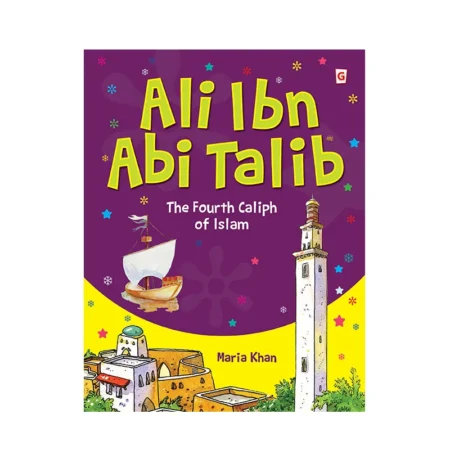
- Ali Ibn Abi Talib : The Fourth Caliph Of Islam ( Maria Khan ) Goodword English
- Significance and Impact:
This book is significant for several reasons: - Educational Value:
It introduces young readers to a major figure in Islamic history in an age-appropriate manner, providing historical, moral, and spiritual education. - Character Building:
Hazrat Ali’s (RA) life serves as a model of courage, wisdom, humility, and ethical leadership, encouraging readers to develop strong moral character. - Understanding Islamic History:
The book contextualizes key events in early Islamic history, making them accessible and relatable. Readers gain insight into the social, political, and ethical challenges of the early Muslim community. - Spiritual Inspiration:
Hazrat Ali’s (RA) devotion, piety, and moral integrity inspire readers to strengthen their faith, practice ethical behavior, and seek knowledge.
4 in stock
Reviews
There are no reviews yet.