
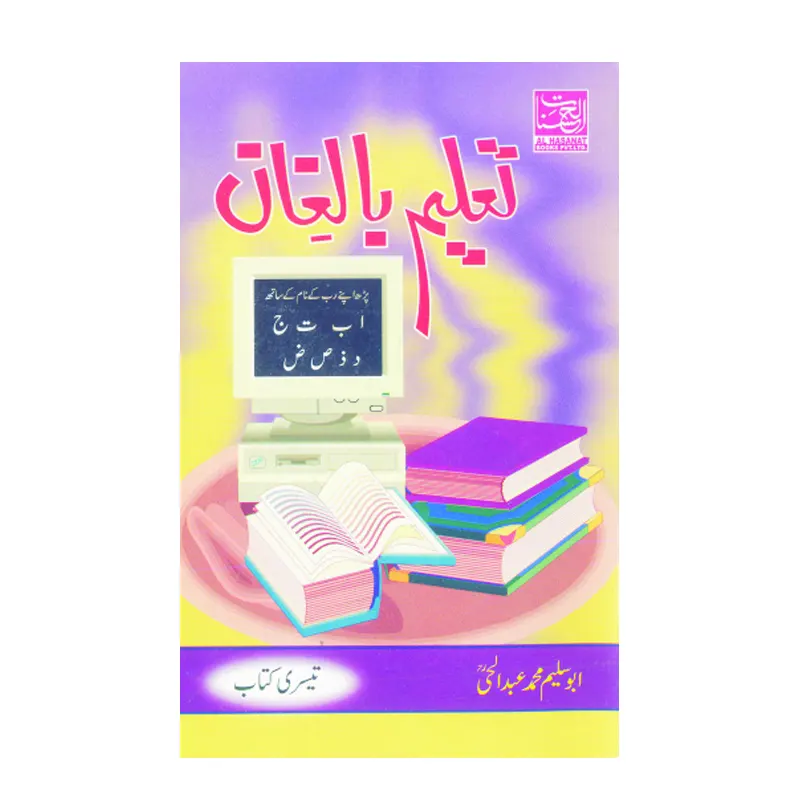
Taleem Baleghan Qaida ( Abu Saleem Mohd Ilahi ) Al Hasanat Urdu

₹10.00
- Taleem Baleghan Qaida ( Abu Saleem Mohd Ilahi ) Al Hasanat Urdu
- Letter recognition and pronunciation – mastering the Urdu alphabet forms the foundation of reading and writing.
- Vowel usage and phonetics – understanding zabar, zer, and pesh ensures correct pronunciation and meaning.
- Word formation and sentence building – combining letters and words enhances comprehension and communication skills.
- Reading and writing practice – tracing and writing exercises reinforce learning and improve handwriting.
- Vocabulary development – everyday words make learning practical and relatable.
- Illustrations and visual aids – images help learners associate words with meanings and retain knowledge.
- Repetition and practice – frequent exercises strengthen skills and build confidence.
- Moral and social lessons – polite phrases and ethical examples nurture character alongside literacy.
- Punctuation and reading rhythm – early exposure prepares learners for more advanced reading comprehension.
Out of stock
Taleem Baleghan Qaida ( Abu Saleem Mohd Ilahi ) Al Hasanat Urdu
Taleem Baleghan Qaida by Abu Saleem Mohd Ilahi is a foundational Urdu learning book aimed at beginners, particularly young children, to help them read, write, and understand Urdu fluently. It is designed to teach learners in a structured and progressive manner, providing them with the essential skills needed to develop literacy in the Urdu language. The book is widely used in homes, madrasas, and schools for early language instruction.
The primary goal of the book is to provide a step-by-step introduction to the Urdu alphabet and script. It begins with individual letters (huroof-e-tahajji) and their correct pronunciation, gradually progressing to simple words, sentences, and short paragraphs. This structured approach ensures that children gain a strong foundation in reading and writing before moving on to more complex exercises.
A key feature of Taleem Baleghan Qaida is its focus on phonetics. The book carefully explains how each Urdu letter is pronounced, including its various forms when used in different positions in a word (initial, medial, and final). The inclusion of vowel marks (zabar, zer, pesh) helps learners understand how vowel sounds affect word formation and meaning. This emphasis on phonetics ensures that children develop correct pronunciation, which is critical for both reading fluency and comprehension.
The book employs a gradual progression from letters to words to sentences. Initially, children are introduced to single letters and their sounds. Once they are familiar with the letters, the book guides them to form simple words and practice reading them. Finally, learners are encouraged to combine words into short sentences, which helps develop reading comprehension and writing skills. This stepwise approach prevents learners from feeling overwhelmed and allows them to gain confidence as they progress.
Another important aspect of the Qaida is its integration of writing exercises alongside reading. Children are encouraged to trace letters and words to develop proper handwriting and become familiar with Urdu script. These exercises also improve fine motor skills and ensure that learners can write accurately while reinforcing their reading skills. The combination of reading and writing practice helps learners internalize the language more effectively.
The book introduces basic vocabulary in a practical and relatable manner. Words related to everyday life, such as family members, animals, objects, colors, and common actions, are included. By learning words that are immediately applicable to their daily experiences, children are able to understand the relevance of Urdu and are encouraged to use the language actively in communication.
Taleem Baleghan Qaida also emphasizes sentence formation and comprehension. As learners become comfortable with words, short sentences are introduced to help them practice reading fluently and understand basic sentence structures. These sentences often include greetings, polite expressions, simple instructions, and descriptions, which teach children both language skills and social etiquette. This dual focus on literacy and moral lessons fosters holistic development.
Illustrations play a supportive role in the Qaida. Pictures accompanying letters, words, and sentences provide visual context, helping learners associate words with their meanings. For example, an image of a “کتاب” (book) reinforces the meaning of the word, making learning more interactive and memorable. Visual aids enhance engagement and make the learning process enjoyable for young children.
Repetition and reinforcement are key strategies employed in the book. Exercises and practice sections appear regularly to help learners consolidate their understanding of letters, words, and sentences. Children are encouraged to read aloud frequently, which improves pronunciation, fluency, and confidence. Consistent practice ensures that foundational skills are solidified, providing a strong base for future Urdu learning.
The Qaida also incorporates ethical and moral lessons subtly within language instruction. Many example sentences include polite expressions, greetings, and phrases that encourage respect, kindness, and social awareness. This helps children develop moral character alongside their linguistic skills. Learning Urdu in conjunction with understanding social values provides a well-rounded educational experience.
An additional feature of the book is its introduction of punctuation and reading rhythm. Children are taught the correct pauses, stops, and intonation while reading, which aids in comprehension and prepares them for reading longer texts in the future. Proper reading rhythm also makes reading more expressive and helps learners understand the meaning of sentences more clearly.
The teaching methodology of Taleem Baleghan Qaida is learner-centered, gradual, and systematic. Each lesson builds upon previous knowledge, ensuring that learners are not overwhelmed and can grasp new concepts effectively. The combination of textual explanations, examples, writing exercises, and illustrations caters to different learning styles, making the book highly effective for a wide range of learners.
Overall, the Qaida emphasizes several key aspects of early Urdu literacy:
Letter recognition and pronunciation – mastering the Urdu alphabet forms the foundation of reading and writing.
Vowel usage and phonetics – understanding zabar, zer, and pesh ensures correct pronunciation and meaning.
Word formation and sentence building – combining letters and words enhances comprehension and communication skills.
Reading and writing practice – tracing and writing exercises reinforce learning and improve handwriting.
Vocabulary development – everyday words make learning practical and relatable.
Illustrations and visual aids – images help learners associate words with meanings and retain knowledge.
Repetition and practice – frequent exercises strengthen skills and build confidence.
Moral and social lessons – polite phrases and ethical examples nurture character alongside literacy.
Punctuation and reading rhythm – early exposure prepares learners for more advanced reading comprehension.
In conclusion, Taleem Baleghan Qaida by Abu Saleem Mohd Ilahi is an essential resource for children beginning their journey in Urdu. Its structured and progressive approach, combined with reading, writing, vocabulary development, and moral guidance, makes it highly effective in teaching literacy. By following this Qaida, children develop strong foundational skills in Urdu, gain confidence in reading and writing, and acquire practical language abilities. Beyond literacy, the book also fosters ethical and social awareness, making it a comprehensive tool for early education.
| Weight | 150 g |
|---|---|
| Dimensions | 16 × 10 × 8 cm |
Only logged in customers who have purchased this product may leave a review.
Related Products
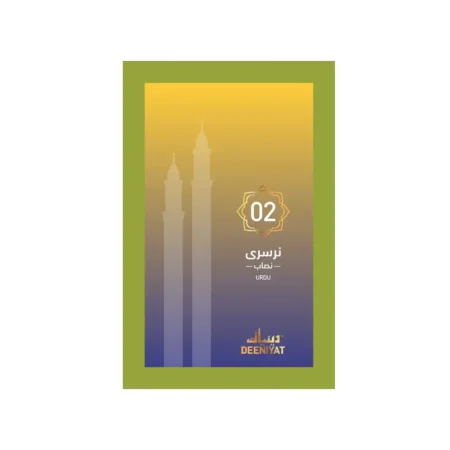
- The syllabus begins by introducing the concept of Allah as the Creator, Sustainer, and Most Merciful.
- Children are taught in simple Urdu phrases that Allah loves them, watches over them, and provides for all creatures.
- The idea of Tawheed (Oneness of Allah) is presented in a way that young minds can grasp, often through short sentences, stories, or illustrations showing Allah’s care in nature, family, and daily life.
- By teaching children about Allah’s attributes at an early age, the syllabus lays the foundation for developing love, respect, and trust in the Creator.
- Another key focus of Nursery Nisab 02 (Deeniyat) is the introduction to the life of the Prophet Muhammad (PBUH).
- The curriculum narrates simple stories about the Prophet’s kindness, honesty, and compassion.
- Children learn about his role as a messenger of Allah, his care for others, and his exemplary moral character.
- Stories are short, illustrated, and delivered in simple Urdu sentences, making them easy to understand and remember.
- These narratives are designed to teach children core moral values such as honesty, patience, respect, and generosity through the actions and teachings of the Prophet (PBUH).
2 in stock
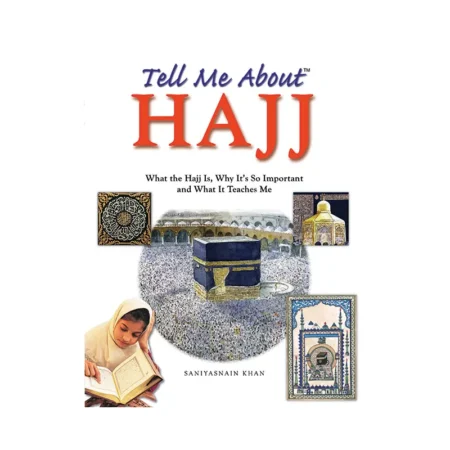
- Tell Me About Hajj (Hb) Saniyasnain Khan (Goodword) English
- Key Rituals of Hajj
- 1. Tawaf (Circumambulation around the Ka’bah)
- Pilgrims walk seven times around the Ka’bah, moving in a counterclockwise direction. This act symbolizes:
- Worship and devotion to Allah alone
- Unity among Muslims, all moving together in harmony
- Remembering the connection between humans and their Creator
2 in stock

- Al-Qamoosul Madrasi Dictionary Elias A. Alias Al Hasanat (Arabic/English)
- Key Features of the Dictionary
- Bilingual Approach
Each Arabic word is listed with its English meaning, usage, and sometimes pronunciation notes. This helps learners recognize semantic nuances. - Contextual Usage
Words are often accompanied by examples drawn from classical Arabic literature, Quranic verses, or Hadiths. This ensures that readers understand the word in its proper context. - Root-Based Organization
Arabic words are organized based on their root letters (usually three letters). This is essential in Arabic because many words derive from the same root but have different forms and meanings. - Focus on Islamic Concepts
Terms related to religion, ethics, law, and morality are highlighted, making it suitable for Islamic studies.
2 in stock
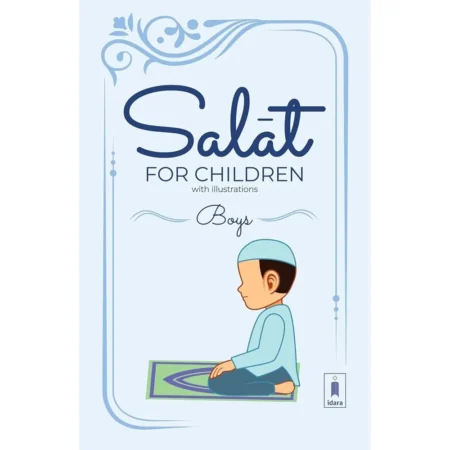
- The book begins with an introduction to the importance of Salah in Islam.
- Children are taught that Salah is one of the five pillars of Islam, a mandatory act of worship prescribed by Allah, and a direct means of connecting with Him.
- The introduction explains in simple, child-friendly language that Salah is a way to express gratitude, seek forgiveness, and remember Allah throughout the day.
- The text emphasizes that establishing Salah from a young age helps develop a strong moral and spiritual foundation, shaping a child’s character and encouraging regular adherence to religious duties.
- One of the key features of the book is its focus on visual learning.
- Each step of Salah is accompanied by clear illustrations showing a boy performing the prayer correctly.
- These illustrations cover all aspects of the prayer, including standing (Qiyam), bowing (Ruku), prostration (Sajdah), and sitting (Jalsa).
- The images are simple yet detailed, making it easy for children to understand the proper postures, hand positions, and movements.
- By seeing the actions depicted visually, children can imitate them accurately, which is especially helpful for learners who benefit from a hands-on, demonstration-based approach.
- The book explains the sequence of Salah in a step-by-step manner. Each step is described using simple language, often breaking down complex concepts into easy-to-understand instructions.
- For instance, it teaches children how to begin with the intention (Niyyah), say Takbir (Allahu Akbar), recite Surah Al-Fatihah and additional short Surahs, perform Ruku and Sajdah correctly, and conclude with Taslim.
- The instructions include guidance on correct pronunciation of Arabic words and phrases, ensuring that children learn not only the actions but also the verbal elements of prayer accurately.
2 in stock

- Quran Stories For Toddlers Board Book Saniyasnain Khan (Goodword) Arabic
1 in stock
- Gengis Khan: Emperor Of All Men Syed Zeeshan Nizami Al Hasanat (Urdu)
1 in stock
- Beautiful Islamic Names For Children Islami Kitab Ghar (English)
- Benefits for Families
- Ease in Selecting Appropriate Names:
- Families can quickly find suitable names with clear meanings and guidance.
- Moral and Spiritual Awareness:
- Encourages parents to choose names that reflect positive values and Islamic teachings.
- Cultural and Religious Education:
- Children and families learn about the significance of names in Islam and Islamic history.
- Enhanced Identity Formation:
- Names chosen with care can inspire children’s character, virtues, and self-esteem.
- Practical Guidance:
- Provides advice on avoiding names with negative meanings and selecting names that are socially and religiously appropriate.
- Long-Term Value:
- Serves as a reference book that families can use for future generations.
1 in stock
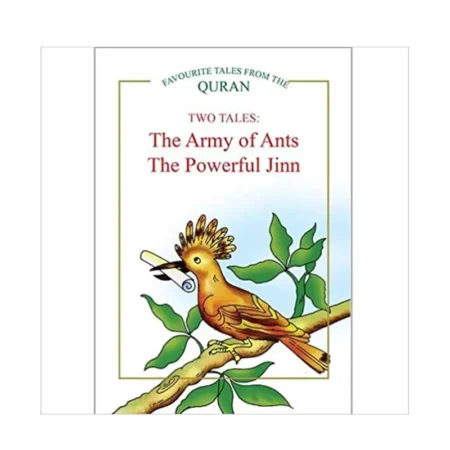
- The Army Of Ants The Powerful Jinn Hb Saniyasnain Khan (Goodword) English
- Story Overview
- The story revolves around Prophet Suleiman’s rule, his ability to communicate with creatures, and the lessons learned from the natural world, particularly ants and jinn.
- 1. Prophet Suleiman and His Kingdom
- Prophet Suleiman, son of Prophet Dawud (David, peace be upon him), was granted wisdom, knowledge, and a vast kingdom by Allah.
- His authority extended over humans, animals, and jinn.
- The book emphasizes his devotion, fairness, and leadership, showing that his power came from Allah and was meant to serve justice and uphold righteousness.
- 2. The Army of Ants
- One day, while traveling with his army, Prophet Suleiman overheard a conversation among the ants, who were concerned about being trampled by the soldiers.
- The story highlights his ability to understand and communicate with animals, reflecting Allah’s blessings and his unique gift.
- Suleiman smiled, showing mercy and consideration, and ensured the ants were safe.
1 in stock

- Allah Ka Tasavvur (Concept of Allah)
Bachon ko pehle Allah ka tasavvur karwaya jata hai. Allah hamara khaliq hai. Allah sab kuch banata hai – aasmaan, zameen, phool, ped, janwar aur hum insaan bhi Allah ne banaye. Allah har cheez ko dekhta hai aur hamesha hamare saath hota hai. Bachon ko ye samjhana zaruri hai ke Allah sab se bara aur sab se accha hai. - 2. Allah Ki Ibadat (Worship of Allah)
Bachon ko ibadat ki ahmiyat samjhayi jati hai. Ibadat ka matlab hai Allah ki baat man’na aur uski khushi ke liye kaam karna. Bachon ko ye sikhaya jata hai ke Allah ke liye namaz, dua aur acchai karna zaruri hai. Simple shabdon me, “Allah ki baat sunna aur acchai karna ibadat hai.” - 3. Dua aur Salam (Prayers and Greetings)
Nursery ke bachon ko chhoti chhoti duaen sikhayi jati hain, jaise: - Bismillah (Kuch bhi shuru karne se pehle bolna)
- Alhamdulillah (Shukriya ada karne ke liye)
- Assalamu Alaikum (Salaam karna)
Bachon ko bataya jata hai ke ye shabd hamare liye barkat aur mohabbat laate hain. Salam karna aur dua karna insaan ko shafqat aur acchai sikhata hai. - 4. Nabiyon Ka Ta’aruf (Introduction to Prophets)
Nursery bachon ko sabse pehle Hazrat Muhammad ﷺ aur kuch dusre nabi ke bare me sikhaya jata hai. Simple kahaniyon ke zariye: - Hazrat Adam A.S – pehle insaan
- Hazrat Nuh A.S – jo barkhata aur insano ko Allah ka hukum batate the
- Hazrat Muhammad ﷺ – akhir ke nabi, sabse pyare aur sabko acchai sikhane wale
Bachon ko ye samjhaya jata hai ke nabi hamesha sach bolte the aur Allah ki baat manate the.
2 in stock
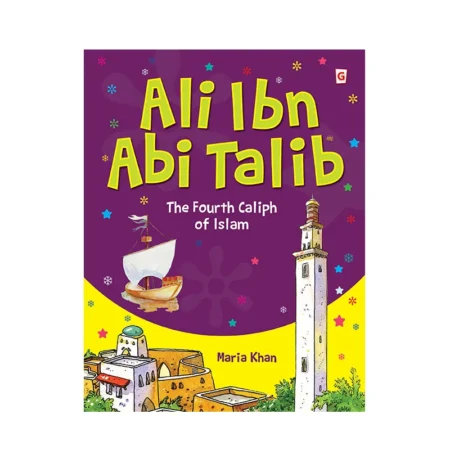
- Ali Ibn Abi Talib : The Fourth Caliph Of Islam ( Maria Khan ) Goodword English
- Significance and Impact:
This book is significant for several reasons: - Educational Value:
It introduces young readers to a major figure in Islamic history in an age-appropriate manner, providing historical, moral, and spiritual education. - Character Building:
Hazrat Ali’s (RA) life serves as a model of courage, wisdom, humility, and ethical leadership, encouraging readers to develop strong moral character. - Understanding Islamic History:
The book contextualizes key events in early Islamic history, making them accessible and relatable. Readers gain insight into the social, political, and ethical challenges of the early Muslim community. - Spiritual Inspiration:
Hazrat Ali’s (RA) devotion, piety, and moral integrity inspire readers to strengthen their faith, practice ethical behavior, and seek knowledge.
4 in stock

- Aasan Tafseer Aakhri 21 Suratein Maulana Muhammad Hai Al Hasanat (Hindi)
3 in stock

- Significance of the Book
- Accessible Tafsīr:
- Makes the Qur’ān understandable for Urdu-speaking audiences, bridging the gap between Arabic text and practical understanding.
- Moral and Spiritual Development:
- Encourages readers to internalize Qur’ānic guidance and transform their character.
- Structured Learning Approach:
- Presents Qur’ānic lessons in organized, thematic segments, aiding study, teaching, and reflection.
- Encourages Reflection and Action:
- Not just a theoretical explanation, it promotes active engagement with verses and practical implementation.
5 in stock
Reviews
There are no reviews yet.