
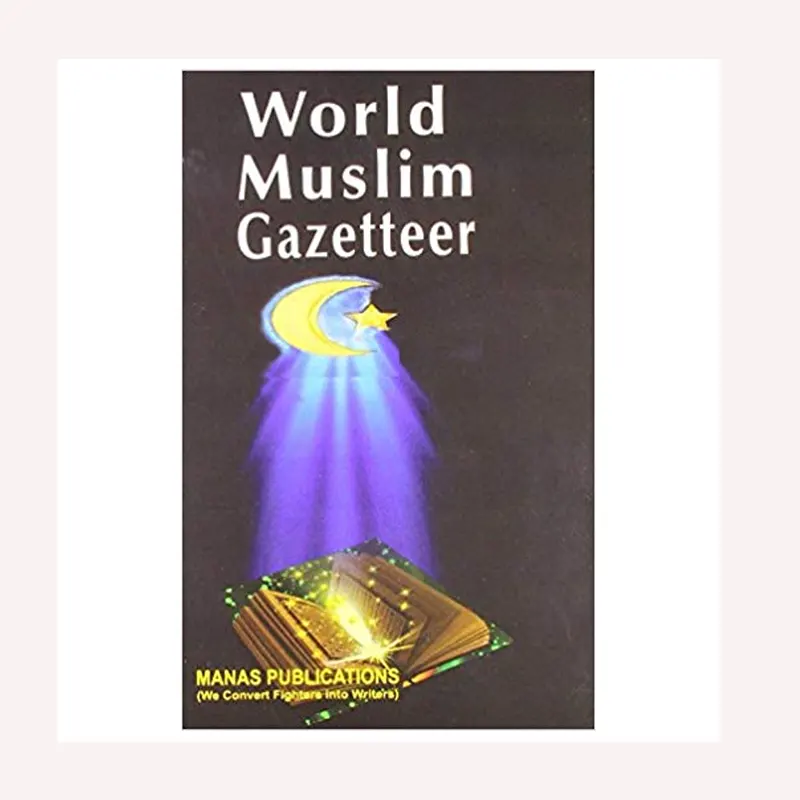
World Muslim Gazeteer

₹450.00
- Purpose and Scope of the Gazetteer
- Global Survey: The gazetteer provides a systematic survey of Muslim populations, from countries with majority Muslim populations to communities living as minorities in non-Muslim nations.
- Historical Context: Each entry often includes a brief historical overview, showing how Islam reached a region, key historical figures, and significant events shaping the local Muslim community.
- Cultural Insight: Beyond demographics, it describes cultural practices, languages, education, architecture, festivals, and social norms specific to Muslim communities.
- Practical Reference: It functions as a resource for academics, policymakers, religious scholars, and students researching Islamic history, sociology, and geography.
- The goal is to provide a holistic view of Islam as a living civilization across different continents and cultures.
- 2. Organization of the Gazetteer
- Alphabetical Entries: Most gazetteers arrange entries alphabetically by country, region, or city for easy reference.
- Thematic Categories: Some sections may focus on demographics, historical evolution, religious institutions, and cultural contributions.
- Maps and Charts: Visual aids such as population maps, demographic charts, and historical timelines enhance understanding.
- Index and References: Detailed indexes allow quick access to specific cities, scholars, or Islamic institutions mentioned in the text.
Out of stock
World Muslim Gazeteer
A World Muslim Gazetteer is a comprehensive reference work that catalogues Muslim communities, countries, cities, and regions across the globe, offering insights into their demographic, cultural, historical, and religious aspects. Unlike a simple atlas or directory, it integrates geography, history, culture, and religion to present a detailed picture of the global Muslim Ummah. Such a gazetteer is invaluable for students, researchers, historians, policymakers, and anyone seeking to understand the distribution, diversity, and social life of Muslims worldwide.
1. Purpose and Scope of the Gazetteer
Global Survey: The gazetteer provides a systematic survey of Muslim populations, from countries with majority Muslim populations to communities living as minorities in non-Muslim nations.
Historical Context: Each entry often includes a brief historical overview, showing how Islam reached a region, key historical figures, and significant events shaping the local Muslim community.
Cultural Insight: Beyond demographics, it describes cultural practices, languages, education, architecture, festivals, and social norms specific to Muslim communities.
Practical Reference: It functions as a resource for academics, policymakers, religious scholars, and students researching Islamic history, sociology, and geography.
The goal is to provide a holistic view of Islam as a living civilization across different continents and cultures.
2. Organization of the Gazetteer
Alphabetical Entries: Most gazetteers arrange entries alphabetically by country, region, or city for easy reference.
Thematic Categories: Some sections may focus on demographics, historical evolution, religious institutions, and cultural contributions.
Maps and Charts: Visual aids such as population maps, demographic charts, and historical timelines enhance understanding.
Index and References: Detailed indexes allow quick access to specific cities, scholars, or Islamic institutions mentioned in the text.
This structured approach ensures readers can navigate vast amounts of information efficiently.
3. Historical Overview of Muslim Populations
Origins and Spread of Islam: The gazetteer typically begins with a summary of the Prophet Muhammad’s (S.A.W.) era, the Rashidun Caliphate, and subsequent expansions.
Regional Histories: It highlights key regions where Islam spread: the Middle East, North Africa, Subcontinent, Southeast Asia, Central Asia, and Europe.
Colonial and Modern Impacts: Historical events, such as colonialism, independence movements, and migration, are included to explain current demographic patterns.
This context helps readers understand not just where Muslims live today, but how historical processes shaped their societies.
4. Demographic Information
Population Statistics: Each country or region entry provides the number of Muslims, percentage of total population, and major ethnic groups.
Sectarian Distribution: Sunni, Shia, Ibadi, Ahmadiyya, and other groups are noted, showing intra-faith diversity.
Urban and Rural Distribution: Information on major cities with significant Muslim populations is provided, along with rural settlement patterns.
This demographic data gives readers a clear sense of the size and diversity of global Muslim communities.
5. Religious and Cultural Life
Mosques and Religious Institutions: Major mosques, Islamic centers, and seminaries are listed, highlighting centers of worship and learning.
Festivals and Rituals: Local celebrations of Eid, Ramadan, Mawlid, and other religious events are described, showing cultural adaptations in different regions.
Education: Information on madrasas, universities, and modern educational institutions demonstrates the emphasis on religious and secular learning.
Arts and Literature: Islamic architecture, calligraphy, music, and literary contributions are noted to illustrate cultural richness.
This section emphasizes that Islam is not only a faith but a way of life shaping culture, ethics, and society.
6. Political and Social Context
Governance and Legal Systems: Countries with Sharia-based laws or Islamic influences in governance are described.
Community Organizations: NGOs, welfare institutions, and charitable organizations run by Muslims are often included.
Challenges and Achievements: Social challenges (poverty, education, discrimination) and successes (development programs, interfaith dialogue) are highlighted.
This demonstrates the active role of Muslim communities in shaping modern society and contributing to global progress.
7. Regional Highlights
Middle East and North Africa: Includes Saudi Arabia, Egypt, Morocco, Iran, and others; focus on historical Islamic civilizations and modern governance.
South Asia: India, Pakistan, Bangladesh, and Afghanistan; highlights cultural diversity, Sufi traditions, and educational institutions.
Southeast Asia: Indonesia, Malaysia, Brunei; largest Muslim populations in Asia with unique cultural adaptations.
Africa: Nigeria, Sudan, Somalia, and Senegal; emphasizes local customs, trade networks, and Islamic scholarship.
Europe and Americas: Minority communities, migration patterns, mosques, and cultural integration.
Regional focus shows both the universality and diversity of Islamic culture worldwide.
8. Educational and Research Utility
Academic Reference: Useful for students of Islamic history, sociology, anthropology, and geography.
Policy and Planning: Helps governments, NGOs, and interfaith organizations understand Muslim demographics and social needs.
Research Tool: Supports studies in migration, diaspora communities, and cross-cultural interactions.
The gazetteer provides verified data, references, and historical context, making it a reliable resource for scholarly work.
9. Ethical and Cultural Insights
Islamic Ethics in Practice: Entries illustrate how local Muslim communities uphold ethical values like charity, justice, and communal responsibility.
Adaptation and Resilience: Shows how Muslims maintain faith and cultural identity while integrating into diverse societies.
Global Contribution: Highlights achievements in science, arts, governance, and education by Muslim communities worldwide.
This emphasizes that Islam has continuously influenced civilization, morality, and cultural progress across regions.
10. Conclusion
A World Muslim Gazetteer serves as both a factual reference and a cultural document:
Provides comprehensive demographic, historical, and cultural data about Muslim communities worldwide.
Demonstrates the diversity and richness of Islamic civilization in different regions.
Highlights the role of Muslims in education, scholarship, arts, governance, and social development.
Offers insights into challenges, resilience, and ethical conduct of Muslim communities.
Serves as a valuable resource for students, scholars, policymakers, and anyone seeking to understand the global Muslim Ummah.
By combining geography, history, and cultural analysis, the gazetteer allows readers to appreciate Islam as a global, dynamic, and living tradition. It emphasizes that the Muslim Ummah is not monolithic but a tapestry of diverse peoples, cultures, and contributions united by faith and shared values.
| Weight | 200 g |
|---|---|
| Dimensions | 16 × 10 × 8 cm |
Only logged in customers who have purchased this product may leave a review.
Related Products

- 98 percent Natural origin
- Pure vegetarian
- Refreshing mint taste
- Natural antibacterial protection for strong teeth and healthy gums
- Enriched with the natural germ-fighting properties of Neem, prevents cavities, bleeding gums and inflammation
6 in stock

- 100% Authentic & Original Products
- 100% Organic Products
- Suitable for All Skin Types
29 in stock

Key Themes and Analysis
1. Administrative Changes Under Mughal Rule
2. Socio-Cultural Transformations
3. Economic Developments
4. Decline of Mughal Influence and Rise of Maratha Power
5. British Colonial Encroachment
1 in stock

- Item part number: 6911212151296
- ASIN: B01GD0406A
- Hair Straightener
- Colour: black
- Ensures matchless performance
1 in stock

- National Brand
- A product of Lion
4 in stock

‘- Premium quality chocolate
– Delicious tasting
– Finest ingredients
10 in stock
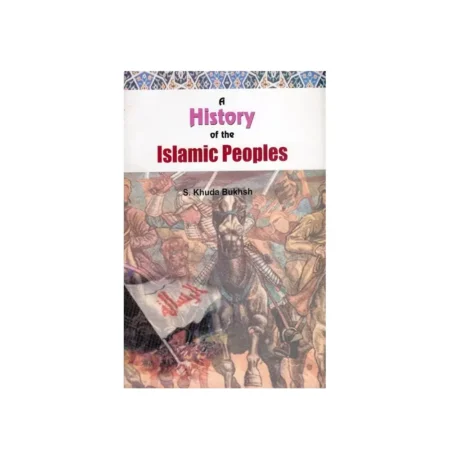
- A History Of The Islamic Peoples S Khuda Bukhsh (Adam Publishers) English
- The Scope of the Book
- The book covers the following broad areas:
- The Rise of Islam and the Prophet Muhammad (PBUH):
- The book begins with the Arabian background – a description of pre-Islamic Arabia, its tribal structure, culture, social conditions, and religious practices.
- It then moves to the life of Prophet Muhammad (peace be upon him), his mission, the revelation of the Qur’an, the struggles in Makkah, migration to Madinah, and the establishment of the first Islamic state.
- The author emphasizes how Islam brought moral, social, and spiritual reforms to a region deeply divided by tribalism and superstition.
- The Rashidun Caliphate (632–661 CE):
- Khuda Bukhsh describes the leadership of the four rightly guided caliphs (Abu Bakr, Umar, Uthman, Ali).
- He highlights the rapid expansion of Islam beyond Arabia into Syria, Iraq, Egypt, and Persia.
- Important administrative and legal reforms introduced by Caliph Umar are explained.
- The internal conflicts, especially during the caliphate of Uthman and Ali, are presented in a balanced way.
- The Umayyad Caliphate (661–750 CE):
- The book outlines the transformation of the caliphate into a hereditary monarchy under Muawiyah.
- It explains the expansion into North Africa, Spain (Andalusia), and Central Asia.
- Khuda Bukhsh also discusses the administrative centralization and cultural flowering of Damascus, the Umayyad capital.
2 in stock

- Organization: Keeps your lipsticks neatly arranged and prevents clutter.
- Visibility: Clear design allows you to see all your lipsticks easily.
- Space-Efficient: Compact size saves space on your vanity or dresser.
- Stylish: Adds a modern touch to your makeup storage area.
1 in stock

- The Alhambra Washington Irving (Goodword) English
- Key Takeaways:
- Islam emerged in a challenging socio-political environment and transformed Arabian society through spiritual and ethical teachings.
- Prophet Muhammad’s (PBUH) leadership combined moral integrity, diplomacy, and strategic acumen.
- The Rashidun Caliphs laid the foundations of governance, justice, and expansion that shaped early Islamic history.
- Umayyad and Abbasid dynasties contributed to political consolidation and cultural flourishing.
- Islamic history provides timeless lessons in leadership, justice, morality, and social responsibility.
- Historical reflection is essential for understanding both the successes and pitfalls of past Muslim societies.
1 in stock

- Oud Sharqia Perfumed Water
- 100Ml
2 in stock

- Taste and texture: Amber dates are fresh, rich with a syrupy flavor. It is soft and fleshy dry variety of date fruit from Saudi Arabia
- Color and size: Amber Dates are the smallest and most fragile type of dates. The firm skin and flesh turn amber, then golden brown when stored, and the fruit itself is small to medium in size.
- Uses: Amber Dates are famous for their extraordinary size, quality and health benefits. Amber Dates are counted among the top-most variety of dates. They are a favourite premium dates variety in Middle East.
- Origins: Amber dates are grown in Saudi Arabia , cultivated from Madinah .
- in 500g , Occasions Amber VIP can between 20-25 pieces
24 in stock
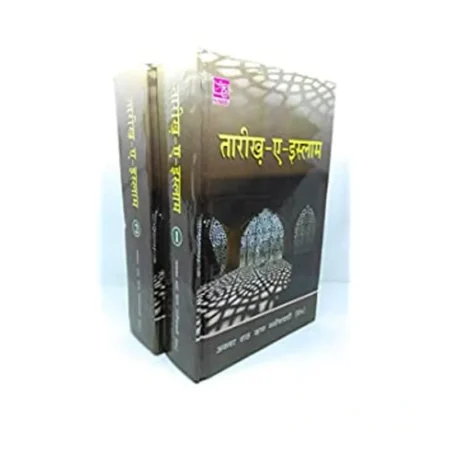
- Tarikh-E-Islam Akbar Shah Khan Najibabadi Al Hasanat (Hindi) 2 Volume Set
- Key Takeaways:
- Islam emerged in a challenging socio-political environment and transformed Arabian society through spiritual and ethical teachings.
- Prophet Muhammad’s (PBUH) leadership combined moral integrity, diplomacy, and strategic acumen.
- The Rashidun Caliphs laid the foundations of governance, justice, and expansion that shaped early Islamic history.
- Umayyad and Abbasid dynasties contributed to political consolidation and cultural flourishing.
- Islamic history provides timeless lessons in leadership, justice, morality, and social responsibility.
- Historical reflection is essential for understanding both the successes and pitfalls of past Muslim societies.
2 in stock
Reviews
There are no reviews yet.