
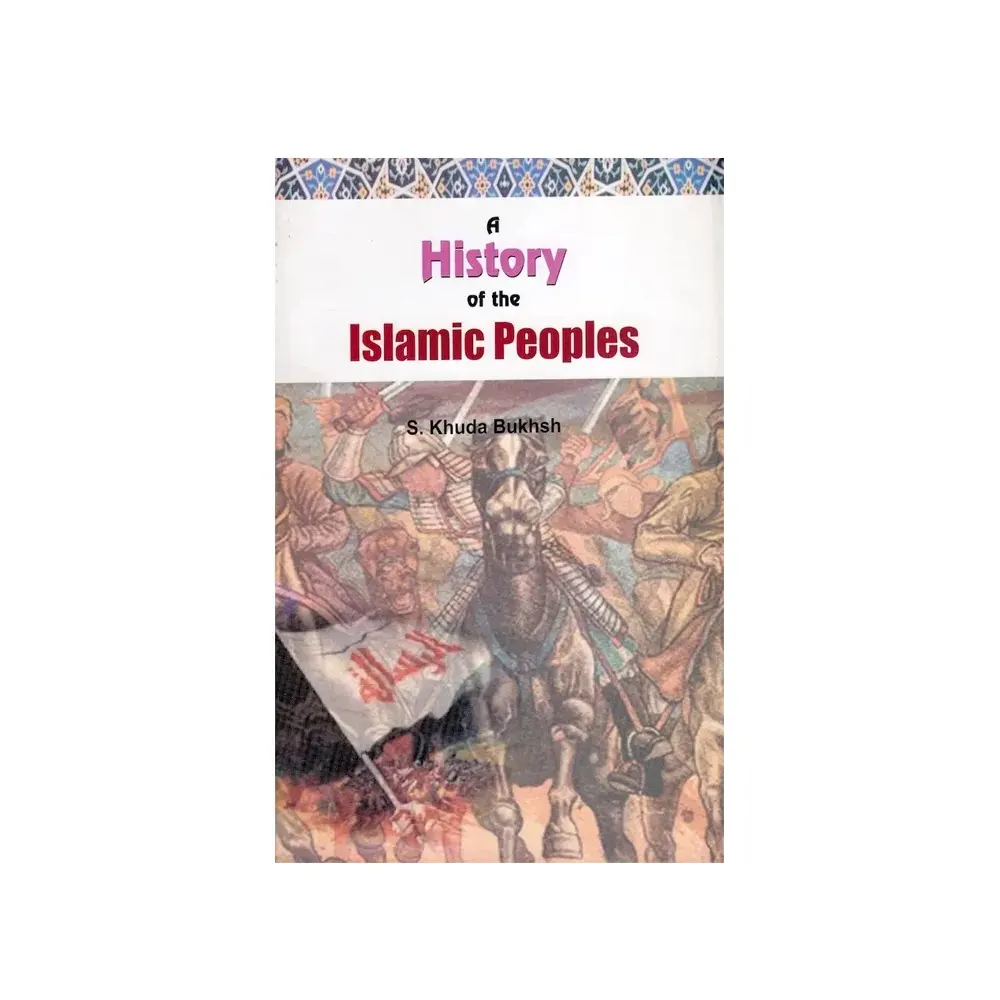
A History Of The Islamic Peoples (S Khuda Bukhsh) Adam Publishers English
Original price was: ₹250.00.₹195.00Current price is: ₹195.00.
- A History Of The Islamic Peoples S Khuda Bukhsh (Adam Publishers) English
- The Scope of the Book
- The book covers the following broad areas:
- The Rise of Islam and the Prophet Muhammad (PBUH):
- The book begins with the Arabian background – a description of pre-Islamic Arabia, its tribal structure, culture, social conditions, and religious practices.
- It then moves to the life of Prophet Muhammad (peace be upon him), his mission, the revelation of the Qur’an, the struggles in Makkah, migration to Madinah, and the establishment of the first Islamic state.
- The author emphasizes how Islam brought moral, social, and spiritual reforms to a region deeply divided by tribalism and superstition.
- The Rashidun Caliphate (632–661 CE):
- Khuda Bukhsh describes the leadership of the four rightly guided caliphs (Abu Bakr, Umar, Uthman, Ali).
- He highlights the rapid expansion of Islam beyond Arabia into Syria, Iraq, Egypt, and Persia.
- Important administrative and legal reforms introduced by Caliph Umar are explained.
- The internal conflicts, especially during the caliphate of Uthman and Ali, are presented in a balanced way.
- The Umayyad Caliphate (661–750 CE):
- The book outlines the transformation of the caliphate into a hereditary monarchy under Muawiyah.
- It explains the expansion into North Africa, Spain (Andalusia), and Central Asia.
- Khuda Bukhsh also discusses the administrative centralization and cultural flowering of Damascus, the Umayyad capital.
A History Of The Islamic Peoples (S Khuda Bukhsh) Adam Publishers English
Introduction
S. Khuda Bukhsh’s A History of the Islamic Peoples is an important scholarly work that examines the growth, development, and impact of Islamic civilization from its very beginning in the 7th century to its later expansions across continents. Unlike books that limit themselves to the political events of rulers and dynasties, this book offers a more complete picture of Islam as a dynamic force in history. It looks at the political, cultural, religious, scientific, and intellectual contributions of Muslims across different ages. The book was written with the aim of providing students and general readers with a clear, accessible, and authentic understanding of the history of Islamic peoples, especially from an Indian subcontinental scholarly perspective.
Khuda Bukhsh (1864–1935), the author, was an eminent historian, educationist, and thinker from Bengal who devoted his life to the study of Islamic history and culture. His writings are considered pioneering because they presented Islam and Muslim civilization to both Muslim and non-Muslim audiences in a balanced and respectful manner, at a time when much of Western scholarship was shaped by Orientalist biases. This particular book is one of his most notable contributions, widely read even today for its clarity, comprehensiveness, and objectivity.
The Scope of the Book
The book covers the following broad areas:
The Rise of Islam and the Prophet Muhammad (PBUH):
The book begins with the Arabian background – a description of pre-Islamic Arabia, its tribal structure, culture, social conditions, and religious practices.
It then moves to the life of Prophet Muhammad (peace be upon him), his mission, the revelation of the Qur’an, the struggles in Makkah, migration to Madinah, and the establishment of the first Islamic state.
The author emphasizes how Islam brought moral, social, and spiritual reforms to a region deeply divided by tribalism and superstition.
The Rashidun Caliphate (632–661 CE):
Khuda Bukhsh describes the leadership of the four rightly guided caliphs (Abu Bakr, Umar, Uthman, Ali).
He highlights the rapid expansion of Islam beyond Arabia into Syria, Iraq, Egypt, and Persia.
Important administrative and legal reforms introduced by Caliph Umar are explained.
The internal conflicts, especially during the caliphate of Uthman and Ali, are presented in a balanced way.
The Umayyad Caliphate (661–750 CE):
The book outlines the transformation of the caliphate into a hereditary monarchy under Muawiyah.
It explains the expansion into North Africa, Spain (Andalusia), and Central Asia.
Khuda Bukhsh also discusses the administrative centralization and cultural flowering of Damascus, the Umayyad capital.
The Abbasid Caliphate (750–1258 CE):
This period is described as the Golden Age of Islam.
The Abbasids shifted the capital to Baghdad, which became the center of science, literature, philosophy, and art.
Scholars like Al-Khwarizmi (mathematics), Ibn Sina (Avicenna, medicine), and Al-Farabi (philosophy) are discussed as part of the Islamic intellectual legacy.
Khuda Bukhsh highlights how Islamic civilization preserved and expanded upon Greek, Indian, and Persian knowledge.
The decline of the Abbasids due to internal weakness and the Mongol invasion of 1258 is also explained.
Muslim Dynasties and Regional Powers:
The book covers various Muslim dynasties outside the central caliphate, such as:
The Fatimids in Egypt
The Umayyads of Spain (Cordoba)
The Seljuks in Central Asia
The Ottomans in Turkey
The Safavids in Persia
The Mughals in India
Each dynasty’s contribution to art, architecture, learning, and governance is explained. For example:
The Umayyads of Spain are credited with the flourishing of architecture (like the Great Mosque of Cordoba) and sciences.
The Ottomans are praised for their strong empire that lasted over 600 years, with Istanbul as a center of trade and culture.
The Mughals in India are highlighted for their unique fusion of Islamic and Indian traditions in art, architecture (e.g., the Taj Mahal), and administration.
Islamic Contributions to Civilization:
A major part of the book deals with Muslim contributions to science, medicine, mathematics, astronomy, philosophy, literature, and the arts.
The preservation and translation of Greek works, and the transmission of this knowledge to Europe through Spain and Sicily, is explained as a key factor in the European Renaissance.
Muslim innovations in algebra, hospitals, navigation, and libraries are celebrated.
The Decline of Muslim Power:
Khuda Bukhsh also discusses the causes of decline among Muslim powers:
Internal divisions and sectarian disputes
Invasions by Mongols, Crusaders, and later European colonial powers
Economic decline due to loss of trade routes
He reflects on the lessons Muslims must learn from their history – particularly the need for unity, education, and moral reform.
Themes and Style of the Book
Balanced Narrative: Unlike many Western historians of his time, Khuda Bukhsh avoids portraying Islam as a “violent” or “backward” force. Instead, he highlights both achievements and shortcomings with fairness.
Cultural Synthesis: The book shows how Islam interacted with local cultures wherever it spread, resulting in a fusion of traditions rather than destruction.
Moral Dimension: The author stresses that the rise of Islam was not only political but also moral and spiritual. The reforms of Islam gave dignity to women, justice to the poor, and unity to fragmented societies.
Educational Purpose: Written in clear English, the book is meant for students and general readers who want to understand the sweep of Islamic history without getting lost in details.
Relevance of the Book
Even today, A History of the Islamic Peoples is relevant because:
It challenges stereotypes about Islam and Muslims.
It shows how Islamic civilization contributed to the progress of humanity.
It reminds Muslims of their glorious past and the need to revive knowledge and unity.
It is a bridge between Eastern and Western historiography, showing how a Muslim scholar interprets his own civilization.
Conclusion
S. Khuda Bukhsh’s A History of the Islamic Peoples is more than just a political history of rulers and wars. It is a comprehensive narrative of a civilization that shaped large parts of the world for over a millennium. The book presents Islam as a force of moral upliftment, intellectual progress, and cultural creativity, while also honestly acknowledging the decline that set in due to internal weaknesses and external invasions. For students, researchers, and general readers, it serves as a valuable introduction to Islamic history, written in accessible language with scholarly depth.
In essence, the book captures the journey of Islamic peoples from the deserts of Arabia to the palaces of Andalusia, from the libraries of Baghdad to the courts of Delhi, and from the mosques of Cairo to the universities of Istanbul – a journey that left an indelible mark on world history.
| Weight | 300 g |
|---|---|
| Dimensions | 16 × 10 × 8 cm |
Only logged in customers who have purchased this product may leave a review.
Related Products

- Islam Christianity And Judaism Moid Siddiqui (Adam) English
1 in stock

- Family Law In Islam Theory And Application Dr Muhammad Tahir Mansoori (Adam) English
2 in stock
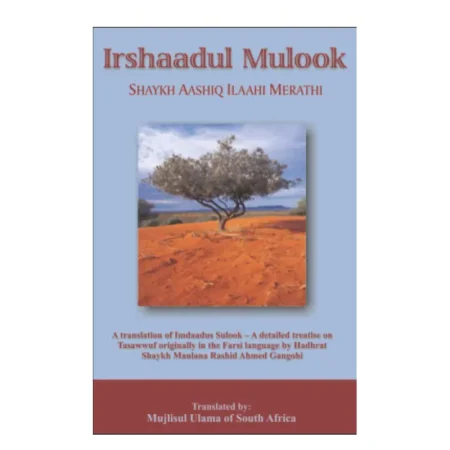
- Irshaadul Mulook Shaykh Aashiq Ilaahi Merathi (Adam) English
1 in stock
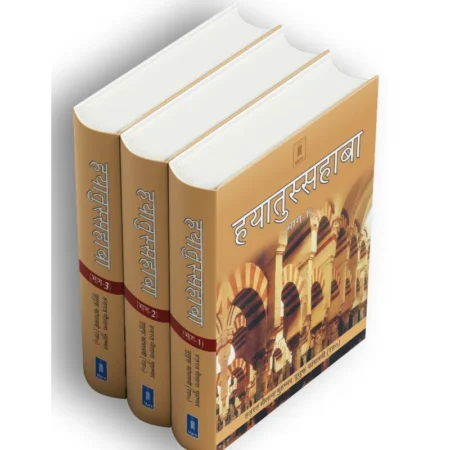
- Hayatus Sahaba Part 1,2&3 Hazrat Maulana Muhammad Yusuf Kandhalvi (Idara) Hindi
Overall Explanation and Themes
Taken together, the three parts of Hayatus Sahaba deliver timeless lessons:
- Faith and Conviction: The Sahaba’s faith was so strong that no torture, poverty, or danger could shake it.
- Love for the Prophet ﷺ: Their lives revolved around his guidance.
- Sacrifice and Simplicity: They abandoned worldly pleasures for the sake of Islam.
- Worship and Reliance on Allah: Their spiritual connection was the foundation of their strength.
- Global Responsibility: They considered spreading Islam a personal duty, not a communal option.
- Character and Justice: Their honesty and compassion won the hearts of nations.
3 in stock

- Islam & Feudalism The Economics Of Riba Interest And Profit Dr Ziaul Haque (Adam) English
2 in stock

- Prophetic Way Of Treatment Badar Azimabadi (Adam) English
1 in stock

- Caliphate & Sultanate In Medieval Persia Dr. A. H. Siddiqi Adam Publishers (English)
1 in stock

- Tarikh-E-Islam Akbar Shah Khan Najibabadi Al Hasanat (Hindi) 2 Volume Set
- Key Takeaways:
- Islam emerged in a challenging socio-political environment and transformed Arabian society through spiritual and ethical teachings.
- Prophet Muhammad’s (PBUH) leadership combined moral integrity, diplomacy, and strategic acumen.
- The Rashidun Caliphs laid the foundations of governance, justice, and expansion that shaped early Islamic history.
- Umayyad and Abbasid dynasties contributed to political consolidation and cultural flourishing.
- Islamic history provides timeless lessons in leadership, justice, morality, and social responsibility.
- Historical reflection is essential for understanding both the successes and pitfalls of past Muslim societies.
2 in stock

2 in stock

- History Testifies To The Infallibility Of The Holy Qur’An Early History Of The Children Of Israel (Adam) English
1 in stock
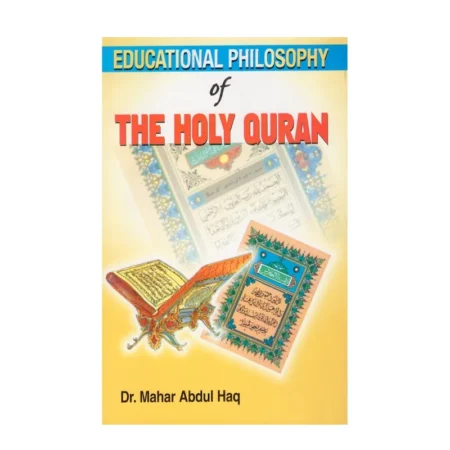
- Educational Philosophy Of The Holy Qur’An Dr Mahar Abdul Haq (Adam) English
1 in stock
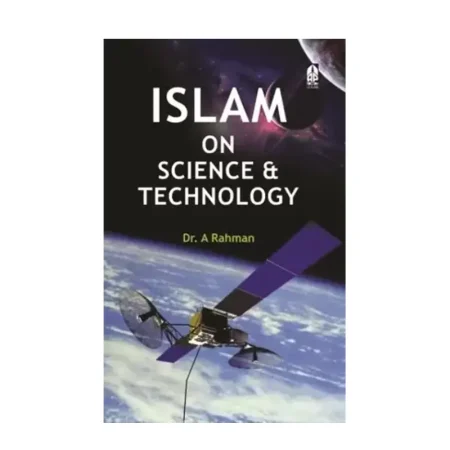
- Islam On Science And Technology Dr. A Rahman Adam Publishers (English)
1 in stock
Reviews
There are no reviews yet.