

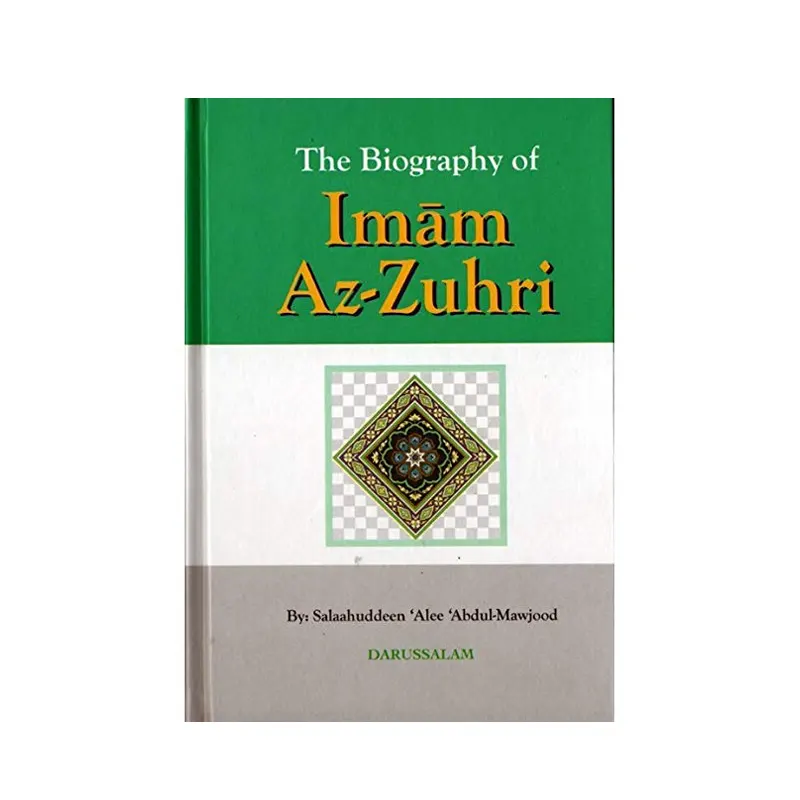
The Biography Of Imam Ibn Al-Qayyim Salahud-Din ‘Ali Abdul-Mawjud Darussalam (English)

₹530.00
- The Biography Of Imam Ibn Al-Qayyim Salahud-Din ‘Ali Abdul-Mawjud Darussalam (English)
- 1. Early Life and Background
- 2. Mentorship Under Imam Ibn Taymiyyah
- 3. Scholarship and Intellectual Contributions
- 4. Personal Character and Piety
- 5. Challenges and Opposition
- 6. Teaching and Mentorship
- 7. Spiritual Writings and Ethical Guidance
Out of stock
The Biography Of Imam Ibn Al-Qayyim Salahud-Din ‘Ali Abdul-Mawjud Darussalam (English)
“The Biography of Imam Ibn Al-Qayyim” by Salahud-Din ‘Ali Abdul-Mawjood, published by Darussalam, provides a comprehensive account of the life, scholarship, and contributions of the renowned Islamic scholar and jurist, Imam Ibn Al-Qayyim Al-Jawziyyah (1292–1350 CE). Known as a profound jurist, theologian, and spiritual guide, Ibn Al-Qayyim left an enduring legacy in Islamic thought, particularly in the fields of jurisprudence (Fiqh), Hadith studies, spirituality (Tasawwuf), and ethical guidance. Abdul-Mawjood’s biography explores his life in historical context, highlighting his scholarship, devotion to Islam, and moral integrity.
1. Early Life and Background
Imam Ibn Al-Qayyim, born Muhammad ibn Abu Bakr ibn Ayyub in Damascus, grew up in a scholarly family. Salahud-Din Abdul-Mawjood emphasizes that from an early age, Ibn Al-Qayyim exhibited remarkable intelligence, curiosity, and dedication to learning. He memorized the Qur’an at a young age and pursued extensive studies in Islamic sciences, including Fiqh, Hadith, Tafsir (Qur’anic exegesis), and Arabic grammar.
The biography highlights Ibn Al-Qayyim’s early exposure to knowledge and the rigorous scholarly environment of Damascus, which shaped his intellectual rigor. His early teachers recognized his extraordinary talent, noting his ability to grasp complex concepts, articulate arguments, and apply reasoning in jurisprudential matters.
2. Mentorship Under Imam Ibn Taymiyyah
A significant phase of Ibn Al-Qayyim’s life, as detailed in the book, was his close association with his teacher, Imam Ibn Taymiyyah. Salahud-Din Abdul-Mawjood explains that Ibn Taymiyyah, a prominent scholar and reformer, became Ibn Al-Qayyim’s mentor, guiding him in Hadith, Fiqh, and Islamic theology. This mentorship profoundly influenced Ibn Al-Qayyim’s scholarship, methodology, and approach to jurisprudence and spiritual matters.
Ibn Al-Qayyim absorbed not only knowledge but also the principles of ethical conduct, moral courage, and commitment to truth from his teacher. The biography portrays him as a devoted student, meticulously recording lessons, questioning assumptions, and engaging critically with Islamic texts while remaining respectful to scholarly tradition.
3. Scholarship and Intellectual Contributions
Salahud-Din Abdul-Mawjood emphasizes Ibn Al-Qayyim’s prolific scholarship, noting that he authored more than 80 works on diverse aspects of Islamic sciences. His writings include topics such as Fiqh, Hadith, Qur’anic commentary, spiritual guidance, ethics, and the refinement of the soul.
One of Ibn Al-Qayyim’s unique contributions was bridging the gap between jurisprudence and spirituality. Abdul-Mawjood explains that he believed Islamic law (Shariah) and inner purification (Tazkiyah) are inseparable, with adherence to legal obligations serving as a means of cultivating sincerity and God-consciousness. His books, such as Madarij al-Salikin and Zad al-Ma’ad, remain central references in Islamic studies.
4. Personal Character and Piety
The biography emphasizes Ibn Al-Qayyim’s exemplary character. Salahud-Din Abdul-Mawjood portrays him as humble, devoted, and morally upright. Despite his scholarship, Ibn Al-Qayyim lived simply, avoiding material excess, and focusing on worship, study, and teaching.
His personal piety extended to practical ethics: he treated students with kindness, advised rulers and the public with honesty, and consistently emphasized sincerity in religious practice. Abdul-Mawjood highlights anecdotes illustrating Ibn Al-Qayyim’s humility, patience in adversity, and compassion for the needy. These qualities made him respected and loved across scholarly and public circles.
5. Challenges and Opposition
Ibn Al-Qayyim lived during a period of significant political and intellectual tension. Salahud-Din Abdul-Mawjood explains that his association with Ibn Taymiyyah and their reformist views sometimes led to criticism from conservative scholars and political authorities. Despite facing imprisonment and public scrutiny, Ibn Al-Qayyim remained steadfast in his pursuit of truth and scholarly integrity.
The book emphasizes that these challenges shaped his character, deepened his spiritual insights, and reinforced his commitment to spreading authentic Islamic knowledge. His perseverance serves as a model for balancing principled scholarship with courage in the face of opposition.
6. Teaching and Mentorship
Imam Ibn Al-Qayyim was a dedicated teacher who influenced a generation of scholars. Salahud-Din Abdul-Mawjood highlights his teaching methodology, which combined rigorous textual analysis with practical guidance for moral and spiritual development. He encouraged students to understand the wisdom behind religious rulings, connect legal knowledge with personal piety, and prioritize sincerity in worship.
Abdul-Mawjood emphasizes that Ibn Al-Qayyim’s mentorship extended beyond academic instruction; he nurtured ethical character, spiritual awareness, and critical thinking. His students became influential scholars themselves, ensuring the continuity of his intellectual and ethical legacy.
7. Spiritual Writings and Ethical Guidance
A key aspect of Ibn Al-Qayyim’s biography is his contribution to spiritual literature. Salahud-Din Abdul-Mawjood explains that Ibn Al-Qayyim addressed the inner dimensions of faith, guiding Muslims on topics such as reliance on God (Tawakkul), repentance, patience, purification of the heart, and mindfulness of divine presence.
His work Madarij al-Salikin systematically outlines the stages of spiritual development, while Al-Fawaid offers practical advice for ethical conduct and self-discipline. Abdul-Mawjood emphasizes that Ibn Al-Qayyim’s teachings continue to inspire seekers of knowledge and spiritual growth, blending intellect, morality, and devotion in a holistic manner.
8. Legacy and Relevance
Salahud-Din Abdul-Mawjood underscores Ibn Al-Qayyim’s enduring impact on Islamic thought. His writings influenced subsequent scholars in Fiqh, Hadith, and Tasawwuf, while his ethical example inspired generations of students and laypeople.
The biography stresses the relevance of Ibn Al-Qayyim’s life for contemporary Muslims. His emphasis on sincerity, moral courage, integration of law and spirituality, and commitment to truth provides guidance for navigating personal, social, and intellectual challenges in modern times.
9. Style and Approach of the Book
The biography is written in a clear and accessible style, blending historical narrative with reflective analysis. Salahud-Din Abdul-Mawjood draws upon authentic sources, including classical biographical dictionaries, Hadith collections, and Ibn Al-Qayyim’s own works. The book not only presents chronological events but also emphasizes moral and spiritual lessons, making it both informative and inspirational.
Conclusion
“The Biography of Imam Ibn Al-Qayyim” by Salahud-Din ‘Ali Abdul-Mawjood presents a detailed and inspiring portrait of one of Islam’s most influential scholars. Ibn Al-Qayyim’s life exemplifies rigorous scholarship, moral integrity, personal piety, and spiritual guidance. From his early intellectual promise to his mentorship under Ibn Taymiyyah, his prolific writing, teaching, and ethical conduct, he represents a holistic model of Islamic scholarship and personal excellence.
The biography highlights that true knowledge in Islam is inseparable from moral and spiritual refinement. Ibn Al-Qayyim’s perseverance in the face of adversity, dedication to teaching, and guidance on the purification of the heart offer timeless lessons. His life continues to inspire scholars, students, and ordinary Muslims, demonstrating that intellect, ethics, and spirituality can coexist harmoniously in the pursuit of divine guidance and service to humanity.
In essence, Ibn Al-Qayyim’s biography is not only a historical account but also a practical guide for ethical, intellectual, and spiritual development, providing insights into leading a balanced and righteous life grounded in Islamic principles.
If you want, I can also make a simplified version of about 600 words for quicker reading while keeping all the essential points.
Do you want me to do that?
| Weight | 490 g |
|---|---|
| Dimensions | 16 × 10 × 8 cm |
Only logged in customers who have purchased this product may leave a review.
Related Products

- Key Themes in the Quran (Applicable to this Edition)
- Although this edition focuses on text presentation, it contains the entire Quran, covering all themes of Islamic guidance:
- Tawheed (Oneness of Allah)
- Repeated emphasis on Allah’s oneness, power, knowledge, and mercy.
- Prophethood (Risalah)
- Stories of prophets and the final message of Prophet Muhammad (PBUH).
- Day of Judgment (Akhirah)
- Moral accountability, rewards for righteousness, and consequences of sin.
- Ethics and Morality
- Guidance on honesty, patience, charity, forgiveness, humility, and social justice.
- Worship and Obligations
- Instructions on prayer (Salah), fasting (Sawm), Zakat, Hajj, and daily conduct.
- Stories of Nations and Lessons
- Narratives from past nations serve as moral lessons, emphasizing obedience to Allah and consequences of injustice.
1 in stock
1 in stock

- Aap Beti Part 1 & 2 Autobiography Of Maulana Zakariyya (Idara) English
- 1. Early Life and Family Background
- Maulana Zakariyya Kandhlawi was born in 1898 in Kandhla, India, into a family deeply committed to Islamic scholarship. The autobiography highlights the influence of his parents and extended family, who emphasized religious education, ethical conduct, and spiritual development.
- Even in his early years, he exhibited remarkable memory, curiosity, and devotion to learning. The book emphasizes how his upbringing instilled the foundations of moral character, spiritual awareness, and a love for Islamic knowledge that would guide his entire life.
- 2. Education and Scholarly Formation
- One of the central themes of Aap Beeti is Maulana Zakariyya’s rigorous Islamic education. He pursued studies in:
- Hifz-ul-Qur’an: Memorizing the Qur’an at a young age
- Hadith: Studying Prophetic traditions with renowned teachers
- Fiqh (Islamic jurisprudence): Mastering Hanafi fiqh and related texts
- Tafsir and Aqidah: Understanding the Qur’an and Islamic creed
- Maulana Zakariyya narrates the challenges he faced, including long hours of study, travel to different madrasas, and personal discipline. The autobiography conveys the dedication required to attain deep Islamic knowledge, highlighting both intellectual rigor and spiritual commitment.
- 3. Spiritual Development and Personal Virtues
- Throughout his life, Maulana Zakariyya (RA) emphasized the integration of knowledge with spiritual practice. His autobiography details his efforts in:
- Regular Salah and Dhikr: Maintaining consistent prayer and remembrance of Allah
- Ethical Conduct: Upholding truthfulness, humility, and honesty in personal and social life
- Self-Discipline: Controlling desires and striving for moral refinement
- Service to Islam: Prioritizing da‘wah, teaching, and moral guidance over personal comfort
2 in stock

- Biography Of Hadrat Moulana Muhammad Yusuf Sahib(R.A) Amire Tabligh Maulana Mufti Azizur-Rehman Bijnori Idara (English)
- 1. Early Life and Background
- Hadrat Moulana Muhammad Yusuf Sahib (R.A) was born in the late 19th or early 20th century in India, into a family committed to Islamic learning and piety. Maulana Mufti Azizur-Rehman Bijnori highlights that his upbringing in a spiritually rich environment laid the foundation for his lifelong dedication to Islamic scholarship and da‘wah (missionary work).
- From an early age, he displayed qualities of sincerity, devotion, discipline, and humility. His family emphasized both religious education and moral training, cultivating in him a love for Qur’an, Hadith, and the practices of the Prophet Muhammad (S.A.W.).
- 2. Education and Religious Formation
- The biography emphasizes Moulana Muhammad Yusuf Sahib’s thorough grounding in Islamic sciences. He studied:
- Tafsir (Qur’anic exegesis)
- Hadith (Prophetic traditions)
- Fiqh (Islamic jurisprudence)
- Aqidah (Islamic creed)
- His teachers recognized his intelligence, piety, and commitment to learning, which allowed him to excel in both religious knowledge and practical application. This strong scholarly foundation later helped him lead, guide, and inspire followers in Tablighi activities across India and beyond.
- 3. Early Involvement in Tabligh Work
- The book narrates Moulana Yusuf Sahib’s early participation in Tablighi activities under the guidance of senior scholars and leaders of the movement. He actively engaged in:
- Missionary journeys (khuruj): Traveling to various towns and villages to invite Muslims to observe Islamic practices.
- Spiritual training of disciples: Teaching sincerity, humility, and moral reform.
- Organization and administration: Assisting in the structured planning of Tablighi missions.
3 in stock
- Conclusion
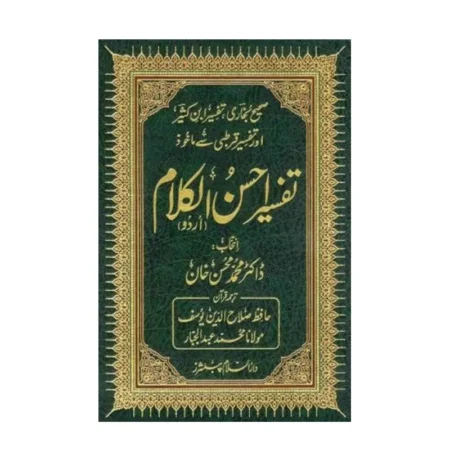
- Tafseer Ahsanul Kalam (Darussalam) by Dr. Muhammad Muhsin Khan and Hafiz Salahuddin Yusuf:
- Provides clear, authentic, and accessible explanations of the Qur’an.
- Integrates spiritual guidance, moral ethics, and social reform, reflecting Islam’s holistic approach.
- Uses a multi-lingual format to make classical scholarship accessible for modern readers.
- Encourages reflection, ethical behavior, and practical application of Qur’anic guidance.
- Serves as a reliable resource for scholars, students, and anyone seeking a comprehensive understanding of the Qur’an.
2 in stock
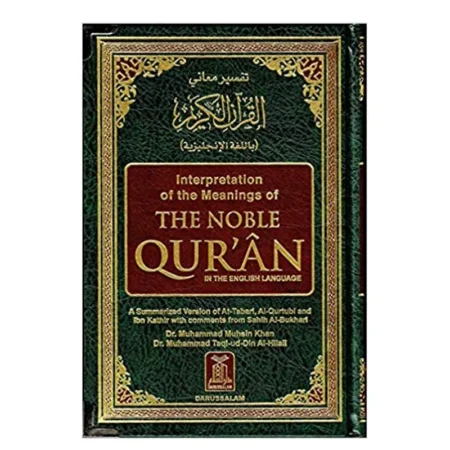
- Hardcover: 1189 pages
- Publisher: Dar-us-Salam Publications (1 March 2011)
- Language: English, Arabic
1 in stock
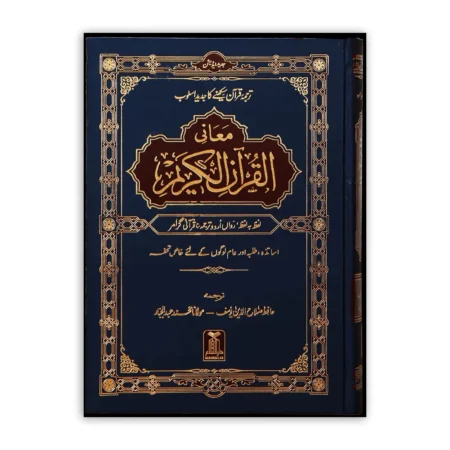
- Key Lessons for Readers
- Faith and Accountability
- Teaches belief in Allah, moral responsibility, and preparation for the Hereafter.
- Ethics and Character
- Guides on honesty, patience, humility, justice, and compassion in personal and social life.
- Spiritual Awareness
- Emphasizes prayer, reflection, and self-purification as central to a balanced life.
- Practical Application
- Word-for-word explanation ensures correct understanding and application of Quranic guidance.
- Understanding Context
- Historical, linguistic, and legal notes help avoid misunderstandings and promote correct interpretation.
1 in stock
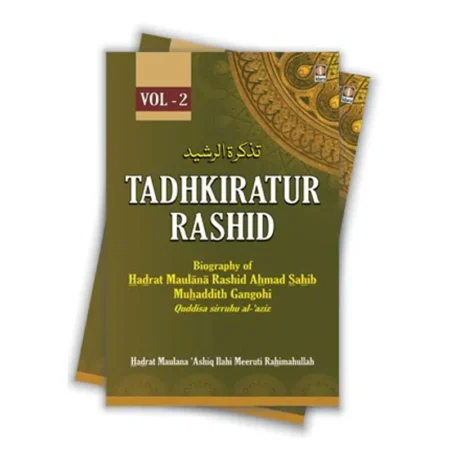
- Biographies of Scholars and Saints
- A key feature of Tadhkiratur Rashid Vol-2 is the detailed biographies of Islamic scholars, jurists, and Sufi saints. Maulana Meeruti presents these figures as models of intellectual and spiritual excellence. Each biography highlights:
- Early life and education: The author details the family background, early learning, and intellectual environment that shaped the personality of each figure.
- Spiritual and moral development: Emphasis is placed on how these personalities cultivated inner piety, patience, humility, and devotion to God.
- Scholarly achievements: Their contributions to Islamic sciences, including Fiqh, Hadith, Tafsir, and Tasawwuf, are elaborated, showing their role in preserving and transmitting knowledge.
- Ethical conduct: The biographies stress the practical application of knowledge, including charity, justice, truthfulness, and service to society.
- By highlighting these elements, the book inspires readers to emulate the balance of knowledge, spirituality, and ethical conduct exhibited by these personalities.
4 in stock
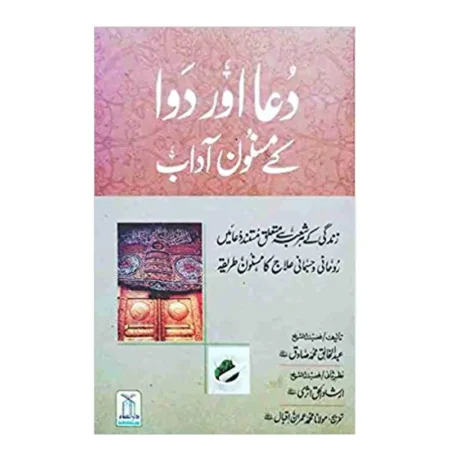
- Dua Aur Dawa Kai Masnoon Aadab Abdul Khaliq Muhammad Sadiq Darussalam (Urdu)
5 in stock

- Practical Lessons for Readers
- Daily Recitation
- Encourages consistent Tilawat, enhancing spiritual reflection and moral awareness.
- Memorization Discipline
- 15-line pages allow learners to memorize systematically and retain verses effectively.
- Tajweed Accuracy
- Recitation rules ensure proper pronunciation, elongation, and pauses, preserving the beauty of Quranic recitation.
- Spiritual Reflection
- Encourages thinking about meaning, guidance, and application while reciting.
- Structured Learning
- Supports incremental progress, making memorization less daunting and more achievable.
1 in stock
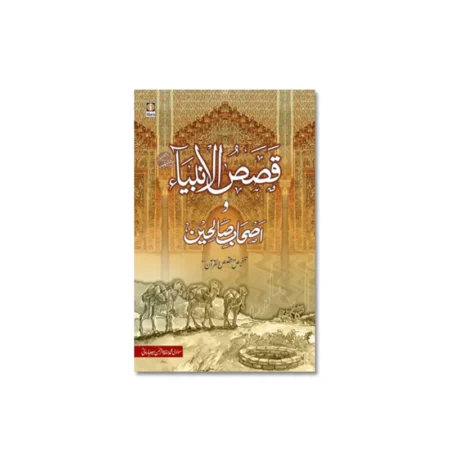
- Qassasul Ambiya Wa Ashabe Saliheen Maulana Muhammad Hifzur Rehman Seeohwarwi Idara (Urdu)
- Prophet Adam (AS): The book details his creation, the test in Paradise, and the lessons of obedience, repentance, and divine mercy.
- Prophet Nuh (AS): His patience in calling his people to monotheism and his perseverance in the face of rejection teaches the importance of steadfastness.
- Prophet Ibrahim (AS): His devotion, sacrifice, and trust in Allah serve as a model of complete submission and reliance on God.
- Prophet Musa (AS) and Prophet Isa (AS): Their struggles against oppression, leadership, and miracles highlight the significance of courage, justice, and divine guidance.
- Prophet Muhammad (SAW): The final prophet’s life, mission, and ethical conduct are presented as the ultimate model of virtue, wisdom, and spiritual guidance.
1 in stock
Reviews
There are no reviews yet.