Ruqayyah And Umm Kulthum The Daughters Of The Prophet Muhammad Sr. Nafees Khan (Goodword) English
₹130.00 Original price was: ₹130.00.₹100.00Current price is: ₹100.00.
- Historical Context and Family Background
- Ruqayyah and Umm Kulthum were among the daughters of the Prophet Muhammad (S.A.W.) and his first wife, Hazrat Khadijah (RA). The biography begins by establishing the historical and social context of the Prophet’s household:
- Life in Makkah during the pre-Islamic and early Islamic periods
- The socio-political challenges faced by Muslims in a predominantly polytheistic society
- The role of the Prophet’s household as exemplars of moral conduct and faith
- Sr. Nafees Khan emphasizes the importance of understanding the daughters’ lives within the broader struggles of early Islam, illustrating how they supported their father’s mission and faced trials with patience and dignity.
- 2. Ruqayyah (RA) – Life and Character
- Ruqayyah (RA) was the Prophet’s second daughter. The biography highlights several aspects of her life:
- Marriage to Uthman ibn Affan (RA): Ruqayyah married Uthman, who later became the third Caliph of Islam. The biography details the marriage as an example of mutual support, piety, and dedication to Islam.
- Patience and Perseverance: During the boycott of the Muslims at Sha’b Abi Talib and other hardships in Makkah, Ruqayyah (RA) endured suffering with steadfast faith.
- Migration (Hijrah): She accompanied her husband and the Muslim community during the migration to Madinah, reflecting courage and devotion.
- Illness and Passing: Ruqayyah (RA) fell ill during the early years in Madinah and passed away at a young age. The biography emphasizes her resilience and the grief her loss caused to the Prophet and the Muslim community.
Out of stock
- Delivery & Return
Shipping Policy
How Does The Delivery Process Work ?
- Once Our System Processes Your Order, Your Products Are Inspected Thoroughly To Ensure They Are In Perfect Condition.
- After They Pass Through The Final Round Of Quality Checks, They Are Packed And Handed Over To Our Trusted Courier Partners.
- Our Delivery Partners Then Bring The Package To You At The Earliest Possibility. In Case, They Are Unable To Reach Your Provided Address Or At A Suitable Time, They Will Contact You To Resolve The Issue.
How Are Items Packed ?
We Package Our Products In Corrugated Boxes, Which Are Covered With 3 Layer Protection. Each Individual Product Is Packed In Bubble Wrap While Fragile Items Like Bottles Are Safely Secured With Additional Bubble Wrap. We Pride Ourselves On The Quality Of Our Packaging.What Is The Range Of Locations To Which Souq Al Buhair Ships It’s Products ?
We Shipped Our Products Pan India!My Order Has Been Shipped, How Can I Track It ?
Once Your Order Has Been Dispatched, You Will Receive An Email And SMS With Tracking Details.You Can Track The Status Of Your Order Within 24 – 48 Hours After Your Order Is Dispatched From Our Warehouse.Following Are Some Of Our Trusted Courier Partners: eKart Logistics, BlueDart, Delhivery, Xpressbees, Ecom Express, DTDC & ShadowfaxWhat Is The Estimated Delivery Time ?
It Takes 3-7 Business Days To Deliver The Order Once Order Has Been Dispatched.Though We Keep 95% Of Our Catalog In Our Inventory, Certain Products Need To Be Sourced Directly From The Brand Itself So That We Can Live Up To Our Promise Of Providing Fresh, Non-expired Products.Are There Any Shipping Charges Applicable To My Order ?
We Have Dynamic Shipping Charges – Depending On Carts Total Weight/Dimension Charge Is Applied To All Orders Below ₹1999, While There Is Free Shipping For All Orders Above ₹1999.Package Weight Must Be Below 1000GM Eligible For Free Shipping .Note: Please Take A Video/Photos While Opening A Order You Received We Need It If Anything Goes Wrong With You Order Between Journey Of Our Warehouse To Your Doorstep, If You Find Order Is Damaged Or Intact Please Do Not Accept The Order Delivery .
Disclaimer: Any Complaints Related To Product/Delivery Should Be Brought To Our Notice Within 48 Hours From The Time Of Delivery.
Help
Give us a shout if you have any other questions and/or concerns. Email: support@souqalbuhair.com Phone: +918755551188 WhatsApp: +918755551188
Ruqayyah And Umm Kulthum The Daughters Of The Prophet Muhammad Sr. Nafees Khan (Goodword) English
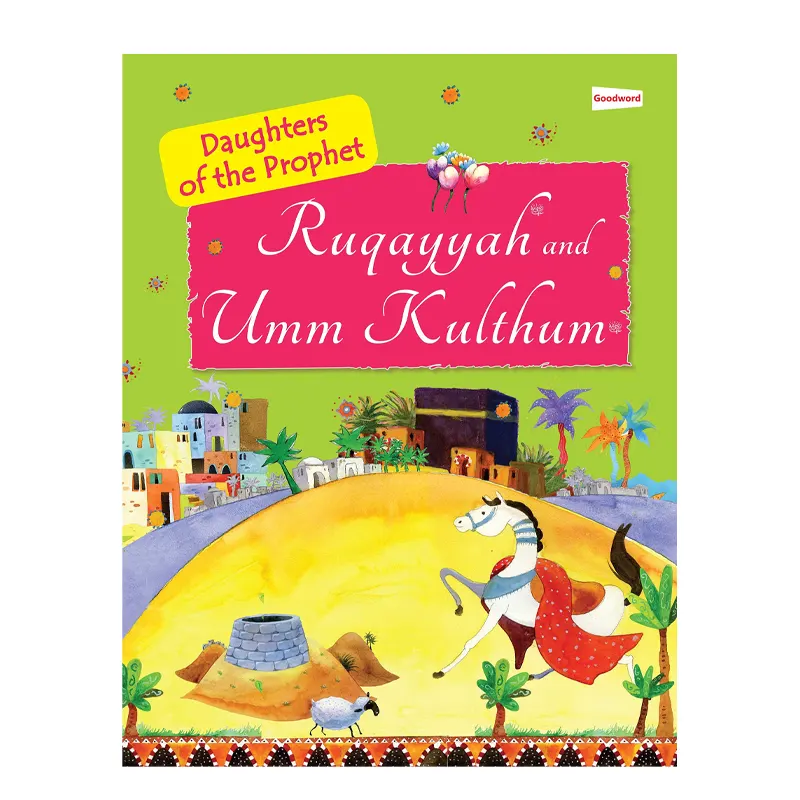
“Ruqayyah and Umm Kulthum: The Daughters of the Prophet Muhammad (S.A.W.)” by Sr. Nafees Khan is a biographical account focusing on the lives, character, and legacy of two of the daughters of Prophet Muhammad (S.A.W.). Unlike many general biographies of the Prophet’s family, this work concentrates specifically on Ruqayyah (RA) and Umm Kulthum (RA), highlighting their personal sacrifices, devotion, and moral excellence. The book is written in accessible English and published by Goodword, making it suitable for both adult and young readers interested in Islamic history, family studies, and the exemplary lives of the Prophet’s household.
1. Historical Context and Family Background
Ruqayyah and Umm Kulthum were among the daughters of the Prophet Muhammad (S.A.W.) and his first wife, Hazrat Khadijah (RA). The biography begins by establishing the historical and social context of the Prophet’s household:
Life in Makkah during the pre-Islamic and early Islamic periods
The socio-political challenges faced by Muslims in a predominantly polytheistic society
The role of the Prophet’s household as exemplars of moral conduct and faith
Sr. Nafees Khan emphasizes the importance of understanding the daughters’ lives within the broader struggles of early Islam, illustrating how they supported their father’s mission and faced trials with patience and dignity.
2. Ruqayyah (RA) – Life and Character
Ruqayyah (RA) was the Prophet’s second daughter. The biography highlights several aspects of her life:
Marriage to Uthman ibn Affan (RA): Ruqayyah married Uthman, who later became the third Caliph of Islam. The biography details the marriage as an example of mutual support, piety, and dedication to Islam.
Patience and Perseverance: During the boycott of the Muslims at Sha’b Abi Talib and other hardships in Makkah, Ruqayyah (RA) endured suffering with steadfast faith.
Migration (Hijrah): She accompanied her husband and the Muslim community during the migration to Madinah, reflecting courage and devotion.
Illness and Passing: Ruqayyah (RA) fell ill during the early years in Madinah and passed away at a young age. The biography emphasizes her resilience and the grief her loss caused to the Prophet and the Muslim community.
Through these narratives, Sr. Nafees Khan portrays Ruqayyah (RA) as a figure of moral strength, devotion, and love for her family and faith.
3. Umm Kulthum (RA) – Life and Character
Umm Kulthum (RA) was the fourth daughter of the Prophet. Her life, as detailed in the biography, reflects:
Marriage and Support: Umm Kulthum (RA) also married Uthman ibn Affan (RA) after the passing of her sister Ruqayyah (RA), demonstrating the continued bond of the Prophet’s family and their support for loyal companions.
Compassion and Devotion: Her life was marked by devotion to her father, faith, and household responsibilities.
Participation in Early Islamic Community: She lived through significant events in Madinah, witnessing the growth of Islam and contributing through moral support, piety, and guidance.
The biography highlights her dignified and patient character, showing how she exemplified the virtues taught by her father, Prophet Muhammad (S.A.W.).
4. Role of the Prophet’s Household
A significant focus of the biography is the role of the Prophet’s family in early Islam:
Exemplars of Faith: The daughters reflected the teachings of Islam in personal conduct, moral integrity, and resilience.
Support in Adversity: Both Ruqayyah (RA) and Umm Kulthum (RA) supported their father during periods of persecution, social boycott, and migration.
Moral Education: Their lives provided examples of patience, humility, and devotion, serving as models for Muslim women in every era.
The author emphasizes that the daughters’ contributions were not merely familial but were pivotal in shaping the early Muslim community and demonstrating the human side of the Prophet’s household.
5. Challenges and Hardships
The biography also discusses the various hardships faced by Ruqayyah (RA) and Umm Kulthum (RA), including:
Social and economic boycott of the Prophet’s family in Makkah
Personal loss and bereavement, including the death of children and early family members
Coping with illness and personal suffering while maintaining devotion and moral strength
Sr. Nafees Khan presents these hardships as opportunities where the daughters displayed resilience, reinforcing the spiritual and moral lessons that can be drawn from their lives.
6. Moral and Spiritual Lessons
The book emphasizes several key lessons from the lives of Ruqayyah (RA) and Umm Kulthum (RA):
Patience (Sabr): Enduring hardship without complaint, relying on faith in Allah
Devotion (Imaan): Commitment to Islamic teachings and the family’s spiritual mission
Compassion and Service: Supporting others in times of need, exemplifying moral leadership
Family Values: Maintaining strong familial bonds and mutual support, emphasizing love, loyalty, and respect
These lessons provide readers with practical guidance for personal development, spiritual growth, and ethical living.
7. Relationship with the Prophet Muhammad (S.A.W.)
A major theme of the biography is the close and loving relationship between the daughters and the Prophet:
Affection and Care: The Prophet’s love and concern for his daughters are highlighted through anecdotes and narrations.
Moral Guidance: The Prophet served as a mentor, guiding their conduct, spiritual growth, and social responsibilities.
Emotional Bonds: The biography portrays the emotional depth of their relationship, including grief at their passing and the joy in their accomplishments.
This intimate portrayal underscores the human dimension of the Prophet’s household, making the historical figures relatable and inspirational.
8. Style and Approach
Sr. Nafees Khan writes in clear, accessible English, making the biography suitable for both adults and young readers. The style is:
Narrative-Based: Combines historical facts with storytelling, creating engaging reading
Analytical: Draws lessons and moral teachings from the daughters’ lives
Inspirational: Encourages readers to emulate their virtues in everyday life
Faith-Centered: Highlights the spiritual significance of the daughters’ actions and choices
The accessible style ensures that readers not only learn historical details but also internalize ethical and spiritual lessons.
9. Educational and Inspirational Value
The biography provides:
Historical Knowledge: Understanding the lives of two important figures in early Islam
Role Models for Women: Showcasing virtues, moral strength, and spiritual excellence
Spiritual Lessons: Emphasizing patience, devotion, and faith during trials
Family and Social Values: Illustrating respect, loyalty, and support within family and community
The book serves as both a historical account and a guide for ethical and spiritual development, particularly highlighting the role of women in Islam.
Conclusion
“Ruqayyah and Umm Kulthum: The Daughters of the Prophet Muhammad (S.A.W.)” by Sr. Nafees Khan provides a focused and insightful biography of two important female figures in early Islamic history. Through detailed accounts of their lives, marriages, contributions, and moral character, the book emphasizes their spiritual, ethical, and familial significance.
Ruqayyah (RA) and Umm Kulthum (RA) exemplify patience, devotion, moral integrity, and resilience, serving as timeless role models for Muslim women and the broader community. Their lives reflect the deep human and spiritual aspects of the Prophet’s household, illustrating how faith, character, and family values can guide personal conduct and inspire future generations.
Ultimately, the biography is both educational and inspirational, offering readers historical insight, moral lessons, and spiritual guidance through the exemplary lives of the Prophet Muhammad’s daughters.
Based on 0 reviews
| 0% | ||
| 0% | ||
| 0% | ||
| 0% | ||
| 0% |
Only logged in customers who have purchased this product may leave a review.
Related Products
- Allah Ka Tasavvur (Concept of Allah)
Bachon ko pehle Allah ka tasavvur karwaya jata hai. Allah hamara khaliq hai. Allah sab kuch banata hai – aasmaan, zameen, phool, ped, janwar aur hum insaan bhi Allah ne banaye. Allah har cheez ko dekhta hai aur hamesha hamare saath hota hai. Bachon ko ye samjhana zaruri hai ke Allah sab se bara aur sab se accha hai. - 2. Allah Ki Ibadat (Worship of Allah)
Bachon ko ibadat ki ahmiyat samjhayi jati hai. Ibadat ka matlab hai Allah ki baat man’na aur uski khushi ke liye kaam karna. Bachon ko ye sikhaya jata hai ke Allah ke liye namaz, dua aur acchai karna zaruri hai. Simple shabdon me, “Allah ki baat sunna aur acchai karna ibadat hai.” - 3. Dua aur Salam (Prayers and Greetings)
Nursery ke bachon ko chhoti chhoti duaen sikhayi jati hain, jaise: - Bismillah (Kuch bhi shuru karne se pehle bolna)
- Alhamdulillah (Shukriya ada karne ke liye)
- Assalamu Alaikum (Salaam karna)
Bachon ko bataya jata hai ke ye shabd hamare liye barkat aur mohabbat laate hain. Salam karna aur dua karna insaan ko shafqat aur acchai sikhata hai. - 4. Nabiyon Ka Ta’aruf (Introduction to Prophets)
Nursery bachon ko sabse pehle Hazrat Muhammad ﷺ aur kuch dusre nabi ke bare me sikhaya jata hai. Simple kahaniyon ke zariye: - Hazrat Adam A.S – pehle insaan
- Hazrat Nuh A.S – jo barkhata aur insano ko Allah ka hukum batate the
- Hazrat Muhammad ﷺ – akhir ke nabi, sabse pyare aur sabko acchai sikhane wale
Bachon ko ye samjhaya jata hai ke nabi hamesha sach bolte the aur Allah ki baat manate the.
2 in stock
- Clear explanations of grammar and syntax – building on earlier concepts and introducing more complex structures.
- Thematic vocabulary expansion – covering practical, daily, and religious contexts.
- Reading and writing exercises – enhancing fluency, comprehension, and accuracy.
- Conversational practice – providing dialogues and situational examples for practical communication.
- Integration of Islamic vocabulary – helping learners understand religious texts alongside modern usage.
- Interactive exercises and revision sections – encouraging active engagement and reinforcement.
- Pronunciation guidance – ensuring accurate articulation of challenging Arabic sounds.
- Structured progression – lessons build logically from simple to more advanced concepts.
- Emphasis on practice and application – enabling learners to internalize knowledge and use it confidently.
2 in stock
- Fun Taleem O Tarbiyaat Vol 2
- Benefits for Children
- Intellectual Growth:
- Enhances Urdu literacy, comprehension, arithmetic skills, and general knowledge.
- Promotes problem-solving, logical thinking, and analytical abilities.
- Moral and Ethical Development:
- Reinforces honesty, patience, empathy, responsibility, teamwork, and gratitude.
- Encourages practical application of ethical principles.
- Emotional and Social Learning:
- Stories and activities foster empathy, cooperation, and communication skills.
- Teaches children to understand the perspectives of others and make ethical decisions.
- Confidence and Independence:
- Encourages self-paced learning and active participation.
- Builds confidence in both academics and ethical reasoning.
- Engaging and Fun Learning Experience:
- Puzzles, illustrations, and creative tasks make learning enjoyable.
- Motivates children to practice regularly, reinforcing knowledge and skills.
- Preparation for Real-Life Challenges:
- Lessons and stories help children understand the importance of applying knowledge and values in everyday life.
- Builds a foundation for academic success and socially responsible behavior.
1 in stock
- Ali Ibn Abi Talib : The Fourth Caliph Of Islam ( Maria Khan ) Goodword English
- Significance and Impact:
This book is significant for several reasons: - Educational Value:
It introduces young readers to a major figure in Islamic history in an age-appropriate manner, providing historical, moral, and spiritual education. - Character Building:
Hazrat Ali’s (RA) life serves as a model of courage, wisdom, humility, and ethical leadership, encouraging readers to develop strong moral character. - Understanding Islamic History:
The book contextualizes key events in early Islamic history, making them accessible and relatable. Readers gain insight into the social, political, and ethical challenges of the early Muslim community. - Spiritual Inspiration:
Hazrat Ali’s (RA) devotion, piety, and moral integrity inspire readers to strengthen their faith, practice ethical behavior, and seek knowledge.
4 in stock
1. Islam as a Religion of Peace
2. The Prophetic Model of Peaceful Struggle
3. Misinterpretations of Jihad
4. Islam and Interfaith Harmony
5. Islam and Modern Civilization
6. The Spiritual Dimension of Islam
1 in stock
- Clear and simple explanations – grammar, vocabulary, and sentence structure are taught in an understandable way.
- Balanced focus on reading, writing, and speaking – ensuring all essential language skills are developed.
- Practical and contextual learning – dialogues and thematic vocabulary make learning relevant and applicable.
- Integration of Islamic terms – useful for learners interested in understanding religious texts.
- Structured progression – each chapter builds on previous knowledge for smooth learning.
- Interactive exercises and puzzles – promote active learning and reinforcement.
- Pronunciation guidance – helps learners articulate words accurately and confidently.
2 in stock
- The Army Of Ants The Powerful Jinn Hb Saniyasnain Khan (Goodword) English
- Story Overview
- The story revolves around Prophet Suleiman’s rule, his ability to communicate with creatures, and the lessons learned from the natural world, particularly ants and jinn.
- 1. Prophet Suleiman and His Kingdom
- Prophet Suleiman, son of Prophet Dawud (David, peace be upon him), was granted wisdom, knowledge, and a vast kingdom by Allah.
- His authority extended over humans, animals, and jinn.
- The book emphasizes his devotion, fairness, and leadership, showing that his power came from Allah and was meant to serve justice and uphold righteousness.
- 2. The Army of Ants
- One day, while traveling with his army, Prophet Suleiman overheard a conversation among the ants, who were concerned about being trampled by the soldiers.
- The story highlights his ability to understand and communicate with animals, reflecting Allah’s blessings and his unique gift.
- Suleiman smiled, showing mercy and consideration, and ensured the ants were safe.
1 in stock
- Quran Stories For Toddlers Board Book Saniyasnain Khan (Goodword) Arabic
1 in stock
- Benefits for Children
- Intellectual Development:
- Improves literacy, comprehension, arithmetic skills, and general knowledge.
- Encourages curiosity, problem-solving, and critical thinking.
- Moral and Ethical Growth:
- Instills values of honesty, patience, gratitude, respect, and responsibility.
- Helps children understand the importance of ethics in daily life.
- Emotional and Social Skills:
- Stories and exercises promote empathy, cooperation, and effective communication.
- Confidence and Independence:
- Encourages self-paced learning and fosters confidence in both academic and ethical understanding.
- Engagement and Enjoyment:
- Fun stories, colorful illustrations, and interactive activities make learning enjoyable and memorable.
- Practical Life Preparation:
- Helps children understand real-life applications of education and ethics.
- Prepares children for both academic success and socially responsible behavior.
1 in stock
- The book begins with an introduction to the importance of Salah in Islam.
- Children are taught that Salah is one of the five pillars of Islam, a mandatory act of worship prescribed by Allah, and a direct means of connecting with Him.
- The introduction explains in simple, child-friendly language that Salah is a way to express gratitude, seek forgiveness, and remember Allah throughout the day.
- The text emphasizes that establishing Salah from a young age helps develop a strong moral and spiritual foundation, shaping a child’s character and encouraging regular adherence to religious duties.
- One of the key features of the book is its focus on visual learning.
- Each step of Salah is accompanied by clear illustrations showing a boy performing the prayer correctly.
- These illustrations cover all aspects of the prayer, including standing (Qiyam), bowing (Ruku), prostration (Sajdah), and sitting (Jalsa).
- The images are simple yet detailed, making it easy for children to understand the proper postures, hand positions, and movements.
- By seeing the actions depicted visually, children can imitate them accurately, which is especially helpful for learners who benefit from a hands-on, demonstration-based approach.
- The book explains the sequence of Salah in a step-by-step manner. Each step is described using simple language, often breaking down complex concepts into easy-to-understand instructions.
- For instance, it teaches children how to begin with the intention (Niyyah), say Takbir (Allahu Akbar), recite Surah Al-Fatihah and additional short Surahs, perform Ruku and Sajdah correctly, and conclude with Taslim.
- The instructions include guidance on correct pronunciation of Arabic words and phrases, ensuring that children learn not only the actions but also the verbal elements of prayer accurately.
2 in stock
- What Is Jannah? Salmah Umm Zainab (Goodword) English
- Understanding Jannah:
- Descriptions of Jannah:
- The Importance of Good Deeds:
- The Mercy of Allah:
- Comparison with Earthly Life:
- Storytelling and Illustrations:
4 in stock
- Have a stronger understanding of basic and intermediate Arabic grammar, including verb conjugation, pluralization, and sentence formation.
- Expand vocabulary related to daily life, social interactions, and Islamic contexts.
- Develop confidence in reading and writing simple Arabic sentences accurately.
- Engage in basic conversations in Arabic, applying grammar and vocabulary in practical situations.
- Recognize and correctly pronounce Arabic letters and sounds.
- Understand the connection between grammar, vocabulary, and sentence construction
2 in stock


Reviews
There are no reviews yet.