
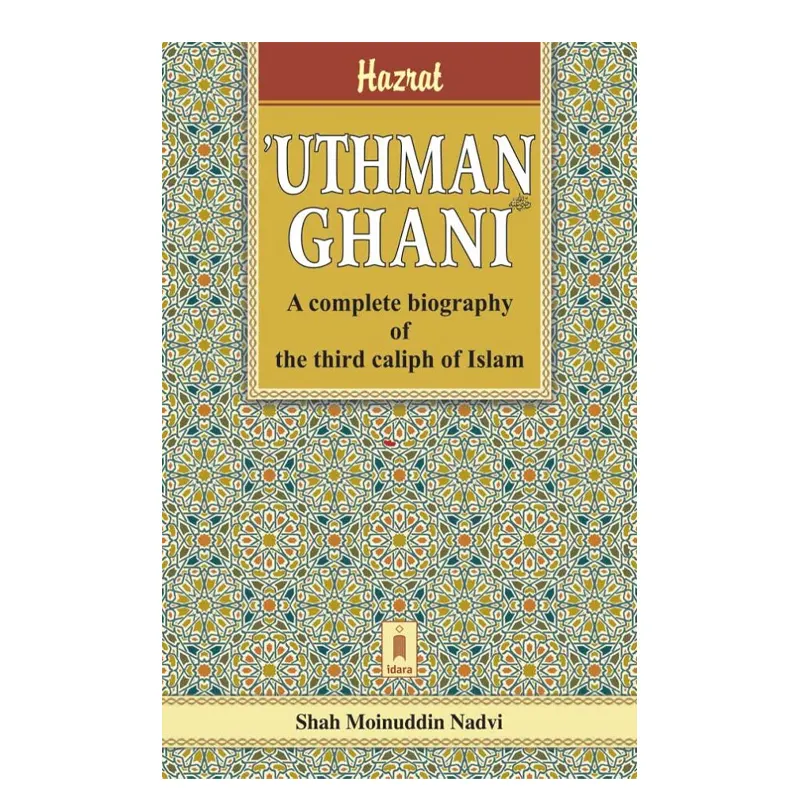
Hazrat Uthman Ghani A Complete Biography Of The Third Caliph Of Islam (Shah Moinuddin Nadvi) Idara English

₹90.00
- Hazrat Usman Ghani A Complete Biography Of The Third Caliph Of Islam Shah Moinuddin Nadvi Idara (English)
- 1. Early Life and Background
- 2. Conversion to Islam
- 3. Role During the Prophet’s Mission
- 4. Caliphate and Governance
- 5. Personal Virtues and Ethical Conduct
- 6. Challenges and Trials
- 7. Legacy and Contributions
- 8. Educational and Spiritual Significance
Out of stock
Hazrat Uthman Ghani A Complete Biography Of The Third Caliph Of Islam (Shah Moinuddin Nadvi) Idara English
“Hazrat Omar Farooq: A Complete Biography of the Second Caliph of Islam” by Shah Moinuddin Nadvi is a comprehensive biography that explores the life, character, and legacy of Hazrat Umar ibn al-Khattab (RA), the second Caliph of Islam. Renowned for his justice, piety, courage, and administrative acumen, Umar Farooq played a pivotal role in consolidating the early Muslim community, expanding the Islamic state, and establishing governance and legal structures rooted in Islamic principles. This biography provides a detailed account of his life, from pre-Islamic times to his caliphate, highlighting his personal virtues, political leadership, and enduring influence on Islamic history.
1. Early Life and Background
Hazrat Umar Farooq was born into the powerful and respected Banu Adi clan of the Quraysh in Makkah. Shah Moinuddin Nadvi provides a vivid account of Umar’s early years, emphasizing his strong character, physical courage, sharp intellect, and sense of justice. Initially, Umar was a fierce opponent of Islam, actively resisting the Prophet Muhammad’s (SAW) message.
The biography highlights how Umar’s transformation after embracing Islam became a turning point in early Islamic history. His conversion, marked by sincere belief and immediate dedication to the Prophet’s mission, significantly strengthened the Muslim community, as Umar’s courage, influence, and eloquence proved vital in defending Islam during its formative years.
2. Conversion to Islam
Shah Moinuddin Nadvi details Umar’s conversion story as one of profound spiritual and moral significance. Moved by reading verses of the Qur’an and witnessing the steadfastness of the early Muslims, Umar recognized the truth of Islam and publicly declared his faith.
His acceptance of Islam not only inspired many others but also shifted the balance of power in favor of the Muslims in Makkah. Umar’s conversion exemplifies the themes of sincerity, courage, and commitment to divine truth, illustrating that genuine faith often requires courage and decisive action.
3. Role During the Prophet’s Mission
After his conversion, Umar Farooq became one of the Prophet Muhammad’s (SAW) closest companions and most trusted advisors. Shah Moinuddin Nadvi emphasizes his unwavering loyalty, administrative skills, and strategic thinking, which were crucial during critical events such as:
The Hijrah (migration to Madinah), where Umar played a key role in planning and ensuring the safety of the Muslim community.
Early battles, including Badr, Uhud, and Khandaq, where his courage and leadership inspired other Muslims.
Supporting the Prophet in establishing social, political, and religious institutions in Madinah.
Umar’s character, decisiveness, and moral integrity became exemplary models for the community, demonstrating how courage and justice can coexist with piety and humility.
4. Caliphate and Governance
Hazrat Umar Farooq became the second Caliph after the death of Hazrat Abu Bakr (RA). Shah Moinuddin Nadvi provides a detailed analysis of Umar’s caliphate (634–644 CE), portraying it as a period of remarkable administrative innovation, expansion, and consolidation.
Key aspects of his leadership include:
Administrative Reforms: Umar established a structured system of governance, including provincial administration, a judiciary, and public treasury (Bayt al-Mal). His reforms ensured accountability, efficiency, and accessibility of justice.
Expansion of the Islamic Empire: Under his leadership, Islamic territories extended into Persia, Egypt, Syria, and other regions, spreading the message of Islam and establishing just governance in newly conquered lands.
Judicial and Legal Systems: Umar emphasized the rule of law, creating a system of courts and judges, and ensuring that justice was administered fairly for all citizens, including non-Muslims.
Welfare and Public Services: He instituted policies for public welfare, including pensions for the needy, support for orphans, public health initiatives, and infrastructure development such as roads, bridges, and canals.
5. Personal Virtues and Ethical Conduct
Shah Moinuddin Nadvi emphasizes Umar’s personal qualities, which distinguished him as both a ruler and a human being. His virtues included:
Justice: Umar Farooq was renowned for his fairness, impartiality, and commitment to upholding the rights of all, regardless of social status.
Simplicity and Humility: Despite his power, he lived a simple life, avoided extravagance, and remained approachable to his subjects.
Courage and Decisiveness: Both in battle and governance, Umar displayed remarkable courage and made firm decisions guided by principle.
Piety and Devotion: He was deeply committed to worship, reflection, and adherence to Islamic law, serving as a moral exemplar for the community.
6. Challenges and Trials
Umar Farooq’s caliphate was not without challenges. Shah Moinuddin Nadvi discusses internal and external difficulties, including:
Resistance from dissenting groups within the Muslim community
Management of rapidly expanding territories
Balancing the interests of diverse populations, including non-Muslims
Despite these challenges, Umar’s leadership was characterized by fairness, wisdom, and consultation (shura), ensuring stability and prosperity across the Islamic state.
7. Legacy and Contributions
The biography emphasizes Umar Farooq’s lasting impact on Islamic history:
Institutional Foundations: He laid the foundations of governance, justice, and public welfare in the Islamic state, influencing subsequent Muslim rulers.
Spread of Islam: His military campaigns and administrative policies facilitated the growth of the Muslim empire while maintaining justice and ethical standards.
Moral and Spiritual Example: Umar’s life serves as a model of integrity, humility, and devotion, inspiring generations of Muslims to balance worldly responsibilities with spiritual growth.
8. Educational and Spiritual Significance
The biography is both educational and inspirational. It offers historical insight into early Islam, the challenges faced by the Prophet’s companions, and the development of the Islamic state. It also provides spiritual lessons in:
Sincere devotion and reliance on God
Courage in standing for truth and justice
Humility in leadership
Ethical conduct in personal and public life
9. Style and Approach
Shah Moinuddin Nadvi combines historical research with narrative storytelling. Drawing from classical Islamic sources, Hadith, and historical records, the biography presents a coherent and detailed portrayal of Umar Farooq’s life, balancing factual accuracy with moral and spiritual reflections.
Conclusion
“Hazrat Omar Farooq: A Complete Biography of the Second Caliph of Islam” by Shah Moinuddin Nadvi provides a detailed and inspiring account of the life of Umar ibn al-Khattab (RA). From his early years in Makkah, his initial opposition and later embrace of Islam, his role as a companion of the Prophet Muhammad (SAW), to his transformative leadership as Caliph, the biography captures the full scope of his character and contributions.
Umar Farooq is portrayed as the ideal combination of justice, courage, piety, and humility, demonstrating that effective leadership in Islam is inseparable from moral and spiritual integrity. The book emphasizes his administrative reforms, territorial expansions, ethical governance, and personal virtues, making it both a historical record and a source of spiritual guidance.
Ultimately, this biography presents Hazrat Umar Farooq as a timeless role model whose life teaches lessons in courage, justice, humility, and devotion—qualities essential for both personal development and community leadership in accordance with Islamic principles.
| Weight | 460 g |
|---|---|
| Dimensions | 16 × 10 × 8 cm |
Only logged in customers who have purchased this product may leave a review.
Related Products

- Pakistani Panj Surah Idara (Arabic)
- Educational Significance
- Foundation for Qur’ānic Literacy
- Helps learners read, memorize, and recite basic Surahs fluently.
- Ease of Memorization
- Short length and thematic focus make it easy for children and beginners to memorize.
- Practical for Daily Life
- Surahs are used in Salah, morning/evening supplications, and protection prayers, giving learners immediate application.
- Spiritual Growth
- Provides reflection on divine guidance, protection, and gratitude, nurturing faith and reliance on Allah.
- Teacher-Friendly Resource
- Structured compilation makes it easy for teachers and parents to guide students step-by-step.
2 in stock

- Hardcover
- Publisher: Idara Impex (2013)
- Language: Hindi
1 in stock
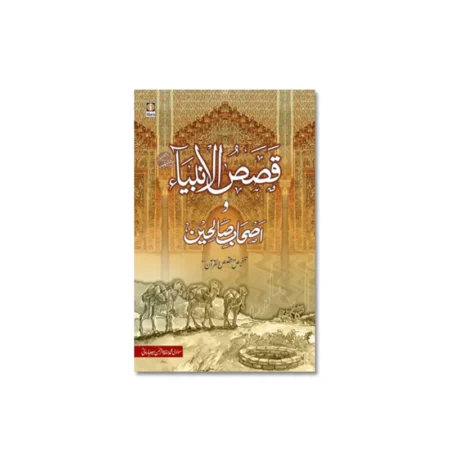
- Qassasul Ambiya Wa Ashabe Saliheen Maulana Muhammad Hifzur Rehman Seeohwarwi Idara (Urdu)
- Prophet Adam (AS): The book details his creation, the test in Paradise, and the lessons of obedience, repentance, and divine mercy.
- Prophet Nuh (AS): His patience in calling his people to monotheism and his perseverance in the face of rejection teaches the importance of steadfastness.
- Prophet Ibrahim (AS): His devotion, sacrifice, and trust in Allah serve as a model of complete submission and reliance on God.
- Prophet Musa (AS) and Prophet Isa (AS): Their struggles against oppression, leadership, and miracles highlight the significance of courage, justice, and divine guidance.
- Prophet Muhammad (SAW): The final prophet’s life, mission, and ethical conduct are presented as the ultimate model of virtue, wisdom, and spiritual guidance.
1 in stock

- Hardcover
- Publisher: Idara Impex (2012)
- Language: Hindi
2 in stock

- Kitabul Umrah Maulana M. S. Banoo Nadwi Idara (English)
2 in stock

- Paperback
- Publisher: idara impex (2012)
8 in stock

- An Index To The Qur’An Harun Yahya Idara (English)
- Conclusion
- “An Index to the Qur’ān” by Harun Yahya is a valuable tool for systematic study, reflection, and research. Its importance lies in:
- Providing quick access to Qur’ānic verses on specific topics.
- Facilitating thematic understanding across multiple surahs.
- Supporting spiritual, academic, and interfaith endeavors.
- Helping readers recognize patterns, repetitions, and core teachings in the Qur’ān.
1 in stock

- Hardcover
- Publisher: idara impex (2013)
- Language: English
1 in stock

- Ahsanul Qawaid Mohammad Yunus Idara (Arabic/English)
- Spiritual and Educational Benefits
- Enhanced Qur’anic Understanding – Grammar knowledge allows readers to discern subtle meanings, differentiate between literal and figurative expressions, and interpret verses accurately.
- Improved Recitation and Tajweed – Understanding syntax helps with proper pauses, elongations, and emphasis during recitation.
- Facilitates Memorization (Hifz) – Recognizing grammatical patterns aids in memorization by providing contextual understanding, rather than rote learning.
- Bridge to Tafsir (Exegesis) – Knowledge of Arabic grammar is essential for Tafsir studies. By mastering grammar, readers can appreciate scholars’ explanations and contextual meanings more deeply.
- Practical Use for Islamic Education – The book is suitable for students, teachers, and madrasas, providing a structured grammar curriculum for Qur’anic studies.
40 in stock

- In The Shade Of The Holy Qur’An Sayyid Qutb Vol.30 Idara (English)
- Significance of Volume 30
- Concluding Lessons of the Qur’ān:
- The final surahs emphasize spiritual purity, ethical conduct, gratitude, and divine reliance, summarizing the core moral and spiritual messages.
- Accessible for Daily Reflection:
- Short, powerful surahs make this volume ideal for meditation, memorization, and application in daily life.
- Bridging Traditional and Modern Understanding:
- Sayyid Qutb’s tafsīr links classical meanings with contemporary human challenges, making it relevant for modern readers.
- Strengthening Faith and Moral Character:
- Encourages readers to internalize faith, uphold moral principles, and maintain ethical behavior in all aspects of life.
2 in stock

- Quran 23 No Cc With Box (Idara) Arabic
- Key Features and Benefits
- Supports Accurate Recitation:
- Bold Arabic letters, proper orthography, and potential color-coded Tajweed markers ensure correct pronunciation and adherence to Tajweed rules.
- Supports long recitation sessions while maintaining focus and spiritual engagement.
- Facilitates Memorization (Hifz):
- Clear verse numbering, Juz markers, and structured layout help learners memorize efficiently.
- Durable pages ensure repeated use without wear, supporting long-term memorization.
- Durable and Long-Lasting:
- High-quality paper, binding, and protective box provide resilience against frequent handling, maintaining the Quran in excellent condition.
- Suitable for personal devotion, mosque circulation, or educational purposes.
- Easy Navigation:
- Surah titles, Ayah numbers, and Juz markers enable readers to plan systematic recitation schedules.
- Sajdah markers guide proper prostration during Salah, ensuring ritual compliance.
- Gift-Worthy Edition:
- The protective box, elegant design, and premium quality make this edition ideal for Hifz completion gifts, Eid, religious milestones, or personal devotion.
2 in stock
- Unknown Binding
- Publisher: Idara Impex; 1st edition (2012)
- Language: Hindi
2 in stock
Reviews
There are no reviews yet.