
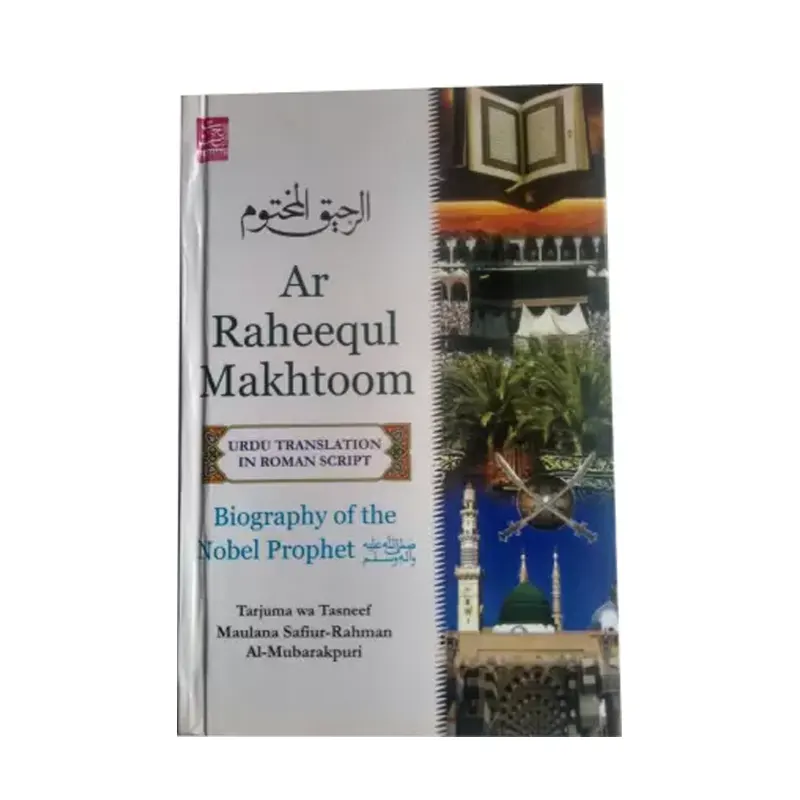
Ar Raheequl Makhtoom Urdu Translation In Roman Script (Maulana Safiur-Rahman Al-Mubarakpuri) Al Hasanat English
Original price was: ₹480.00.₹384.00Current price is: ₹384.00.
- Ar Raheequl Makhtoom Urdu Translation In Roman Script Maulana Safiur-Rahman Al-Mubarakpuri Al Hasanat (English)
- 1. Purpose and Significance
- The primary aim of Ar-Raheeq Al-Makhtoom is to provide an authentic, detailed, and engaging account of the Prophet’s life, emphasizing lessons for personal conduct, spiritual development, and community leadership. Maulana Al-Mubarakpuri carefully relied on authentic sources, including Qur’an, Hadith, and classical Seerah texts, to present a historically accurate narrative.
- The Roman Urdu translation enables wider accessibility for readers who prefer Roman script while maintaining the scholarly depth and authenticity of the original work.
- 2. Early Life of Prophet Muhammad (S.A.W.)
- The book begins with the Prophet’s early life in Makkah:
- Born in 570 CE in the Banu Hashim clan of Quraysh
- Orphaned early in life, raised by his grandfather Abdul Muttalib and later by his uncle Abu Talib
- Early signs of piety, honesty, and moral character
- Known as Al-Amin (the trustworthy) for his integrity and reliability
- These early experiences shaped his personality, preparing him for prophethood. The book highlights how his noble lineage, moral upbringing, and personal virtues established a foundation for his future mission.
- 3. Call to Prophethood and Revelation
- At the age of 40, Muhammad (S.A.W.) received the first revelation in the cave of Hira. Ar-Raheeq Al-Makhtoom emphasizes:
- The spiritual preparation and reflection preceding revelation
- The support of Hazrat Khadijah (RA) and Waraqah ibn Nawfal
- Early preaching in secrecy, followed by public proclamation
- The challenges posed by the Quraysh, including persecution, social ostracism, and economic boycott
Out of stock
Ar Raheequl Makhtoom Urdu Translation In Roman Script (Maulana Safiur-Rahman Al-Mubarakpuri) Al Hasanat English
“Ar-Raheeq Al-Makhtoom” (translated in Roman Urdu) by Maulana Safiur-Rahman Al-Mubarakpuri is a widely acclaimed biography of Prophet Muhammad (S.A.W.), recognized for its clarity, comprehensive detail, and historical accuracy. Originally written in Arabic, it won the first prize in a competition organized by the Muslim World League in 1978, reflecting its scholarly credibility. The Roman Urdu translation makes this important work accessible to Urdu readers familiar with Roman script. The biography presents the life, mission, character, and legacy of the Prophet Muhammad (S.A.W.) in a chronological and thematic manner.
1. Purpose and Significance
The primary aim of Ar-Raheeq Al-Makhtoom is to provide an authentic, detailed, and engaging account of the Prophet’s life, emphasizing lessons for personal conduct, spiritual development, and community leadership. Maulana Al-Mubarakpuri carefully relied on authentic sources, including Qur’an, Hadith, and classical Seerah texts, to present a historically accurate narrative.
The Roman Urdu translation enables wider accessibility for readers who prefer Roman script while maintaining the scholarly depth and authenticity of the original work.
2. Early Life of Prophet Muhammad (S.A.W.)
The book begins with the Prophet’s early life in Makkah:
Born in 570 CE in the Banu Hashim clan of Quraysh
Orphaned early in life, raised by his grandfather Abdul Muttalib and later by his uncle Abu Talib
Early signs of piety, honesty, and moral character
Known as Al-Amin (the trustworthy) for his integrity and reliability
These early experiences shaped his personality, preparing him for prophethood. The book highlights how his noble lineage, moral upbringing, and personal virtues established a foundation for his future mission.
3. Call to Prophethood and Revelation
At the age of 40, Muhammad (S.A.W.) received the first revelation in the cave of Hira. Ar-Raheeq Al-Makhtoom emphasizes:
The spiritual preparation and reflection preceding revelation
The support of Hazrat Khadijah (RA) and Waraqah ibn Nawfal
Early preaching in secrecy, followed by public proclamation
The challenges posed by the Quraysh, including persecution, social ostracism, and economic boycott
Through these accounts, the biography underscores the Prophet’s patience, courage, and unwavering commitment to conveying Allah’s message.
4. The Meccan Period
The biography extensively covers the difficult years in Makkah:
Preaching of monotheism in a polytheistic society
Formation of the first Muslim community
The role of key companions, such as Abu Bakr Siddique, Ali ibn Abi Talib, and Uthman ibn Affan (RA)
Trials faced by early Muslims, including the boycott at Sha’b Abi Talib and migration of some Muslims to Abyssinia
Maulana Al-Mubarakpuri emphasizes the Prophet’s strategic patience, moral courage, and reliance on Allah during this period. The narrative also illustrates how ethical conduct, wisdom, and compassion were central to his character.
5. Migration (Hijrah) and Life in Madinah
The Hijrah marks a turning point in Islamic history. Key aspects highlighted in the biography include:
Careful planning and secret departure from Makkah with Hazrat Abu Bakr (RA)
Reception by the people of Madinah and establishment of the Constitution of Madinah
Formation of a cohesive Muslim community with social, political, and spiritual frameworks
Battles in defense of the community, including Badr, Uhud, and Khandaq
The book emphasizes how the Prophet’s leadership combined strategic foresight, ethical governance, and spiritual guidance, creating a model Islamic society.
6. Character and Personal Virtues
Ar-Raheeq Al-Makhtoom extensively details the Prophet’s exemplary character, which is central to understanding his life and teachings:
Truthfulness and honesty: Known as Al-Amin, his life exemplified integrity in personal and public affairs
Compassion and mercy: Treatment of family, companions, and even adversaries
Humility and simplicity: Despite being a leader, he lived modestly and emphasized ethical conduct
Justice and fairness: Applied in conflict resolution, governance, and daily interactions
These virtues serve as a moral and spiritual guide for all Muslims.
7. Family Life and Personal Relations
The biography also emphasizes the Prophet’s relationships with his family:
Marriage to Hazrat Khadijah (RA) and later to other wives
Raising children with care and moral instruction
Exemplary treatment of household members and companions, demonstrating patience, guidance, and love
These aspects highlight the balance between personal responsibilities and leadership duties.
8. Later Life and Completion of Mission
The biography concludes with the Prophet’s final years:
The Farewell Pilgrimage and key sermons summarizing Islamic teachings
Emphasis on moral, spiritual, and social principles for all Muslims
Completion of the Qur’anic revelation and final guidance
Passing in 632 CE, leaving a lasting spiritual and moral legacy
The book emphasizes continuity of his teachings through companions, the Qur’an, and Hadith, ensuring the enduring influence of his mission.
9. Educational and Spiritual Value
Ar-Raheeq Al-Makhtoom provides:
Historical understanding: Chronological events, political, social, and spiritual contexts
Moral and ethical guidance: Lessons applicable in personal, familial, and societal life
Spiritual inspiration: Encourages emulation of the Prophet’s character, devotion, and ethical conduct
The Roman Urdu translation allows readers to access these lessons in an easily readable format, bridging classical scholarship with modern accessibility.
10. Style and Approach
Maulana Safiur-Rahman Al-Mubarakpuri writes in a clear, structured, and engaging style:
Chronological narrative supplemented with thematic discussions
Emphasis on authentic sources, ensuring historical accuracy
Focus on lessons and guidance applicable to contemporary readers
Roman Urdu translation retains clarity and accessibility for Urdu-speaking audiences
This approach ensures the reader not only learns the historical facts but also internalizes moral and spiritual teachings.
Conclusion
“Ar-Raheeq Al-Makhtoom” (Urdu Translation in Roman Script) by Maulana Safiur-Rahman Al-Mubarakpuri is an authoritative, detailed, and inspiring biography of Prophet Muhammad (S.A.W.). From his early life, noble lineage, and prophethood to the trials in Makkah, migration to Madinah, leadership, moral character, and completion of his mission, the biography captures the full essence of his life.
It serves as a guide for personal development, ethical conduct, and spiritual growth, emphasizing the Prophet’s exemplary character, leadership, and devotion. The Roman Urdu translation makes these lessons accessible to a wider audience, ensuring the legacy of the Prophet continues to inspire Muslims across generations.
Ultimately, Ar-Raheeq Al-Makhtoom teaches that following the Prophet’s life means embracing truth, justice, humility, compassion, and devotion—values that remain timeless and universally relevant.
| Weight | 300 g |
|---|---|
| Dimensions | 16 × 10 × 8 cm |
Only logged in customers who have purchased this product may leave a review.
Related Products
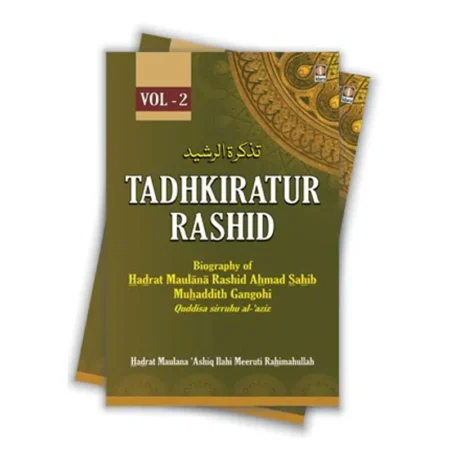
- Biographies of Scholars and Saints
- A key feature of Tadhkiratur Rashid Vol-2 is the detailed biographies of Islamic scholars, jurists, and Sufi saints. Maulana Meeruti presents these figures as models of intellectual and spiritual excellence. Each biography highlights:
- Early life and education: The author details the family background, early learning, and intellectual environment that shaped the personality of each figure.
- Spiritual and moral development: Emphasis is placed on how these personalities cultivated inner piety, patience, humility, and devotion to God.
- Scholarly achievements: Their contributions to Islamic sciences, including Fiqh, Hadith, Tafsir, and Tasawwuf, are elaborated, showing their role in preserving and transmitting knowledge.
- Ethical conduct: The biographies stress the practical application of knowledge, including charity, justice, truthfulness, and service to society.
- By highlighting these elements, the book inspires readers to emulate the balance of knowledge, spirituality, and ethical conduct exhibited by these personalities.
4 in stock
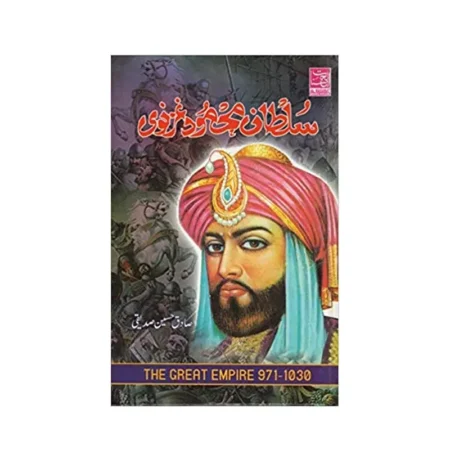
- Sultan Mahmood Ghaznavi Sadiq Hussain Siddiqui Al Hasanat (Urdu)
3 in stock

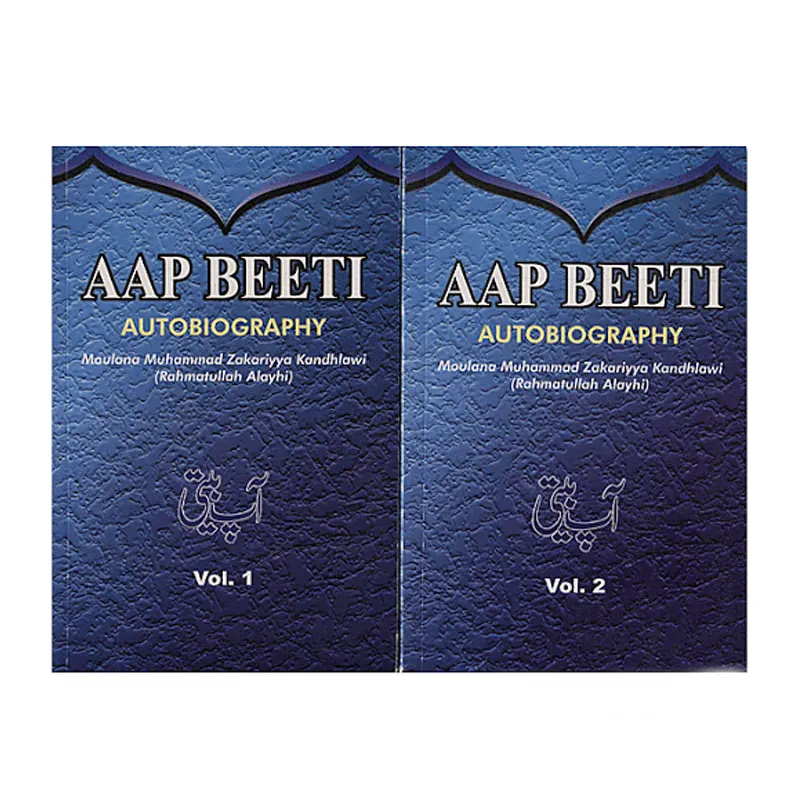
- Aap Beti Part 1 & 2 Autobiography Of Maulana Zakariyya (Idara) English
- 1. Early Life and Family Background
- Maulana Zakariyya Kandhlawi was born in 1898 in Kandhla, India, into a family deeply committed to Islamic scholarship. The autobiography highlights the influence of his parents and extended family, who emphasized religious education, ethical conduct, and spiritual development.
- Even in his early years, he exhibited remarkable memory, curiosity, and devotion to learning. The book emphasizes how his upbringing instilled the foundations of moral character, spiritual awareness, and a love for Islamic knowledge that would guide his entire life.
- 2. Education and Scholarly Formation
- One of the central themes of Aap Beeti is Maulana Zakariyya’s rigorous Islamic education. He pursued studies in:
- Hifz-ul-Qur’an: Memorizing the Qur’an at a young age
- Hadith: Studying Prophetic traditions with renowned teachers
- Fiqh (Islamic jurisprudence): Mastering Hanafi fiqh and related texts
- Tafsir and Aqidah: Understanding the Qur’an and Islamic creed
- Maulana Zakariyya narrates the challenges he faced, including long hours of study, travel to different madrasas, and personal discipline. The autobiography conveys the dedication required to attain deep Islamic knowledge, highlighting both intellectual rigor and spiritual commitment.
- 3. Spiritual Development and Personal Virtues
- Throughout his life, Maulana Zakariyya (RA) emphasized the integration of knowledge with spiritual practice. His autobiography details his efforts in:
- Regular Salah and Dhikr: Maintaining consistent prayer and remembrance of Allah
- Ethical Conduct: Upholding truthfulness, humility, and honesty in personal and social life
- Self-Discipline: Controlling desires and striving for moral refinement
- Service to Islam: Prioritizing da‘wah, teaching, and moral guidance over personal comfort
2 in stock

- Structure and Features
- Arabic Text
- Preserves authentic Uthmani script for correct recitation.
- Includes ayah numbering, surah headings, and sections for easy reference.
- Hindi Translation
- Clear, literal translation accompanied by contextual meaning.
- Uses simple Hindi for readers of all levels.
- Explanatory Commentary
- Explains historical background, ethical teachings, and spiritual guidance.
- Highlights practical lessons for daily life.
- Focuses on peace, morality, and understanding rather than complex academic discourse.
- Thematic Organization
- Surahs presented in traditional order for continuity of reading.
- Footnotes clarify difficult Arabic terms or phrases.
- Practical Layout
- Clear page formatting for comfortable reading.
- Some editions include indexes or topic-based references for easier navigation.
1 in stock
1 in stock
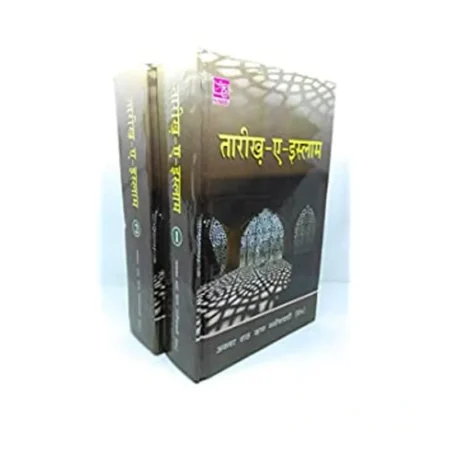
- Tarikh-E-Islam Akbar Shah Khan Najibabadi Al Hasanat (Hindi) 2 Volume Set
- Key Takeaways:
- Islam emerged in a challenging socio-political environment and transformed Arabian society through spiritual and ethical teachings.
- Prophet Muhammad’s (PBUH) leadership combined moral integrity, diplomacy, and strategic acumen.
- The Rashidun Caliphs laid the foundations of governance, justice, and expansion that shaped early Islamic history.
- Umayyad and Abbasid dynasties contributed to political consolidation and cultural flourishing.
- Islamic history provides timeless lessons in leadership, justice, morality, and social responsibility.
- Historical reflection is essential for understanding both the successes and pitfalls of past Muslim societies.
1 in stock
- Weight 3.2 kg
- Author/Translator Altaf Ahmad Azmi
- Language Arabic-Urdu
- Binding Hardbound
- Pages 1092
1 in stock
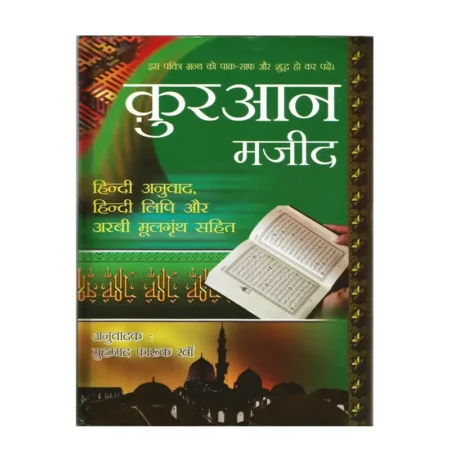
- Quran Majeed ( Maulana Muhammad Farooq Khan ) Hindi/Maktaba Al Hasnat
- In Short
- Author: Maulana Muhammad Farooq Khan
- Language: Hindi
- Purpose: Comprehensible understanding of Qur’anic guidance
- Method: Arabic text + Hindi translation + explanatory notes
- Focus: Faith, ethics, morality, spirituality, and practical application
- Audience: Students, teachers, families, and general Hindi-speaking readers
2 in stock
1 in stock

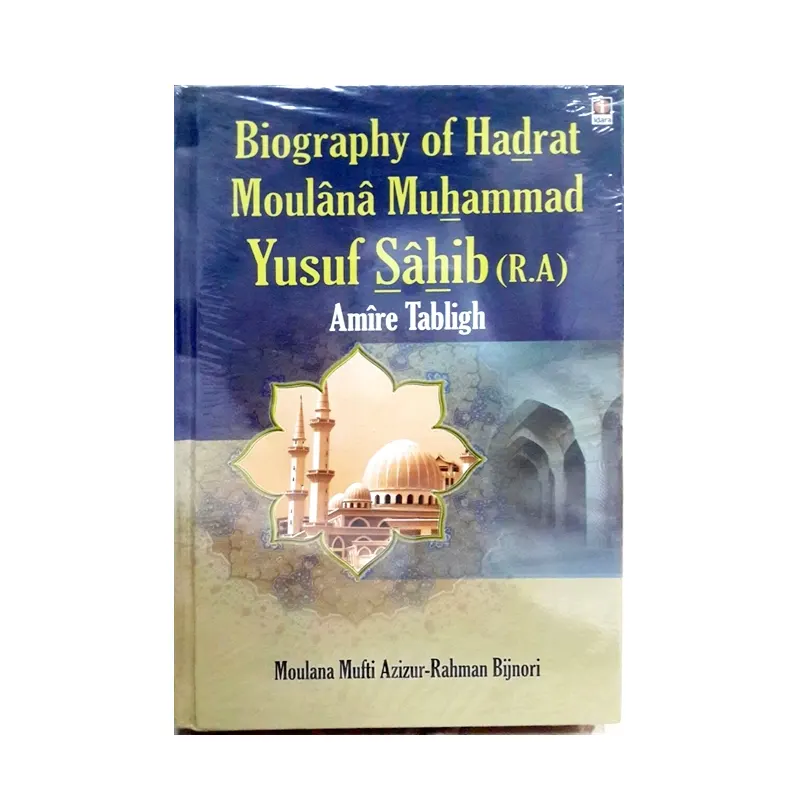
- Biography Of Hadrat Moulana Muhammad Yusuf Sahib(R.A) Amire Tabligh Maulana Mufti Azizur-Rehman Bijnori Idara (English)
- 1. Early Life and Background
- Hadrat Moulana Muhammad Yusuf Sahib (R.A) was born in the late 19th or early 20th century in India, into a family committed to Islamic learning and piety. Maulana Mufti Azizur-Rehman Bijnori highlights that his upbringing in a spiritually rich environment laid the foundation for his lifelong dedication to Islamic scholarship and da‘wah (missionary work).
- From an early age, he displayed qualities of sincerity, devotion, discipline, and humility. His family emphasized both religious education and moral training, cultivating in him a love for Qur’an, Hadith, and the practices of the Prophet Muhammad (S.A.W.).
- 2. Education and Religious Formation
- The biography emphasizes Moulana Muhammad Yusuf Sahib’s thorough grounding in Islamic sciences. He studied:
- Tafsir (Qur’anic exegesis)
- Hadith (Prophetic traditions)
- Fiqh (Islamic jurisprudence)
- Aqidah (Islamic creed)
- His teachers recognized his intelligence, piety, and commitment to learning, which allowed him to excel in both religious knowledge and practical application. This strong scholarly foundation later helped him lead, guide, and inspire followers in Tablighi activities across India and beyond.
- 3. Early Involvement in Tabligh Work
- The book narrates Moulana Yusuf Sahib’s early participation in Tablighi activities under the guidance of senior scholars and leaders of the movement. He actively engaged in:
- Missionary journeys (khuruj): Traveling to various towns and villages to invite Muslims to observe Islamic practices.
- Spiritual training of disciples: Teaching sincerity, humility, and moral reform.
- Organization and administration: Assisting in the structured planning of Tablighi missions.
3 in stock
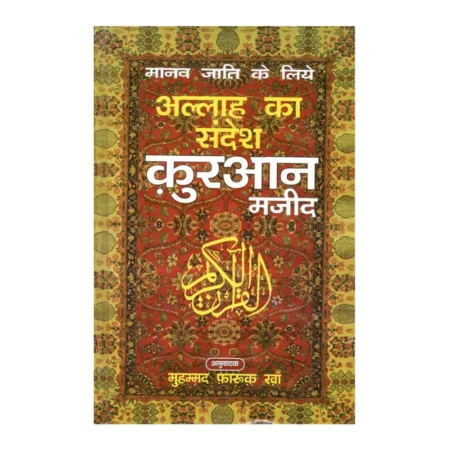
- Manav Jati Ke Liye Allah Ka Sandesh Qur’An Majeed ( Mohd. Farooq Khan ) Al Hasanat Hindi
7 in stock

- Quran Sharif Muhammad Farooq Khan Al Hasanat (Hindi/Roman)
- Structure and Features
- Arabic Text
- Maintains authentic Uthmani script.
- Includes ayah numbers, surah headings, and section markers (Ruku) for navigation.
- Hindi Translation
- Simple, concise Hindi explanation for each verse.
- Focuses on meaning, context, and practical guidance.
- Roman Urdu Transliteration
- Guides readers in correct pronunciation of Arabic verses.
- Particularly helpful for beginners, students, and Hindi speakers unfamiliar with Arabic script.
- Explanatory Commentary
- Includes brief explanations, highlighting:
- Historical context (Asbab al-Nuzul)
- Moral and spiritual lessons
- Application in daily life
- Commentary avoids overly complex scholarly discussions, emphasizing clarity and understanding.
- Practical Layout
- Arabic text, Hindi translation, and Roman Urdu transliteration are aligned for easy reading.
- High-quality printing ensures clarity, durability, and usability.
1 in stock
Reviews
There are no reviews yet.