

School Syllabus English (Nursery To Book 6)
₹912.00
- At the Nursery level, the English syllabus introduces children to basic oral communication and familiarization with sounds, letters, and simple words.
- Children learn the English alphabet (A-Z), the pronunciation of each letter, and associated vocabulary through interactive methods such as songs, rhymes, and storytelling.
- Nursery activities include listening to simple instructions, repeating words, recognizing common objects, colors, shapes, and animals.
- Writing exercises at this stage involve tracing letters and drawing associated objects to develop fine motor skills and letter recognition.
- Emphasis is placed on listening and speaking, allowing children to express themselves using simple words and short phrases while building confidence in using the language.
- In LKG and UKG, children build on their familiarity with letters and sounds by forming simple words and sentences.
- Vocabulary development becomes a central focus, introducing words related to daily life, the environment, family, animals, and colors.
- Students begin reading short words, simple sentences, and basic stories. Writing exercises include copying letters, writing simple words, and forming short sentences.
- Listening and comprehension skills are enhanced through storytelling, rhymes, and simple dialogues.
- Children are encouraged to ask and answer basic questions, participate in role plays, and communicate with peers, which helps develop oral fluency and confidence.
Out of stock
School Syllabus English (Nursery To Book 6)
The English syllabus from Nursery to Book 6 is designed to systematically develop a student’s proficiency in the English language, covering the four essential language skills: listening, speaking, reading, and writing. The syllabus not only focuses on language acquisition but also emphasizes comprehension, vocabulary development, grammar, communication skills, and literary appreciation. The progression from Nursery to Book 6 ensures that children gain a strong foundation in early language skills and gradually develop advanced abilities to express themselves effectively, understand complex texts, and appreciate English literature.
Nursery Level:
At the Nursery level, the English syllabus introduces children to basic oral communication and familiarization with sounds, letters, and simple words. Children learn the English alphabet (A-Z), the pronunciation of each letter, and associated vocabulary through interactive methods such as songs, rhymes, and storytelling. Nursery activities include listening to simple instructions, repeating words, recognizing common objects, colors, shapes, and animals. Writing exercises at this stage involve tracing letters and drawing associated objects to develop fine motor skills and letter recognition. Emphasis is placed on listening and speaking, allowing children to express themselves using simple words and short phrases while building confidence in using the language.
Lower Kindergarten (LKG) & Upper Kindergarten (UKG):
In LKG and UKG, children build on their familiarity with letters and sounds by forming simple words and sentences. Vocabulary development becomes a central focus, introducing words related to daily life, the environment, family, animals, and colors. Students begin reading short words, simple sentences, and basic stories. Writing exercises include copying letters, writing simple words, and forming short sentences. Listening and comprehension skills are enhanced through storytelling, rhymes, and simple dialogues. Children are encouraged to ask and answer basic questions, participate in role plays, and communicate with peers, which helps develop oral fluency and confidence.
Book 1 & 2 (Primary Stage):
Books 1 and 2 further develop reading and writing skills. The syllabus introduces short stories, poems, and simple dialogues to enhance vocabulary, comprehension, and sentence construction. Basic grammar concepts, such as nouns, verbs, adjectives, pronouns, and articles, are introduced through exercises integrated into reading passages. Writing skills expand to include forming sentences, simple paragraph writing, and dictation. Listening skills are nurtured through oral storytelling and following instructions, while speaking skills are developed through recitation, role-plays, and answering questions orally. Students begin to understand the moral lessons in stories and learn to express ideas clearly in both speech and writing.
Book 3 & 4 (Intermediate Stage):
Books 3 and 4 focus on expanding vocabulary, reading comprehension, and grammar proficiency. The syllabus includes longer stories, fables, and poems, encouraging students to analyze characters, settings, and events while inferring meaning from context. Grammar lessons cover sentence structure, tenses, plurals, adjectives, adverbs, prepositions, and basic punctuation rules. Writing exercises include paragraph writing, letter writing, and simple descriptive compositions. Listening activities involve understanding instructions, stories, and short passages, while speaking exercises encourage students to narrate events, retell stories, and participate in class discussions. Literary appreciation is enhanced by introducing students to moral and ethical lessons through the content they read.
Book 5 & 6 (Upper Primary Stage):
By Books 5 and 6, students transition to advanced English skills. Reading comprehension includes understanding longer stories, essays, poems, and non-fiction texts. Students learn to summarize, analyze, and interpret text, identify themes, and discuss character traits and moral lessons. Advanced grammar topics include complex tenses, direct and indirect speech, active and passive voice, sentence types, and punctuation. Writing skills are developed through essay writing, letter writing, story composition, report writing, and creative writing exercises. Listening comprehension involves understanding longer passages, following multi-step instructions, and summarizing spoken content. Speaking exercises include presentations, debates, storytelling, poetry recitation, and discussion, fostering critical thinking, fluency, and confidence. Literary appreciation includes exposure to classic and contemporary English literature, poetry analysis, and recognition of literary devices such as similes, metaphors, and rhyme.
Skill Development Across Levels:
The English syllabus is designed to progressively develop the following skills:
Reading: From letter recognition and simple words in Nursery to fluent reading and comprehension of complex texts in Book 6.
Writing: From tracing letters and forming words to essay writing, creative compositions, and formal correspondence.
Listening: Listening to stories, instructions, dialogues, and oral passages to improve comprehension and attention.
Speaking: Oral expression through recitation, dialogues, storytelling, role-plays, and discussions to build confidence and fluency.
Literary and Cultural Awareness:
Alongside language skills, the syllabus emphasizes exposure to literature and cultural context. Through stories, poems, and fables, students learn moral values, ethics, and cultural lessons while developing an appreciation for narrative and literary style. Literary devices and storytelling techniques are gradually introduced to enhance analytical thinking and creativity.
Assessment and Evaluation:
Assessment in the English syllabus includes reading aloud, comprehension exercises, dictation, written assignments, creative writing, oral presentations, and participation in discussions. Evaluation focuses not only on accuracy but also on fluency, expression, and the ability to understand and apply moral and literary lessons. Regular revision and practice ensure mastery of vocabulary, grammar, and comprehension skills at each stage.
Conclusion:
The English syllabus from Nursery to Book 6 is carefully structured to provide a comprehensive learning experience. Beginning with letter recognition, basic words, and oral communication in Nursery, it gradually advances to reading, writing, listening, and speaking fluency in higher books. By Book 6, students are capable of understanding complex texts, expressing ideas clearly in writing and speech, and analyzing literary content. The syllabus emphasizes vocabulary development, grammar proficiency, comprehension, creative expression, and literary appreciation, ensuring that children acquire the skills to communicate effectively, think critically, and develop a lifelong interest in the English language. By combining language learning with moral, ethical, and cultural lessons, the syllabus ensures holistic development, making English education both practical and enriching for students.
Only logged in customers who have purchased this product may leave a review.
Related Products

- Fun Taleem O Tarbiyaat Vol 2
- Benefits for Children
- Intellectual Growth:
- Enhances Urdu literacy, comprehension, arithmetic skills, and general knowledge.
- Promotes problem-solving, logical thinking, and analytical abilities.
- Moral and Ethical Development:
- Reinforces honesty, patience, empathy, responsibility, teamwork, and gratitude.
- Encourages practical application of ethical principles.
- Emotional and Social Learning:
- Stories and activities foster empathy, cooperation, and communication skills.
- Teaches children to understand the perspectives of others and make ethical decisions.
- Confidence and Independence:
- Encourages self-paced learning and active participation.
- Builds confidence in both academics and ethical reasoning.
- Engaging and Fun Learning Experience:
- Puzzles, illustrations, and creative tasks make learning enjoyable.
- Motivates children to practice regularly, reinforcing knowledge and skills.
- Preparation for Real-Life Challenges:
- Lessons and stories help children understand the importance of applying knowledge and values in everyday life.
- Builds a foundation for academic success and socially responsible behavior.
1 in stock

- Uthman Ibn Affan The Third Caliph Of Islam Sr. Nafees Khan (Goodword) English
- Moral Lessons and Significance:
The book emphasizes several moral and spiritual lessons from Uthman ibn Affan’s life:- Faith and Patience: Strong belief in Allah provides strength to face trials and adversity.
- Humility and Generosity: Wealth and influence should be used for the service of others.
- Dedication to Knowledge: Promoting learning and preserving sacred texts is a vital responsibility.
- Justice and Integrity: Leadership requires fairness, patience, and adherence to ethical principles.
- Service to the Community: True leadership is measured by commitment to the welfare of people rather than personal gain.
4 in stock
- The book begins with an introduction to the importance of Salah in Islam.
- Children are taught that Salah is one of the five pillars of Islam, a mandatory act of worship prescribed by Allah, and a direct means of connecting with Him.
- The introduction explains in simple, child-friendly language that Salah is a way to express gratitude, seek forgiveness, and remember Allah throughout the day.
- The text emphasizes that establishing Salah from a young age helps develop a strong moral and spiritual foundation, shaping a child’s character and encouraging regular adherence to religious duties.
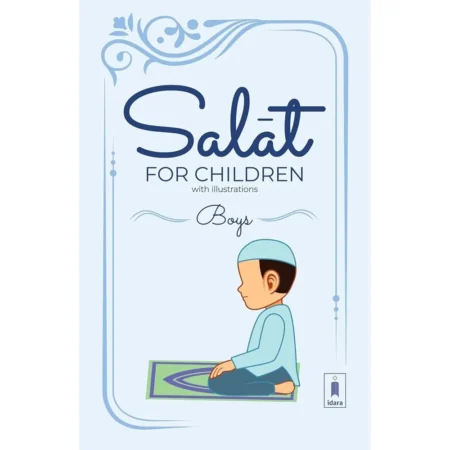
- One of the key features of the book is its focus on visual learning.
- Each step of Salah is accompanied by clear illustrations showing a boy performing the prayer correctly.
- These illustrations cover all aspects of the prayer, including standing (Qiyam), bowing (Ruku), prostration (Sajdah), and sitting (Jalsa).
- The images are simple yet detailed, making it easy for children to understand the proper postures, hand positions, and movements.
- By seeing the actions depicted visually, children can imitate them accurately, which is especially helpful for learners who benefit from a hands-on, demonstration-based approach.
- The book explains the sequence of Salah in a step-by-step manner. Each step is described using simple language, often breaking down complex concepts into easy-to-understand instructions.
- For instance, it teaches children how to begin with the intention (Niyyah), say Takbir (Allahu Akbar), recite Surah Al-Fatihah and additional short Surahs, perform Ruku and Sajdah correctly, and conclude with Taslim.
- The instructions include guidance on correct pronunciation of Arabic words and phrases, ensuring that children learn not only the actions but also the verbal elements of prayer accurately.
2 in stock

- Quran Stories For Toddlers Board Book Saniyasnain Khan (Goodword) Arabic
1 in stock

- Arabic Reading Lessons Duncan Forbes Goodword (English)
- Learning Benefits:
- Foundational Arabic Literacy:
- Children and beginners develop the ability to read Arabic letters, words, and sentences with confidence.
- Provides essential skills for Quranic reading and further Islamic studies.
- Improved Pronunciation:
- Focus on vowels, Sukun, and Tanween ensures learners pronounce letters and words accurately, which is essential for both general Arabic and Quranic reading.
- Enhanced Reading Fluency:
- Stepwise progression from letters to words and sentences builds speed and accuracy in reading.
- Learners can gradually read more complex texts with proper rhythm and intonation.
- Interactive Learning:
- Exercises and drills encourage active participation, making learning enjoyable.
- Visual and repetitive practice helps reinforce memory and understanding.
- Confidence Building:
- The structured lessons allow learners to track their progress, increasing motivation and self-confidence.
2 in stock
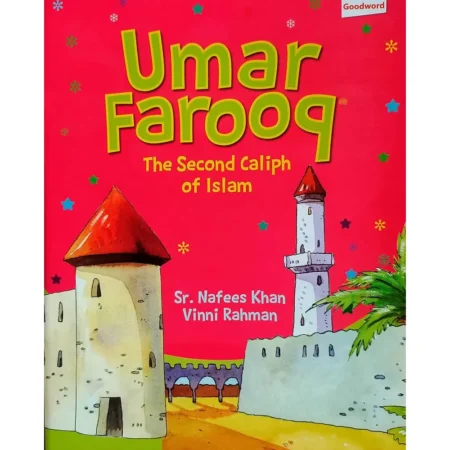
- Illustrations and Visual Appeal
The book contains colorful and detailed illustrations showing: - Hazrat Umar (RA) in daily life, prayers, and leadership moments.
- Key events like battles, governance, and social reforms.
- Scenes depicting Islamic culture and lifestyle during the Prophet’s time.
- Illustrations help visual learners understand history and make stories more memorable and interesting.
- 12. Educational and Spiritual Benefits
Reading this book provides multiple benefits for children: - Historical Knowledge: Introduces early Islamic history and life of companions.
- Moral Development: Teaches virtues like justice, courage, and honesty.
- Spiritual Awareness: Encourages children to reflect on their faith and relationship with Allah.
- Role Modeling: Hazrat Umar (RA) becomes a role model for children in behavior, faith, and leadership.
4 in stock
- Muslim Baby Book For Girls (Goodword) English
- Introducing Islamic concepts such as Allah, the Prophet Muhammad (S), prayers, and simple acts of worship.
- Teaching basic duas (supplications), Islamic greetings, and manners in an easy-to-understand format.
- Providing a resource for parents and caregivers to guide early religious education at home.
- Encouraging cognitive development through interactive elements, repetition, and visual learning.
- Promoting moral and ethical development by highlighting values such as kindness, honesty, gratitude, and respect.
1 in stock
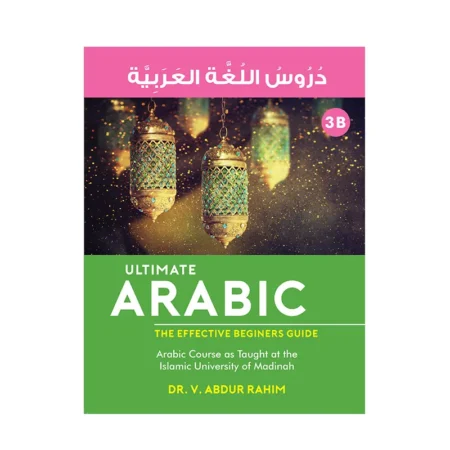
- Clear explanations of grammar and syntax – building on earlier concepts and introducing more complex structures.
- Thematic vocabulary expansion – covering practical, daily, and religious contexts.
- Reading and writing exercises – enhancing fluency, comprehension, and accuracy.
- Conversational practice – providing dialogues and situational examples for practical communication.
- Integration of Islamic vocabulary – helping learners understand religious texts alongside modern usage.
- Interactive exercises and revision sections – encouraging active engagement and reinforcement.
- Pronunciation guidance – ensuring accurate articulation of challenging Arabic sounds.
- Structured progression – lessons build logically from simple to more advanced concepts.
- Emphasis on practice and application – enabling learners to internalize knowledge and use it confidently.
2 in stock
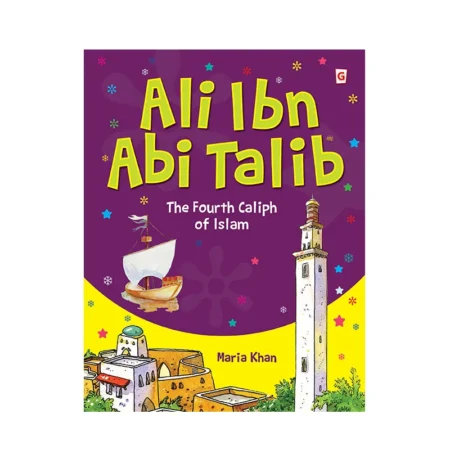
- Ali Ibn Abi Talib : The Fourth Caliph Of Islam ( Maria Khan ) Goodword English
- Significance and Impact:
This book is significant for several reasons: - Educational Value:
It introduces young readers to a major figure in Islamic history in an age-appropriate manner, providing historical, moral, and spiritual education. - Character Building:
Hazrat Ali’s (RA) life serves as a model of courage, wisdom, humility, and ethical leadership, encouraging readers to develop strong moral character. - Understanding Islamic History:
The book contextualizes key events in early Islamic history, making them accessible and relatable. Readers gain insight into the social, political, and ethical challenges of the early Muslim community. - Spiritual Inspiration:
Hazrat Ali’s (RA) devotion, piety, and moral integrity inspire readers to strengthen their faith, practice ethical behavior, and seek knowledge.
4 in stock
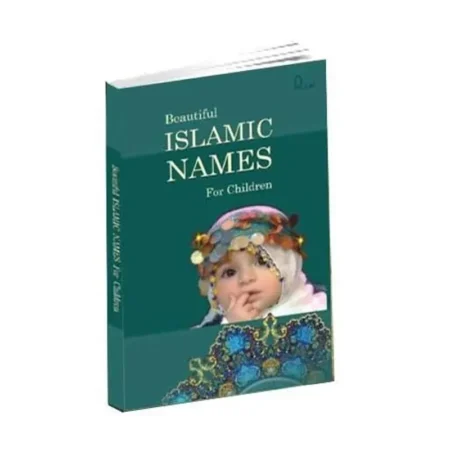
- Beautiful Islamic Names For Children Islami Kitab Ghar (English)
- Benefits for Families
- Ease in Selecting Appropriate Names:
- Families can quickly find suitable names with clear meanings and guidance.
- Moral and Spiritual Awareness:
- Encourages parents to choose names that reflect positive values and Islamic teachings.
- Cultural and Religious Education:
- Children and families learn about the significance of names in Islam and Islamic history.
- Enhanced Identity Formation:
- Names chosen with care can inspire children’s character, virtues, and self-esteem.
- Practical Guidance:
- Provides advice on avoiding names with negative meanings and selecting names that are socially and religiously appropriate.
- Long-Term Value:
- Serves as a reference book that families can use for future generations.
1 in stock
- The syllabus begins by introducing the concept of Allah as the Creator, Sustainer, and Most Merciful.
- Children are taught in simple Urdu phrases that Allah loves them, watches over them, and provides for all creatures.
- The idea of Tawheed (Oneness of Allah) is presented in a way that young minds can grasp, often through short sentences, stories, or illustrations showing Allah’s care in nature, family, and daily life.
- By teaching children about Allah’s attributes at an early age, the syllabus lays the foundation for developing love, respect, and trust in the Creator.
- Another key focus of Nursery Nisab 02 (Deeniyat) is the introduction to the life of the Prophet Muhammad (PBUH).
- The curriculum narrates simple stories about the Prophet’s kindness, honesty, and compassion.
- Children learn about his role as a messenger of Allah, his care for others, and his exemplary moral character.
- Stories are short, illustrated, and delivered in simple Urdu sentences, making them easy to understand and remember.
- These narratives are designed to teach children core moral values such as honesty, patience, respect, and generosity through the actions and teachings of the Prophet (PBUH).
2 in stock
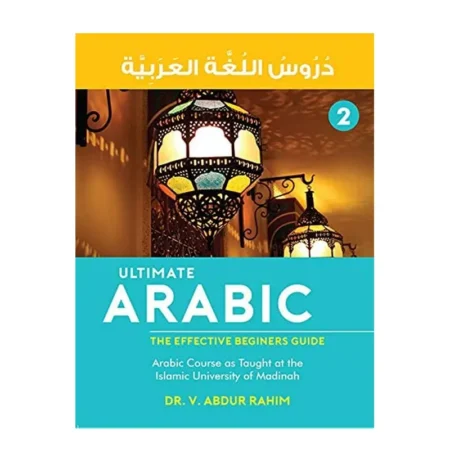
- Have a stronger understanding of basic and intermediate Arabic grammar, including verb conjugation, pluralization, and sentence formation.
- Expand vocabulary related to daily life, social interactions, and Islamic contexts.
- Develop confidence in reading and writing simple Arabic sentences accurately.
- Engage in basic conversations in Arabic, applying grammar and vocabulary in practical situations.
- Recognize and correctly pronounce Arabic letters and sounds.
- Understand the connection between grammar, vocabulary, and sentence construction
2 in stock
Reviews
There are no reviews yet.