
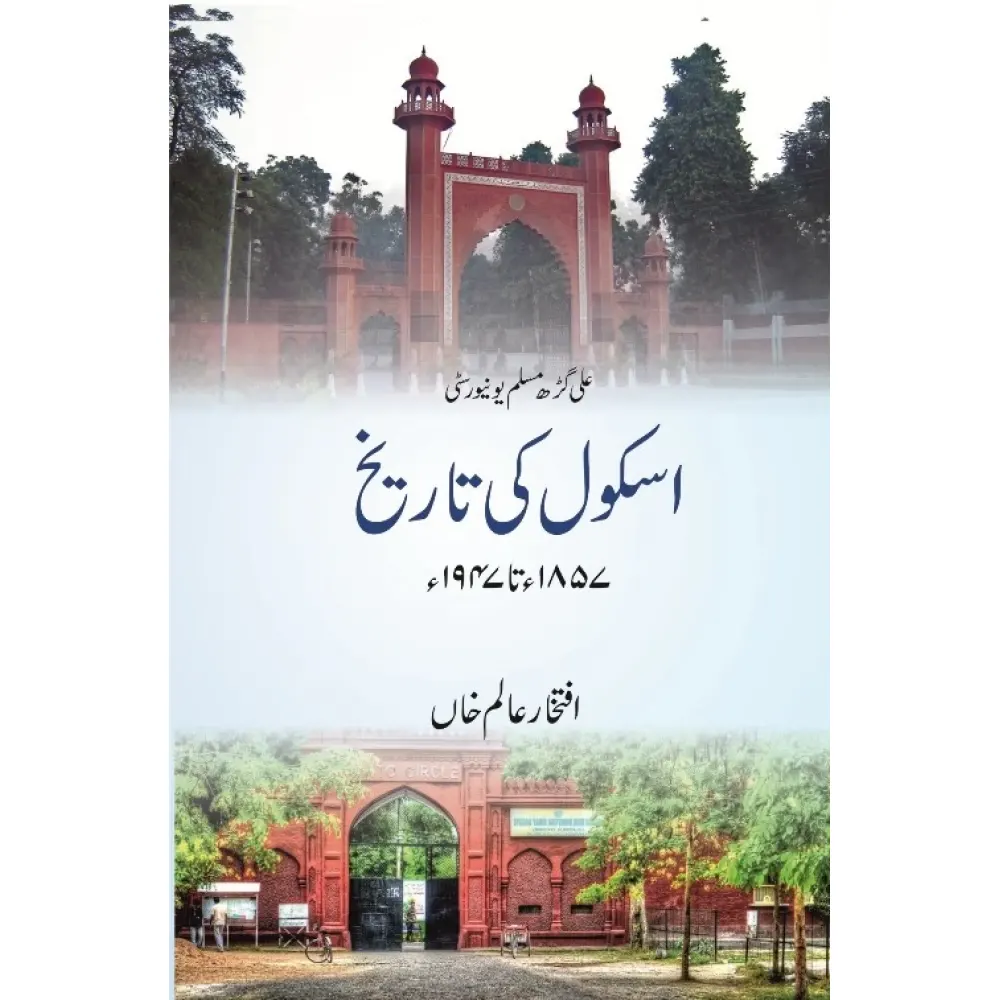
Aligarh Muslim University School Ki Tareekh (1857-1947) (Iftikhar Alam Khan) B.Brown Book

₹300.00
Features
- Chronological Organization: Provides a clear timeline of events from 1857 to 1947.
- Biographical Accounts: Highlights the contributions of Sir Syed Ahmad Khan, administrators, scholars, and alumni.
- Historical Context: Situates the university’s development within colonial, social, and political frameworks.
- Educational Focus: Discusses curriculum, pedagogy, and student life in detail.
- Analytical Approach: Combines historical narrative with analysis of challenges, strategies, and successes.
Out of stock
Aligarh Muslim University School Ki Tareekh (1857-1947) (Iftikhar Alam Khan) B.Brown Book
Book Overview
“Aligarh Muslim University School Ki Tareekh (1857–1947)” by Iftikhar Alam Khan is a comprehensive historical account of the Aligarh Movement and the foundation and growth of the Aligarh Muslim University (AMU) during its formative years. Written in Urdu, this book provides an in-depth examination of the educational, social, and political developments that shaped one of India’s most prominent Muslim educational institutions.
The work covers the period from 1857, immediately after the Indian Rebellion, to 1947, the year of Indian independence and partition, highlighting how the AMU evolved in the context of colonial India, reform movements, and socio-political changes. The book emphasizes historical accuracy, archival research, and biographical accounts of key figures, making it an essential reference for scholars of South Asian history, Muslim education, and colonial studies.
Author Background
Iftikhar Alam Khan is a respected historian and researcher specializing in Muslim educational history and institutional development. His expertise includes:
Historical scholarship: Utilizing primary sources such as archival records, letters, government documents, and personal memoirs.
Critical analysis: Examining the impact of socio-political events on education and reform.
Educational narrative: Writing in a style that is both informative and accessible, suitable for students, researchers, and general readers.
Khan’s approach combines chronological narration with thematic exploration, showing how education, politics, and social reform intersected in the AMU’s history.
Content and Structure
The book is organized chronologically and thematically, tracing the development of AMU from its roots in the Aligarh Movement to a fully established university by 1947. Its content can be divided into the following key sections:
1. Historical Context (1857–1875)
Discusses the aftermath of the 1857 Rebellion and its impact on Muslim society in India.
Highlights the educational backwardness and social challenges faced by Indian Muslims under colonial rule.
Introduces Sir Syed Ahmad Khan, the founder of the Aligarh Movement, and his vision for modern education.
Establishes the need for Western-style education combined with Islamic principles to empower the Muslim community.
2. Founding of the Muhammadan Anglo-Oriental College (MAO College)
Chronicles the establishment of MAO College in 1875, the precursor to AMU.
Discusses the educational philosophy of Sir Syed, emphasizing:
Modern sciences and humanities alongside religious studies.
English language proficiency for administrative and professional opportunities.
Moral and ethical development of students.
Details financial challenges, societal resistance, and administrative planning in the early years.
3. Growth and Development (1875–1900)
Covers the expansion of curriculum, faculty recruitment, and infrastructure development.
Highlights the role of benefactors, reformers, and scholars in shaping the college.
Discusses the integration of Western education with Islamic cultural identity, creating a model for modern Muslim education in India.
Explores early student life, extracurricular activities, and academic culture.
4. Institutional Consolidation (1900–1920)
Examines the transition from college to university status, including the demand for recognition and autonomy.
Highlights political and social activism among students and faculty, including participation in nationalist movements.
Discusses challenges such as:
British colonial policies on education.
Tensions between tradition and modernity in curriculum design.
Emphasizes the emergence of AMU as a center for intellectual and cultural development.
5. Expansion and Recognition (1920–1947)
Covers the formal establishment of Aligarh Muslim University in 1920 through the Aligarh Muslim University Act.
Chronicles institutional governance, academic departments, and faculty recruitment.
Highlights contributions of key administrators, scholars, and political leaders in shaping AMU’s identity and academic standards.
Discusses AMU’s role in preparing leaders for the Indian Muslim community, promoting social reform, and responding to nationalist movements.
6. Role of Students and Alumni
Profiles prominent students and alumni who contributed to Indian society, politics, and education.
Highlights student organizations, debates, and cultural societies that fostered leadership skills and civic engagement.
Explains how AMU alumni influenced Muslim politics, social reform, and educational initiatives across India.
7. Challenges and Achievements
Explores financial constraints, political pressures, and societal criticism faced by AMU.
Examines the university’s successes in academic excellence, cultural preservation, and social influence.
Highlights the balance between modern education and Islamic identity, a hallmark of AMU’s legacy.
Themes and Key Lessons
Educational Reform and Modernization:
Shows how modern education, scientific knowledge, and ethical development were integrated into Muslim society.
Leadership and Vision:
Emphasizes the role of visionary leaders like Sir Syed Ahmad Khan in transforming community education.
Socio-Political Awareness:
Demonstrates the interaction of education with politics, social reform, and community development.
Institution Building:
Highlights the practical and strategic challenges of founding and expanding educational institutions.
Cultural Identity:
Illustrates how AMU preserved Islamic cultural values while embracing modern education, creating a unique model of education.
Role of Students and Alumni:
Shows how students and graduates became agents of social change, reflecting the transformative power of education.
Educational Value
“Aligarh Muslim University School Ki Tareekh” provides significant educational value:
Historical Insight:
Offers a detailed account of Muslim educational history and reform in colonial India.
Role Model for Leadership:
Inspires students and educators through examples of visionary leadership and perseverance.
Institutional Learning:
Provides a case study of building and sustaining a major educational institution under challenging circumstances.
Cultural Awareness:
Enhances understanding of Muslim identity, socio-political engagement, and educational reform.
Research Resource:
Valuable for historians, researchers, and students of South Asian studies, education, and Islamic movements.
Features
Chronological Organization: Provides a clear timeline of events from 1857 to 1947.
Biographical Accounts: Highlights the contributions of Sir Syed Ahmad Khan, administrators, scholars, and alumni.
Historical Context: Situates the university’s development within colonial, social, and political frameworks.
Educational Focus: Discusses curriculum, pedagogy, and student life in detail.
Analytical Approach: Combines historical narrative with analysis of challenges, strategies, and successes.
Practical Use
Academic Reference:
Useful for students and researchers in history, education, and Islamic studies.
Institutional Case Study:
Offers insights into building, managing, and sustaining educational institutions.
Inspirational Reading:
Inspires educators, administrators, and community leaders with examples of vision and perseverance.
Cultural and Social Understanding:
Enhances appreciation for the role of education in social reform and community development.
Conclusion
“Aligarh Muslim University School Ki Tareekh (1857–1947)” by Iftikhar Alam Khan is a comprehensive and insightful account of the history of one of India’s most important Muslim educational institutions. It chronicles the challenges, achievements, and transformative impact of the Aligarh Movement, from its roots in the post-1857 period to the establishment of AMU as a university in 1920, and its role until 1947.
The book highlights the vision of Sir Syed Ahmad Khan, the dedication of educators, and the engagement of students and alumni, emphasizing how education can serve as a catalyst for social reform and community empowerment. Written in accessible Urdu, it serves as both an academic resource and a source of inspiration, providing valuable lessons in leadership, perseverance, and cultural preservation.
By studying this book, readers gain:
A deep understanding of the Aligarh Movement and its historical context.
Insights into institution building, educational reform, and leadership.
Appreciation of the role of education in social, cultural, and political transformation.
“Aligarh Muslim University School Ki Tareekh” is therefore an indispensable resource for students, historians, educators, and anyone interested in the history of Muslim education in South Asia.
Only logged in customers who have purchased this product may leave a review.
Related Products

- Enriched With Extracts Of Nut Grass That Sooth, & Moisturize
- Turmeric That Protect The Skin Due To Its Antiseptic Activities, Cucumber Sooth, Cleanse And Refresh, And Oil Of Coconut Nourishes, And Moisturizes Skin
- Indications: Soap For Regular Use In Individuals With Normal & Oily Skin
2 in stock

1 in stock
- Badaam
- 100G
21 in stock

- 100% Authentic & Original Products
- 100% Organic Products
- Suitable for All Skin Types
19 in stock
Key Themes and Analysis
1. Administrative Changes Under Mughal Rule
2. Socio-Cultural Transformations
3. Economic Developments
4. Decline of Mughal Influence and Rise of Maratha Power
5. British Colonial Encroachment
1 in stock

- Brand- Hlr Star
- Name- Eyeshadow
3 in stock

- National Brand
- A product of Lion
4 in stock

- Oud Sharqia Perfumed Water
- 100Ml
2 in stock

- Tasty Chocolate
- Package Contents: 1 Chocolate Box
- Perfect Gift
4 in stock

- Chhuara
- 250G
4 in stock

1 in stock

- Item part number: 6911212151296
- ASIN: B01GD0406A
- Hair Straightener
- Colour: black
- Ensures matchless performance
1 in stock
Reviews
There are no reviews yet.