
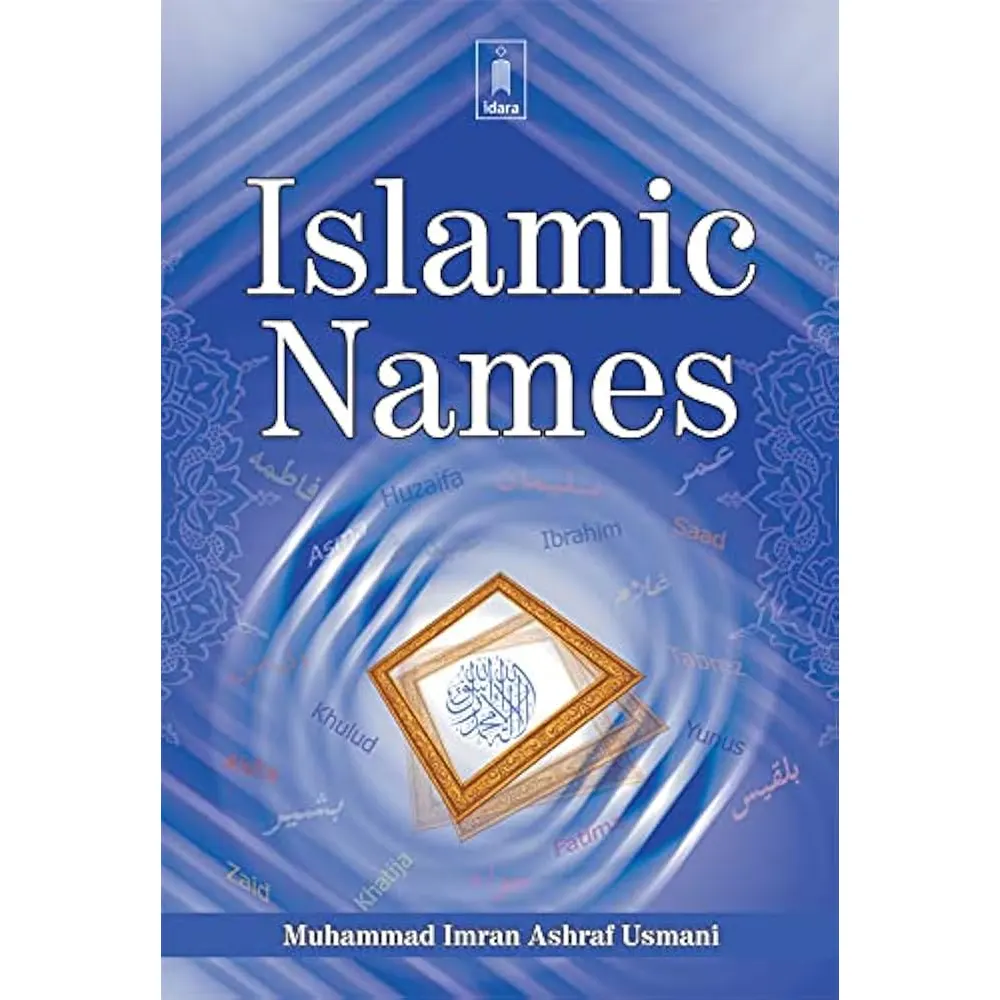
Islamic Names (Muhammad Imran Ashraf Usmani) Idara English

₹90.00
Conclusion:
- Religious Significance: Names reflect faith, moral values, and connection to Allah.
- Moral and Social Implications: Names influence behavior, perception, and social respect.
- Practical Guidance: Includes rules for naming, changing names, and gender-specific considerations.
- Extensive Name Lists: Provides examples with meanings, making it a practical reference.
- Cultural and Ethical Awareness: Encourages maintaining Islamic identity while considering cultural context.
Islamic Names (Muhammad Imran Ashraf Usmani) Idara English
Overview of the Book:
Islamic Names by Muhammad Imran Ashraf Usmani is a comprehensive guide that explores the significance, meanings, and etiquettes of Islamic names. The book is aimed at helping Muslim parents, guardians, and individuals select appropriate names for children or themselves in accordance with Islamic teachings, culture, and ethics.
Names in Islam are not just identifiers; they carry spiritual, moral, and social significance. The book emphasizes that choosing a good name is a religious duty and an act of blessing, as a name can influence a person’s character, social perception, and even destiny.
Importance of Names in Islam:
Spiritual Significance:
Names reflect identity, faith, and character. A meaningful name can serve as a source of inspiration throughout life.
The Prophet Muhammad (peace be upon him) encouraged giving good and meaningful names to children.
Social and Ethical Importance:
Names affect interpersonal interactions and social respect.
Choosing a positive, respectful name fosters honor and dignity in society.
Religious Obligations:
Islam forbids names with offensive, blasphemous, or immoral meanings.
Names should ideally reflect virtue, piety, or positive traits.
Types of Islamic Names:
Names of Prophets:
Names like Muhammad, Isa (Jesus), Musa (Moses), Ibrahim (Abraham) carry great spiritual significance.
Such names invoke blessings and emulate the virtues of the prophets.
Names Reflecting Attributes of Allah:
Names using ‘Abd’ (servant of) + one of Allah’s names, e.g., Abdullah (Servant of Allah), Abdul Rahman (Servant of the Most Merciful).
Emphasizes servitude, devotion, and moral alignment with divine attributes.
Names Indicating Virtue or Good Traits:
Names like Karim (generous), Amin (trustworthy), Saeed (happy), Hafiz (protector/guardian) are encouraged.
Such names inspire the bearer to embody these traits.
Names Based on Natural Phenomena or Objects:
Names like Najma (star), Qamar (moon), Zahra (flower) are permissible if they carry positive meanings.
Family or Tribal Names:
Some names reflect lineage or honor familial heritage, but care is taken to ensure Islamic permissibility.
Guidelines for Choosing Islamic Names:
Meaning and Significance:
The meaning should be good, positive, and free from evil connotations.
Names with negative or harmful meanings are prohibited.
Ease of Pronunciation:
Names should be easy to pronounce and remember, fostering respect and social ease.
Avoiding Imitation of Non-Islamic Practices:
Names should not mimic names of idols, polytheistic traditions, or immoral figures.
The book emphasizes maintaining Islamic identity through names.
Following Sunnah:
The Prophet Muhammad (peace be upon him) gave guidance on naming, including choosing names like Abdullah, Muhammad, and other virtuous names.
He also encouraged changing inappropriate names given at birth if their meanings were undesirable.
Combining Names with Religious Awareness:
Names using ‘Abd’ (servant) with one of Allah’s attributes are highly recommended.
Names should reflect devotion, piety, and moral aspiration.
Practical Advice in the Book:
Naming at Birth:
It is recommended to choose a name within seven days of a child’s birth.
Names are ideally announced publicly, allowing the community to recognize the child.
Changing Names:
If a person has a name with negative or inappropriate meaning, Islam allows changing it to a good name.
The book provides guidance on selecting alternative names while maintaining respect for heritage.
Gender Considerations:
Male and female names are distinguished clearly.
Female names often reflect beauty, virtue, and piety, while male names emphasize strength, moral character, or devotion to Allah.
Cultural Context:
Names should be culturally appropriate but not compromise Islamic principles.
Parents are advised to avoid modern trends that conflict with religious teachings.
Examples and Meanings:
The book provides extensive lists of names with meanings and proper usage:
Male Names:
Muhammad: Praiseworthy
Ali: Exalted, noble
Hassan: Good, handsome
Abdul Rahman: Servant of the Most Merciful
Female Names:
Aisha: Alive, living
Fatimah: Captivating, daughter of the Prophet
Zainab: Fragrant flower, good name
Khadijah: Early baby, trustworthy
Names Derived from Virtues or Morals:
Karim (generous), Amin (trustworthy), Sabir (patient), Hafiz (protector/guardian)
Names Reflecting Devotion to Allah:
Abdullah (servant of Allah), Abdul Aziz (servant of the Almighty)
Ethical and Religious Considerations:
Avoiding Names with Negative Meanings:
Names indicating sin, evil, or immoral behavior should be avoided.
Example: Names implying misfortune or idolatry.
Encouraging Names with Spiritual Significance:
Names that remind the bearer of Allah, virtue, or moral excellence are highly encouraged.
Community and Identity:
Names serve as a reflection of Islamic identity and promote social respect and cohesion.
Conclusion:
Islamic Names by Muhammad Imran Ashraf Usmani provides comprehensive guidance on selecting meaningful, virtuous, and religiously appropriate names for children and individuals. Key insights include:
Religious Significance: Names reflect faith, moral values, and connection to Allah.
Moral and Social Implications: Names influence behavior, perception, and social respect.
Practical Guidance: Includes rules for naming, changing names, and gender-specific considerations.
Extensive Name Lists: Provides examples with meanings, making it a practical reference.
Cultural and Ethical Awareness: Encourages maintaining Islamic identity while considering cultural context.
By following the principles outlined in the book, parents and individuals can ensure that their names are blessed, meaningful, and aligned with Islamic teachings, creating a strong spiritual and social foundation for the bearer throughout life.
Only logged in customers who have purchased this product may leave a review.
Related Products

- 26 Chabbis Surtein Momin Ka Hathyar Allah Ki Panah Muhammad Yunus Idara (Urdu)
4 in stock
- Paperback
- Publisher: Idara Impex (2011)
- Language: Hindi
1 in stock

- The Guide Book For Prayer ( Idara ) English / Arabic
7 in stock

- Bahishti Zewar : Heavenly Ornaments (ENGLISH) Ashraf Ali Thanvi’s best selling book of advice specially for the Muslim Woman.
2 in stock

- An Index To The Qur’An Harun Yahya Idara (English)
- Conclusion
- “An Index to the Qur’ān” by Harun Yahya is a valuable tool for systematic study, reflection, and research. Its importance lies in:
- Providing quick access to Qur’ānic verses on specific topics.
- Facilitating thematic understanding across multiple surahs.
- Supporting spiritual, academic, and interfaith endeavors.
- Helping readers recognize patterns, repetitions, and core teachings in the Qur’ān.
1 in stock

- Ahsanul Qawaid Mohammad Yunus Idara (Arabic/English)
- Spiritual and Educational Benefits
- Enhanced Qur’anic Understanding – Grammar knowledge allows readers to discern subtle meanings, differentiate between literal and figurative expressions, and interpret verses accurately.
- Improved Recitation and Tajweed – Understanding syntax helps with proper pauses, elongations, and emphasis during recitation.
- Facilitates Memorization (Hifz) – Recognizing grammatical patterns aids in memorization by providing contextual understanding, rather than rote learning.
- Bridge to Tafsir (Exegesis) – Knowledge of Arabic grammar is essential for Tafsir studies. By mastering grammar, readers can appreciate scholars’ explanations and contextual meanings more deeply.
- Practical Use for Islamic Education – The book is suitable for students, teachers, and madrasas, providing a structured grammar curriculum for Qur’anic studies.
48 in stock

- Madinah Arabic Reader Book 2 Dr.V.Abdur Rahim (Goodword) Arabic/English
3 in stock

Emaan Tracing Quran
Benefits of Tracing the Qur’an
Strengthens Connection with the Qur’an
Enhances Focus and Contemplation (Tadabbur)
Improves Arabic Writing and Recognition

- Cultural Side Of Islam Muhammad Marmaduke Pickthall Idara (English)
2 in stock

- Let?S Speak Arabic S.A. Rahman Goodword (English/Arabic)
1 in stock

- Madinah Arabic Reader Book 1 Dr.V.Abdur Rahim (Goodword) Arabic/English
2 in stock
- Desire For The Aa-Khirah M. Ashraf Ali Thanvi Idara (English)
2 in stock
Reviews
There are no reviews yet.