

Umar Farooq The Second Caliph Of Islam Sr. Nafees Khan (Goodword) English


Original price was: ₹90.00.₹75.00Current price is: ₹75.00.
- Umar Farooq The Second Caliph Of Islam Sr. Nafees Khan (Goodword) English
- Moral Lessons:
The book concludes with reflections on the moral and spiritual lessons from Umar’s life:- Courage and Conviction: True strength comes from faith in Allah and courage to uphold justice.
- Justice and Fairness: Leadership requires impartiality and dedication to the welfare of all people.
- Humility and Accountability: Even powerful leaders must remain humble and accountable to Allah and the community.
- Service to Humanity: Righteous leadership prioritizes the needs of the people and the ethical spread of faith.
- Faith and Transformation: Umar’s life exemplifies how sincere reflection and faith can transform character and purpose.
Out of stock
Umar Farooq The Second Caliph Of Islam Sr. Nafees Khan (Goodword) English
Introduction:
The book Umar Farooq: The Second Caliph of Islam by Sr. Nafees Khan provides a comprehensive account of the life, leadership, and enduring legacy of Hazrat Umar ibn al-Khattab (RA), one of the most influential figures in Islamic history. Known for his unwavering commitment to justice, discipline, and piety, Umar (RA) served as the second caliph after the passing of Prophet Muhammad (PBUH). The author highlights his journey from a staunch opponent of Islam to one of its most devoted supporters, showcasing his remarkable transformation and dedication to serving Allah and the Muslim community.
Early Life and Character:
Hazrat Umar ibn al-Khattab was born in Mecca into the powerful and respected Quraysh tribe. From an early age, he was known for his courage, strength, and decisive nature. Sr. Nafees Khan portrays Umar as a man of principle, with a strong sense of justice and an unwavering moral compass even before his conversion to Islam. His early life in Mecca was marked by privilege and social standing, but also by a firm character and a fearlessness that would later define his leadership style.
The author emphasizes Umar’s physical strength and sharp mind, qualities that made him a natural leader. However, he also possessed a temper and rigidity that initially made him resistant to Islam. This aspect of his character plays a crucial role in understanding the depth of his later transformation.
Conversion to Islam:
One of the pivotal moments in Umar’s life, as detailed by Sr. Nafees Khan, was his acceptance of Islam. Initially, Umar was a fierce opponent of the Prophet Muhammad (PBUH) and actively sought to suppress the new faith. However, upon hearing the Qur’an recited and witnessing the steadfastness of early Muslims, he experienced a profound spiritual awakening. His conversion was dramatic and transformative, marking the beginning of his journey as one of Islam’s most dedicated servants.
The book highlights the significance of Umar’s conversion not only for him personally but also for the Muslim community. His embrace of Islam brought strength, courage, and leadership to a fledgling community facing persecution in Mecca. Umar’s story demonstrates that sincere reflection and guidance from Allah can transform even the most determined opposition into devoted faith.
Contributions During the Prophet’s Life:
After his conversion, Umar (RA) became a staunch supporter of the Prophet and an active participant in spreading Islam. Sr. Nafees Khan explains how Umar’s courage and decisiveness were instrumental in protecting Muslims during periods of persecution and in strengthening the community’s resolve. He participated in key battles, supported the Prophet in decision-making, and consistently upheld principles of justice and fairness.
The author emphasizes that Umar’s loyalty was not limited to military strength but extended to moral guidance, community organization, and spiritual support. His ability to combine firmness with compassion set him apart as a leader who prioritized the welfare of the people while adhering strictly to Islamic principles.
Leadership as the Second Caliph:
Following the death of Hazrat Abu Bakr (RA), Umar ibn al-Khattab became the second caliph of Islam. Sr. Nafees Khan provides a detailed account of his governance, highlighting his administrative brilliance, commitment to justice, and implementation of Islamic law. Umar (RA) is remembered for establishing a structured system of governance, including public welfare initiatives, fair taxation, judicial institutions, and military organization. His policies were guided by the principles of equality, accountability, and adherence to the teachings of the Qur’an and Sunnah.
One of the key themes in the book is Umar’s emphasis on justice. He is renowned for his impartiality, often personally ensuring that the rights of the poor, weak, and marginalized were protected. Sr. Nafees Khan illustrates numerous instances where Umar (RA) would walk the streets of Medina at night to understand the hardships faced by his people, embodying the ideal of a just and caring ruler.
Military and Territorial Expansion:
Under Umar’s leadership, the Islamic state expanded significantly. Sr. Nafees Khan narrates how Umar (RA) oversaw the conquest of vast territories, including Syria, Egypt, and parts of Persia. These military campaigns were conducted with strategic brilliance and careful planning, ensuring minimal suffering while establishing Islamic governance. Umar’s administrative skills were evident in how he integrated new territories, maintained law and order, and respected local populations, reflecting his commitment to justice and ethical conduct even during warfare.
The author emphasizes that Umar’s expansion of the Islamic state was not for personal gain but to establish justice, protect the oppressed, and spread the message of Islam. His military leadership was inseparable from his moral and ethical values, making him a unique example of principled governance.
Character and Personal Qualities:
Sr. Nafees Khan dedicates considerable attention to Umar’s personal qualities. Despite his high status, Umar (RA) lived a simple and humble life. He avoided extravagance, valued modesty, and constantly reminded himself of accountability before Allah. His fear of God, dedication to prayer, and concern for the community made him a model leader in both personal and public life.
The book also highlights Umar’s courage, decisiveness, and strictness, balanced with compassion and fairness. He was unafraid to make difficult decisions, always guided by Islamic principles. These qualities earned him respect, loyalty, and admiration from companions and ordinary citizens alike.
Legacy and Influence:
The legacy of Umar ibn al-Khattab is enduring and multifaceted. Sr. Nafees Khan portrays him as a paragon of justice, devotion, and leadership. His governance principles, commitment to equality, and dedication to public welfare set benchmarks for Islamic leadership that are studied and admired to this day. Umar’s life demonstrates the profound impact a righteous and principled leader can have on society, highlighting the importance of ethics, courage, and faith in governance.
His influence extended beyond his lifetime, shaping Islamic jurisprudence, administration, and community values. The book emphasizes that Umar’s example continues to inspire Muslims to strive for justice, humility, and service to humanity.
Moral Lessons:
The book concludes with reflections on the moral and spiritual lessons from Umar’s life:
Courage and Conviction: True strength comes from faith in Allah and courage to uphold justice.
Justice and Fairness: Leadership requires impartiality and dedication to the welfare of all people.
Humility and Accountability: Even powerful leaders must remain humble and accountable to Allah and the community.
Service to Humanity: Righteous leadership prioritizes the needs of the people and the ethical spread of faith.
Faith and Transformation: Umar’s life exemplifies how sincere reflection and faith can transform character and purpose.
Conclusion:
Umar Farooq: The Second Caliph of Islam by Sr. Nafees Khan is a compelling biography that brings to life the exemplary character, leadership, and enduring legacy of Hazrat Umar ibn al-Khattab (RA). Through detailed narration and insightful analysis, the book provides readers with lessons on faith, justice, humility, and effective leadership. Umar’s journey from a strong-willed opponent of Islam to one of its most respected and righteous leaders serves as an enduring source of inspiration, illustrating how devotion, integrity, and service to humanity can leave a lasting impact on the world.
| Weight | 250 g |
|---|---|
| Dimensions | 16 × 10 × 8 cm |
Only logged in customers who have purchased this product may leave a review.
Related Products

- Paperback: 271 pages
- Language: English
1 in stock

- A Brief Illustrated Guide To Understanding Islam I. A. Ibrahim Goodword (English)
1 in stock
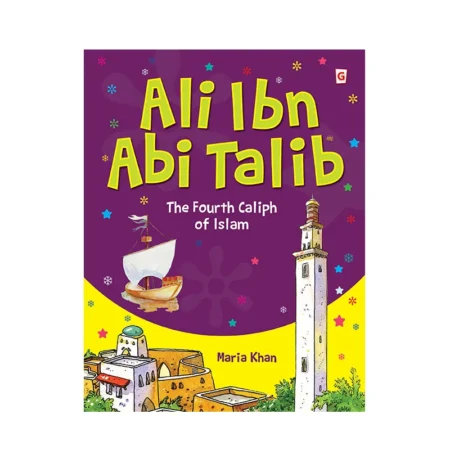
- Ali Ibn Abi Talib : The Fourth Caliph Of Islam ( Maria Khan ) Goodword English
- Significance and Impact:
This book is significant for several reasons: - Educational Value:
It introduces young readers to a major figure in Islamic history in an age-appropriate manner, providing historical, moral, and spiritual education. - Character Building:
Hazrat Ali’s (RA) life serves as a model of courage, wisdom, humility, and ethical leadership, encouraging readers to develop strong moral character. - Understanding Islamic History:
The book contextualizes key events in early Islamic history, making them accessible and relatable. Readers gain insight into the social, political, and ethical challenges of the early Muslim community. - Spiritual Inspiration:
Hazrat Ali’s (RA) devotion, piety, and moral integrity inspire readers to strengthen their faith, practice ethical behavior, and seek knowledge.
4 in stock

- Introducing The Quran Dr. Hasanuddin Ahmed Goodword (English)
1 in stock

- A Dictionary Of Muslim Names Prof. S. A. Rahman Goodword (English)
- Key Features of the Dictionary
- Alphabetical Arrangement
Names are listed alphabetically for ease of reference. Both male and female names are included, with separate indications where necessary. - Meanings and Origins
Each name is accompanied by: - Its meaning in English.
- Its linguistic origin (Arabic, Persian, Turkish, Urdu, etc.).
- Its religious or historical significance, if applicable.
- Pronunciation Guides
Some editions provide phonetic spellings to help readers pronounce names correctly. - Focus on Positive and Virtuous Meanings
Names often carry religious, moral, or noble qualities, reflecting Islamic values, such as honesty, piety, bravery, and beauty. - Quranic and Hadith References
Many names are drawn from Quranic terms, names of Prophets, companions, or historical Islamic figures, often with references to their sources.
1 in stock
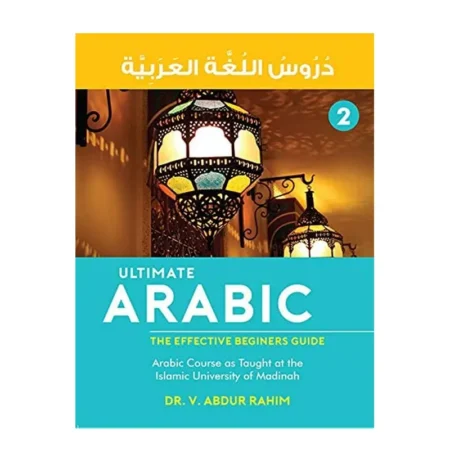
- Have a stronger understanding of basic and intermediate Arabic grammar, including verb conjugation, pluralization, and sentence formation.
- Expand vocabulary related to daily life, social interactions, and Islamic contexts.
- Develop confidence in reading and writing simple Arabic sentences accurately.
- Engage in basic conversations in Arabic, applying grammar and vocabulary in practical situations.
- Recognize and correctly pronounce Arabic letters and sounds.
- Understand the connection between grammar, vocabulary, and sentence construction
2 in stock
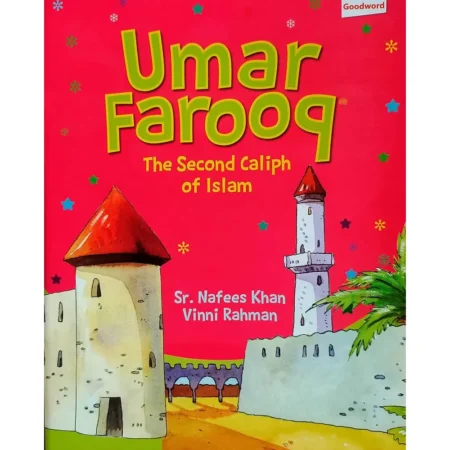
- Illustrations and Visual Appeal
The book contains colorful and detailed illustrations showing: - Hazrat Umar (RA) in daily life, prayers, and leadership moments.
- Key events like battles, governance, and social reforms.
- Scenes depicting Islamic culture and lifestyle during the Prophet’s time.
- Illustrations help visual learners understand history and make stories more memorable and interesting.
- 12. Educational and Spiritual Benefits
Reading this book provides multiple benefits for children: - Historical Knowledge: Introduces early Islamic history and life of companions.
- Moral Development: Teaches virtues like justice, courage, and honesty.
- Spiritual Awareness: Encourages children to reflect on their faith and relationship with Allah.
- Role Modeling: Hazrat Umar (RA) becomes a role model for children in behavior, faith, and leadership.
4 in stock

- Arabic Conversation Book Mohd. Harun Rashid (Goodword) English/Arabic
- Educational and Cognitive Benefits
- Enhanced Communication Skills:
- Learners develop reading, writing, speaking, and listening skills simultaneously.
- Vocabulary Retention:
- Thematic dialogues reinforce common words and phrases, improving memory retention.
- Critical Thinking and Comprehension:
- Comprehension exercises help learners analyze meaning and context.
- Cultural Competence:
- Understanding Arabic etiquette and customs enhances effective and polite communication.
- Confidence in Practical Use:
- Role-playing and conversational exercises build speaking confidence.
- Foundation for Advanced Studies:
- Prepares learners for formal Arabic courses, Modern Standard Arabic, or interaction with Arabic speakers.
2 in stock

- Beautiful Islamic Names For Children Islami Kitab Ghar (English)
- Benefits for Families
- Ease in Selecting Appropriate Names:
- Families can quickly find suitable names with clear meanings and guidance.
- Moral and Spiritual Awareness:
- Encourages parents to choose names that reflect positive values and Islamic teachings.
- Cultural and Religious Education:
- Children and families learn about the significance of names in Islam and Islamic history.
- Enhanced Identity Formation:
- Names chosen with care can inspire children’s character, virtues, and self-esteem.
- Practical Guidance:
- Provides advice on avoiding names with negative meanings and selecting names that are socially and religiously appropriate.
- Long-Term Value:
- Serves as a reference book that families can use for future generations.
1 in stock

- A-Z Ready Reference Of The Quran Abdullah Yusuf Ali Goodword (English)
1 in stock

- Paperback
- Publisher: Goodword Books
- Language: English
1 in stock
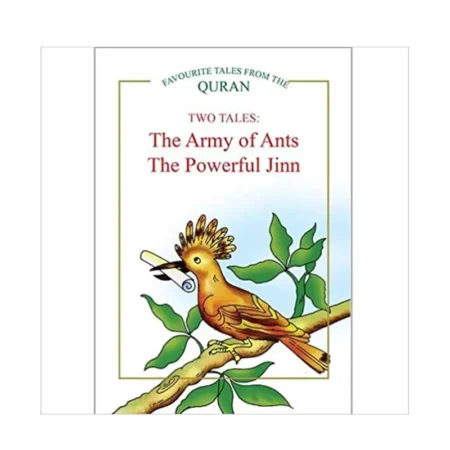
- The Army Of Ants The Powerful Jinn Hb Saniyasnain Khan (Goodword) English
- Story Overview
- The story revolves around Prophet Suleiman’s rule, his ability to communicate with creatures, and the lessons learned from the natural world, particularly ants and jinn.
- 1. Prophet Suleiman and His Kingdom
- Prophet Suleiman, son of Prophet Dawud (David, peace be upon him), was granted wisdom, knowledge, and a vast kingdom by Allah.
- His authority extended over humans, animals, and jinn.
- The book emphasizes his devotion, fairness, and leadership, showing that his power came from Allah and was meant to serve justice and uphold righteousness.
- 2. The Army of Ants
- One day, while traveling with his army, Prophet Suleiman overheard a conversation among the ants, who were concerned about being trampled by the soldiers.
- The story highlights his ability to understand and communicate with animals, reflecting Allah’s blessings and his unique gift.
- Suleiman smiled, showing mercy and consideration, and ensured the ants were safe.
1 in stock
Reviews
There are no reviews yet.