
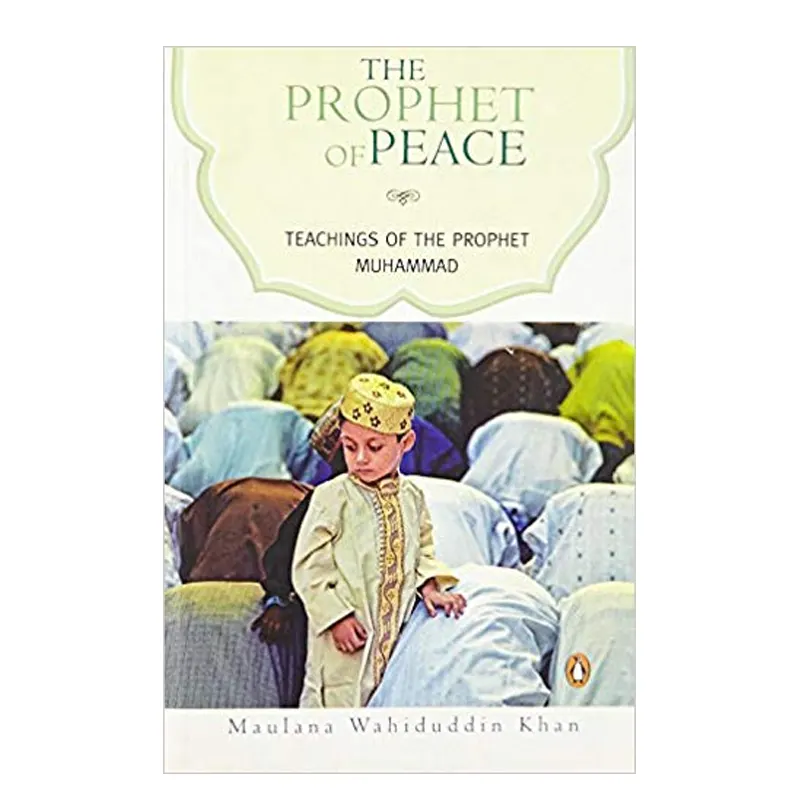
The Prophet Of Peace Wahiduddin Khan (Goodword) English
Original price was: ₹405.00.₹311.54Current price is: ₹311.54.
- The Prophet Of Peace Wahiduddin Khan (Goodword) English
- Key Takeaways
- Some of the main lessons highlighted in The Prophet of Peace include:
- Peace is the core message of Islam and the Prophet’s life.
- Moral integrity, honesty, and patience are more powerful than coercion.
- Conflict resolution requires empathy, dialogue, and fairness.
- Social reform can be achieved through ethical persuasion rather than violence.
- The Prophet’s life provides a blueprint for individuals and societies striving for harmony.
- Understanding Islam through the Prophet’s teachings can counter stereotypes of violence.
Out of stock
The Prophet Of Peace Wahiduddin Khan (Goodword) English
“The Prophet of Peace” by Wahiduddin Khan is a compelling work that highlights the peaceful teachings of Prophet Muhammad (peace be upon him) and presents him as a model of non-violence, moral integrity, and spiritual guidance. The book seeks to challenge misconceptions about Islam, particularly the common stereotype associating the religion with violence, and instead presents the Prophet as a reformer, peacemaker, and a person whose life provides lessons for humanity in resolving conflicts and living harmoniously.
Wahiduddin Khan, a prominent Islamic scholar known for his emphasis on peace, simplicity, and interfaith dialogue, structures the book around key events in the Prophet’s life that demonstrate his unwavering commitment to peace, patience, and moral principles. The central thesis of the book is that the essence of Islam, as taught and exemplified by the Prophet, is peace—both internal and external—and that this message is highly relevant in today’s conflict-ridden world.
1. Life of the Prophet as a Model of Peace
The book begins by recounting the Prophet’s early life in Mecca. Wahiduddin Khan emphasizes how, even as a young man, Muhammad (peace be upon him) displayed remarkable honesty, integrity, and a commitment to justice. Known as “Al-Amin” (the Trustworthy), he earned the respect of his community not through coercion but through moral character. The author draws attention to the fact that the Prophet’s leadership style was based on persuasion, dialogue, and moral example rather than force.
The early struggles faced by the Prophet and his followers—persecution, social boycott, and threats—are presented as opportunities where his steadfast adherence to non-violence and ethical conduct shone. Khan argues that the Prophet’s patience under persecution exemplifies the principle of enduring hardship without responding with aggression, a lesson that has universal applicability.
2. Principles of Peace and Conflict Resolution
One of the key contributions of the book is its focus on the Prophet’s methods of resolving conflicts. Wahiduddin Khan highlights several episodes from the Prophet’s life where he chose diplomacy over confrontation. For instance, the Treaty of Hudaybiyyah is presented as a landmark event illustrating the Prophet’s commitment to peace. Despite initial opposition from his own followers, Muhammad agreed to terms that appeared unfavorable in the short term, but ultimately laid the groundwork for lasting reconciliation and the spread of Islam.
The author explains that the Prophet’s approach to conflict resolution was guided by several principles: patience, negotiation, empathy, and justice. By prioritizing human dignity and fairness, Muhammad demonstrated that peace is not merely the absence of conflict but the presence of moral order and mutual respect. Khan emphasizes that these principles can guide not only individuals but also nations in their pursuit of peaceful coexistence.
3. Non-Violence and Ethical Conduct
Wahiduddin Khan also explores the Prophet’s insistence on ethical conduct even during warfare. The book details instances where the Prophet instructed his followers to avoid harming non-combatants, destroy crops, or damage property. Khan underscores that the Prophet’s model of warfare was defensive, strictly regulated, and aimed at restoring peace rather than asserting dominance.
The author contrasts these principles with common misconceptions about jihad, arguing that the Prophet’s true understanding of struggle was spiritual and moral first, with physical struggle only as a last resort. This interpretation positions Islam as a religion that fundamentally seeks harmony and discourages aggression.
4. The Prophet as a Social Reformer
Beyond political and military aspects, The Prophet of Peace delves into Muhammad’s social reforms. Khan discusses how the Prophet championed the rights of the oppressed, including women, slaves, and the poor. The book highlights his efforts to abolish unjust social practices, promote education, and encourage compassion. These reforms, according to Khan, were peaceful yet transformative, showing that social change does not necessarily require violence or coercion.
The Prophet’s emphasis on dialogue, consultation (Shura), and moral persuasion is repeatedly highlighted as a hallmark of his leadership. Wahiduddin Khan argues that these methods are relevant for modern societies seeking ethical governance and social cohesion.
5. Relevance in the Contemporary World
A significant portion of the book is dedicated to drawing lessons for today’s world. Wahiduddin Khan writes in the context of global conflicts, terrorism, and religious misunderstandings, asserting that following the Prophet’s model could lead to a more peaceful and tolerant society. The book appeals to Muslims and non-Muslims alike, presenting the Prophet as a universal figure whose teachings transcend time and culture.
Khan emphasizes that peace is not passive; it requires moral courage, patience, and a commitment to justice. He encourages readers to embrace dialogue, understanding, and empathy in resolving both personal and societal conflicts. By highlighting the Prophet’s exemplary life, Khan illustrates that real strength lies in patience, ethical conduct, and the pursuit of peace.
6. Style and Approach
The writing style of the book is accessible, clear, and engaging. Wahiduddin Khan combines historical narrative with ethical reflection, making complex ideas understandable to general readers. The book is richly supported by examples from the Prophet’s life, Qur’anic verses, and Hadith, which reinforce the central theme of peace. Khan avoids overly academic language, making the book suitable for a wide audience, including those unfamiliar with Islamic theology.
7. Key Takeaways
Some of the main lessons highlighted in The Prophet of Peace include:
Peace is the core message of Islam and the Prophet’s life.
Moral integrity, honesty, and patience are more powerful than coercion.
Conflict resolution requires empathy, dialogue, and fairness.
Social reform can be achieved through ethical persuasion rather than violence.
The Prophet’s life provides a blueprint for individuals and societies striving for harmony.
Understanding Islam through the Prophet’s teachings can counter stereotypes of violence.
Conclusion
“The Prophet of Peace” by Wahiduddin Khan is more than a biography; it is a guide for ethical living and peaceful leadership. By presenting the Prophet Muhammad (peace be upon him) as a model of patience, justice, and moral courage, Khan challenges readers to rethink the essence of Islam and its application in the modern world. The book inspires reflection on personal conduct, social responsibility, and the pursuit of peace in daily life.
Through vivid examples and thoughtful analysis, Wahiduddin Khan emphasizes that peace is not passive but requires active effort, moral clarity, and steadfastness in the face of adversity. The Prophet’s life, as portrayed in this book, demonstrates that true leadership is grounded in ethical principles and a commitment to the welfare of all.
In essence, the book serves as a bridge for understanding the true spirit of Islam, highlighting its peaceful teachings, and encouraging readers to adopt the principles of tolerance, justice, and compassion in their own lives. It is a timely reminder that the Prophet’s message of peace is universal and enduring, offering practical lessons for personal growth, societal harmony, and global coexistence.
| Weight | 180 g |
|---|---|
| Dimensions | 20 × 14 × 4 cm |
Only logged in customers who have purchased this product may leave a review.
Related Products

- A Brief Illustrated Guide To Understanding Islam I. A. Ibrahim Goodword (English)
1 in stock
- Biographies of Scholars and Saints
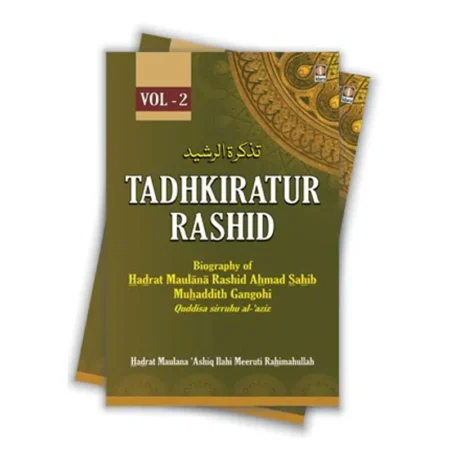
- A key feature of Tadhkiratur Rashid Vol-2 is the detailed biographies of Islamic scholars, jurists, and Sufi saints. Maulana Meeruti presents these figures as models of intellectual and spiritual excellence. Each biography highlights:
- Early life and education: The author details the family background, early learning, and intellectual environment that shaped the personality of each figure.
- Spiritual and moral development: Emphasis is placed on how these personalities cultivated inner piety, patience, humility, and devotion to God.
- Scholarly achievements: Their contributions to Islamic sciences, including Fiqh, Hadith, Tafsir, and Tasawwuf, are elaborated, showing their role in preserving and transmitting knowledge.
- Ethical conduct: The biographies stress the practical application of knowledge, including charity, justice, truthfulness, and service to society.
- By highlighting these elements, the book inspires readers to emulate the balance of knowledge, spirituality, and ethical conduct exhibited by these personalities.
4 in stock
- Mutala-E-Seerat (Goodword ) Urdu
4 in stock

- Quran Stories For Toddlers Board Book Saniyasnain Khan (Goodword) Arabic
1 in stock
- Muslim Baby Book For Girls (Goodword) English
- Introducing Islamic concepts such as Allah, the Prophet Muhammad (S), prayers, and simple acts of worship.
- Teaching basic duas (supplications), Islamic greetings, and manners in an easy-to-understand format.
- Providing a resource for parents and caregivers to guide early religious education at home.
- Encouraging cognitive development through interactive elements, repetition, and visual learning.
- Promoting moral and ethical development by highlighting values such as kindness, honesty, gratitude, and respect.
1 in stock

- Biography Of Hadrat Moulana Muhammad Yusuf Sahib(R.A) Amire Tabligh Maulana Mufti Azizur-Rehman Bijnori Idara (English)
- 1. Early Life and Background
- Hadrat Moulana Muhammad Yusuf Sahib (R.A) was born in the late 19th or early 20th century in India, into a family committed to Islamic learning and piety. Maulana Mufti Azizur-Rehman Bijnori highlights that his upbringing in a spiritually rich environment laid the foundation for his lifelong dedication to Islamic scholarship and da‘wah (missionary work).
- From an early age, he displayed qualities of sincerity, devotion, discipline, and humility. His family emphasized both religious education and moral training, cultivating in him a love for Qur’an, Hadith, and the practices of the Prophet Muhammad (S.A.W.).
- 2. Education and Religious Formation
- The biography emphasizes Moulana Muhammad Yusuf Sahib’s thorough grounding in Islamic sciences. He studied:
- Tafsir (Qur’anic exegesis)
- Hadith (Prophetic traditions)
- Fiqh (Islamic jurisprudence)
- Aqidah (Islamic creed)
- His teachers recognized his intelligence, piety, and commitment to learning, which allowed him to excel in both religious knowledge and practical application. This strong scholarly foundation later helped him lead, guide, and inspire followers in Tablighi activities across India and beyond.
- 3. Early Involvement in Tabligh Work
- The book narrates Moulana Yusuf Sahib’s early participation in Tablighi activities under the guidance of senior scholars and leaders of the movement. He actively engaged in:
- Missionary journeys (khuruj): Traveling to various towns and villages to invite Muslims to observe Islamic practices.
- Spiritual training of disciples: Teaching sincerity, humility, and moral reform.
- Organization and administration: Assisting in the structured planning of Tablighi missions.
3 in stock

- Paperback: 271 pages
- Language: English
1 in stock

- Aap Beti Part 1 & 2 Autobiography Of Maulana Zakariyya (Idara) English
- 1. Early Life and Family Background
- Maulana Zakariyya Kandhlawi was born in 1898 in Kandhla, India, into a family deeply committed to Islamic scholarship. The autobiography highlights the influence of his parents and extended family, who emphasized religious education, ethical conduct, and spiritual development.
- Even in his early years, he exhibited remarkable memory, curiosity, and devotion to learning. The book emphasizes how his upbringing instilled the foundations of moral character, spiritual awareness, and a love for Islamic knowledge that would guide his entire life.
- 2. Education and Scholarly Formation
- One of the central themes of Aap Beeti is Maulana Zakariyya’s rigorous Islamic education. He pursued studies in:
- Hifz-ul-Qur’an: Memorizing the Qur’an at a young age
- Hadith: Studying Prophetic traditions with renowned teachers
- Fiqh (Islamic jurisprudence): Mastering Hanafi fiqh and related texts
- Tafsir and Aqidah: Understanding the Qur’an and Islamic creed
- Maulana Zakariyya narrates the challenges he faced, including long hours of study, travel to different madrasas, and personal discipline. The autobiography conveys the dedication required to attain deep Islamic knowledge, highlighting both intellectual rigor and spiritual commitment.
- 3. Spiritual Development and Personal Virtues
- Throughout his life, Maulana Zakariyya (RA) emphasized the integration of knowledge with spiritual practice. His autobiography details his efforts in:
- Regular Salah and Dhikr: Maintaining consistent prayer and remembrance of Allah
- Ethical Conduct: Upholding truthfulness, humility, and honesty in personal and social life
- Self-Discipline: Controlling desires and striving for moral refinement
- Service to Islam: Prioritizing da‘wah, teaching, and moral guidance over personal comfort
3 in stock

- Madinah Arabic Reader Book 3 Dr.V.Abdur Rahim (Goodword) Arabic/English
4 in stock
- Payghambar E Islam Hazrat Muhammad Ka Jeevan Maulana Wahiduddin Khan (Goodword) Hindi
1 in stock
- Qassasul Ambiya Wa Ashabe Saliheen Maulana Muhammad Hifzur Rehman Seeohwarwi Idara (Urdu)
- Prophet Adam (AS): The book details his creation, the test in Paradise, and the lessons of obedience, repentance, and divine mercy.
- Prophet Nuh (AS): His patience in calling his people to monotheism and his perseverance in the face of rejection teaches the importance of steadfastness.
- Prophet Ibrahim (AS): His devotion, sacrifice, and trust in Allah serve as a model of complete submission and reliance on God.
- Prophet Musa (AS) and Prophet Isa (AS): Their struggles against oppression, leadership, and miracles highlight the significance of courage, justice, and divine guidance.
- Prophet Muhammad (SAW): The final prophet’s life, mission, and ethical conduct are presented as the ultimate model of virtue, wisdom, and spiritual guidance.
1 in stock

- Arabic Reading Lessons Duncan Forbes Goodword (English)
- Learning Benefits:
- Foundational Arabic Literacy:
- Children and beginners develop the ability to read Arabic letters, words, and sentences with confidence.
- Provides essential skills for Quranic reading and further Islamic studies.
- Improved Pronunciation:
- Focus on vowels, Sukun, and Tanween ensures learners pronounce letters and words accurately, which is essential for both general Arabic and Quranic reading.
- Enhanced Reading Fluency:
- Stepwise progression from letters to words and sentences builds speed and accuracy in reading.
- Learners can gradually read more complex texts with proper rhythm and intonation.
- Interactive Learning:
- Exercises and drills encourage active participation, making learning enjoyable.
- Visual and repetitive practice helps reinforce memory and understanding.
- Confidence Building:
- The structured lessons allow learners to track their progress, increasing motivation and self-confidence.
2 in stock
Reviews
There are no reviews yet.