

Hasan Al Banna Shaheed Ek Mutala Abdul Gaffar Aziz Manshurat (Urdu)


₹350.00
- Hasan Al Banna Shaheed Ek Mutala Abdul Gaffar Aziz Manshurat (Urdu)
- Ideology and Vision
- Hasan Al-Banna’s ideology, as described in the book, emphasized the integration of faith with action. Abdul Gaffar Aziz highlights key elements:
- Unity of the Muslim Ummah: Al-Banna stressed that Muslims must transcend sectarian and regional divisions to build a strong, cohesive community.
- Moral and Spiritual Reform: Personal piety, ethical behavior, and spiritual awareness were essential for societal transformation.
- Education and Knowledge: Al-Banna promoted learning, literacy, and critical thinking to empower Muslims intellectually and morally.
- Socio-Political Engagement: He advocated participation in social and political affairs to promote justice, welfare, and Islamic governance.
- His vision was comprehensive, seeking reform in personal character, society, and governance, rooted firmly in Islamic teachings.
- 5. Organizational Work and Leadership
- Abdul Gaffar Aziz details Hasan Al-Banna’s exceptional organizational skills. Under his leadership, the Muslim Brotherhood grew rapidly, establishing:
- Schools and educational institutions
- Charitable organizations and welfare programs
- Advocacy for social justice and moral education
- Community networks that strengthened collective identity and activism
Out of stock
Hasan Al Banna Shaheed Ek Mutala Abdul Gaffar Aziz Manshurat (Urdu)
“Hasan Al-Banna Shaheed: Ek Mutala” by Abdul Gaffar Aziz is a comprehensive Urdu study of the life, mission, and legacy of Hasan Al-Banna, the founder of the Muslim Brotherhood in Egypt. Recognized as a transformative Islamic thinker, reformer, and activist, Hasan Al-Banna dedicated his life to revitalizing Islamic thought, social reform, and moral revival. This book examines his personal life, ideological contributions, organizational work, challenges, and enduring influence on Islamic movements worldwide.
1. Early Life and Background
Hasan Al-Banna was born in 1906 in Mahmudiyya, Egypt, into a religious and scholarly family. Abdul Gaffar Aziz highlights that his father, a well-educated and pious man, played a significant role in shaping his character and instilling Islamic values. From an early age, Hasan exhibited intelligence, leadership qualities, and a deep concern for societal reform.
His early exposure to Qur’anic teachings, Hadith, and Islamic scholarship laid the foundation for his later ideological and organizational work. The biography emphasizes his moral integrity, simplicity, and commitment to Islamic principles, which would later define his leadership.
2. Education and Intellectual Development
Hasan Al-Banna received both traditional religious education and modern schooling. Aziz highlights that he balanced his knowledge of classical Islamic sciences with contemporary understanding, allowing him to address both spiritual and social needs of the Muslim community.
He developed a keen awareness of societal problems, including moral decay, colonial influence, poverty, and political disunity. These observations motivated him to seek solutions rooted in Islamic values, leading to his vision of a morally, socially, and politically reformed society.
3. Founding of the Muslim Brotherhood
One of the central aspects of the book is the establishment of the Muslim Brotherhood in 1928. Abdul Gaffar Aziz explains that Hasan Al-Banna founded the organization to achieve spiritual renewal, social reform, and political awareness among Muslims.
The Brotherhood aimed to:
Promote adherence to Islamic principles in personal and social life
Revive Islamic morals and ethics in society
Provide education, social services, and community support
Foster political consciousness rooted in Islamic ideals
The organization’s structure combined religious guidance with social activism, making it both a spiritual movement and a socio-political reform initiative.
4. Ideology and Vision
Hasan Al-Banna’s ideology, as described in the book, emphasized the integration of faith with action. Abdul Gaffar Aziz highlights key elements:
Unity of the Muslim Ummah: Al-Banna stressed that Muslims must transcend sectarian and regional divisions to build a strong, cohesive community.
Moral and Spiritual Reform: Personal piety, ethical behavior, and spiritual awareness were essential for societal transformation.
Education and Knowledge: Al-Banna promoted learning, literacy, and critical thinking to empower Muslims intellectually and morally.
Socio-Political Engagement: He advocated participation in social and political affairs to promote justice, welfare, and Islamic governance.
His vision was comprehensive, seeking reform in personal character, society, and governance, rooted firmly in Islamic teachings.
5. Organizational Work and Leadership
Abdul Gaffar Aziz details Hasan Al-Banna’s exceptional organizational skills. Under his leadership, the Muslim Brotherhood grew rapidly, establishing:
Schools and educational institutions
Charitable organizations and welfare programs
Advocacy for social justice and moral education
Community networks that strengthened collective identity and activism
Al-Banna’s charismatic leadership, eloquence, and moral example attracted a wide following, especially among youth and professionals. His methods combined persuasion, moral authority, and strategic planning, making the Brotherhood a model of disciplined Islamic activism.
6. Challenges and Opposition
Hasan Al-Banna faced considerable opposition from colonial authorities, political rivals, and secular movements in Egypt. Abdul Gaffar Aziz narrates that he endured arrests, threats, and political persecution but remained steadfast in his mission.
The biography emphasizes his patience, resilience, and unwavering commitment to Islamic ideals, demonstrating that meaningful reform often requires courage and persistence in the face of adversity.
7. Assassination and Martyrdom
Hasan Al-Banna was assassinated in 1949, at the age of 43, a tragic event that shocked the Muslim world. Abdul Gaffar Aziz highlights that his death was a result of his bold advocacy for Islamic reform and his opposition to corruption, injustice, and moral decay.
His martyrdom is presented as a symbol of sacrifice, dedication, and steadfastness, inspiring generations of Muslims to continue his mission of moral, spiritual, and social renewal.
8. Legacy and Influence
The book emphasizes Hasan Al-Banna’s enduring legacy:
Islamic Revival: His teachings influenced numerous Islamic movements worldwide, promoting the integration of faith, ethics, and activism.
Social and Educational Reform: Initiatives started under his guidance continue to serve communities in education, healthcare, and social welfare.
Moral and Spiritual Example: Al-Banna’s life exemplifies piety, integrity, humility, and commitment to justice.
Organizational Model: The Muslim Brotherhood’s structure and strategies influenced subsequent Islamic organizations, emphasizing disciplined activism combined with spiritual guidance.
9. Educational and Inspirational Value
Abdul Gaffar Aziz presents Hasan Al-Banna as a role model for Muslims seeking to balance personal piety with social responsibility. The biography provides practical lessons in:
Leadership and organizational skills rooted in moral authority
Patience and courage in the face of opposition
Integration of ethical, spiritual, and socio-political life
Commitment to education, service, and community development
10. Style and Approach
The biography is written in clear and engaging Urdu, combining historical narrative with analytical commentary. Abdul Gaffar Aziz provides anecdotes, speeches, letters, and reflections that make Hasan Al-Banna’s life accessible and inspirational. The book balances historical detail with moral and spiritual lessons, ensuring readers understand both the historical context and the broader significance of his work.
Conclusion
“Hasan Al-Banna Shaheed: Ek Mutala” by Abdul Gaffar Aziz offers a thorough, insightful, and inspiring account of the life, mission, and legacy of Hasan Al-Banna. From his early life, education, and moral formation to the founding of the Muslim Brotherhood, leadership, challenges, and martyrdom, the biography portrays him as a visionary reformer, spiritual guide, and dedicated activist.
Hasan Al-Banna’s life teaches that true Islamic leadership combines personal piety, moral integrity, social responsibility, and courageous advocacy. His emphasis on education, ethical conduct, and unity of the Muslim community remains highly relevant today. The book encourages readers to learn from his example and continue efforts toward moral, spiritual, and social reform.
Ultimately, Hasan Al-Banna Shaheed’s legacy is a source of inspiration, demonstrating that faith, intellect, and ethical action together can transform individuals, communities, and societies in accordance with Islamic principles.
| Weight | 200 g |
|---|---|
| Dimensions | 16 × 10 × 8 cm |
Only logged in customers who have purchased this product may leave a review.
Related Products

- Biography Of Hadrat Moulana Muhammad Yusuf Sahib(R.A) Amire Tabligh Maulana Mufti Azizur-Rehman Bijnori Idara (English)
- 1. Early Life and Background
- Hadrat Moulana Muhammad Yusuf Sahib (R.A) was born in the late 19th or early 20th century in India, into a family committed to Islamic learning and piety. Maulana Mufti Azizur-Rehman Bijnori highlights that his upbringing in a spiritually rich environment laid the foundation for his lifelong dedication to Islamic scholarship and da‘wah (missionary work).
- From an early age, he displayed qualities of sincerity, devotion, discipline, and humility. His family emphasized both religious education and moral training, cultivating in him a love for Qur’an, Hadith, and the practices of the Prophet Muhammad (S.A.W.).
- 2. Education and Religious Formation
- The biography emphasizes Moulana Muhammad Yusuf Sahib’s thorough grounding in Islamic sciences. He studied:
- Tafsir (Qur’anic exegesis)
- Hadith (Prophetic traditions)
- Fiqh (Islamic jurisprudence)
- Aqidah (Islamic creed)
- His teachers recognized his intelligence, piety, and commitment to learning, which allowed him to excel in both religious knowledge and practical application. This strong scholarly foundation later helped him lead, guide, and inspire followers in Tablighi activities across India and beyond.
- 3. Early Involvement in Tabligh Work
- The book narrates Moulana Yusuf Sahib’s early participation in Tablighi activities under the guidance of senior scholars and leaders of the movement. He actively engaged in:
- Missionary journeys (khuruj): Traveling to various towns and villages to invite Muslims to observe Islamic practices.
- Spiritual training of disciples: Teaching sincerity, humility, and moral reform.
- Organization and administration: Assisting in the structured planning of Tablighi missions.
3 in stock

- Paperback: 224 pages
- Publisher: Manshurat Publishers and Distributors; 1 edition (2014)
- Language: Urdu
1 in stock

- Literary Style and Techniques
- Inspirational Tone:
- Uses motivating language to encourage self-improvement and conscious living.
- Examples and Anecdotes:
- Draws from Islamic teachings, history, and contemporary life to illustrate points.
- Reflective Questions:
- Often poses questions to the reader to encourage self-reflection and active engagement.
- Clear and Accessible Language:
- Avoids overly complex terminology, making the concepts understandable and relatable.
- Combination of Theory and Practice:
- Blends philosophical and spiritual insights with practical advice for real-life application.
2 in stock

- Key Lessons and Moral Insights
- Patience and Moral Steadfastness:
- Life’s trials and misunderstandings are opportunities for growth and ethical development.
- Ethical Decision-Making:
- Actions guided by integrity, honesty, and moral awareness lead to personal fulfillment and societal harmony.
- Spiritual Awareness and Reliance on God:
- Trust in God and spiritual reflection provide strength, guidance, and resilience.
- Empathy and Forgiveness:
- Emotional intelligence, understanding, and forgiveness are essential for healthy relationships and personal growth.
- Balancing Personal and Societal Expectations:
- Navigating cultural norms, family obligations, and personal desires requires wisdom, patience, and ethical judgment.
- Transformative Power of Love and Understanding:
- Love, when guided by patience, empathy, and moral integrity, becomes a source of growth and strength.
1 in stock
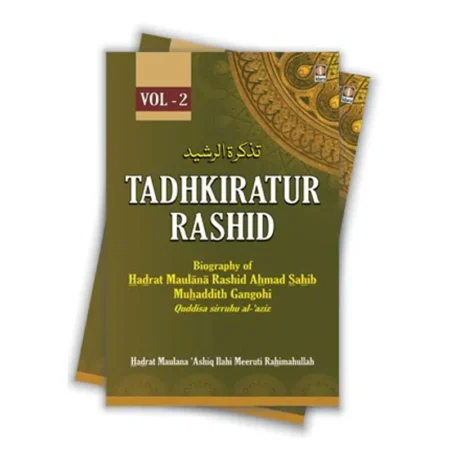
- Biographies of Scholars and Saints
- A key feature of Tadhkiratur Rashid Vol-2 is the detailed biographies of Islamic scholars, jurists, and Sufi saints. Maulana Meeruti presents these figures as models of intellectual and spiritual excellence. Each biography highlights:
- Early life and education: The author details the family background, early learning, and intellectual environment that shaped the personality of each figure.
- Spiritual and moral development: Emphasis is placed on how these personalities cultivated inner piety, patience, humility, and devotion to God.
- Scholarly achievements: Their contributions to Islamic sciences, including Fiqh, Hadith, Tafsir, and Tasawwuf, are elaborated, showing their role in preserving and transmitting knowledge.
- Ethical conduct: The biographies stress the practical application of knowledge, including charity, justice, truthfulness, and service to society.
- By highlighting these elements, the book inspires readers to emulate the balance of knowledge, spirituality, and ethical conduct exhibited by these personalities.
4 in stock

- Qassasul Ambiya Wa Ashabe Saliheen Maulana Muhammad Hifzur Rehman Seeohwarwi Idara (Urdu)
- Prophet Adam (AS): The book details his creation, the test in Paradise, and the lessons of obedience, repentance, and divine mercy.
- Prophet Nuh (AS): His patience in calling his people to monotheism and his perseverance in the face of rejection teaches the importance of steadfastness.
- Prophet Ibrahim (AS): His devotion, sacrifice, and trust in Allah serve as a model of complete submission and reliance on God.
- Prophet Musa (AS) and Prophet Isa (AS): Their struggles against oppression, leadership, and miracles highlight the significance of courage, justice, and divine guidance.
- Prophet Muhammad (SAW): The final prophet’s life, mission, and ethical conduct are presented as the ultimate model of virtue, wisdom, and spiritual guidance.
1 in stock

- Aap Beti Part 1 & 2 Autobiography Of Maulana Zakariyya (Idara) English
- 1. Early Life and Family Background
- Maulana Zakariyya Kandhlawi was born in 1898 in Kandhla, India, into a family deeply committed to Islamic scholarship. The autobiography highlights the influence of his parents and extended family, who emphasized religious education, ethical conduct, and spiritual development.
- Even in his early years, he exhibited remarkable memory, curiosity, and devotion to learning. The book emphasizes how his upbringing instilled the foundations of moral character, spiritual awareness, and a love for Islamic knowledge that would guide his entire life.
- 2. Education and Scholarly Formation
- One of the central themes of Aap Beeti is Maulana Zakariyya’s rigorous Islamic education. He pursued studies in:
- Hifz-ul-Qur’an: Memorizing the Qur’an at a young age
- Hadith: Studying Prophetic traditions with renowned teachers
- Fiqh (Islamic jurisprudence): Mastering Hanafi fiqh and related texts
- Tafsir and Aqidah: Understanding the Qur’an and Islamic creed
- Maulana Zakariyya narrates the challenges he faced, including long hours of study, travel to different madrasas, and personal discipline. The autobiography conveys the dedication required to attain deep Islamic knowledge, highlighting both intellectual rigor and spiritual commitment.
- 3. Spiritual Development and Personal Virtues
- Throughout his life, Maulana Zakariyya (RA) emphasized the integration of knowledge with spiritual practice. His autobiography details his efforts in:
- Regular Salah and Dhikr: Maintaining consistent prayer and remembrance of Allah
- Ethical Conduct: Upholding truthfulness, humility, and honesty in personal and social life
- Self-Discipline: Controlling desires and striving for moral refinement
- Service to Islam: Prioritizing da‘wah, teaching, and moral guidance over personal comfort
2 in stock

- Gujrat Files Paish Parda Haqaiq Ka Inkeshaf Rana Ayyub Manshurat (Urdu)
- Key Lessons and Insights
- Importance of Truth and Transparency:
- Highlighting hidden facts encourages ethical governance and social accountability.
- Role of Critical Thinking:
- Readers are urged to question narratives, analyze sources, and evaluate events critically.
- Human Impact of Political and Communal Conflict:
- Emphasizes empathy, understanding, and advocacy for affected communities.
- Ethical Journalism and Activism:
- Demonstrates the power of investigative journalism in uncovering injustice and advocating for change.
- Need for Legal and Social Reform:
- Calls attention to systemic failures and urges reforms in law enforcement, judiciary, and governance.
- Empowerment Through Knowledge:
- Educates readers about socio-political realities, inspiring informed participation in society.
2 in stock
Reviews
There are no reviews yet.