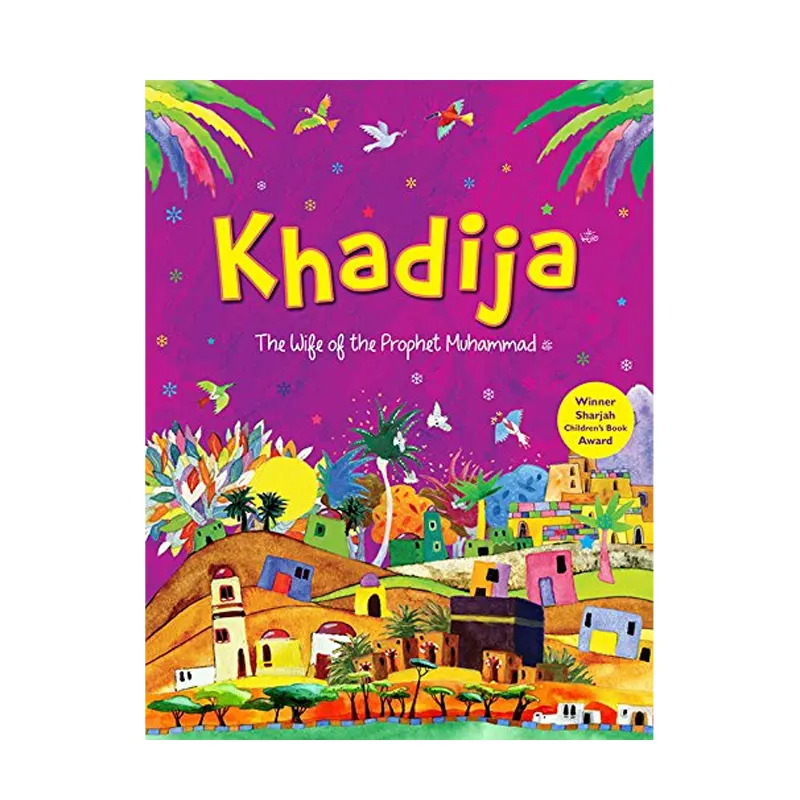
Khadija The Wife Of The Prophet Muhammad S.A.W Pb (Saniyasnain Khan) Goodword English
₹750.00 Original price was: ₹750.00.₹550.00Current price is: ₹550.00.
- The story begins by describing the social and economic environment of pre-Islamic Arabia, highlighting the moral decay, tribal conflicts, and widespread injustice of Meccan society.
- Against this backdrop, Khadija (RA) emerges as a remarkable woman of exceptional integrity, wealth, and influence.
- She belonged to a respected family of Quraysh and was known for her business acumen, honesty, and generosity.
- Unlike many women of her time who had limited roles, Khadija managed her own trade caravans, negotiating deals and traveling for commerce, which was highly unusual for a woman in 6th-century Arabia.
- The book emphasizes Khadija’s character traits: she was intelligent, wise, and deeply spiritual.
- She valued truth and fairness, both in business and personal life, earning the respect of her peers.
- Her reputation as “Al-Tahira” (the Pure) was widely known, reflecting her ethical conduct and sincere devotion to God. Despite her wealth and social status, she lived a life marked by humility, compassion, and moral responsibility.
- These qualities made her an ideal partner for Prophet Muhammad (S.A.W.), who also embodied truthfulness, piety, and kindness.
Out of stock
- Delivery & Return
Shipping Policy
How Does The Delivery Process Work ?
- Once Our System Processes Your Order, Your Products Are Inspected Thoroughly To Ensure They Are In Perfect Condition.
- After They Pass Through The Final Round Of Quality Checks, They Are Packed And Handed Over To Our Trusted Courier Partners.
- Our Delivery Partners Then Bring The Package To You At The Earliest Possibility. In Case, They Are Unable To Reach Your Provided Address Or At A Suitable Time, They Will Contact You To Resolve The Issue.
How Are Items Packed ?
We Package Our Products In Corrugated Boxes, Which Are Covered With 3 Layer Protection. Each Individual Product Is Packed In Bubble Wrap While Fragile Items Like Bottles Are Safely Secured With Additional Bubble Wrap. We Pride Ourselves On The Quality Of Our Packaging.What Is The Range Of Locations To Which Souq Al Buhair Ships It’s Products ?
We Shipped Our Products Pan India!My Order Has Been Shipped, How Can I Track It ?
Once Your Order Has Been Dispatched, You Will Receive An Email And SMS With Tracking Details.You Can Track The Status Of Your Order Within 24 – 48 Hours After Your Order Is Dispatched From Our Warehouse.Following Are Some Of Our Trusted Courier Partners: eKart Logistics, BlueDart, Delhivery, Xpressbees, Ecom Express, DTDC & ShadowfaxWhat Is The Estimated Delivery Time ?
It Takes 3-7 Business Days To Deliver The Order Once Order Has Been Dispatched.Though We Keep 95% Of Our Catalog In Our Inventory, Certain Products Need To Be Sourced Directly From The Brand Itself So That We Can Live Up To Our Promise Of Providing Fresh, Non-expired Products.Are There Any Shipping Charges Applicable To My Order ?
We Have Dynamic Shipping Charges – Depending On Carts Total Weight/Dimension Charge Is Applied To All Orders Below ₹1999, While There Is Free Shipping For All Orders Above ₹1999.Package Weight Must Be Below 1000GM Eligible For Free Shipping .Note: Please Take A Video/Photos While Opening A Order You Received We Need It If Anything Goes Wrong With You Order Between Journey Of Our Warehouse To Your Doorstep, If You Find Order Is Damaged Or Intact Please Do Not Accept The Order Delivery .
Disclaimer: Any Complaints Related To Product/Delivery Should Be Brought To Our Notice Within 48 Hours From The Time Of Delivery.
Help
Give us a shout if you have any other questions and/or concerns. Email: support@souqalbuhair.com Phone: +918755551188 WhatsApp: +918755551188
Khadija The Wife Of The Prophet Muhammad S.A.W Pb (Saniyasnain Khan) Goodword English
The book Khadija: The Wife of the Prophet Muhammad (S.A.W.) by Saniyasnain Khan is a carefully written biography aimed at presenting the life, character, and contributions of Hazrat Khadija (RA), the first wife of Prophet Muhammad (peace be upon him). It is part of the Goodword series on the lives of eminent Islamic personalities and is designed to be accessible to readers of all ages, including children and young adults, while maintaining historical accuracy and Islamic authenticity.
The story begins by describing the social and economic environment of pre-Islamic Arabia, highlighting the moral decay, tribal conflicts, and widespread injustice of Meccan society. Against this backdrop, Khadija (RA) emerges as a remarkable woman of exceptional integrity, wealth, and influence. She belonged to a respected family of Quraysh and was known for her business acumen, honesty, and generosity. Unlike many women of her time who had limited roles, Khadija managed her own trade caravans, negotiating deals and traveling for commerce, which was highly unusual for a woman in 6th-century Arabia.
The book emphasizes Khadija’s character traits: she was intelligent, wise, and deeply spiritual. She valued truth and fairness, both in business and personal life, earning the respect of her peers. Her reputation as “Al-Tahira” (the Pure) was widely known, reflecting her ethical conduct and sincere devotion to God. Despite her wealth and social status, she lived a life marked by humility, compassion, and moral responsibility. These qualities made her an ideal partner for Prophet Muhammad (S.A.W.), who also embodied truthfulness, piety, and kindness.
Khadija’s marriage to Prophet Muhammad (S.A.W.) is depicted as a relationship based on mutual respect, love, and support. The book highlights the story of how Khadija, impressed by Muhammad’s honesty and moral character, proposed marriage to him through a mutual acquaintance. This marriage was unique in its balance of partnership and spiritual companionship. Khadija provided emotional and financial support to Muhammad (S.A.W.) during the early years of his prophethood, offering reassurance when he first received revelations and faced the challenges of conveying God’s message to a skeptical and hostile society.
One of the significant aspects of the book is how it portrays Khadija’s unwavering faith. When Prophet Muhammad (S.A.W.) received the first revelation from Angel Jibreel (Gabriel) in the cave of Hira, he was naturally fearful and unsure of what had occurred. Khadija, demonstrating profound insight and belief in the divine, comforted him, reassured him of his prophetic role, and sought guidance from her cousin Waraqa ibn Nawfal, a Christian scholar who confirmed that Muhammad (S.A.W.) had indeed been chosen as a messenger of God. This incident highlights her spiritual intelligence, courage, and decisive role in supporting the early Islamic mission.
The narrative in the book also underlines Khadija’s social contributions. She used her wealth not for personal indulgence but for charitable causes, supporting the poor, helping the oppressed, and assisting those in need. Her home became a center of support for the early Muslim community, providing protection and resources to those facing persecution. She exemplified the Islamic principle that wealth is a means of serving humanity and pleasing God.
Khadija’s personal life, as narrated in the book, is also characterized by patience and resilience. She experienced the loss of loved ones and faced societal challenges with composure and faith. Her marriage, spanning 25 years until her passing, is portrayed as one of profound companionship, where both spouses encouraged each other’s spiritual and moral growth. Khadija bore several children, including Fatimah (RA), who would later play a pivotal role in Islamic history. The book highlights that her motherhood, combined with her business and social responsibilities, demonstrates the multidimensional role of women in Islam.
Importantly, the book conveys Khadija’s role as a trailblazer for women in Islam. She broke stereotypes of her era by excelling in business, education, and social influence, all while maintaining a life rooted in faith and family values. Her example serves as a timeless model of how women can balance personal ambition with spiritual and social responsibility.
Khadija’s death, which occurred before the migration to Madinah, is described with reverence and deep emotional impact. Prophet Muhammad (S.A.W.) mourned her loss profoundly, referring to the period after her death as the “Year of Sorrow” due to the loss of both Khadija and his uncle Abu Talib. The book emphasizes the deep love, respect, and spiritual companionship they shared, underscoring her unique position as the Prophet’s most trusted supporter during the formative years of Islam.
The writing style of Saniyasnain Khan is simple, engaging, and descriptive. He includes anecdotes, historical references, and insights into Arabian culture to provide context for Khadija’s life. The book avoids overly complex theological discussions, making it suitable for young readers, yet it maintains depth by highlighting her character, moral strength, and lasting influence on Islamic history. Illustrations, when included, depict key events and help readers visualize the era, enhancing the educational aspect of the book.
In conclusion, Khadija: The Wife of the Prophet Muhammad (S.A.W.) is not merely a biography but a lesson in faith, integrity, courage, and devotion. Khadija (RA) is portrayed as a pioneering woman whose intelligence, spirituality, and compassion left an indelible mark on the life of the Prophet and the early Muslim community. The book inspires readers to emulate her virtues, emphasizing that wealth and status gain true value only when combined with righteousness, generosity, and unwavering support for justice and truth. It serves as both a historical account and a moral guide, reinforcing the timeless principles of Islam through the exemplary life of Hazrat Khadija (RA).
Based on 0 reviews
| 0% | ||
| 0% | ||
| 0% | ||
| 0% | ||
| 0% |
Only logged in customers who have purchased this product may leave a review.
Related Products
1. Islam as a Religion of Peace
2. The Prophetic Model of Peaceful Struggle
3. Misinterpretations of Jihad
4. Islam and Interfaith Harmony
5. Islam and Modern Civilization
6. The Spiritual Dimension of Islam
1 in stock
- Fun Taleem O Tarbiyaat Vol 2
- Benefits for Children
- Intellectual Growth:
- Enhances Urdu literacy, comprehension, arithmetic skills, and general knowledge.
- Promotes problem-solving, logical thinking, and analytical abilities.
- Moral and Ethical Development:
- Reinforces honesty, patience, empathy, responsibility, teamwork, and gratitude.
- Encourages practical application of ethical principles.
- Emotional and Social Learning:
- Stories and activities foster empathy, cooperation, and communication skills.
- Teaches children to understand the perspectives of others and make ethical decisions.
- Confidence and Independence:
- Encourages self-paced learning and active participation.
- Builds confidence in both academics and ethical reasoning.
- Engaging and Fun Learning Experience:
- Puzzles, illustrations, and creative tasks make learning enjoyable.
- Motivates children to practice regularly, reinforcing knowledge and skills.
- Preparation for Real-Life Challenges:
- Lessons and stories help children understand the importance of applying knowledge and values in everyday life.
- Builds a foundation for academic success and socially responsible behavior.
1 in stock
- Illustrations and Visual Appeal
The book contains colorful and detailed illustrations showing: - Hazrat Umar (RA) in daily life, prayers, and leadership moments.
- Key events like battles, governance, and social reforms.
- Scenes depicting Islamic culture and lifestyle during the Prophet’s time.
- Illustrations help visual learners understand history and make stories more memorable and interesting.
- 12. Educational and Spiritual Benefits
Reading this book provides multiple benefits for children: - Historical Knowledge: Introduces early Islamic history and life of companions.
- Moral Development: Teaches virtues like justice, courage, and honesty.
- Spiritual Awareness: Encourages children to reflect on their faith and relationship with Allah.
- Role Modeling: Hazrat Umar (RA) becomes a role model for children in behavior, faith, and leadership.
4 in stock
- Arabic Reading Lessons Duncan Forbes Goodword (English)
- Learning Benefits:
- Foundational Arabic Literacy:
- Children and beginners develop the ability to read Arabic letters, words, and sentences with confidence.
- Provides essential skills for Quranic reading and further Islamic studies.
- Improved Pronunciation:
- Focus on vowels, Sukun, and Tanween ensures learners pronounce letters and words accurately, which is essential for both general Arabic and Quranic reading.
- Enhanced Reading Fluency:
- Stepwise progression from letters to words and sentences builds speed and accuracy in reading.
- Learners can gradually read more complex texts with proper rhythm and intonation.
- Interactive Learning:
- Exercises and drills encourage active participation, making learning enjoyable.
- Visual and repetitive practice helps reinforce memory and understanding.
- Confidence Building:
- The structured lessons allow learners to track their progress, increasing motivation and self-confidence.
2 in stock
- Benefits for Children
- Intellectual Development:
- Improves literacy, comprehension, arithmetic skills, and general knowledge.
- Encourages curiosity, problem-solving, and critical thinking.
- Moral and Ethical Growth:
- Instills values of honesty, patience, gratitude, respect, and responsibility.
- Helps children understand the importance of ethics in daily life.
- Emotional and Social Skills:
- Stories and exercises promote empathy, cooperation, and effective communication.
- Confidence and Independence:
- Encourages self-paced learning and fosters confidence in both academic and ethical understanding.
- Engagement and Enjoyment:
- Fun stories, colorful illustrations, and interactive activities make learning enjoyable and memorable.
- Practical Life Preparation:
- Helps children understand real-life applications of education and ethics.
- Prepares children for both academic success and socially responsible behavior.
1 in stock
- Tell Me About Hajj (Hb) Saniyasnain Khan (Goodword) English
- Key Rituals of Hajj
- 1. Tawaf (Circumambulation around the Ka’bah)
- Pilgrims walk seven times around the Ka’bah, moving in a counterclockwise direction. This act symbolizes:
- Worship and devotion to Allah alone
- Unity among Muslims, all moving together in harmony
- Remembering the connection between humans and their Creator
2 in stock
- Beautiful Islamic Names For Children Islami Kitab Ghar (English)
- Benefits for Families
- Ease in Selecting Appropriate Names:
- Families can quickly find suitable names with clear meanings and guidance.
- Moral and Spiritual Awareness:
- Encourages parents to choose names that reflect positive values and Islamic teachings.
- Cultural and Religious Education:
- Children and families learn about the significance of names in Islam and Islamic history.
- Enhanced Identity Formation:
- Names chosen with care can inspire children’s character, virtues, and self-esteem.
- Practical Guidance:
- Provides advice on avoiding names with negative meanings and selecting names that are socially and religiously appropriate.
- Long-Term Value:
- Serves as a reference book that families can use for future generations.
1 in stock
- Muslim Baby Book For Girls (Goodword) English
- Introducing Islamic concepts such as Allah, the Prophet Muhammad (S), prayers, and simple acts of worship.
- Teaching basic duas (supplications), Islamic greetings, and manners in an easy-to-understand format.
- Providing a resource for parents and caregivers to guide early religious education at home.
- Encouraging cognitive development through interactive elements, repetition, and visual learning.
- Promoting moral and ethical development by highlighting values such as kindness, honesty, gratitude, and respect.
1 in stock
- The book begins with an introduction to the importance of Salah in Islam.
- Children are taught that Salah is one of the five pillars of Islam, a mandatory act of worship prescribed by Allah, and a direct means of connecting with Him.
- The introduction explains in simple, child-friendly language that Salah is a way to express gratitude, seek forgiveness, and remember Allah throughout the day.
- The text emphasizes that establishing Salah from a young age helps develop a strong moral and spiritual foundation, shaping a child’s character and encouraging regular adherence to religious duties.
- One of the key features of the book is its focus on visual learning.
- Each step of Salah is accompanied by clear illustrations showing a boy performing the prayer correctly.
- These illustrations cover all aspects of the prayer, including standing (Qiyam), bowing (Ruku), prostration (Sajdah), and sitting (Jalsa).
- The images are simple yet detailed, making it easy for children to understand the proper postures, hand positions, and movements.
- By seeing the actions depicted visually, children can imitate them accurately, which is especially helpful for learners who benefit from a hands-on, demonstration-based approach.
- The book explains the sequence of Salah in a step-by-step manner. Each step is described using simple language, often breaking down complex concepts into easy-to-understand instructions.
- For instance, it teaches children how to begin with the intention (Niyyah), say Takbir (Allahu Akbar), recite Surah Al-Fatihah and additional short Surahs, perform Ruku and Sajdah correctly, and conclude with Taslim.
- The instructions include guidance on correct pronunciation of Arabic words and phrases, ensuring that children learn not only the actions but also the verbal elements of prayer accurately.
2 in stock
- Have a stronger understanding of basic and intermediate Arabic grammar, including verb conjugation, pluralization, and sentence formation.
- Expand vocabulary related to daily life, social interactions, and Islamic contexts.
- Develop confidence in reading and writing simple Arabic sentences accurately.
- Engage in basic conversations in Arabic, applying grammar and vocabulary in practical situations.
- Recognize and correctly pronounce Arabic letters and sounds.
- Understand the connection between grammar, vocabulary, and sentence construction
2 in stock
- Clear explanations of grammar and syntax – building on earlier concepts and introducing more complex structures.
- Thematic vocabulary expansion – covering practical, daily, and religious contexts.
- Reading and writing exercises – enhancing fluency, comprehension, and accuracy.
- Conversational practice – providing dialogues and situational examples for practical communication.
- Integration of Islamic vocabulary – helping learners understand religious texts alongside modern usage.
- Interactive exercises and revision sections – encouraging active engagement and reinforcement.
- Pronunciation guidance – ensuring accurate articulation of challenging Arabic sounds.
- Structured progression – lessons build logically from simple to more advanced concepts.
- Emphasis on practice and application – enabling learners to internalize knowledge and use it confidently.
2 in stock
- Allah Ka Tasavvur (Concept of Allah)
Bachon ko pehle Allah ka tasavvur karwaya jata hai. Allah hamara khaliq hai. Allah sab kuch banata hai – aasmaan, zameen, phool, ped, janwar aur hum insaan bhi Allah ne banaye. Allah har cheez ko dekhta hai aur hamesha hamare saath hota hai. Bachon ko ye samjhana zaruri hai ke Allah sab se bara aur sab se accha hai. - 2. Allah Ki Ibadat (Worship of Allah)
Bachon ko ibadat ki ahmiyat samjhayi jati hai. Ibadat ka matlab hai Allah ki baat man’na aur uski khushi ke liye kaam karna. Bachon ko ye sikhaya jata hai ke Allah ke liye namaz, dua aur acchai karna zaruri hai. Simple shabdon me, “Allah ki baat sunna aur acchai karna ibadat hai.” - 3. Dua aur Salam (Prayers and Greetings)
Nursery ke bachon ko chhoti chhoti duaen sikhayi jati hain, jaise: - Bismillah (Kuch bhi shuru karne se pehle bolna)
- Alhamdulillah (Shukriya ada karne ke liye)
- Assalamu Alaikum (Salaam karna)
Bachon ko bataya jata hai ke ye shabd hamare liye barkat aur mohabbat laate hain. Salam karna aur dua karna insaan ko shafqat aur acchai sikhata hai. - 4. Nabiyon Ka Ta’aruf (Introduction to Prophets)
Nursery bachon ko sabse pehle Hazrat Muhammad ﷺ aur kuch dusre nabi ke bare me sikhaya jata hai. Simple kahaniyon ke zariye: - Hazrat Adam A.S – pehle insaan
- Hazrat Nuh A.S – jo barkhata aur insano ko Allah ka hukum batate the
- Hazrat Muhammad ﷺ – akhir ke nabi, sabse pyare aur sabko acchai sikhane wale
Bachon ko ye samjhaya jata hai ke nabi hamesha sach bolte the aur Allah ki baat manate the.
2 in stock


Reviews
There are no reviews yet.