
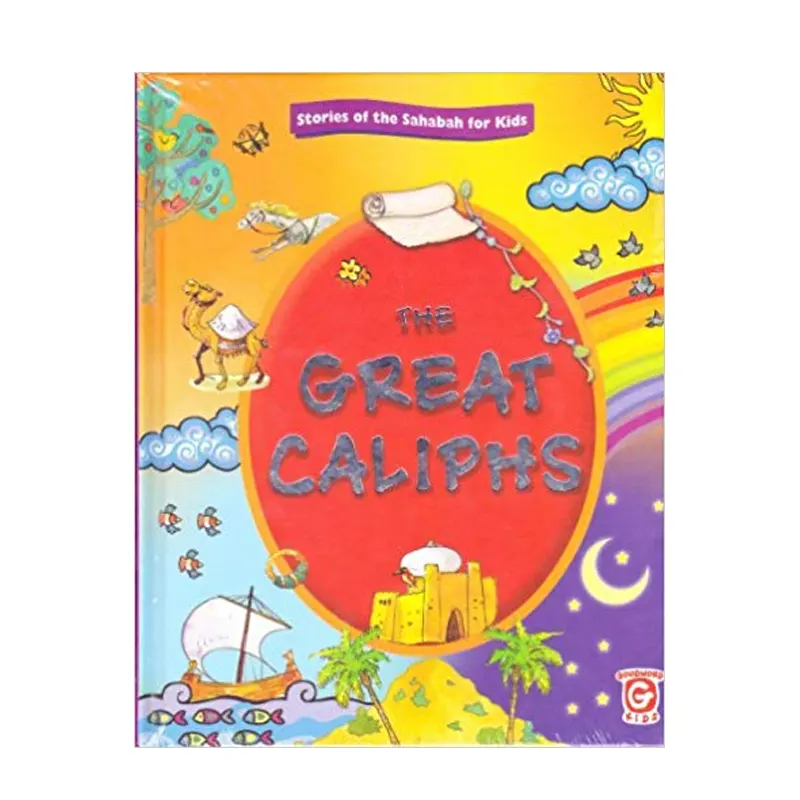
The Great Caliphs Hb Sr. Nafees Khan (Goodword) English


Original price was: ₹380.00.₹292.31Current price is: ₹292.31.
- The Great Caliphs Hb Sr. Nafees Khan (Goodword) English
xplanations of Each Caliph’s Story
1. Abu Bakr as-Siddiq (RA) – The First Caliph
- Abu Bakr was the closest companion of Prophet Muhammad ﷺ. He was known for his truthfulness, generosity, and loyalty.
- He was the first adult man to accept Islam. He supported the Prophet ﷺ during all hardships, including the migration to Madinah.
- After the Prophet ﷺ passed away, Abu Bakr was chosen as the first Caliph. His leadership came at a difficult time when many tribes left Islam.
- He united the Muslims, preserved the teachings of Islam, and oversaw the collection of the Quran into a single manuscript.
- Lesson: True leadership means standing firm in times of crisis, being honest, and protecting the truth.
Out of stock
The Great Caliphs Hb Sr. Nafees Khan (Goodword) English
The Great Caliphs – Explanation
by Sr. Nafees Khan (Goodword Books)
Introduction
The Great Caliphs is a children’s book written by Sr. Nafees Khan and published by Goodword Books. It presents the lives and contributions of the first four caliphs of Islam—Abu Bakr as-Siddiq, Umar ibn al-Khattab, Uthman ibn Affan, and Ali ibn Abi Talib (may Allah be pleased with them all)—in a way that is simple, engaging, and inspiring for young readers.
The book introduces children to the early Islamic leadership after the passing of Prophet Muhammad ﷺ, showing how these righteous men carried forward the Prophet’s mission and established justice, compassion, and order in the Muslim community. It emphasizes their qualities of honesty, humility, courage, and deep faith.
Purpose of the Book
The book aims to:
Educate children about the first leaders of Islam after the Prophet ﷺ.
Inspire young readers with stories of courage, justice, and leadership.
Highlight Values such as honesty, responsibility, and care for people.
Preserve Islamic history in a child-friendly way so that future generations understand the foundations of Islamic civilization.
Structure of the Book
The book is divided into sections, each dedicated to one of the four caliphs:
Abu Bakr as-Siddiq – The First Caliph.
Umar ibn al-Khattab – The Second Caliph.
Uthman ibn Affan – The Third Caliph.
Ali ibn Abi Talib – The Fourth Caliph.
Each section tells the story of their life, their qualities, their leadership, and their role in spreading Islam.
Key Explanations of Each Caliph’s Story
1. Abu Bakr as-Siddiq (RA) – The First Caliph
Abu Bakr was the closest companion of Prophet Muhammad ﷺ. He was known for his truthfulness, generosity, and loyalty.
He was the first adult man to accept Islam. He supported the Prophet ﷺ during all hardships, including the migration to Madinah.
After the Prophet ﷺ passed away, Abu Bakr was chosen as the first Caliph. His leadership came at a difficult time when many tribes left Islam.
He united the Muslims, preserved the teachings of Islam, and oversaw the collection of the Quran into a single manuscript.
Lesson: True leadership means standing firm in times of crisis, being honest, and protecting the truth.
2. Umar ibn al-Khattab (RA) – The Second Caliph
Umar was known for his strength, fairness, and justice. Before Islam, he was harsh, but after becoming a Muslim, his heart softened with faith.
As Caliph, he expanded the Islamic state into many lands, including Syria, Egypt, and Persia.
Umar was famous for his sense of justice. He would walk in the streets at night to make sure no one was hungry or mistreated.
He established courts, introduced welfare for the poor, and created a system of governance that was organized and fair.
Lesson: Leadership requires justice, accountability, and care for people’s needs.
3. Uthman ibn Affan (RA) – The Third Caliph
Uthman was known for his gentleness, generosity, and modesty. He came from a wealthy family and used his wealth for the sake of Islam.
He financed the army, provided wells for water, and supported the poor.
During his caliphate, Islam spread even further, and he commissioned the official compilation of the Quran into one standard text, ensuring unity among Muslims.
Unfortunately, some unrest and conflict arose in his time, and he was martyred while reciting the Quran.
Lesson: A true leader is humble, generous, and works for the unity of the people, even in the face of difficulty.
4. Ali ibn Abi Talib (RA) – The Fourth Caliph
Ali was the cousin and son-in-law of the Prophet ﷺ, known for his bravery, wisdom, and knowledge.
From his youth, he supported Islam and stood by the Prophet in battles and struggles.
As Caliph, he faced many internal challenges, as some groups opposed his leadership.
Despite these difficulties, Ali remained committed to justice, fairness, and guiding people according to the Quran and Sunnah.
He was also known for his wise sayings and deep spirituality.
Lesson: Leadership requires wisdom, courage, and fairness, even in times of division.
Themes of the Book
The lives of the caliphs collectively highlight important Islamic values:
Faith in Allah – They trusted Allah in every decision.
Justice – They treated all people equally, regardless of wealth or status.
Humility – They lived simple lives despite being leaders of a vast empire.
Sacrifice – They gave their wealth, time, and lives for Islam.
Service to the Ummah – Their concern was always the well-being of Muslims.
Style and Presentation
Simple Language: The stories are written in easy English for children to follow.
Illustrations: Respectful and colorful drawings make the book engaging.
Storytelling Approach: Each Caliph’s life is narrated like a story, making history enjoyable for young readers.
Values-Oriented: After narrating the events, the moral lessons are made clear.
Educational Value
Islamic History: Children gain knowledge of early Islamic leadership.
Moral Lessons: Inspires honesty, justice, bravery, and humility.
Role Models: Provides examples of righteous leadership for children to look up to.
Family Learning: Can be read aloud by parents to spark discussions on values and faith.
Impact on Readers
Children: Learn about heroes of Islam in an inspiring and approachable way.
Parents/Teachers: Provides a teaching resource to explain Islamic history in a simple form.
Community: Helps strengthen Muslim identity by showing the noble examples of the early caliphs.
Conclusion
The Great Caliphs by Sr. Nafees Khan is more than a children’s book—it is a moral and spiritual guide. By telling the stories of Abu Bakr, Umar, Uthman, and Ali, the book introduces children to the foundations of Islamic leadership after the Prophet ﷺ.
The book highlights the timeless values of truthfulness, justice, generosity, wisdom, and humility. These qualities make the four caliphs shining role models not just for Muslims but for all humanity.
Through simple storytelling, respectful illustrations, and clear lessons, The Great Caliphs helps young readers understand that true leadership means serving people, staying close to Allah, and living with honesty and humility.
It is a book that families, schools, and communities can use to inspire children with the beauty of Islamic history and the noble examples of the rightly guided caliphs.
| Weight | 250 g |
|---|---|
| Dimensions | 16 × 10 × 8 cm |
Only logged in customers who have purchased this product may leave a review.
Related Products
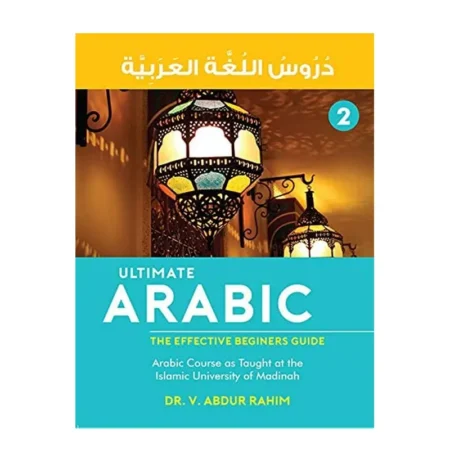
- Have a stronger understanding of basic and intermediate Arabic grammar, including verb conjugation, pluralization, and sentence formation.
- Expand vocabulary related to daily life, social interactions, and Islamic contexts.
- Develop confidence in reading and writing simple Arabic sentences accurately.
- Engage in basic conversations in Arabic, applying grammar and vocabulary in practical situations.
- Recognize and correctly pronounce Arabic letters and sounds.
- Understand the connection between grammar, vocabulary, and sentence construction
2 in stock
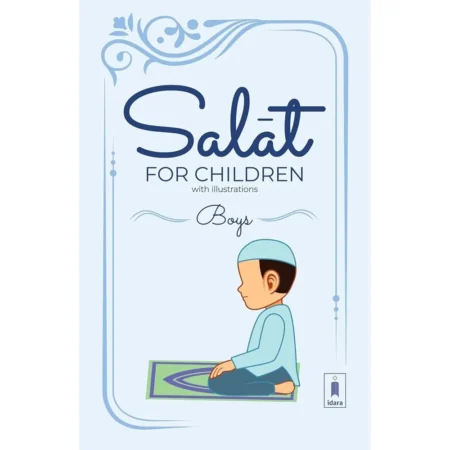
- The book begins with an introduction to the importance of Salah in Islam.
- Children are taught that Salah is one of the five pillars of Islam, a mandatory act of worship prescribed by Allah, and a direct means of connecting with Him.
- The introduction explains in simple, child-friendly language that Salah is a way to express gratitude, seek forgiveness, and remember Allah throughout the day.
- The text emphasizes that establishing Salah from a young age helps develop a strong moral and spiritual foundation, shaping a child’s character and encouraging regular adherence to religious duties.
- One of the key features of the book is its focus on visual learning.
- Each step of Salah is accompanied by clear illustrations showing a boy performing the prayer correctly.
- These illustrations cover all aspects of the prayer, including standing (Qiyam), bowing (Ruku), prostration (Sajdah), and sitting (Jalsa).
- The images are simple yet detailed, making it easy for children to understand the proper postures, hand positions, and movements.
- By seeing the actions depicted visually, children can imitate them accurately, which is especially helpful for learners who benefit from a hands-on, demonstration-based approach.
- The book explains the sequence of Salah in a step-by-step manner. Each step is described using simple language, often breaking down complex concepts into easy-to-understand instructions.
- For instance, it teaches children how to begin with the intention (Niyyah), say Takbir (Allahu Akbar), recite Surah Al-Fatihah and additional short Surahs, perform Ruku and Sajdah correctly, and conclude with Taslim.
- The instructions include guidance on correct pronunciation of Arabic words and phrases, ensuring that children learn not only the actions but also the verbal elements of prayer accurately.
2 in stock

- Arabic Conversation Book Mohd. Harun Rashid (Goodword) English/Arabic
- Educational and Cognitive Benefits
- Enhanced Communication Skills:
- Learners develop reading, writing, speaking, and listening skills simultaneously.
- Vocabulary Retention:
- Thematic dialogues reinforce common words and phrases, improving memory retention.
- Critical Thinking and Comprehension:
- Comprehension exercises help learners analyze meaning and context.
- Cultural Competence:
- Understanding Arabic etiquette and customs enhances effective and polite communication.
- Confidence in Practical Use:
- Role-playing and conversational exercises build speaking confidence.
- Foundation for Advanced Studies:
- Prepares learners for formal Arabic courses, Modern Standard Arabic, or interaction with Arabic speakers.
2 in stock

- Benefits for Children
- Intellectual Development:
- Improves literacy, comprehension, arithmetic skills, and general knowledge.
- Encourages curiosity, problem-solving, and critical thinking.
- Moral and Ethical Growth:
- Instills values of honesty, patience, gratitude, respect, and responsibility.
- Helps children understand the importance of ethics in daily life.
- Emotional and Social Skills:
- Stories and exercises promote empathy, cooperation, and effective communication.
- Confidence and Independence:
- Encourages self-paced learning and fosters confidence in both academic and ethical understanding.
- Engagement and Enjoyment:
- Fun stories, colorful illustrations, and interactive activities make learning enjoyable and memorable.
- Practical Life Preparation:
- Helps children understand real-life applications of education and ethics.
- Prepares children for both academic success and socially responsible behavior.
1 in stock

Educational and Intellectual Impact
Europe Speaks Arabic has significant educational value:
- Historical awareness: Introduces students and general readers to lesser-known historical facts about European-Arabic intellectual exchange.
- Cultural literacy: Encourages respect for Arabic civilization’s contributions to modern knowledge.
- Language appreciation: Shows the importance of Arabic as a medium of scientific and philosophical thought.
- Interdisciplinary learning: Combines history, philosophy, literature, and science, making it a holistic educational resource.
- Critical thinking: Encourages readers to re-evaluate historical narratives and recognize the interconnectedness of civilizations.
2 in stock

- Uthman Ibn Affan The Third Caliph Of Islam Sr. Nafees Khan (Goodword) English
- Moral Lessons and Significance:
The book emphasizes several moral and spiritual lessons from Uthman ibn Affan’s life:- Faith and Patience: Strong belief in Allah provides strength to face trials and adversity.
- Humility and Generosity: Wealth and influence should be used for the service of others.
- Dedication to Knowledge: Promoting learning and preserving sacred texts is a vital responsibility.
- Justice and Integrity: Leadership requires fairness, patience, and adherence to ethical principles.
- Service to the Community: True leadership is measured by commitment to the welfare of people rather than personal gain.
4 in stock

- C.B.S.E. Arabic Grammar Amanulla Vadakkangara (Goodword) English/Arabic
- Educational and Cognitive Impact
- Cognitive Development:
- Enhances logical thinking, memory, and analytical skills through grammar exercises.
- Linguistic Competence:
- Students develop proficiency in reading, writing, and sentence construction.
- Cultural Awareness:
- Exposure to Arabic culture, expressions, and Islamic phrases enriches cultural literacy.
- Exam Preparation:
- Exercises and structured learning help students perform well in CBSE assessments.
- Confidence Building:
- Progressive learning fosters fluency, comprehension, and the ability to construct meaningful sentences.
2 in stock

- Allah Ka Tasavvur (Concept of Allah)
Bachon ko pehle Allah ka tasavvur karwaya jata hai. Allah hamara khaliq hai. Allah sab kuch banata hai – aasmaan, zameen, phool, ped, janwar aur hum insaan bhi Allah ne banaye. Allah har cheez ko dekhta hai aur hamesha hamare saath hota hai. Bachon ko ye samjhana zaruri hai ke Allah sab se bara aur sab se accha hai. - 2. Allah Ki Ibadat (Worship of Allah)
Bachon ko ibadat ki ahmiyat samjhayi jati hai. Ibadat ka matlab hai Allah ki baat man’na aur uski khushi ke liye kaam karna. Bachon ko ye sikhaya jata hai ke Allah ke liye namaz, dua aur acchai karna zaruri hai. Simple shabdon me, “Allah ki baat sunna aur acchai karna ibadat hai.” - 3. Dua aur Salam (Prayers and Greetings)
Nursery ke bachon ko chhoti chhoti duaen sikhayi jati hain, jaise: - Bismillah (Kuch bhi shuru karne se pehle bolna)
- Alhamdulillah (Shukriya ada karne ke liye)
- Assalamu Alaikum (Salaam karna)
Bachon ko bataya jata hai ke ye shabd hamare liye barkat aur mohabbat laate hain. Salam karna aur dua karna insaan ko shafqat aur acchai sikhata hai. - 4. Nabiyon Ka Ta’aruf (Introduction to Prophets)
Nursery bachon ko sabse pehle Hazrat Muhammad ﷺ aur kuch dusre nabi ke bare me sikhaya jata hai. Simple kahaniyon ke zariye: - Hazrat Adam A.S – pehle insaan
- Hazrat Nuh A.S – jo barkhata aur insano ko Allah ka hukum batate the
- Hazrat Muhammad ﷺ – akhir ke nabi, sabse pyare aur sabko acchai sikhane wale
Bachon ko ye samjhaya jata hai ke nabi hamesha sach bolte the aur Allah ki baat manate the.
2 in stock

- Quran Stories For Toddlers Board Book Saniyasnain Khan (Goodword) Arabic
1 in stock

- Islam And Peace Wahiduddin Khan (Goodword) English
1 in stock

- A-Z Ready Reference Of The Quran Abdullah Yusuf Ali Goodword (English)
1 in stock

- Madinah Arabic Reader Book 1 Dr.V.Abdur Rahim (Goodword) Arabic/English
2 in stock
Reviews
There are no reviews yet.